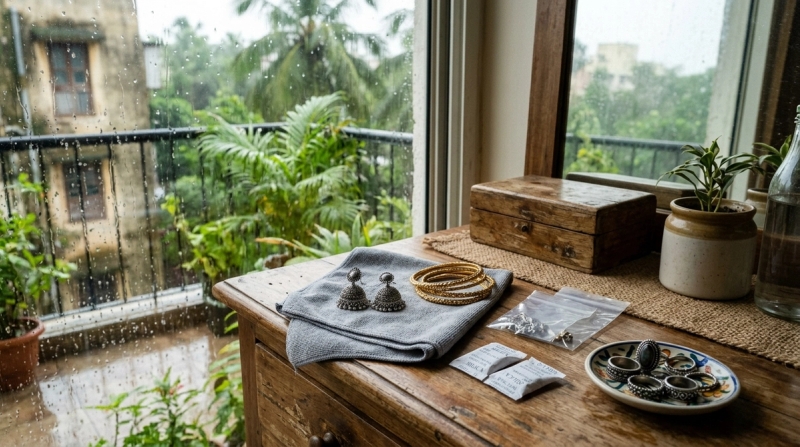
The best monsoon jewellery care routine is simple: keep jewellery dry, wipe sweat or rainwater off after every wear, and store each piece separately in a closed, dry pouch. Use silica gel for moisture control and anti-tarnish strips for silver, oxidised and imitation jewellery.
The first rain feels lovely until you open your jewellery box and your favourite earrings suddenly look dull, dark or a little off.
That is the not-so-glamorous side of the monsoon. The air stays damp, sweat takes longer to dry, and one unexpected shower can wet your rings, chains or earrings even if you thought they were safely tucked under your hair, scarf, dupatta or collar.
Silver may tarnish faster. Gold-plated jewellery can lose its shine. Imitation pieces may turn greenish, rusty or patchy. Sometimes you only notice the damage when you are getting ready and already running late.
The good news is that you do not need to stop wearing jewellery all season. You also do not need to buy a separate “monsoon jewellery” collection unless you genuinely want to. A few small habits can protect most of your everyday pieces.
This guide is practical, affordable and made for real monsoon weather, especially the kind we deal with in India.
Why Monsoon Weather Damages Jewellery
#Jewellery does not react only to rainwater. It reacts to the whole monsoon mix: humidity, sweat, perfume, creams, sunscreen, hair products, moisture in the air and sometimes direct rain.
When metal comes in contact with moisture and oxygen, oxidation can happen. Depending on the type of metal, this may show up as tarnish, rust, dullness, dark patches or green marks.
Silver naturally tarnishes over time, but humid weather can make it happen faster. Gold-plated jewellery can become dull because the outer layer is thin and sensitive to sweat and moisture. Imitation jewellery often has a cheaper base metal inside, and once moisture reaches that layer, rust or discolouration can appear quickly.
Oxidised jewellery needs careful handling too. That dark, antique-looking finish is part of the design. If you rub it too hard or clean it with harsh products, you may remove the finish instead of “fixing” it.
So the basic monsoon rule is simple: keep jewellery dry, wipe it after wearing, and store it in a closed, dry place.
What to Wear and What to Skip in the Monsoon
#Use this quick guide before stepping out, especially when the sky already looks suspicious.
A simple way to decide: if the piece is plated, oxidised, glued, stone-heavy or very sentimental, do not test it in a downpour.
Daily Monsoon Jewellery Care Routine
#Most monsoon damage does not happen in one dramatic moment. It happens slowly because we wear something, take it off, and drop it into a box while it is still carrying sweat, perfume or moisture.
1. Wipe jewellery as soon as you remove it
#Before storing anything, gently wipe it with a soft, dry microfiber cloth.
Pay attention to the parts that touch your skin the most:
- the inside of rings
- the back of pendants
- earring posts
- bracelet links
- chain clasps
- the underside of bangles and cuffs
Do this even if the jewellery does not look wet. During the monsoon, humidity and sweat can leave a thin film on the surface without being obvious.
2. Do not use wet wipes for regular cleaning
#Wet wipes feel convenient, but they add more moisture. Many are also not made for jewellery surfaces and may leave residue behind.
For everyday cleaning, a dry microfiber cloth is safer. Tissues are not ideal either. They can leave lint and may feel rough on delicate plating.
3. Follow the “last on, first off” rule
#Put jewellery on after your perfume, moisturiser, sunscreen and hair products have dried.
When you come home, remove your jewellery before you change, shower, cook or start doing chores.
It sounds basic, but this small habit reduces contact with sweat, steam, oils and product residue. Over time, it makes a real difference.
4. Dry rain-exposed jewellery immediately
#If your earrings, rings, bracelet or chain get wet in the rain, do not leave them in your bag to deal with later.
Pat them dry with a soft cloth as soon as possible. Then let them air-dry fully before storing.
This is especially important for gold-plated jewellery care and imitation jewellery care because moisture can damage the plating or reach the base metal underneath.
5. Be gentle with oxidised jewellery
#Do not scrub oxidised jewellery to make it “shine”. The darker finish is intentional.
Wipe it lightly, keep it dry, and store it separately so it does not rub against other pieces. Over-cleaning can spoil the look faster than regular wear.
The Best Jewellery Storage Setup for Humidity
#Good jewellery storage in humidity does not have to be fancy. You mainly need three things:
- separation
- dryness
- less exposure to air and moisture
1. Store each piece separately
#Avoid keeping all your jewellery together in one pouch or tray.
Chains tangle, earrings scratch each other, stones can rub against metal, and tarnished pieces can make the whole box look neglected.
Use small airtight ziplock bags, dry pouches or individual compartments. If you use ziplock bags, make sure the jewellery is completely dry before sealing it.
2. Keep jewellery away from bathrooms
#Bathrooms are usually damp because of steam and poor ventilation. Do not keep rings near the sink or earrings on a bathroom shelf, even if it feels convenient.
A bedroom drawer or cupboard shelf is usually better, as long as it is not damp or too close to a window where rainwater can enter.
3. Use silica gel in your storage box
#Silica gel packets help absorb moisture inside the storage area. Place a few packets in your main jewellery box, drawer or organiser.
You can often reuse the little packets that come with bags, shoes or packaging, as long as they are clean and dry.
But remember, silica gel is not magic. Do not put wet jewellery into the box and expect it to fix everything. Dry the jewellery first, then store it.
4. Add anti-tarnish strips for silver and imitation pieces
#Anti-tarnish strips can slow tarnish by absorbing some airborne elements that speed up oxidation.
They are especially useful for:
- sterling silver
- oxidised jewellery
- imitation jewellery
- pieces you do not wear very often during humid weeks
Slip one strip into the pouch or box section where you keep these pieces. Replace the strips according to the packet instructions.
5. Be careful with velvet-lined boxes in the monsoon
#Velvet and fabric-lined boxes look beautiful, but fabric can hold moisture during humid weather.
If your jewellery box smells musty or feels damp, move your pieces into dry airtight pouches. Keep silica gel in the main storage area and let the box dry out properly before using it again.
What to Do If Jewellery Looks Dull or Tarnished
#Before cleaning anything, first figure out what kind of jewellery it is. Silver, gold-plated and imitation jewellery should not be treated the same way.
For sterling silver
#Use a soft silver-polishing cloth if the piece is plain and sturdy.
Do not scrub hard on pieces with stones, delicate detailing or oxidised areas. If the piece has both shiny and oxidised parts, be extra careful because polishing can lighten the darker finish.
For gold-plated jewellery
#Avoid abrasive cleaning completely.
Do not use:
- toothpaste
- baking soda
- rough powders
- hard brushes
- harsh jewellery dips
Wipe gently with a dry microfiber cloth.
If the plating has already become patchy, cleaning will not bring back the missing layer. At that point, the piece may need replating, or you may simply want to wear it less often.
For imitation jewellery
#Dry it fully and wipe it gently.
If rust or flaking has already started, avoid soaking or scrubbing it. That usually makes things worse.
Imitation jewellery care is mostly about prevention. Once the top coating starts peeling or the base metal begins rusting, there is only so much you can do at home.
For valuable, loose-stone or damaged jewellery
#Take it to a trusted jeweller.
If a stone is loose, a clasp feels weak, the plating is badly damaged, or the piece is antique or expensive, do not try aggressive DIY cleaning. It is not worth the risk.
Quick Monsoon Jewellery Checklist
#- Move jewellery storage away from bathrooms, windows and damp cupboards.
- Wipe worn jewellery every evening with a soft, dry microfiber cloth.
- Store silver, gold-plated, oxidised and imitation pieces separately.
- Use airtight ziplock bags or individual compartments for daily pieces.
- Add silica gel packets to your jewellery box or drawer.
- Use anti-tarnish strips for silver and imitation jewellery.
- Avoid brass or zinc-alloy imitation jewellery on heavy rain days.
- Keep gold-plated jewellery away from rain, sweat and perfume as much as possible.
- Do not use toothpaste, wet wipes or harsh scrubbing on plated pieces.
- Take valuable, loose-stone or damaged jewellery to a jeweller.
Final Takeaway
#Monsoon jewellery care is not about being overly careful with everything you own. It is about building a small routine so your favourite pieces do not become dull, rusty or tarnished before the season is over.
Wear sturdier pieces on wet days. Save delicate gold-plated, oxidised, imitation and stone-heavy jewellery for drier plans. Wipe jewellery before storing it. Use silica gel and anti-tarnish strips. And when a piece is valuable, damaged or has loose stones, skip the DIY experiment and take it to a jeweller.
A little care after every wear is much easier than trying to rescue your entire jewellery box at the end of the monsoon.