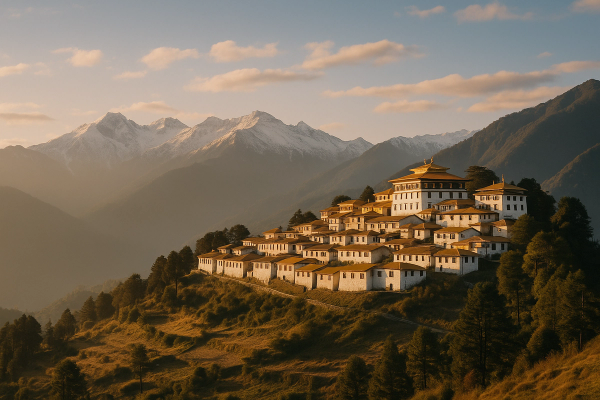
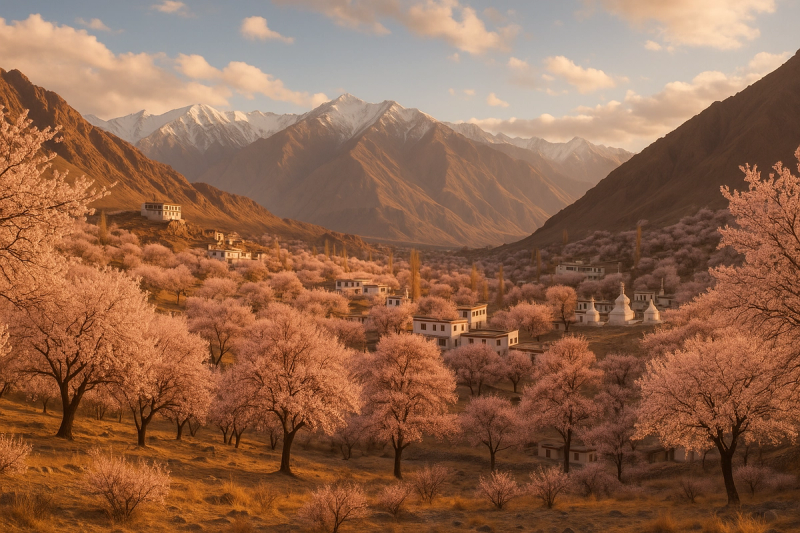
If you only know Ladakh for bike trips, high passes, frozen rivers, and those super dramatic brown mountains, then honestly... same. For the longest time, that was my image too. Then I went in spring and saw entire villages softened by pale pink and white apricot blossoms, and it kind of changed the way I look at Ladakh. The Apricot Blossom Festival is not one of those loud, over-touristy festivals where you stand behind ten selfie sticks and wonder why you even came. It feels smaller, warmer, more rooted in village life. And if you time it right, you get this weirdly beautiful contrast of snow peaks in the background and blooming orchards in the foreground. It doesn’t even look real at first.
This guide is for people planning the Ladakh Apricot Blossom Festival trip, especially if you're going from India and want practical details, not just dreamy Instagram-type lines. I’m mixing my own experience with current travel info because a lot of blogs either get too emotional or too robotic. So ya, here’s the useful stuff too: when to go, what villages to visit, how many days you need, what hotels and homestays usually cost, food to try, safety things, and a few mistakes I made so maybe you don’t repeat them.
First things first: when does the apricot blossom season usually happen?
#Apricot blossom season in Ladakh usually falls between early April and late April, sometimes stretching a little into the first week of May in higher or colder pockets. There isn’t one fixed date every single year because bloom timing depends on winter snowfall, spring temperature, and altitude. Lower areas start first, then the colder villages catch up later. That’s why if someone says, “just go in April,” that’s only half-helpful. Better approach is to keep a 5 to 7 day buffer in your plan and track local tourism updates from Ladakh authorities, hotel owners, or homestays in villages like Turtuk, Hanu, Biama, Garkone, Darchik, and parts of Sham valley. They usually know what’s blooming before the fancy websites do.
For the main festival window, mid-April is often a sweet spot. Not guaranteed, but pretty reliable. If you're planning specifically for Ladakh Apricot Blossom Festival 2026, I’d personally start watching updates from March end and aim for the second or third week of April. Don’t lock your heart to one exact day. Blossoms don’t care about your leave approval, sadly.
What the festival actually feels like on ground
#A lot of people imagine a single big venue with one stage and one ticket counter. It’s not really like that. The festival is more spread out across villages, and that’s honestly the best part. You move through apricot-growing regions, and depending on where celebrations are happening, you’ll come across cultural performances, local food stalls, small handicraft displays, traditional music, village walks, and people just... being normal and lovely. It feels lived-in. Not over-produced. In one village I saw women in traditional dress serving tea while kids ran through the orchard like it was the most regular thing in the world. Meanwhile I was standing there with my camera acting like I had discovered heaven.
Ladakh in spring is soft in a way I didn’t expect. We always talk about its harsh beauty, but blossom season shows you a gentler side of it.
Best places to see apricot blossoms in Ladakh
#This is where trip planning gets interesting, because not all blossom spots feel the same. Some are easier to reach from Leh, some need longer drives, and some are less famous but way more peaceful.
- Sham region villages like Skurbuchan, Alchi side, Saspol, Biama area — easier if you want a shorter trip from Leh and decent road access.
- Aryan Valley villages such as Garkone, Darchik, Hanu — really beautiful for blossoms plus culture, and the landscape there has a distinct feel.
- Turtuk belt — one of the most talked-about spots for apricot bloom, and for good reason. The village itself is gorgeous, though the drive is long.
- Batalik sector side villages — underrated, more raw, fewer crowds compared to the better-known circuits.
Personally, Aryan Valley surprised me the most. Turtuk is stunning, yes, but Aryan Valley had this slower pace that stayed with me. The orchards, old houses, streams, tiny lanes, women drying produce, and those impossible mountain backdrops... it all came together in a very quiet way. If you like places that feel less polished and more real, you might love it too.
How many days you really need
#Minimum? 4 nights if you’re flying into Leh and only doing nearby blossom villages. Comfortable? 6 to 8 days. Best? Around a week, especially because Ladakh is high altitude and your body may not cooperate on day one. Please don’t land in Leh and immediately rush to far villages just because some reel told you to maximize the itinerary. Acute Mountain Sickness is not content, okay. Day 1 should be rest in Leh. Proper rest. Walk slowly, drink water, no heroic stunts.
- Day 1: Arrive in Leh, acclimatise, keep it light.
- Day 2: Explore Leh local or Sham valley slowly.
- Day 3-4: Blossom villages in Aryan Valley or Batalik side.
- Day 5-6: Turtuk or Nubra extension if roads and weather are good.
- Day 7: Buffer day for weather, rest, shopping, or monastery visits.
Getting there, road conditions, permits and what’s current
#Most people arrive via Leh airport, which is the easiest option in spring because highway openings from Srinagar or Manali can still be uncertain early in the season. Flights from Delhi are the most common, with seasonal connections from cities like Mumbai, Jammu, Chandigarh and sometimes others depending on airline schedules. Flight prices can be annoying though. In blossom season, return fares can sit anywhere from around ₹7,000 to ₹18,000 or more from Delhi depending on how late you book. Last-minute and holiday-period tickets go properly crazy.
Road travel is possible later when conditions allow, but if your main goal is blossom viewing, flying is simpler and saves time. Local road conditions inside Ladakh are usually manageable but can change quickly due to wind, patch repair work, or sudden weather. Start early for village drives. For places near border-sensitive areas like Turtuk and some Batalik belt locations, Indian travellers may need to carry valid ID and sometimes inner line permit requirements can vary by area and current rules. Always check the latest Leh administration guidance or ask your hotel before heading out. Don’t rely on a random old blog from 2022, bascially.
Where to stay and what it may cost now
#Accommodation during blossom season is one of those things people underestimate because they assume spring is off-season. Not exactly. It’s quieter than peak summer, sure, but blossom tourism has grown a lot, especially among photographers, bikers doing shoulder-season trips, couples, and domestic travellers who want Ladakh without peak crowd chaos. In Leh, decent guesthouses usually start around ₹1,200 to ₹2,500 per night for a basic double room. Mid-range hotels often fall between ₹3,000 and ₹6,500. Nicer boutique stays can go beyond that, especially if heating, airport transfer, or breakfast is included.
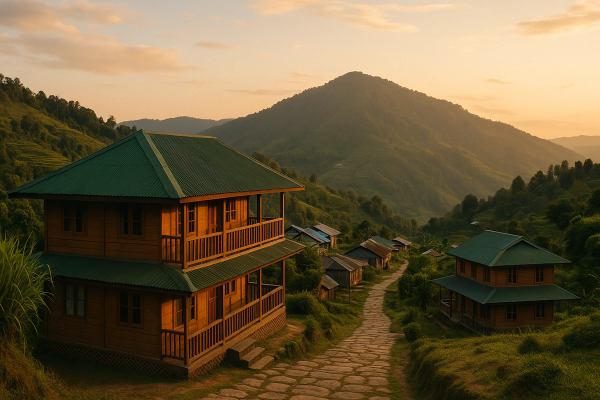
In villages, homestays are the better experience in my opinion. Prices usually range from ₹1,500 to ₹3,500 for simple but warm rooms with meals in many places, though premium heritage-style or scenic stays can charge more. Don’t expect metro-style luxury everywhere. Expect clean bedding, very kind hosts, home-cooked food, maybe patchy network, and the possibility that your room window opens into an apricot orchard. Which, trust me, is better than any polished lobby music.
Food during the festival, and yes apricot everything is a real thing
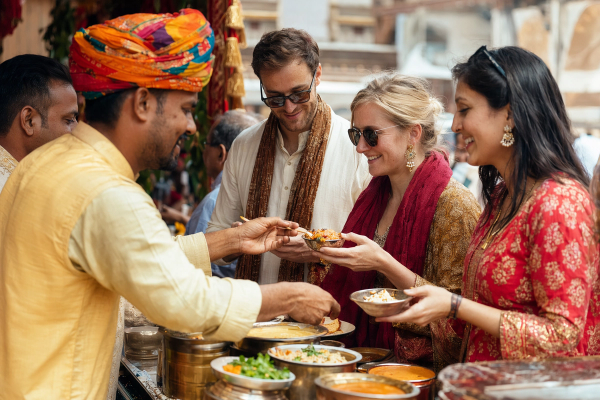
#One thing I absolutely loved was how apricot isn’t just decoration there. It’s part of local food culture and livelihood. During blossom season and in local markets, you’ll find apricot jam, dried apricot, apricot kernel oil, juices, and sometimes desserts or homemade preserves sold by local women’s groups and village cooperatives. Buy from them if you can. It feels better than buying the same thing in fancy packaging from an airport shelf.
- Try local butter tea at least once, even if you end up making a weird face like I did.
- Momos, thukpa, skyu, khambir with apricot jam, and simple home-style meals in homestays are worth prioritising over generic cafe pasta.
- In Leh, cafes now have more variety than before — Tibetan, Ladakhi, North Indian, bakery-style breakfasts, even decent coffee in some spots.
That said, village food is usually simple. Rice, dal, sabzi, noodles, soup, local bread, tea. Don’t go expecting ten-page menus. Also carry snacks if you get hungry fast. I made the mistake of thinking I’d “figure it out on the way” and then spent one long drive surviving on a half-crushed packet of chips and regret.
What to wear because spring in Ladakh is confusing af
#In photos, blossom season looks soft and sunny. In reality, mornings and nights can still be very cold, and weather changes fast. Daytime in April may feel pleasant under direct sun, maybe around 10 to 18°C in some areas, but nights can drop close to freezing, especially outside Leh. Layering is the only smart move. Carry thermals, a fleece, padded jacket, gloves, sunglasses, sunscreen, lip balm, and solid shoes. The sun in Ladakh is no joke. I got tanned and dehydrated while still feeling cold. Explain that one.
Also, if you’re there for photos, avoid packing only white or grey clothes. Blossoms are pale. Mountains are muted. A little colour actually looks nicer in pictures. Not mandatory, obviously, but just saying.
A few safety and practical updates people should know
#Ladakh remains generally safe for travellers, including solo travellers, but safe doesn’t mean careless. Weather, altitude, and road distance are the real things to respect here. Network can be unreliable outside Leh. Postpaid connections from major Indian networks usually work better than prepaid in many areas, though this keeps changing. Carry cash because village digital payment can fail when signal disappears. Keep a basic medical kit, especially for headache, cold, stomach issues, and altitude symptoms. If you feel dizzy, breathless, or unusually tired, slow down. No itinerary is worth pushing through AMS.
Another thing — tourism has increased, and with it, waste too. Please don’t be that person leaving coffee cups and chips packets in blossom spots. These are working villages, not your personal picnic set. Ask before photographing people, especially older women and private homes. Most locals are very warm, but basic respect matters a lot here.
Things to do beyond just looking at blossoms
#This is where many people cut the trip short. They drive in, click ten orchard photos, and leave. Big mistake, honestly. Stay a little longer and the place opens up.
- Join a village walk and actually talk to people growing apricots.
- Buy local products directly from self-help groups or families.
- Watch cultural performances if they’re happening — folk music in that setting hits different.
- Combine the trip with Alchi, Basgo, Lamayuru, or Nubra if your body is acclimatised well.
- Wake up early one morning just for the light. Blossom valleys at sunrise are stupidly pretty.
One morning in a village stay, I stepped out before breakfast and there was this total silence except for a little water channel and some birds. Blossoms were just falling on the ground, not dramatically, just lightly. Nobody else was around. That ended up being my favrite moment, not the festival performance, not the drive, not even the photos. Just that small quiet scene.
Budget snapshot for Indian travellers
#Costs obviously depend on flight deals and whether you’re sharing cabs, but for a rough current estimate, a 5 to 7 day blossom trip from Delhi can be done on around ₹22,000 to ₹35,000 per person in budget to lower mid-range style if you book smart and share transport. More comfortably, with better stays and a private cab for village circuits, think ₹35,000 to ₹60,000+. Local taxis in Ladakh are expensive compared to plains travel because distances are long and routes are fixed-rate in many cases. Shared options are cheaper but less flexible. If you’re going with friends, splitting a cab makes a huge difference. Solo travellers should budget extra, unfortuantely.
Is it worth choosing blossom season over peak summer?
#For me, yes. Easily yes. Peak summer gives you easier access to more routes, more open hotels, and that classic Leh-Ladakh buzz. But blossom season gives you mood. Soft light, fewer crowds, quieter roads, and a version of Ladakh many people still miss. The downside is that not every route may be fully convenient, weather can be moody, and you need a bit more flexibility. But if you like meaningful trips more than checklist trips, spring wins. Maybe not for everyone, but definitely for me.
Final thoughts before you plan it
#If you’re thinking of doing the Ladakh Apricot Blossom Festival, my simple advice is this: keep your itinerary light, give your body time, stay in at least one village homestay, and don’t chase only the most famous photo points. The real charm is in the in-between bits — tea in a sunlit courtyard, pink-white petals on mud walls, children running through orchards, old aunties selling jam, the contrast of hard mountains and delicate flowers. It’s a very Indian kind of travel joy too, where the memory stays because of people as much as the place.
And ya, book with some flexibility, check bloom updates closer to your dates, carry cash, layer up, and be respectful. If you do that, this trip can be something really special. I went expecting pretty trees and came back with a whole new season of Ladakh in my head. If you like reading travel stuff written a bit more honestly, not too polished-polished, you can also browse more on AllBlogs.in.