That tiny panic at KLIA when your phone says “No Service”
#I still remember landing in Kuala Lumpur after a red-eye from India, half-asleep, hair looking like I had fought the aircraft seat and lost, and the first thing I did was not immigration, not coffee, not even toilet. I pulled out my phone. Obviously. Because in 2026 or whatever year you’re reading this, your phone is basically your passport to the trip. Boarding pass, hotel address, Grab taxi, Google Maps, WhatsApp family group where your mom is already asking “reached?” three times. And that’s where the whole Malaysia eSIM vs local SIM debate becomes real, not some neat travel-tech comparison on a spreadsheet. If you’re an Indian traveler going to Malaysia, especially KL, Penang, Langkawi, Genting, Johor Bahru, or even just a 3-day visa-free-ish style quick trip, connectivity is not optional. It decides whether you glide out of the airport like a tech wizard or stand near a random pillar hunting for free Wi-Fi like me, sweating and pretending everything is under control.
My short answer, because I know some of you just want the verdict
#If your phone supports eSIM and you mainly need data for maps, Grab, WhatsApp, Instagram, UPI checks, hotel bookings, and random “best nasi lemak near me” searches, get a Malaysia eSIM before you fly. It’s clean, fast, and you land online. But if you need a Malaysian phone number, plan to stay longer, want the cheapest heavy-data pack, or you’re travelling with family members who are not techy at all, a local physical SIM from Maxis Hotlink, CelcomDigi, U Mobile, Yes, or Tune Talk can still make more sense. I know that sounds like a boring “it depends” answer, but honestly it really does depend. For me personally, eSIM wins for short trips. Local SIM wins when I’m staying 10+ days or when I need calls. And roaming from Indian telcos? Useful as backup for OTPs, but I wouldn’t use it as my main data pipe unless company is paying, lol.
| Option | Best for Indian travelers who... | Main upside | Main annoyance |
|---|---|---|---|
| Malaysia eSIM | Want data instantly after landing and have an eSIM-compatible unlocked phone | No airport queue, no tiny plastic SIM, easy setup before travel | Usually data-only, no Malaysian number |
| Local Malaysian SIM | Need a local number, heavy data, or longer stay | Often better value for big data and local calls | Passport registration, kiosk queue, SIM swapping drama |
| Indian international roaming | Need banking OTPs and emergency backup | Keeps Indian number active and familiar | Can be expensive for data, packs vary a lot |
| Airport Wi-Fi only | Are brave, patient, or forgot everything | Free-ish for quick setup | Unreliable when you need it most |
What an eSIM actually changes, in normal human words
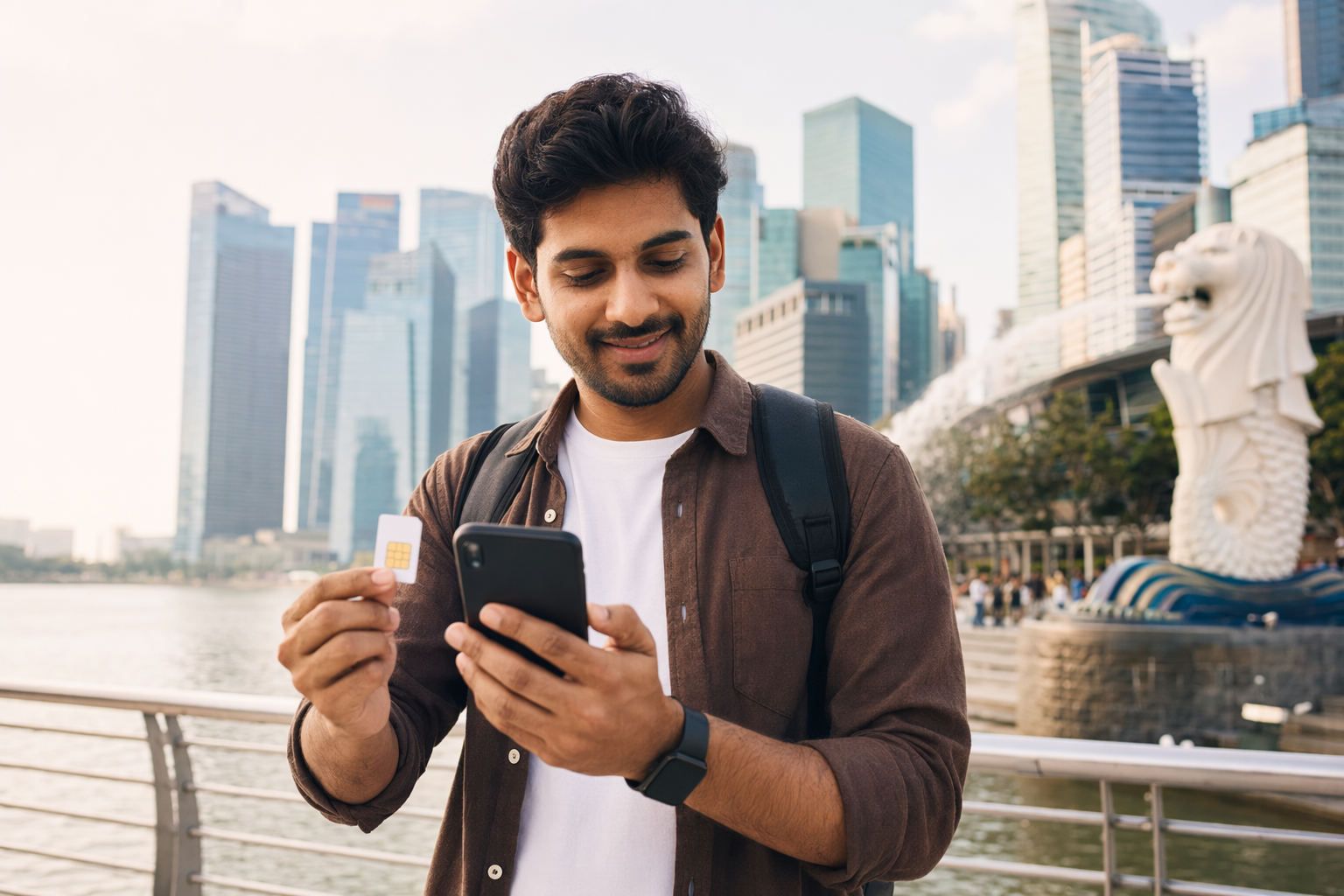
#An eSIM is basically a digital SIM profile built into your phone, so instead of popping a small plastic card into the tray, you scan a QR code or install a plan from an app. Your phone stores that network profile and connects once you arrive in Malaysia. Most travel eSIMs for Malaysia are data-only, meaning you won’t get a Malaysian phone number for normal voice calls or SMS. This is the part people miss. They see “Malaysia eSIM unlimited data” and assume it replaces everything. Not always. It replaces mobile data beautifully, but not always local calling, SMS verification, or some apps that ask for a local number. On newer iPhones, Samsung Galaxy phones, Google Pixels, and some Motorola and OnePlus models, eSIM works nicely, but please check your exact model. Also make sure your phone is unlocked. A locked phone is like buying a sports car and then finding out the steering wheel is decorative. Painful.
The setup is usually this: you buy a plan from an eSIM marketplace or provider, install the eSIM while still in India on good Wi-Fi, keep it turned off or set to inactive, then when you land in Malaysia you enable it and turn on data roaming for that eSIM profile. Some providers tell you not to activate too early because the validity starts ticking from installation or first network connection, depending on the provider. Read that line. I know nobody reads instructions, me included, but this one matters. I once installed a travel eSIM two days early because I was excited, like an idiot, and then realised the validity window had already started. Not a disaster, but still. Tiny tech tax for being overenthusiastic.
The local SIM reality in Malaysia, not the brochure version
#Local prepaid SIMs in Malaysia are pretty good. Actually, Malaysia is one of the easier countries in Southeast Asia for tourists to get connected. You’ll see telco counters at KLIA, KLIA2, malls, convenience stores, and phone shops. The big consumer names you’ll bump into are Hotlink by Maxis, CelcomDigi, U Mobile, Yes, Unifi Mobile, and sometimes Tune Talk. Plans change all the time, so I won’t pretend a specific price I saw last month is gospel. But in general, local SIMs tend to offer more data for less money than travel eSIMs, especially if you’re okay doing the registration step. Malaysia requires prepaid SIM registration, so tourists normally need to show passport details. This isn’t some shady shop being nosy. It’s part of the official process. Keep your passport handy and don’t hand it to random unofficial counters in weird corners, obviously.
The annoying bit is arrival timing. If you land with 300 other passengers and everyone wants a SIM, that cute “just buy local SIM at airport” plan can become a 25-minute queue. And if you’re arriving late night, some counters may be closed or understaffed. Airport SIM packs are convenient but not always the cheapest. City shops can be cheaper, but you need internet to reach the city, book Grab, message your hotel, and not get lost. See the loop? This is why I like eSIM as the arrival-day safety net. It doesn’t have to be your forever solution. It can be a bridge. Land, connect, get to hotel, then later buy a local SIM if the trip needs it. Very underrated approach.
The Indian traveler problem: OTPs, UPI, WhatsApp and that one bank app that ruins your mood
#For Indians, the Malaysia connectivity question is not only “will Instagram load?” It’s OTPs. Banking OTPs, credit card alerts, UPI verification, Aadhaar-linked stuff sometimes, WhatsApp re-login, airline changes, forex card SMS, all of that jazz. A Malaysia eSIM will not recieve SMS sent to your Indian number. Your Indian SIM still needs to remain active if you expect Indian OTPs. This is where dual SIM phones are magic: keep your Indian SIM as secondary for SMS and calls, use Malaysia eSIM for data. But make sure your Indian number has international roaming enabled before you leave India. Sometimes incoming SMS works without a big roaming pack, sometimes it depends on operator and account settings, and I don’t like gambling with bank OTPs at immigration. I wrote more notes around this exact mess in eSIM OTP Abroad Guide for Indian Travelers, because honestly, OTP planning deserves its own therapy session.
WhatsApp is easier. If WhatsApp is already logged in on your Indian number, it keeps working over Malaysian data, whether that data comes from eSIM, local SIM, hotel Wi-Fi, or your friend’s hotspot. Don’t log out. Don’t uninstall the app on travel day. Don’t do “let me clean storage” at the airport. I have seen people do this and then need SMS verification abroad, and suddenly the whole trip becomes a detective story. UPI also generally works over internet if your bank app and SIM situation are already set, but some actions may ask for SMS verification or device binding. So yes, eSIM is brilliant, but it doesn’t magically solve Indian telecom dependency. Keep the Indian SIM alive, even if mobile data is off on it.
Cost talk: eSIM feels premium, local SIM feels practical
#This is where I get slightly conflicted. I love eSIM because it feels futuristic. Scan, install, done. No plastic, no tray pin, no fear of losing your Indian SIM under a hotel bed. But if you compare pure gigabytes per rupee, local Malaysian prepaid usually wins. Tourist eSIMs are priced for convenience. You pay extra because someone packaged the network access neatly, made an app, gave you a QR code, and saved you from airport counter chaos. For a 4-day KL trip, I don’t mind paying that convenience premium. For a 3-week Malaysia trip with Netflix, hotspotting laptop, uploading Reels, and video calling home daily, I’d probably buy local. Also check fair usage policies on “unlimited” eSIMs. Unlimited sometimes means fast for a certain amount, then slower. Not always bad, but read before you buy. Marketing departments love the word unlimited way too much.
A rough way I calculate it, very unscientific but useful
#- Under 5 days, mostly city travel, one person: eSIM is usually worth it just for the peace of mind. You land connected, book Grab, message hotel, and move on with life.
- 7 to 14 days, moderate data, maybe two cities: either option works. I’d start with eSIM if arriving late, then decide if local SIM is worth the effort later.
- More than 2 weeks, heavy hotspot use, remote work, or family trip: local SIM starts looking very sensible because data value matters more over time.
- Need Malaysian number for restaurant bookings, local calls, certain deliveries, or old-school coordination: local SIM. Data-only eSIM won’t scratch that itch.
Network nerd corner: 4G, 5G, coverage and why your phone bands matter
#Malaysia’s mobile networks are good in the places most Indian tourists go: Kuala Lumpur, Petaling Jaya, Putrajaya, Penang, Johor Bahru, Melaka, Genting area, and many parts of Langkawi. 4G is widely usable. 5G has expanded a lot in urban Malaysia through the national 5G rollout model, and operators market 5G plans heavily now. But don’t obsess over 5G. I know, as a tech person I should be yelling about speed tests, but for travel, stable 4G is more important than one glorious 5G screenshot. Maps, Grab, WhatsApp, UPI, translation, browsing, all fine on 4G. The problems show up in basements, island edges, rural roads, rain-heavy areas, or crowded events where everyone is hammering the same tower.
Also, your phone’s supported bands matter. Most modern Indian smartphones work fine in Malaysia, but if you’re carrying an older budget phone or a model bought from another region, check compatibility. eSIM compatibility is separate from network compatibility. A phone can support Malaysian 4G but not eSIM. Or support eSIM but be carrier locked, especially if bought abroad on contract. On iPhones, eSIM support starts from iPhone XS, XS Max, and XR generation onward, broadly speaking. Many recent Samsung Galaxy S and Z series phones support it, as do many Pixels. But don’t assume. Go to your phone settings and look for “Add eSIM” or “Add mobile plan” before booking anything. This one 30-second check can save you from a very expensive facepalm.
My arrival-day setup, the one I’d recommend to my cousin also
#- Before leaving India, install the Malaysia eSIM on Wi-Fi but don’t make it your primary line yet. Screenshot the QR code and instructions, because airport Wi-Fi can be moody and apps sometimes log you out at the worst time.
- Turn on international roaming for your Indian SIM, at least for incoming SMS. If your operator has a cheap pack for validity and emergency calls, consider it. Don’t wait until you’re already abroad to discover the app needs an OTP.
- After landing, switch mobile data to the Malaysia eSIM and enable data roaming for that eSIM. Keep Indian SIM active for SMS, but turn off data roaming on Indian SIM unless you enjoy surprise bills.
- Open Grab, Google Maps, WhatsApp, hotel booking app, and your bank app once while still inside the airport. If something fails, airport Wi-Fi and counters are still nearby. Once you’re in a moving taxi, troubleshooting becomes comedy.
- If staying longer, buy a local SIM later at a proper telco store or mall kiosk. You’ll have internet already, so you can compare plans calmly instead of nodding at the first airport counter like a confused tourist.
Where eSIM absolutely wins for Malaysia
#The biggest eSIM win is mental load. I can’t overstate this. Travel days are noisy. Immigration forms, luggage belt, currency exchange, “where is the exit”, parents calling, cab drivers, and your brain running on two hours of sleep. Removing one task from that list feels amazing. With eSIM, I land, toggle a setting, and I’m online. For solo travelers, first-time international travelers, business travelers, and people landing at odd hours, that’s worth real money. Also if you’re doing a short KL trip, maybe for a concert, conference, visa run, or long weekend, why waste your first hour shopping telecom counters? Get online and go eat. Seriously.
Another underrated thing: you don’t risk losing your Indian SIM. Physical SIM swapping is such a tiny old-world problem but it still bites people. That little Airtel/Jio/Vi SIM comes out, you place it in passport cover, then later it vanishes into another dimension. Now your banking, WhatsApp recovery, and family calls are all tied to a missing fingernail-sized chip. eSIM lets your Indian physical SIM stay where it is. If your phone supports one physical SIM plus one eSIM, this is perfect. Some newer phones even support dual eSIM active, though the exact limit depends on model. Tech is finally solving the “where did I keep my SIM ejector pin” problem, and I am here for it.
Where local SIM still beats eSIM, no matter how fancy we get
#Local SIM wins when you need local identity. Not identity like passport, I mean a reachable Malaysian number. Some local services, delivery riders, smaller guesthouses, tour operators, and old-school businesses still prefer calling. Grab works with foreign numbers in many cases, but having a local number can make life smoother if you’re doing longer stays or non-touristy stuff. Local SIM also wins for heavy data. If you’re working remotely from KL cafes, uploading YouTube footage, using hotspot for laptop, or travelling with kids who think YouTube is oxygen, local prepaid packs can be more practical. And if your phone doesn’t support eSIM, well, that answers the debate quickly.
There’s also the family factor. I’m comfortable scanning QR codes and messing with APN settings, but my uncle? No chance. He’ll say “beta phone not working” and hand it to me before even reading the screen. For parents or less tech-comfortable travellers, a physical local SIM installed by a shop person can be easier. The staff tests it, data works, done. Of course, then their Indian SIM is out unless the phone has dual physical slots. So you have to decide what pain you prefer: eSIM setup pain or physical SIM juggling pain. Travel tech is basically choosing the least annoying problem.
A quick comparison with other trips I’ve done
#Malaysia is actually nicer than some destinations because the airport and city connectivity ecosystem is mature. When I was looking at Central Asia planning, I noticed the same pattern: eSIM is brilliant for landing smoothly, local SIM is better for longer stays. I had similar thoughts while reading and testing setups around Kazakhstan, and this Almaty eSIM & Taxi App Setup for Indian Travelers has a very similar arrival-day logic. Different country, same traveler panic. You need data before you need anything else. Taxi apps, hotel maps, translation, payment screenshots. It’s not glamorous tech, but it’s the tech that keeps your trip from going sideways.
The Malaysia version is just more India-friendly in vibe because flights are common, lots of Indian tourists go there, and KL especially feels easy once you’re connected. But don’t get lazy. Download offline maps for KL and your hotel area. Save your hotel address in English and maybe Malay if provided. Keep screenshots of eSIM QR, passport, flight, booking, insurance, and emergency contacts. I know this sounds like dad advice. Fine, it is. But future-you at 1:20 AM outside KLIA will thank present-you.
Troubleshooting: when the eSIM refuses to behave, because of course it does
#- If the eSIM installs but no data works, check whether data roaming is enabled for that eSIM line. Travel eSIMs often need roaming ON, even though that feels scary. Just make sure roaming is OFF on your Indian SIM.
- If it shows signal but pages don’t load, restart the phone. I hate that this basic advice still works, but it does. Airplane mode on/off also helps sometimes.
- If 5G is unstable, force LTE/4G. Faster isn’t better if it keeps dropping. Stable 4G beats dramatic 5G every single day when you’re trying to book a cab.
- If your Indian OTPs aren’t coming, don’t blame the Malaysia eSIM immediately. Check if Indian SIM has network, roaming is enabled, and your operator supports incoming SMS abroad on your current plan.
- If hotspot doesn’t work, check eSIM provider rules. Some travel eSIMs allow tethering, some restrict it, and some are vague in that annoying corporate way.
Small food tangent, because connectivity is only step one
#Once your internet is sorted, the next Indian traveler problem in Malaysia is food. I’m not even joking. You’ll use that shiny eSIM or local SIM to search “veg food near me” within 40 minutes, especially if you land hungry in KL. Malaysia is amazing for food, but vegetarian and Jain-ish preferences need a bit of planning, because fish sauce, shrimp paste, egg, and chicken stock sneak into things. If you’re landing in Kuala Lumpur and want to avoid wandering around hangry while your phone battery dies, keep this Kuala Lumpur Vegetarian Food Guide for Indian Travelers open. Connectivity gets you to the restaurant. Good planning gets you fed. Both are important, and I will die on this hill.
So what should you actually buy?
#Here’s my honest recommendation. For most Indian tourists doing Malaysia for 3 to 7 days, buy a Malaysia eSIM before departure and keep your Indian SIM active for OTPs. That’s the cleanest setup. If you’re staying longer than a week, travelling with family, need local calls, or want maximum data value, buy a local SIM after arrival, maybe even after using an eSIM for day one. If your phone doesn’t support eSIM, don’t stress. Local SIMs are common and perfectly fine. Just carry passport, go to a proper counter, and don’t pick a plan only because the poster says “unlimited” in huge letters. Ask about validity, hotspot, speed limits, and whether calls are included.
Also don’t make roaming your main plan unless you’ve checked your Indian operator’s current pack and you’re okay with the cost. Roaming is best as safety backup, especially for SMS OTP and emergency calls. I treat it like travel insurance for connectivity. Hope you don’t need it much, but when you do, you really do. And please test things before flying: eSIM compatibility, Indian SIM roaming, bank app login, WhatsApp status, power bank charged, all of it. It’s boring for ten minutes and saves you from airport drama later.
Final tech thoughts, slightly biased but earned
#I’m obviously biased toward eSIM because I like tech that quietly removes friction. And Malaysia is exactly the kind of destination where eSIM shines: short flights from India, busy airports, app-based transport, digital payments, lots of moving around, and that immediate need to tell everyone you landed safely. But I’m not anti-local SIM. Local SIMs are still the value king, especially for longer trips and local number needs. The best setup is not eSIM vs local SIM like a boxing match. It’s eSIM plus smart backup, and maybe local SIM if the trip demands it. That’s the grown-up answer, unfortunately. Anyway, if you’re planning Malaysia soon, sort connectivity before you obsess over outfits and cafe lists. Future-you will be less cranky. And if you like these slightly nerdy, practical travel-tech breakdowns, I’ve been finding more good rabbit holes on AllBlogs.in lately, so yeah, worth a look.