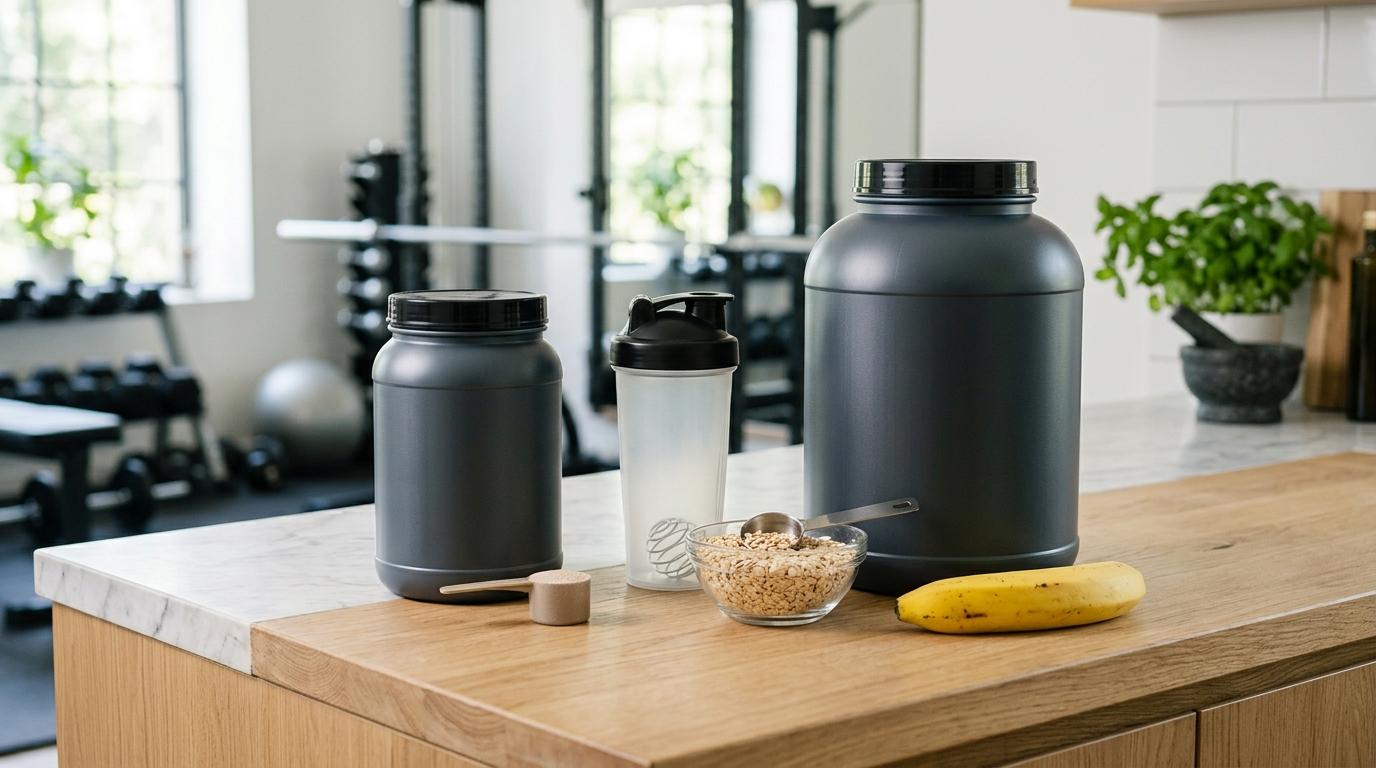
If you’re trying to choose between mass gainer vs protein powder, here’s the honest beginner-friendly answer: most people should start with protein powder, not mass gainer. Protein powder mainly helps you get enough protein without adding a lot of extra calories. Mass gainer is for people who genuinely struggle to eat enough overall.
The Short Answer
#Buy protein powder if:
- You want an easy way to increase daily protein.
- You’re new to training and still fixing your meals.
- You want better control over calories.
- You mainly need help hitting a protein goal.
Buy mass gainer if:
- You’re underweight and struggling to gain weight.
- You eat more, but your weight still does not move.
- You have a very high activity level.
- You feel full quickly when eating normal meals.
Best beginner move: start with food. Add protein powder if you’re short on protein. If you still can’t eat enough calories consistently, then consider mass gainer.
Who This Guide Is For
#This guide is for the person standing in the supplement aisle, staring at huge tubs of powder and thinking, “Okay, but which one do I actually need?”
It’s especially useful if you’re:
- A beginner trying to build muscle.
- An underweight adult trying to gain weight safely.
- Someone with a small appetite.
- Comparing mass gainer vs whey protein for the first time.
- Tired of supplement hype and just want a straight answer.
If you already track calories, follow a structured meal plan, or work with a coach or dietitian, you may need more personalized advice than this beginner guide.
Mass Gainer vs Protein Powder: What’s the Difference?
#Mass gainers and protein powders can look almost identical from the outside. They both come in big tubs. They both mix with water or milk. They both get marketed to people who lift weights.
But they are not the same thing.
Protein powder helps you get more protein. Mass gainer helps you get more total calories.
That difference matters a lot, especially if you’re new to lifting.
Protein Powder: What It Actually Does
#Protein powder, like whey protein or plant protein, is mainly used to increase your protein intake without adding a huge number of calories.
A typical serving of protein powder often gives you:
- Around 20 to 30 grams of protein.
- Around 100 to 150 calories.
- Lower carbs and fats compared with mass gainer.
That makes it flexible. You can drink it after a workout, add it to oats, blend it into a smoothie, or use it when one of your meals is low in protein.
But protein powder does not magically build muscle on its own. It just helps you reach your protein target. Training, sleep, total calories, and consistency still matter.
Mass Gainer: What It Actually Does
#Mass gainer is a high-calorie supplement. It usually contains protein, but it also comes with a lot of carbohydrates and sometimes added fats.
A typical mass gainer serving may have:
- Around 500 to 1,500 or more calories.
- Around 30 to 60 grams of protein.
- A much higher amount of carbs than regular protein powder.
That can be useful if you truly can’t eat enough food to gain weight. But this is also where beginners can get into trouble.
If your meals are already decent and you add a huge mass gainer shake every day, you might overshoot your calories without realizing it. Instead of gaining mostly lean muscle, you may gain more body fat than you wanted.
Mass gainer isn’t bad. It’s just easy to overdo.
Whey Protein vs Mass Gainer: The Real Question
#The whey protein vs mass gainer decision is not about which product is “better.” It’s about what problem you’re trying to solve.
Ask yourself:
Am I struggling to eat enough protein, or am I struggling to eat enough calories overall?
If your meals are low in protein, protein powder is usually the better choice. If you already get enough protein but still can’t gain weight because you can’t eat enough total food, mass gainer may make sense.
Most beginners should not jump straight to mass gainer. Usually, they need better meal habits, enough protein, and consistent training first.
Quick Comparison
#- Main purpose: protein powder increases protein; mass gainer increases total calories.
- Best for: protein powder suits most beginners; mass gainer suits underweight adults, hard-gainers, and very active people.
- Calories: protein powder is usually lower calorie; mass gainer is much higher calorie.
- Carbs: protein powder is usually low to moderate; mass gainer is usually high-carb.
- Beginner risk: protein powder can become a meal replacement crutch; mass gainer can push calories too high.
- Better first purchase: usually protein powder, unless food and protein powder are not enough.
What to Check Before Buying
#Don’t buy the biggest tub just because it looks serious. Supplement labels can be confusing, and serving sizes are not always what you expect. Some products look like a great deal until you realize one serving is several giant scoops.
If You’re Buying Protein Powder
#1. Protein Per Serving
#Look at how much protein you get per scoop. A good general range is around 20 to 30 grams of protein per serving.
Also check the scoop size. If the scoop is huge but the protein amount is not very high, you may be paying for extra carbs, fillers, flavoring, or sweeteners instead of mostly protein.
2. Calories Per Serving
#A normal protein powder is usually much lower in calories than a mass gainer. If your “protein powder” has several hundred calories per serving, look closer. It may be closer to a gainer product than a standard protein powder.
3. Added Sugar
#A little sweetness is normal. But if the sugar is high, think twice. You’re buying protein support, not dessert powder.
4. Type of Protein
#Whey protein is the most common choice because it mixes well, tastes decent, and is usually easy to find. Plant protein is a good option if you avoid dairy or prefer a vegan supplement.
If regular whey bothers your stomach, whey isolate or plant protein may be easier to tolerate. Everyone’s digestion is different, so pay attention to how you feel after drinking it.
If You’re Buying Mass Gainer
#If you’re seriously considering mass gainer, read the label carefully. Mass gainers can be useful, but you want to know exactly what you’re getting.
1. Serving Size
#Some mass gainers advertise a very high calorie number, but one serving may be two, three, or even four big scoops.
Before buying, check:
- How many scoops make one serving.
- How many servings are in the tub.
- Whether you would realistically drink that amount.
- How many calories come from the powder alone.
2. Protein-to-Carb Ratio
#Mass gainers are meant to be high in calories, so they usually contain a lot of carbs. A more balanced mass gainer might have something like a 1:2 or 1:3 protein-to-carb ratio. Be more careful if the product is mostly cheap carbohydrate powder with relatively little protein.
3. Carb Source
#Many mass gainers use maltodextrin, a processed carbohydrate. Others use ingredients like oat flour or sweet potato powder. That doesn’t make one automatically great and another useless, but it is worth knowing what most of the tub is made from.
4. Calories With Water vs Milk
#Some labels look more impressive because the calorie number includes mixing the powder with milk. Check whether the calories are listed for powder only or powder plus milk.
Protein Powder: Best For and Avoid If
#Best For
#Protein powder is best for:
- Most beginner gym-goers.
- People trying to build muscle slowly.
- People who eat enough calories but fall short on protein.
- Anyone who wants a flexible supplement.
- People who want to control calories through regular food.
Avoid or Reconsider If
#You may not need protein powder if:
- You expect it to replace proper meals.
- You’re allergic or sensitive to an ingredient.
- You’re buying it only because you think supplements are required to build muscle.
- You already get enough protein from food.
Mass Gainer: Best For and Avoid If
#Best For
#Mass gainer is best for:
- Underweight adults who struggle to eat enough.
- Hard-gainers with a low appetite.
- Very active people who burn a lot of calories.
- People who tried food and protein powder but still can’t stay in a calorie surplus.
Avoid or Reconsider If
#Mass gainer may not be the right choice if:
- You gain fat easily.
- You have a normal appetite and can eat full meals.
- You want to stay fairly lean while building muscle.
- You are not training consistently.
- You’re using it as a shortcut instead of improving your meals.
Mass gainer is not “stronger protein powder.” It is a high-calorie product.
Food First: The Step Most Beginners Skip
#Before buying mass gainer, take an honest look at your normal eating. A lot of beginners say they eat “a ton,” but when they look closer, they’re actually inconsistent. One huge lunch does not make up for skipping breakfast, eating a low-protein dinner, or snacking randomly throughout the day.
A food-first approach can look like this:
- Add one extra meal or snack per day.
- Include a protein source with each main meal.
- Use calorie-dense foods like rice, potatoes, nuts, nut butter, pasta, milk, or olive oil.
- Add a protein shake when food is not convenient.
- Track your weight for a few weeks, not just two days.
This is where protein powder for weight gain can still make sense. You can use protein powder in a higher-calorie homemade smoothie instead of buying a commercial mass gainer right away.
Common Mistakes to Avoid
#1. Buying Mass Gainer When You Only Need More Protein
#If your weight is stable but your protein intake is low, a mass gainer may be too much. You might only need regular whey protein or plant protein, plus better meals.
2. Assuming More Calories Means More Muscle
#Calories help with weight gain, but they do not guarantee lean muscle gain. If you drink a huge mass gainer shake on top of normal meals and your training is inconsistent, the extra calories may not go where you want them to.
3. Ignoring the Label
#The front of the tub is marketing. The back of the tub is where the useful information is.
Check serving size, calories, protein per serving, carb amount, sugar amount, main carb source, and number of servings per container.
4. Replacing Too Many Meals With Shakes
#Shakes are convenient. That doesn’t mean they should become your whole diet. Whole foods give you texture, variety, fiber, micronutrients, and a more normal eating routine.
5. Buying Based on Body Type Labels Alone
#Words like “skinny,” “hard-gainer,” and “bulking” can be useful, but they should not make the decision for you. Your actual eating pattern matters more than the label.
So, What Should Beginners Buy?
#For most beginners, the better first purchase is protein powder, either whey or plant-based. It’s simpler, easier to control, and useful for different goals.
Mass gainer is more specific. It’s for people who need help getting enough calories, not just enough protein.
A practical order would look like this:
- Fix your regular meals first.
- Add protein powder if you struggle to hit your protein goal.
- Add calorie-dense foods if you need to gain weight.
- Try homemade high-calorie shakes if eating more feels hard.
- Consider mass gainer only if those steps are not enough.
That’s the safest way to approach the mass gainer vs whey protein decision without overspending or overdoing your calories.