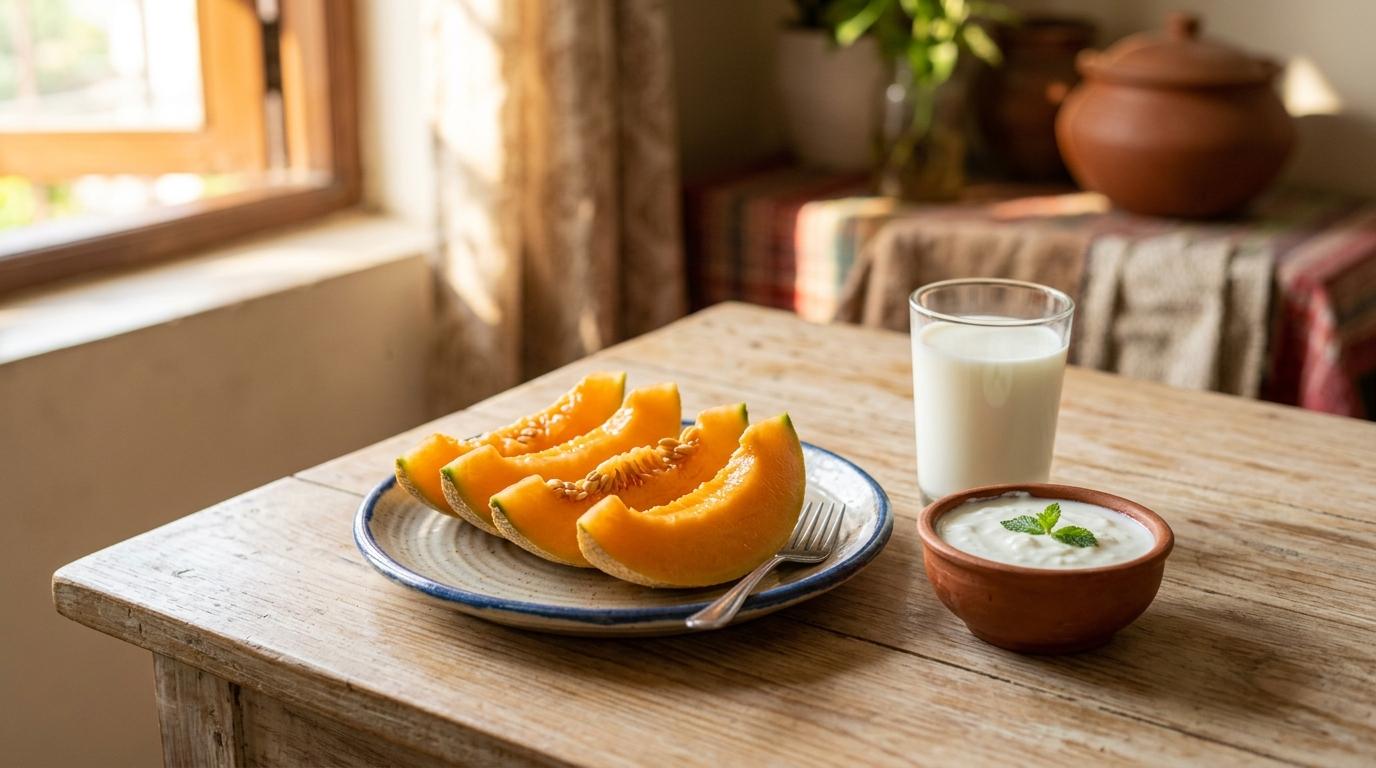
A chilled bowl of kharbuja on a hot summer day feels like such a relief. In the middle of Indian summer, when you do not feel like eating anything heavy, muskmelon feels just right. It is sweet, juicy, cooling, and easy to eat.
But in many homes, one question always comes up:
Can we eat kharbuja with milk or curd?
Is muskmelon milkshake okay? Can you mix kharbuja with dahi and make a quick fruit raita? Or is it one of those combinations that can upset the stomach?
The honest answer is: it depends on your digestion.
Some people can eat a little kharbuja with milk or curd and feel perfectly fine. But many people, especially those who already deal with gas, bloating, acidity, reflux, or a sensitive stomach, may find this combination heavy.
Kharbuja is watery and light. Milk and curd are heavier and digest differently. When you mix them, your stomach may not always be happy.
This does not mean kharbuja is bad. It also does not mean milk or curd is bad. Food should not feel like a list of dangers. But some combinations simply suit the stomach better than others.
Let us understand what is safer, what to avoid, and how to enjoy kharbuja without turning a refreshing summer snack into a digestion problem.
Medical note: This article is only for general food guidance. It is not medical advice. If you have GERD, severe acidity, diabetes, kidney disease, IBS, lactose intolerance, or any regular digestive issue, please speak to a doctor or qualified dietitian.
Quick answer
#It is usually better to avoid eating kharbuja with milk or curd, especially if you have a sensitive stomach or often get acidity, gas, bloating, sour burps, or heaviness after eating.
Kharbuja, also called muskmelon, is a watery summer fruit. It is generally best eaten fresh and plain. Milk and curd are heavier foods, and when they are mixed with melons, some people may feel uncomfortable.
Can you eat it once in a while? Maybe, if your digestion is strong and the portion is small.
But as a regular habit, muskmelon with milk or kharbuja with curd may not be the best choice for everyone.
A safer approach is:
- Eat kharbuja plain.
- Keep a gap between kharbuja and dairy.
- Avoid very large portions.
- Do not eat it very late at night if you get reflux.
- Never eat kharbuja that smells sour, looks slimy, or has been cut and kept for too long.
Why kharbuja with milk or curd may feel heavy
#The issue is not that kharbuja is unhealthy. It is not. The issue is how it may behave when mixed with dairy.
Some people have strong digestion and can handle mixed foods easily. Others may feel uncomfortable even after one wrong food combination. If you are someone who gets bloated or acidic easily, this is worth paying attention to.
Kharbuja is light and watery
#Kharbuja has a high water content. That is why it feels so refreshing in summer. When eaten plain, it is usually a simple and light snack.
For many people, kharbuja digestion is easiest when the fruit is eaten on its own.
But once you add milk, curd, cream, sugar, ice cream, or heavy toppings, it becomes a very different snack. It may taste good, but it may not feel as light in the stomach.
Milk and curd digest differently
#Milk and curd contain dairy proteins and, depending on the type, some amount of fat too. They are more filling than watery fruits.
That is why plain kharbuja may feel light, but a muskmelon milkshake may feel heavy or even make you feel sleepy.
When you mix kharbuja with milk or curd, your stomach is dealing with fruit sugar, water, dairy protein, and fat together. Some people manage this without any issue. Others may notice:
- Bloating
- Gas
- Heaviness
- Sour burps
- Mild nausea
- Acidity-like discomfort
If this happens once, it may just be your stomach reacting that day. But if it happens repeatedly, the combination may not suit you.
Why muskmelon with milk is often avoided
#In many Indian households, people say melons should be eaten alone. This is old food wisdom, and Ayurveda also usually advises against mixing melons with milk.
Modern nutrition may explain it in a different way, but the practical advice is quite similar: watery fruits and dairy can feel heavy for people with sensitive digestion.
So muskmelon with milk is often avoided, especially by people who already get acidity, bloating, or reflux.
This does not mean muskmelon milkshake is poisonous. It simply means it may not suit everyone’s stomach.
What about kharbuja with curd?
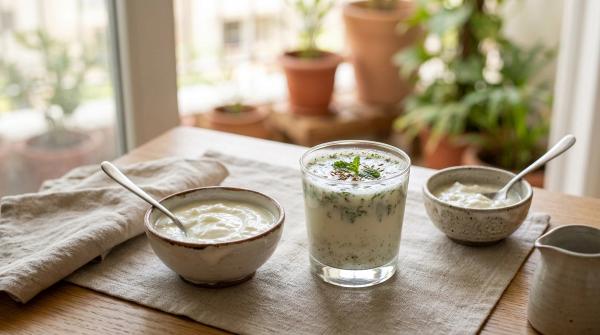
#Curd feels cooling, so it is natural to think kharbuja with curd should be fine in summer. And yes, some people may tolerate it.
But curd is still dairy. It is thicker, more filling, and slightly sour. When mixed with watery melon, it may cause gas, heaviness, sour burps, or acidity in some people.
If you notice muskmelon acidity after eating kharbuja with dahi, it is better to avoid that combination.
Eat kharbuja separately. Eat curd separately. Simple.
Who should be more careful?
#Some people can eat almost anything and feel fine. Others have one cold milkshake and then spend the rest of the day feeling bloated.
If you fall into the second group, be a little more careful with kharbuja with milk or curd.
People with acidity or reflux
#If you often get burning in the chest, sour burps, throat irritation, or reflux after meals, heavy food combinations may make things worse.
Plain kharbuja may suit you, but kharbuja with milk or curd may sit heavy. Also, eating a large bowl late at night may not be a good idea if reflux is already a problem.
People who bloat easily
#If your stomach becomes tight or gassy after fruit bowls, smoothies, milkshakes, or curd-based snacks, keep kharbuja simple.
Avoid mixing it with milk, curd, cream, too much sugar, or too many other fruits. Sometimes the stomach does better when there is less going on.
People with IBS or sensitive digestion
#If you have IBS or a sensitive gut, do not try a big bowl of melon and dairy just because someone else eats it without any problem.
Their digestion is not your digestion.
Try plain kharbuja first. If even plain kharbuja causes bloating or discomfort, reduce the portion or speak to a health professional.
People who eat late dinners
#Late meals can already be harder to digest. A heavy muskmelon milkshake or kharbuja-curd bowl at night may feel cooling at first, but later it can cause heaviness, burping, or reflux.
If you enjoy kharbuja, try having it during the day instead of close to bedtime.
Children and older adults
#Children and older adults may have more sensitive digestion. If they feel full, uneasy, bloated, or gassy after fruit and dairy combinations, avoid giving kharbuja with milk or curd.
Fresh, plain kharbuja in small portions is usually easier to manage.
Safer ways to eat kharbuja
#You do not have to stop eating kharbuja. Just keep it simple.
Eat kharbuja plain
#This is the easiest and safest way for most people.
Cut fresh kharbuja, remove the seeds, and eat it as it is. No milk, no curd, no cream, no heavy toppings.
Honestly, good kharbuja does not need much.
Keep a gap from dairy
#If you drink milk every day or eat curd with lunch, you do not need to stop. Just avoid having dairy at the same time as kharbuja.
Many Indian households commonly keep a gap of around 2 to 3 hours.
For example:
- Eat kharbuja mid-morning and have curd later with lunch.
- Drink milk in the evening, but eat kharbuja earlier in the day.
- Avoid drinking milk immediately after eating muskmelon.
The gap does not have to be perfect for everyone. But if you often get digestive discomfort, separating kharbuja and dairy is a sensible habit.
Keep the portion small
#Because kharbuja is light and juicy, it is easy to eat a lot without realizing it. But even a watery fruit can cause discomfort if the portion is too large.
Start with a small bowl. If you feel fine, that portion probably suits you. If you feel bloated or acidic, reduce the amount or change the timing.
Avoid eating it very late if you get reflux
#Kharbuja is not dangerous at night. But if you have reflux, eating anything close to bedtime can sometimes cause trouble.
A large portion of watery fruit late at night may lead to burping, heaviness, or reflux when you lie down.
If this happens to you, eat kharbuja earlier in the day.
Eat only fresh and properly stored fruit
#This is especially important in summer.
Once kharbuja is cut, it can spoil quickly if not stored properly. If it has been kept outside for too long, smells sour, looks slimy, or tastes odd, throw it away.
Do not mix spoiled fruit with milk, curd, sugar, or ice to cover the smell or taste.
Spoiled fruit can upset your stomach no matter what you eat it with.
Do not make it too complicated
#Sometimes we take a simple fruit and turn it into a full dessert: fruit bowl, curd, milk, cream, syrup, honey, seeds, ice cream. Then we wonder why the stomach feels heavy.
Kharbuja does not need all that.
Fresh, plain, slightly chilled kharbuja is enough.
What to do if you already ate kharbuja with milk or curd
#First, do not panic.
If you ate kharbuja with milk or curd and feel completely fine, you do not need to do anything.
If you feel heavy, gassy, or acidic, keep the next few hours simple:
- Do not eat another heavy meal immediately.
- Sip water if you feel thirsty.
- Avoid lying down right after eating.
- Keep dinner light if this happened in the evening.
- Notice whether the same combination troubles you every time.
If symptoms are severe, painful, unusual, or do not settle, speak to a doctor.
Best time to eat kharbuja in summer
#For most people, kharbuja works best as a simple snack during the day.
Good times to eat it include:
- Mid-morning
- Early evening
- Between meals
- When you are not combining it with milk or curd
Try not to eat it immediately after a heavy lunch or dinner. Also avoid turning it into a large dessert if you already struggle with acidity or bloating.
Final takeaway
#Kharbuja is a lovely summer fruit, and you can enjoy it without fear. But for most people, it is best eaten on its own.
The combination of kharbuja with milk or curd may suit some people in small amounts, but it can feel heavy for those with sensitive digestion, gas, bloating, reflux, or acidity.
If muskmelon with milk or kharbuja with curd makes you uncomfortable, listen to your body. That is your clearest sign.
Keep it simple. Eat fresh kharbuja plain, keep a gap from dairy, avoid late heavy portions, and throw away any fruit that seems spoiled.
That is the easiest way to enjoy kharbuja in summer without inviting stomach trouble.