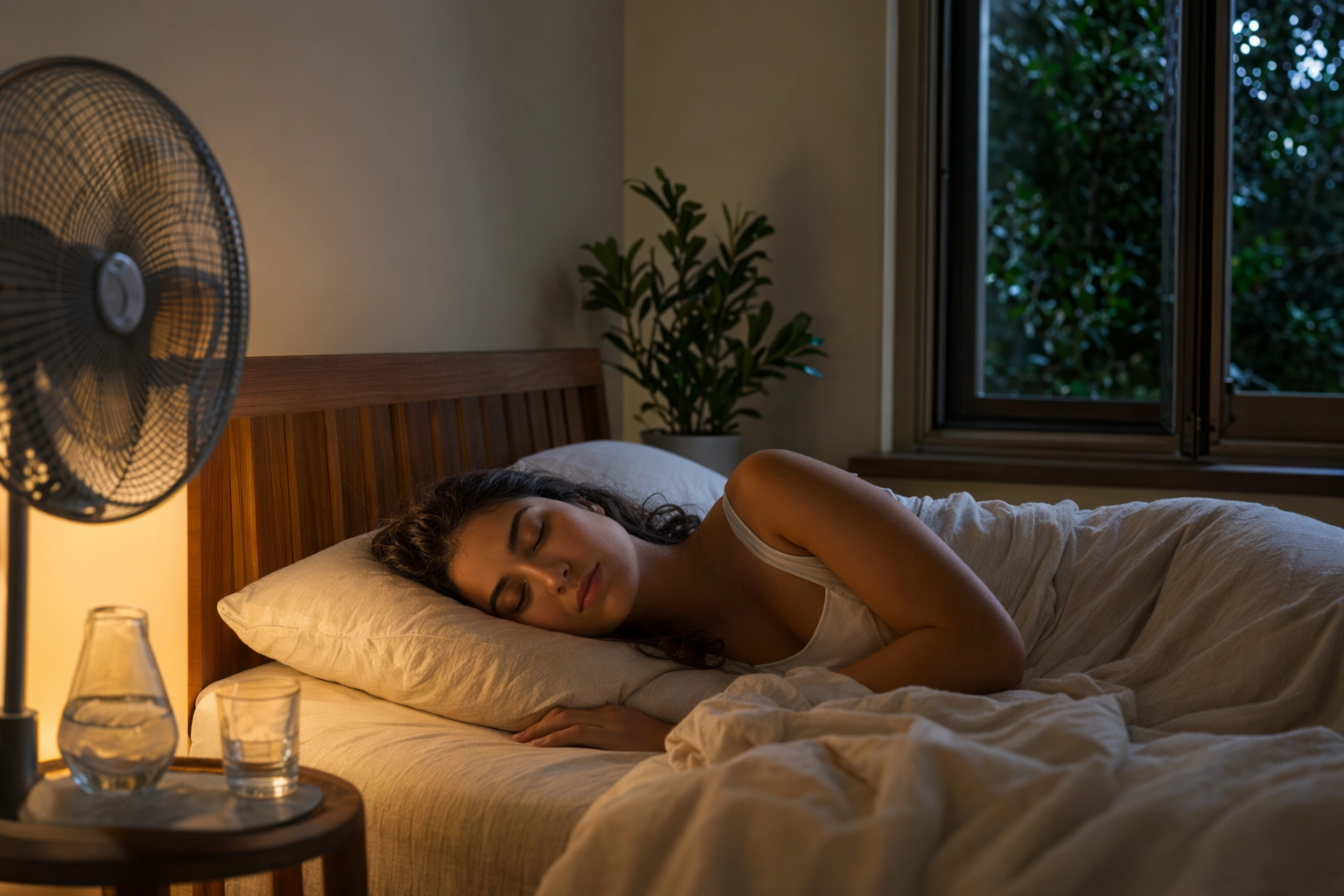
First, a quick reality check: hot-room sleep is not just “being fussy”
#Trying to sleep in a hot room without AC can feel weirdly defeating. You’re tired, you did the whole bedtime thing, maybe the lights are off and the phone is finally down, and then your body is just... nope. Too sticky. Too warm. Too awake. That is not a character flaw. Sleep and body temperature are closely linked. As evening comes on, the body normally starts shedding heat so core temperature can dip a little, which helps support sleep. When the room stays hot, humid, or airless, that cooling process gets harder. You may toss around more, wake up sweaty, or feel like your sleep is shallow even if you technically spent enough hours in bed.
This guide is practical, but careful. Cooling tricks can help many people feel more comfortable, but they are not a treatment for heat illness, insomnia, or a medical condition. If the room is dangerously hot, or if someone is elderly, pregnant, very young, living with heart or kidney disease, taking medications that affect sweating or hydration, or feeling unwell, the safest step may be getting to a cooler place rather than trying to “hack” the bedroom. Heat can be serious. And no, you do not have to tough it out just because people online make it sound like a badge of honor.
Know when the room is uncomfortable vs unsafe
#There is a big difference between “ugh, this room is too warm” and “this could be risky.” A warm bedroom may disrupt sleep, but extreme indoor heat can contribute to heat exhaustion or, in worse cases, heat stroke. Public health agencies commonly warn that symptoms like dizziness, headache, heavy sweating, nausea, weakness, muscle cramps, fainting, confusion, hot dry skin, or a very high body temperature deserve attention. Confusion, fainting, chest pain, trouble breathing, or symptoms that are severe or worsening should be treated as urgent. That is especially true during heat waves, when buildings may stay hot through the night and people don’t get a break from daytime heat.
A basic indoor thermometer is honestly underrated here. Guessing room temperature by vibes is not always reliable, especially when humidity is high. If the room is around mildly warm, you can often improve comfort with ventilation, lighter bedding, and water management. If indoor temperatures are very high, roughly in the mid-90s Fahrenheit or about 35°C and above, a fan alone may not be enough to prevent heat-related illness. It might move hot air around without actually cooling the body much, particularly for people at higher risk. In that situation, consider a cooling center, a public library, a friend’s place, a shaded ground-floor room, or any safer cool space available. It sounds dramatic until you’ve seen how badly buildings can trap heat overnight.
Cool the room before bedtime, not only after you’re miserable
#The best hot-room sleep strategy starts earlier than bedtime. Once the room has absorbed heat all day, it can act like a brick oven, especially in apartments, top-floor rooms, west-facing bedrooms, and spaces with poor insulation. During the hottest part of the day, keep direct sun out. Close curtains, blinds, or shades, and if you have blackout curtains or reflective window coverings, they may reduce heat gain. It does make the room feel a bit cave-like, which is not everyone’s favorite, but it can help keep the bedroom from turning into a sauna.
Then, when outdoor air becomes cooler than indoor air, open windows if it is safe to do so. That timing matters. Opening windows at noon during a heat wave can just invite hot air inside. Opening them at night or early morning may help flush the room. If you can create a cross-breeze, even better: open windows or doors on opposite sides of the home and use a fan to push hot air out one opening while drawing cooler air in from another. Keep internal doors open if privacy and safety allow. Air needs a path, not just a fan pointed randomly at a pile of laundry.
Also, reduce indoor heat sources in the evening. Ovens, stovetops, dryers, gaming computers, bright incandescent bulbs, and even a cluster of charging electronics can add heat. Not always a huge amount, but in a small bedroom it adds up. Cook earlier if you can, choose no-cook meals on the hottest nights, and move chargers or laptops out of the sleeping area. It is not glamorous wellness advice. It is more like boring apartment survival. But boring works sometimes.
Use fans smarter, because placement matters more than people think
#A fan can support cooling by moving air across skin and helping sweat evaporate. But fan setup matters. If the air outside is cooler than inside, placing a fan near a window can help exchange air. One approach is to point a fan outward in one window to exhaust hot indoor air, while opening another window on the shaded or cooler side of the home to pull air in. If you only have one window, experiment. Sometimes pointing the fan outward for 20 to 30 minutes before bed clears the heat better than blasting air at your face all night.
If you use more than one fan, avoid creating a chaotic wind tunnel that just stirs dust and warm air. Try one fan low near a cooler air source and another higher up pushing warm air out, since warm air tends to collect higher in the room. Keep fan blades clean, keep cords out of walkways, and avoid draping wet towels directly over electric fans unless the product is designed for that. Water and electricity are not a cute combo.
Airflow also gets worse when beds, curtains, boxes, or furniture block paths. If your fan is wedged behind a chair or blowing into the side of a dresser, it is doing a lot of work for very little payoff. The same common-sense placement idea applies to other bedroom devices too. If you use an air purifier, for example, the bedroom layout tips in Air Purifier Placement Guide: Bedroom, Living Room & Apartment can help you think about keeping air paths clear instead of accidentally blocking circulation.
Make the bed less heat-trapping
#Bedding can make or break a hot night. Heavy duvets, thick comforters, dense foam mattress toppers, and some synthetic sheets can trap warmth close to the body. In a hot room, switch to lighter layers that are easy to kick off and pull back on. A thin cotton sheet, linen sheet, or light blanket may feel better than one big bulky cover. Natural fibers like cotton and linen are often more breathable than some tightly woven synthetics, though fabric quality matters. Bamboo-viscose and similar fabrics can feel cool to the touch for some people, but claims vary a lot, so it is better to judge by breathability, weave, and how it actually feels after washing.
If you normally sleep under a weighted blanket, thick duvet, or plush comforter, consider saving it for cooler months or using a much lighter alternative during hot weather. Weighted blankets can feel calming for some people, but they can also hold heat. If you are comparing layers and trying to figure out what belongs on the bed in summer, this guide on Weighted Blanket vs Comforter vs Duvet: What Should You Buy for Better Sleep? fits right into that decision. The short version for hot rooms: breathable, washable, and easy to adjust usually beats cozy-but-suffocating.
Mattresses matter too. Memory foam can retain heat for some sleepers, especially older foam or foam without good airflow. You may not be able to replace a mattress, obviously. That is expensive and not realistic advice for everyone. But you can try smaller changes: remove a heat-trapping mattress protector, use a breathable cotton mattress pad, avoid plastic-like waterproof covers unless medically needed, and leave the bed uncovered for a while in the evening so trapped warmth can escape. If you need a waterproof protector, look for one that is described as breathable, and check reviews from hot sleepers, not just marketing copy.
Cool your body gently before sleep
#A cool or lukewarm shower before bed may help some people feel more comfortable, especially if sweat and humidity are making skin sticky. But icy showers are not always the magic trick they seem to be. Very cold water can feel shocking, and for some people it may make the body respond by conserving heat or feeling more alert. A lukewarm rinse often works better: it removes sweat, cools the skin a bit, and helps you get into bed feeling less grimy. Keep it safe, especially if you are dizzy, overheated, or unsteady. Sit down, cool slowly, and get help if symptoms are concerning.
Cold packs can help too, but use them carefully. Wrap an ice pack or frozen gel pack in a towel and place it near areas where blood vessels are closer to the surface, like the neck, wrists, or behind the knees, for short periods. Do not sleep directly on ice packs, and do not put ice straight on skin. That can irritate or injure skin. A damp washcloth kept in the fridge can be gentler. Some people also like cooling pillows or pillowcases, though results are mixed and they tend to warm up after a while. Still, a cool pillow at the start of the night can be a small mercy.
Clothing should be light, loose, and breathable. Some people sleep best in a thin cotton shirt and shorts, others prefer minimal sleepwear. The goal is to let heat escape while still feeling comfortable and covered enough to relax. If you sweat heavily, keeping a spare dry shirt or pillowcase nearby can prevent the 3 a.m. routine of fumbling around half-awake and annoyed. Not fancy. Very useful.
Hydrate, but don’t turn bedtime into a water-chugging contest
#Hot nights can increase sweating, and dehydration may make you feel worse. But drinking a huge amount of water right before bed can backfire by sending you to the bathroom all night. A better approach is steady hydration earlier in the day and evening. Sip water, eat water-rich foods if they appeal to you, and pay attention to thirst, urine color, and how you feel. Very dark urine, dizziness, dry mouth, confusion, or not urinating much can be warning signs that deserve more attention, especially in heat.
Electrolyte drinks are not automatically necessary for every sweaty night. They may be useful for some people who sweat a lot, are active in heat, or have been losing fluids, but they can also come with sugar, caffeine, sodium, or bold claims that are not needed for ordinary bedtime hydration. People with kidney disease, heart failure, high blood pressure, or fluid restrictions should ask a qualified healthcare professional before using electrolyte products regularly. If you do buy them, reading the label matters more than the front-of-bottle hype. This explainer, How to Read an Electrolyte Drink Label Properly, is helpful if you want to avoid overdoing sugar, caffeine, or unnecessary add-ons.
Alcohol deserves a mention because it can make hot sleep worse. It may feel relaxing at first, but alcohol can disrupt sleep architecture, increase nighttime waking, and contribute to dehydration. Caffeine later in the day can also keep the body more alert when you are already battling heat. This does not mean everyone needs a perfect monk-like evening routine. Just be honest with the basics: if the room is hot and sleep is fragile, alcohol and late caffeine may make the whole thing harder.
Lower humidity when you can, because “hot” and “sticky” are not the same problem
#Humidity changes how heat feels. Sweat cools the body when it evaporates. When the air is humid, evaporation slows down, so the same temperature can feel much more oppressive. If you have a dehumidifier, using it earlier in the evening may help, though dehumidifiers can also release some heat while running. That means it may be better to run one before sleep rather than right next to the bed all night, depending on your space. Empty the tank, clean it as directed, and avoid letting stagnant water sit around.
If you do not have a dehumidifier, small habits still help a bit. Avoid drying wet clothes in the bedroom during hot nights. Use bathroom exhaust fans after showers if you have them. Keep lids on boiling pots if cooking, or better yet, avoid steamy cooking at night. If the outdoor air is more humid than indoor air, opening windows may not feel good even if the temperature is lower, so you may need to experiment. Weather apps that show humidity or dew point can be more useful than temperature alone. Dew point is a little nerdy, yes, but it tells you why 78°F can feel fine one night and swampy the next.
Try low-tech cooling tricks, but skip the unsafe ones
#There are plenty of no-AC cooling tricks floating around, and some are decent. A bowl of ice in front of a fan can create a small cool breeze for a short time. It will not cool a whole room like an air conditioner, and it can add moisture as the ice melts, but if you are sitting close by while winding down, it may help. A frozen water bottle wrapped in a towel near your feet can feel soothing. Chilling a pillowcase in a sealed bag for a few minutes before bed can be nice, though it warms quickly. These are comfort tools, not emergency heat protection.
Be cautious with wet sheets or soaking the bed. Damp fabric can feel cooling at first, but it may make the mattress humid, encourage mildew, irritate skin, or leave you waking up clammy. A lightly damp washcloth is usually more manageable than turning the bed into a swamp. Also skip anything involving open containers of water near outlets, overloaded extension cords, or homemade electrical setups. Heat makes people desperate and the internet gets creative in ways that are not always safe.
If you live in a dry climate, evaporative cooling methods may work better than they do in humid places. In a humid climate, they can make the room feel wetter without much cooling. That is one of those annoying “it depends” answers, but it really does. Your climate, room size, window placement, and building materials all change what works.
Change where you sleep, if the bedroom is the worst room
#Sometimes the best way to sleep in a hot room is... not to sleep in that room. If another part of the home is cooler and safe, use it. Lower floors are often cooler than upper floors. A room that gets morning sun may be cooler at night than a west-facing room that baked all afternoon. Sleeping closer to the floor can feel cooler in some spaces, though make sure it is safe, clean, and not a trip hazard. A simple floor mattress or camping pad may be a temporary heat-wave solution if your usual bed is holding too much warmth.
For renters or people in small apartments, options may be limited, and that can feel frustrating. Still, even small changes help: move the bed away from a sun-heated wall, pull it a few inches from the wall for airflow, open the bedroom door, or use a hallway fan to pull cooler air through. If safety, noise, insects, or outdoor air quality make open windows impossible, focus on blocking daytime heat and reducing indoor heat sources. There is no moral failure in having fewer options. You work with the room you’ve got.
Protect children, older adults, pets, and higher-risk sleepers
#Hot rooms are not equally risky for everyone. Babies and young children are less able to regulate temperature and cannot always explain how they feel. Older adults may be more vulnerable to heat, and some may not sense thirst or temperature changes as strongly. People with chronic health conditions, limited mobility, pregnancy, certain mental health conditions, or medications such as diuretics, some blood pressure medicines, stimulants, anticholinergics, and some psychiatric medications may also have higher heat risk. This does not mean panic. It means plan earlier.
Check on vulnerable people during heat waves, especially at night. Make sure they have water, a way to cool down, and a safer place to go if the room becomes too hot. For babies, follow safe sleep guidance: place infants on their backs, on a firm flat sleep surface, without loose blankets, pillows, or soft bedding. Do not use cooling products in a crib unless they are specifically safe for infant sleep and recommended by a qualified professional. If a child seems unusually sleepy, irritable, hot, confused, or is not drinking or urinating normally, seek medical advice promptly.
Pets need care too. They can overheat in stuffy rooms, particularly flat-faced breeds, older animals, overweight pets, and pets with heart or breathing issues. Give access to water, shade, and a cooler area. Heavy panting, weakness, drooling, vomiting, collapse, or confusion in a pet should be treated as urgent veterinary territory.
Build a simple hot-night routine you can repeat
#When it is hot, decision-making gets worse. A routine helps because you are not inventing a plan while sweaty and irritated. About two hours before bed, block or release heat depending on the outdoor temperature. If outside is hotter, keep windows covered. If outside is cooler, start ventilation. One hour before bed, reduce heat sources, set up fans, prep water, and switch bedding to the lightest layers. Thirty minutes before bed, take a lukewarm rinse if you want, put on breathable sleepwear, and cool your pillow or washcloth. Then keep the room dark and calm. Nothing magical. Just repeatable.
- Check the indoor temperature and humidity if you can, rather than guessing.
- Create airflow before bedtime, especially when outdoor air cools down.
- Use light bedding and breathable sleepwear, not heavy layers that trap heat.
- Sip fluids earlier in the evening, and be cautious with alcohol or late caffeine.
- Have a backup plan for extreme heat: a cooler room, neighbor, friend, public cooling space, or medical help if symptoms appear.
What not to overthink
#It is easy to fall into the trap of optimizing every detail: the perfect linen weave, the exact fan angle, the ideal bedtime electrolyte ratio, the fancy cooling pillow that costs more than dinner. Some of that stuff can help, sure. But the biggest wins are usually basic: keep sun out, move cooler air in, reduce trapped heat, wear breathable layers, hydrate reasonably, and know when heat is unsafe. You do not need a flawless sleep sanctuary to make a hot room more survivable.
Also, one bad hot night does not mean your sleep is broken forever. Heat waves pass, weather shifts, and sometimes the body just has a rough night. But if poor sleep is persistent, severe, or affecting daytime functioning, it is worth talking with a qualified healthcare professional. And if you regularly wake up drenched in sweat without an obvious heat explanation, or you have fever, unexplained weight loss, chest symptoms, breathing problems, or anything unusual for you, get medical guidance. Night sweats and insomnia can have many causes, and online tips should not replace proper care.
A gentle final word for tonight
#Sleeping in a hot room without AC is partly comfort, partly safety, and partly accepting that some nights are just not going to be perfect. Start with the room: block daytime heat, ventilate when cooler air is available, and place fans with a purpose. Then adjust the bed and body: lighter layers, breathable sleepwear, a lukewarm rinse, cool cloths, and steady hydration. Keep an eye on people who are more vulnerable to heat, and take warning signs seriously. The goal is not to prove you can endure misery. The goal is to get through the night as safely and comfortably as possible. For more practical, non-fussy wellness guides, you can always wander through AllBlogs.in.