Summer can be brutal on fruit. A kharbuja that looked perfect in the morning can feel too soft by evening. You pick it up, smell it, press the skin a little, and wonder, “Is this still okay… or has it gone bad?”
The good news: a soft kharbuja is not automatically spoiled.
Kharbuja, also called muskmelon or cantaloupe, naturally becomes softer, sweeter, and more fragrant as it ripens. Sometimes it simply becomes too soft for neat fruit cubes, but it is still fine for smoothies or shakes. Other times, it has crossed the line and should not be eaten.
Here’s how to tell the difference.
Quick Answer: Is Overripe Kharbuja Safe to Eat?
#Yes, overripe kharbuja can be safe to eat if it is only soft, extra sweet, and slightly mushy. It should still smell fresh, fruity, and pleasant.
But throw it away if you notice any of these signs:
- Sour, sharp, alcoholic, or fermented smell
- Slimy, sticky, or slippery flesh
- Mold on the rind or inside the fruit
- Liquid leaking from the whole melon before cutting
- Deep rotten or sunken soft patches
- Discolored, stringy, gooey, or strange-looking flesh
- Cut melon that has been sitting out for too long, especially in hot weather
If the melon is just a bit too soft, you can use it in smoothies, milkshakes, popsicles, or puree. But if it shows signs of spoilage, do not taste it, blend it, freeze it, or try to “save” it.
When in doubt, especially with cut melon, it is safer to throw it away.
Soft Kharbuja vs Spoiled Kharbuja
#A slightly overripe kharbuja and a spoiled kharbuja can feel similar at first, but they are not the same. Check the smell, texture, and appearance before eating.
If the only problem is softness, the melon may still be okay. But if the smell is off, the flesh feels slimy, or you see mold or leaking, don’t risk it.
Smell It First: Sweet Is Fine, Fermented Is Not
#Your nose is one of the best tools here.
A ripe kharbuja should smell sweet, fruity, and a little musky. An overripe one may smell even stronger and sweeter. That by itself is not a problem.
But be careful if it smells:
- Sour
- Sharp
- Alcoholic
- Vinegar-like
- Fizzy or fermented
- Rotten or unpleasant
That sour, fermented smell usually means the fruit has gone too far. The sugars may be breaking down, and unwanted microbes may be growing.
And no, sugar, lemon, milk, ice, chaat masala, or blending will not fix it. If it smells fermented, throw it away.
Check the Texture: Soft Can Be Okay, Slimy Is Not
#Kharbuja can turn soft quickly in hot weather. That does not always mean it is unsafe. If the flesh is soft, juicy, sweet-smelling, and clean-looking, it may still be fine.
But texture can also be a clear warning sign.
Throw it away if you notice:
- Slimy flesh
- Sticky or slippery coating
- Gooey patches
- Deep watery soft spots
- Flesh that collapses into mush and smells bad
- Rind that caves in easily with light pressure
- Areas that look rotten instead of simply ripe
A helpful rule: soft is not always bad, but slimy is bad.
Mold, Leaking, and Deep Rot Mean “Do Not Eat”
#Mold is a clear sign to discard the melon. That includes fuzzy patches on the rind, mold inside the fruit, or mold in a container of cut kharbuja.
Do not just cut off the moldy part and eat the rest. Kharbuja has a high water content, so spoilage can spread beyond what you can see.
Also throw it away if the whole melon is leaking before you cut it. Some juice after slicing is normal. But if an uncut kharbuja is sitting on the counter and leaving wet spots, or if the rind has split and liquid is seeping out, treat it as spoiled.
Deep soft rot is another warning sign. A little softness at one end can be normal, but large sunken patches, watery breakdown, or collapsing areas are not.
Wash the Rind Before Cutting
#This step is easy to skip, but it matters.
Melons grow close to the ground. Their rinds can carry dirt and germs from soil, water, hands, transport, and market surfaces. Kharbuja and cantaloupe often have textured rinds too, which can trap more dirt.
If you cut an unwashed melon, the knife can drag germs from the outside into the flesh.
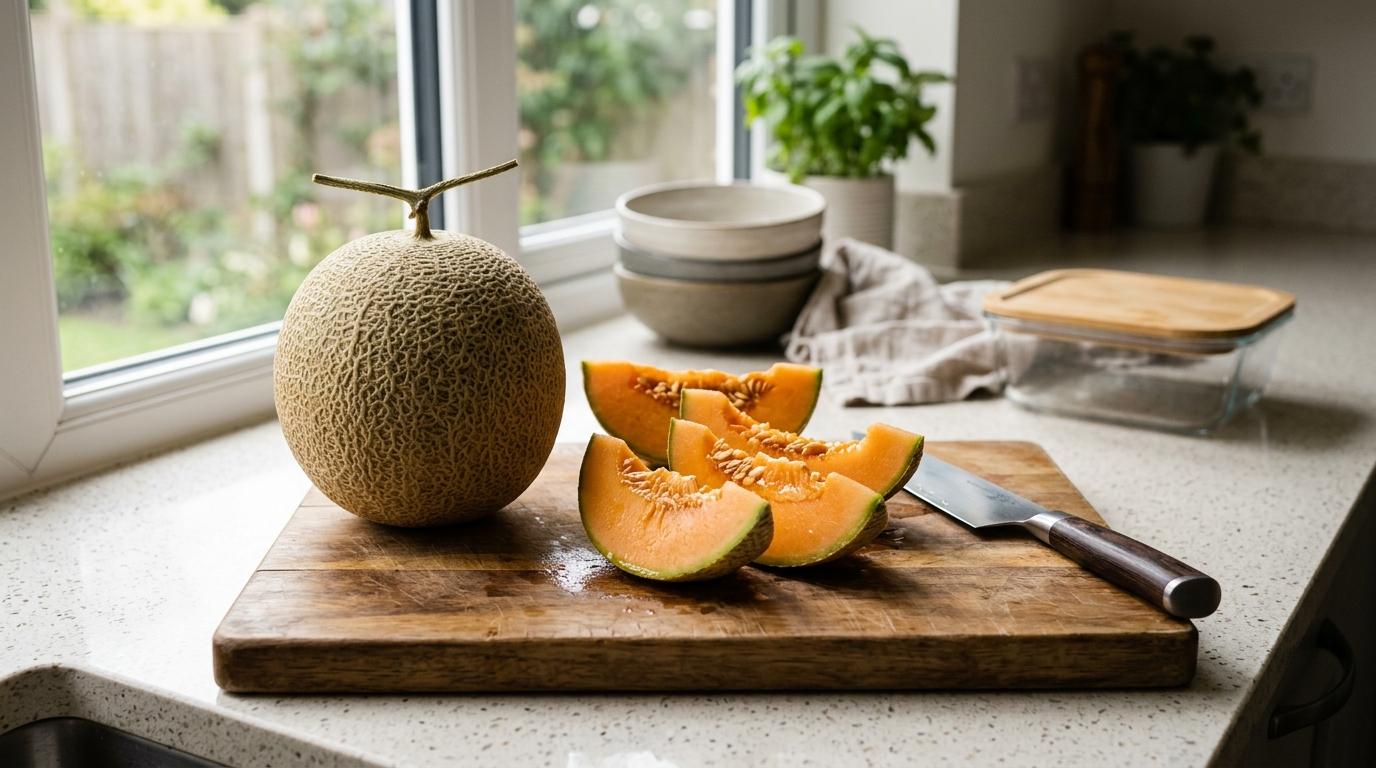
Before cutting kharbuja:
- Wash your hands.
- Rinse the whole melon under running water.
- Scrub the rind with a clean produce brush.
- Use a clean knife and a clean cutting board.
Washing will not make a spoiled melon safe. It simply helps reduce the chance of carrying germs from the outside into a good melon.
How Long Can Cut Kharbuja Sit Out?
#Once kharbuja is cut, it needs to be handled more carefully. Cut melon is moist, sweet, and not very acidic, which means bacteria can grow faster if it sits warm for too long.
The simple rule: keep cut melon cold.
At room temperature
#Do not leave cut kharbuja at room temperature for more than 2 hours.
If the weather is very hot, around 32°C or higher, keep it to 1 hour.
This applies to fruit bowls, melon cubes at parties, kharbuja left on the dining table, tiffin or picnic fruit, street-style fruit plates, and milkshakes or smoothies made with cut melon.
If cut melon has been sitting out all afternoon in summer heat, throw it away.
In the fridge
#Store cut kharbuja in a clean, covered container in the refrigerator.
Try to eat it within 3 to 4 days. If it becomes slimy, smells sour, grows mold, or turns watery and unpleasant before that, discard it sooner.
The fridge slows spoilage, but it does not stop it forever.
Safe Ways to Use Slightly Overripe Kharbuja
#If your kharbuja passes the safety check, meaning no sour smell, no mold, no slime, no leaking, and no deep rotten spots, you can still use it.
In fact, slightly soft kharbuja is often better in blended recipes than in fruit salad.
Kharbuja milkshake or smoothie
#Blend soft kharbuja with chilled milk or curd, ice, and a little cardamom if you like. Use only melon that smells fresh and sweet. If it smells sour or fermented, don’t use it.
Melon popsicles
#Puree the kharbuja and freeze it in moulds. A small squeeze of lime can help balance the sweetness. Freezing can improve the texture, but it does not make spoiled fruit safe.
Chilled melon puree
#Blend the melon and chill it well before serving. This works nicely when the fruit tastes good but is too soft to cut into clean cubes.
Smooth melon bowl
#Mash or lightly blend the fruit and serve it cold. Keep it refrigerated until serving, and don’t leave it sitting out in the heat.
These ideas are only for slightly overripe melon. They are not rescue methods for spoiled kharbuja.
Who Should Be Extra Careful?
#Everyone should be careful with cut melon, but some people need to be more cautious.
Be extra careful if the kharbuja is for pregnant individuals, young children, adults over 65, or people with weakened immune systems.
For these groups, avoid anything that feels borderline. Serve only freshly cut melon that was washed before cutting, refrigerated after cutting, and eaten within a safe time.
If there is any sour smell, slime, mold, leaking, or uncertainty about how long it sat outside, discard it.
How to Keep Kharbuja from Becoming Overripe Too Quickly
#A whole kharbuja can stay at room temperature until it reaches the ripeness you like. Once it smells sweet and gives slightly when pressed, move it to the fridge if you are not cutting it right away.
After cutting, refrigerate it quickly in a covered container.
A few simple habits help a lot:
- Buy only what you can eat soon, especially in very hot weather.
- Avoid melons with cracks, leaks, mold, or deep bruises.
- Wash the rind before cutting.
- Use clean hands, a clean knife, and a clean board.
- Chill cut melon quickly.
- Do not mix fresh melon with older melon pieces in the same container.
Small steps, but they make a real difference.
Final Takeaway
#An overripe kharbuja is not automatically unsafe. If it is just soft, sweet, and a little mushy, you can still use it in chilled drinks, purees, or popsicles.
But spoiled kharbuja is different. Sour or fermented smell, slime, mold, leaking, deep soft rot, or cut melon left out too long are all signs to discard it.
Simple rule: sweet and soft may be okay. Sour, slimy, moldy, leaking, or doubtful means throw it away.