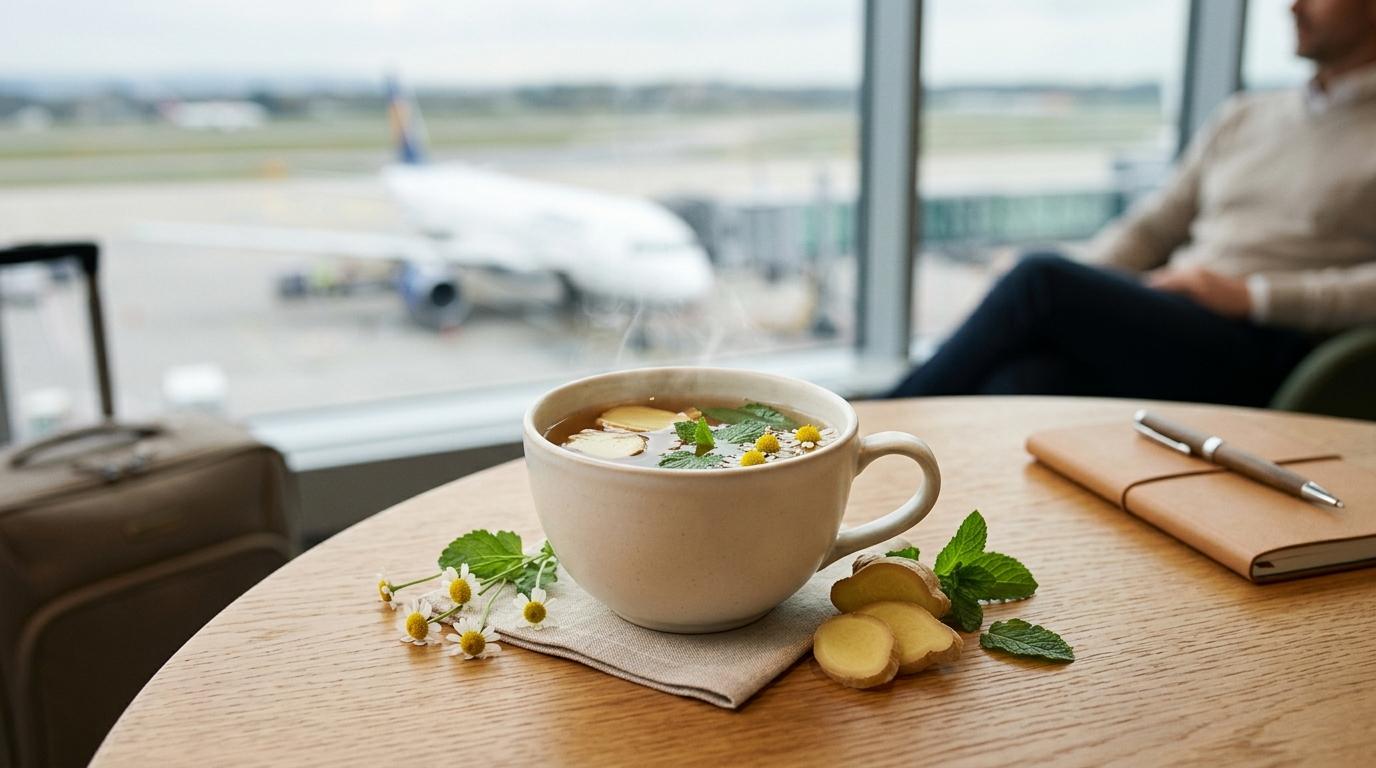
Flying has a funny way of making your body feel slightly off. You eat at odd times, hurry through security, sit for hours, breathe dry cabin air, and maybe top it all off with airport coffee and a rushed sandwich.
So if your stomach feels a little unsettled before a flight, you’re not imagining it.
For a lot of travelers, a warm caffeine-free herbal tea feels gentler than coffee or soda. But the best choice depends on what you’re actually trying to deal with. Nausea, bloating, reflux, and pre-flight nerves are different problems, and one tea won’t suit all of them.
If you’re wondering which herbal tea before a flight makes the most sense, here’s the practical breakdown: ginger, peppermint, chamomile, or sometimes just plain water.
This article is for general travel comfort and education only. Herbal tea may help with mild, occasional discomfort, but it is not a diagnosis, cure, or treatment for ongoing digestive issues, severe reflux, chronic nausea, sleep disorders, or any medical condition. If your symptoms are persistent, severe, unusual for you, or worrying, speak with a healthcare professional.
Quick answer
#If you’re in the terminal trying to decide what to drink before a flight, here’s the simple version:
- Choose ginger tea if you tend to feel mildly nauseous, get motion discomfort, or want something warm after a heavy airport meal.
- Choose peppermint tea if you feel bloated or gassy, but avoid it if you get acid reflux or heartburn.
- Choose chamomile tea before an evening flight, overnight flight, or red-eye if you want to relax and ease into sleep mode.
- Choose water if you’re dehydrated, dealing with reflux, unsure how you react to an herb, or trying to avoid extra bathroom trips.
And one very useful travel rule: don’t try a brand-new herbal tea for the first time on flight day.
Best herbal tea before a flight by situation
#Different flight-day annoyances call for different drinks. Peppermint might feel great if you’re bloated, but it can be a bad idea if you’re prone to heartburn. Chamomile can help you wind down before a red-eye, but it’s not the drink you want if you need to stay alert for a tight morning connection.
Here’s a quick comparison.
Timing matters too, especially on long-haul flights. A big hot tea right before boarding can feel cozy for about ten minutes, and then suddenly you need the bathroom while everyone is still putting bags in the overhead bins.
If you want tea before a long flight, drink it while you still have easy restroom access in the terminal. Once you’re on board, sip slowly rather than downing a large cup all at once.
For a red-eye, chamomile usually works best after dinner or once the boarding chaos has settled. Pair it with a small wind-down routine: dim your screen, put on headphones, get your neck pillow sorted, and avoid sneaking in caffeine close to sleep time.
Ginger tea
#Best for: mild nausea, motion discomfort, and gentle digestive support.
Ginger tea before a flight is a popular choice for people who get a little queasy during takeoff, landing, turbulence, or even the ride to the airport. Ginger is widely used for nausea support, and a warm cup can feel especially comforting when your stomach already feels uncertain.
It can also be a nice option after a heavy airport meal, especially if you want something caffeine-free that feels warming rather than acidic or sharp.
Ginger is probably the most practical herbal tea when your main concern is nausea. It won’t magically guarantee a smooth flight, and it shouldn’t be treated like medicine. But for mild, occasional travel queasiness, it’s often the tea people reach for first.
A few simple tips:
- Choose plain ginger tea if possible, not a complicated blend you’ve never tried.
- Sip it slowly, especially if it’s strong.
- If hot drinks make you feel worse when you’re already queasy, stick with room-temperature water instead.
Peppermint tea
#Best for: mild bloating, gas, and that tight post-meal feeling.
Worst for: reflux, heartburn, or sour burps.
Peppermint tea for flight bloating can be useful if airport food leaves your stomach feeling full, gassy, or uncomfortable. Peppermint contains menthol, and many people find it soothing when their digestion feels tense or cramped.
But peppermint has one big catch, especially when flying.
It may worsen reflux in some people because peppermint can relax the lower esophageal sphincter. That’s the small ring of muscle that helps keep stomach acid from moving upward. If you’re prone to heartburn, peppermint tea before a flight can backfire, particularly if you drink it and then spend hours sitting slouched or reclined.
Skip peppermint tea if:
- You already have heartburn.
- You often get reflux after mint, chocolate, coffee, spicy food, or heavy meals.
- You’re planning to recline or sleep soon after drinking it.
- Peppermint tea has caused sour burps or burning for you before.
If your main issue is bloating and reflux is not part of the picture, peppermint may be a reasonable choice. But if reflux is even a possibility, ginger tea or plain water is usually the safer bet.
Chamomile tea
#Best for: evening flights, red-eyes, long-haul wind-down, and a calmer pre-sleep routine.
Chamomile tea before a red-eye flight can be a good fit if you want a caffeine-free drink that helps you shift out of airport mode. It’s warm, gentle, and commonly used as part of a bedtime routine.
Chamomile does not force sleep. It’s not like taking a sleep medication, so don’t expect it to knock you out. Think of it more as a signal to your body: we’re slowing down now.
And honestly, that little ritual can help. Airports are bright, loud, rushed, and weirdly draining. A cup of chamomile gives you one calm, familiar thing in the middle of all that.
For red-eye and long-haul timing:
- Drink chamomile after you’ve eaten, cleared security, and are closer to boarding.
- Avoid a large cup right before takeoff if you don’t want to wake up needing the bathroom.
- On board, ask for hot water during beverage service and steep your own tea bag when you’re ready.
- If your flight has meal service, you may prefer chamomile after the meal so it becomes part of your sleep routine.
Chamomile is usually easy on the stomach, but the same rule applies: only use it before flying if you already know it agrees with you.
When to skip herbal tea
#Herbal tea can be comforting, but it isn’t always the smartest pre-flight drink. Sometimes the best choice is just water. Not exciting, but very reliable.
Skip herbal tea and choose water instead when:
- You’re already dehydrated. Dry mouth, headache, dark urine, or realizing you’ve barely had fluids all day are signs that water should come first.
- You have active reflux or heartburn. Peppermint is the biggest concern, but very hot drinks in general may feel irritating if your throat or chest is already burning.
- You’ve never tried that tea before. Flight day is not the time to find out a blend makes you bloated, itchy, sleepy, nauseous, or just uncomfortable.
- The blend has too many mystery ingredients. “Sleep,” “detox,” and “digestive” teas can contain several herbs. If you don’t recognize them or haven’t tested them, skip it.
- You want to avoid bathroom trips. A large hot drink before boarding, takeoff, or a long seatbelt-sign stretch can become inconvenient fast.
- You feel seriously unwell. Severe nausea, ongoing vomiting, intense abdominal pain, chest pain, or symptoms that feel unusual for you need proper medical attention, not tea.
Water is not a boring choice on a flight. It’s often the most dependable answer to what to drink before a flight, especially if your body is already stressed, dry, or unpredictable.
How to pack tea bags for flights
#Bringing your own tea bags is one of the easiest ways to avoid relying on whatever the airport café or airline happens to have. Some places only offer black tea, green tea, sweetened drinks, or random blends you may not want right before flying.
Packing tea bags in cabin baggage is usually simple because dry tea bags are not liquids. Keep them clean, dry, and easy to reach.
A few airport and cabin tips:
- Pack individually wrapped tea bags. They stay cleaner in your backpack, handbag, or carry-on. If yours are not wrapped, put a few in a small zip bag or clean pouch.
- Keep them in your personal item. Don’t bury them in your roller bag. You want to be able to grab one at the gate or during beverage service without unpacking half your luggage.
- Bring an empty travel mug if you like. An empty mug or thermos can usually go through airport security. Fill it after security, not before.
- Be careful with liquid extracts or tinctures. Dry tea bags are easy. Liquid herbal extracts need to follow airport liquid limits, such as the 100 ml or 3.4 oz rule used in many security systems. Check the rules for your airport and route.
- Ask for hot water after security. Airport coffee shops may give you hot water, although some may charge for the cup.
- Use care with in-flight hot water. Cabin cups are small, tray tables are cramped, and hot water can be very hot. Steep your tea carefully, keep it away from your laptop and lap, and let it cool before drinking.
- Pack a few extras for your hotel. If you’re unsure about the room kettle or coffee maker, get hot water from the café, breakfast area, or room service instead.
A tiny tea kit can be as simple as three ginger tea bags, two chamomile tea bags, and one peppermint tea bag if peppermint agrees with you. That covers nausea, sleep, and occasional bloating without taking up much space.