The Quick Verdict: Which Island Fits Your Travel Style?
#If your vision of New Zealand is dramatic snow-capped alpine peaks, turquoise glacial lakes, roaring waterfalls inside sheer fjords like Milford Sound, and world-capital adventure sports in Queenstown, go to the South Island. The South Island is wilder, less populated, more rugged, and delivers the iconic postcard landscapes most international travelers dream of when thinking of New Zealand.
If you are drawn to living indigenous Māori culture, steaming geothermal geysers and bubbling mud pools in Rotorua, active volcanic craters like the Tongariro Alpine Crossing, and warm subtropical golden sand beaches in the Bay of Islands, go to the North Island. The North Island is richer in cultural history, has warmer weather, and features fascinating volcanic geography that looks like another planet.
New Zealand is roughly the size of the United Kingdom or California, but it stretches over 1,000 miles (1,600 kilometres) from top to bottom. 
The two main islands are separated by the Cook Strait, a 3.5-hour ferry crossing that can disrupt tight travel schedules.
If you have less than two weeks for your first trip, trying to see both islands will leave you exhausted, spending more time staring through a windshield than enjoying the scenery. Here is the honest, side-by-side comparison of landscapes, driving conditions, Māori culture, outdoor hiking, and costs to help you choose the right island.
Landscapes and Scenery: Active Volcanism vs Dramatic Alpine Peaks
#The landscape of each island tells a completely different geological story.
The North Island is defined by active volcanism, rolling emerald hills, and stunning coastlines. 
At the center of the island sits the Taupō Volcanic Zone. Here, you can walk among steaming sulphur vents, boiling mud pools, and silica terraces in Rotorua, or hike across the barren volcanic moonscape of the Tongariro Alpine Crossing between active volcanic craters and neon emerald lakes. 
Further north, the scenery shifts into rolling green farmland (where the real Hobbiton Movie Set was built in Matamata), ancient subtropical kauri rainforests, and secluded golden beaches in the Coromandel and Bay of Islands.
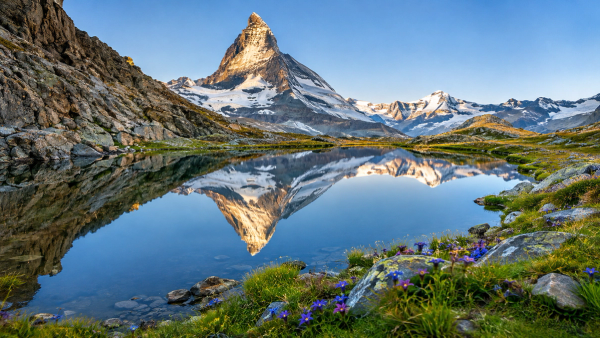
The South Island is dominated by the monumental Southern Alps, a spine of jagged glaciated mountains running 300 miles down the length of the island. 
Here, the scale of nature feels gigantic:
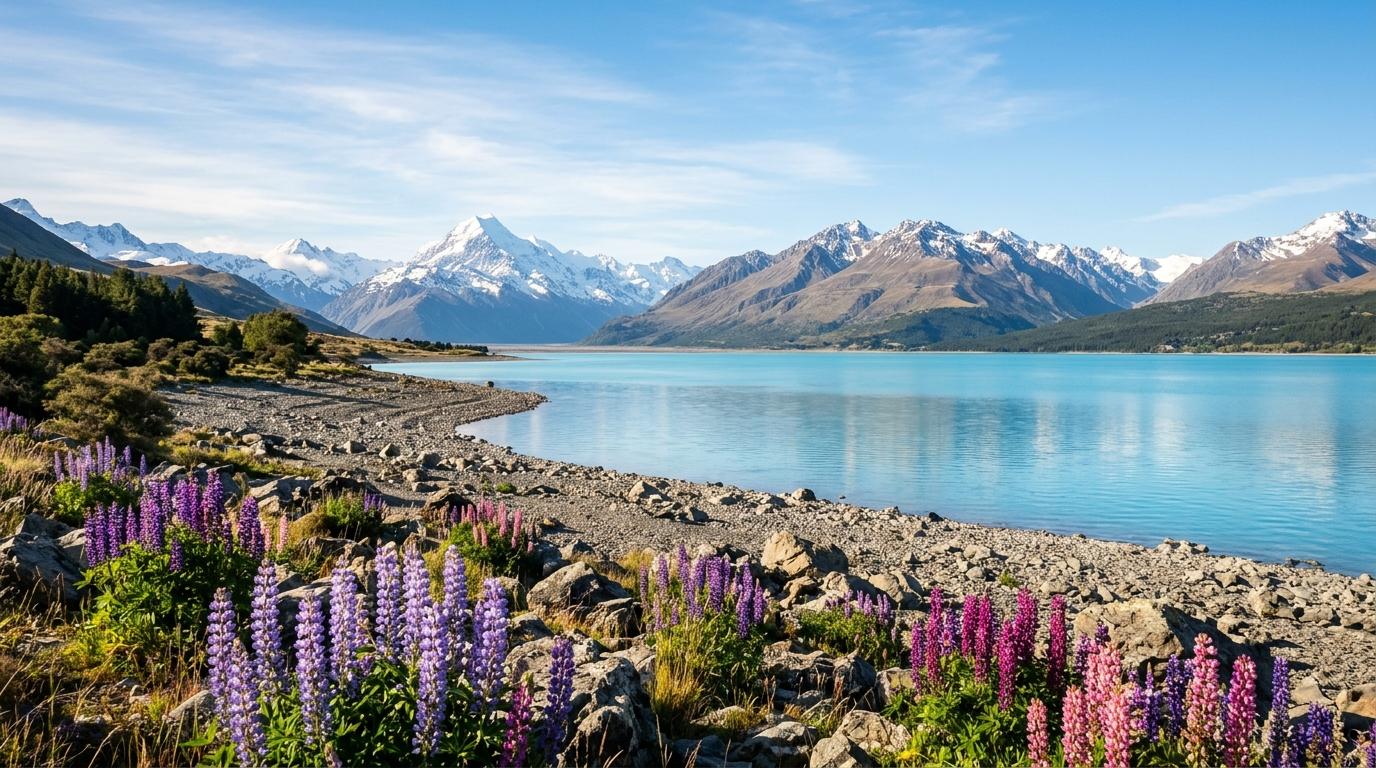
- Aoraki / Mount Cook rises over 12,000 feet, surrounded by roaring hanging glaciers and electric-blue glacial lakes like Lake Pukaki and Lake Tekapo.
- Fiordland National Park features vertical granite cliffs rising thousands of feet straight out of dark, mirror-calm fjord waters at Milford Sound and Doubtful Sound.
- The West Coast features ancient temperate rainforests where massive glaciers like Franz Josef and Fox Glacier spill down almost to sea level.
- The northern tip features Abel Tasman National Park, offering golden sand beaches framed by lush native bush and granite headlands.
If you want jaw-dropping mountain drama and epic scale, the South Island wins hands down. If you want smoking volcanic calderas, geothermal pools, and lush rolling coastal hills, the North Island is extraordinary.
Culture and History: Living Māori Heritage vs Gold Rush Frontiers
#How you experience New Zealand’s human history differs greatly between the two islands.
The North Island is the cultural heart of Aotearoa (the Māori name for New Zealand). 
Over 75% of New Zealand’s population lives on the North Island, and the vast majority of Māori people reside here. 
In Rotorua and the Bay of Islands, Māori culture is not a staged tourist performance; it is a living, breathing part of daily community life:
- You can visit traditional living villages like Whakarewarewa, where families still use natural geothermal steam boxes and boiling hot water pools to cook everyday meals.
- You can experience an evening at a marae (tribal meeting ground), watching a powerful live haka, listening to traditional choral harmonies, and eating a delicious hāngī meal slow-cooked underground on hot volcanic rocks.
- In the Bay of Islands, you can visit the Waitangi Treaty Grounds, the sacred historical site where Māori chiefs and the British Crown signed New Zealand's founding document in 1840.
The South Island’s heritage is rooted in 19th-century gold rush history, early European pastoral farming, and mountaineering pioneering. 
Towns like Arrowtown near Queenstown still feature preserved 1860s wooden storefronts and the restored stone huts of Chinese gold miners who worked the riverbeds during the Otago Gold Rush. 
In Christchurch, the architectural style reflects English colonial heritage, while Dunedin showcases magnificent Scottish Victorian stone architecture and the world's steepest residential street.
If understanding Māori traditions, language, and indigenous culture is a core goal of your journey, you must spend time on the North Island.
Driving, Roads, and Campervans: Rolling Farmland vs Mountain Passes
#Renting a campervan or rental car is the classic way to experience New Zealand, but driving conditions vary between the two islands.
The North Island has denser highway networks, but driving can be deceptively slow. 
Outside of the multi-lane motorway connecting Auckland and Hamilton, most North Island highways are winding, two-lane roads with frequent logging trucks, blind corners, and heavy residential commuter traffic around towns. Driving between major hubs like Auckland, the Coromandel, Rotorua, and Napier often takes 30% longer than GPS navigation estimates due to hilly terrain and speed restrictions.
The South Island is built for the ultimate scenic road trip. 
Traffic on South Island highways is remarkably light once you get away from Christchurch and Queenstown. 
The roads stretch across wide, expansive plains and wind through breath-taking mountain passes (like Arthur’s Pass, Haast Pass, and the Lindis Pass). Every hour behind the wheel brings a completely new panoramic viewpoint. 
However, South Island driving has its own unique challenges:
- Roads are narrow with very few passing lanes, meaning you can get stuck behind slow campervans on winding gorge roads.
- Single-lane wooden bridges are common; you must watch the right-of-way priority signs carefully before crossing.
- Fuel stations can be 50 to 80 miles apart through Fiordland and the West Coast, so you cannot let your gas tank drop too low.
Both islands drive on the left side of the road. For wide-open scenic cruising with majestic alpine views out every window, the South Island is the greatest road trip destination in the southern hemisphere.
Outdoor Adventure and Hiking: Day Walks vs The Great Walks
#If you love outdoor recreation, New Zealand’s Department of Conservation (DOC) maintains one of the finest trail systems in the world.
The South Island is the hiking and adventure sports capital of the Southern Hemisphere. 
Queenstown is world-famous as the birthplace of commercial bungy jumping (at the Kawarau Bridge), jet boating through narrow rocky canyons, tandem skydiving, and white-water rafting. 
For hikers (known locally as "trampers"), the South Island is paradise, hosting 7 of New Zealand’s 10 premier "Great Walks":
- The Milford Track: A 4-day, 33-mile world-famous trek through glacial valleys, alpine passes, and towering waterfalls into Milford Sound.
- The Routeburn Track: A 3-day alpine crossing offering incredible panoramic views over the Southern Alps.
- The Kepler Track: A custom-built circuit traversing exposed ridgelines above Lake Te Anau.
- Abel Tasman Coast Track: A coastal trail where you hike between golden beaches and kayak with native fur seals.
The North Island offers incredible single-day hikes and geothermal walks. 
Its standout outdoor adventure is the Tongariro Alpine Crossing, widely regarded as one of the finest one-day hikes on Earth:
- The 12-mile (19-kilometre) trail takes you across active volcanic craters, past the steaming Red Crater, and beside the vivid blue-green Emerald Lakes under Mount Ngauruhoe (Mount Doom in the Lord of the Rings films).
- The North Island also hosts 3 Great Walks: the Lake Waikaremoana track, the Whanganui River Journey (a multi-day canoe expedition), and the Tongariro Northern Circuit.
For multi-day alpine trekking, backcountry huts, and adrenaline thrills, the South Island wins decisively. For accessible one-day volcanic hikes, the North Island holds its own.
Climate and Weather: Subtropical Warmth vs Alpine Moods
#Because New Zealand sits in the southern hemisphere, seasons are reversed compared to North America and Europe: summer runs from December through February, while winter runs from June through August.
The North Island has a warmer, maritime to subtropical climate. 
Northland and the Bay of Islands are known as the "Winterless North" because frosts are rare and daytime winter temperatures stay around 60°F (15°C). In summer, North Island beaches are warm enough for comfortable swimming, surfing, and paddleboarding. 
Rain can fall year-round, but it often arrives in passing tropical showers rather than freezing alpine fronts.
The South Island has a cooler, much more volatile alpine climate. 
The Southern Alps act as a giant weather barrier:
- The West Coast (around Franz Josef and Milford Sound) catches moisture blown in from the Tasman Sea, making it one of the wettest places on Earth with over 250 inches of annual rainfall. When it rains in Fiordland, thousands of temporary waterfalls cascade down the sheer rock walls.
- Central Otago (around Queenstown and Wanaka) sits in the rain shadow, giving it dry, hot summer days (frequently reaching 85°F / 30°C) and freezing winter days with heavy snowfall on the ski fields.
- Temperatures can plummet rapidly at any time of year. You can experience blistering sunshine, freezing rain, and mountain snow in a single 24-hour period.
If you hate packing multiple layers of cold-weather gear and prefer mild beach weather, stick to the North Island. If you love crisp mountain air and dramatic weather shifts, head South.
Iconic Highlights Head-to-Head: Rotorua and Tongariro vs Queenstown and Milford Sound
#Comparing the top attractions head-to-head helps clarify the experience:
- Geothermal and Volcanic Wonders: Rotorua and Tongariro (North) vs Franz Josef Glacier (South). Rotorua lets you walk among active bubbling mud pools and geysers, while Tongariro lets you hike around volcanic peaks. In the South, you hike across terminal moraines to view receding blue glacier ice.
- Alpine Towns: Taupō (North) vs Queenstown and Wanaka (South). Lake Taupō is a massive, relaxed volcanic caldera lake with lakefront cafes and sailing. Queenstown is a buzzing resort town set against The Remarkables mountain range, packed with craft breweries, burger joints (like Fergburger), and adventure sports.
- Water Scenery: Bay of Islands (North) vs Milford Sound (South). The Bay of Islands offers 144 subtropical islands with swimming with dolphins and sailing. Milford Sound offers dramatic, sheer dark cliffs plunging into glacial waters with tumbling waterfalls.
Summary Comparison Table: North Island vs South Island
#| Factor | North Island | South Island |
|---|---|---|
| Primary Scenery | Geothermal springs, active volcanoes, beaches | Jagged alpine peaks, fjords, turquoise lakes |
| Cultural Immersion | Deep living Māori heritage, marae visits, hāngī | European gold rush towns & Scottish heritage |
| Driving Pace | Busy two-lane highways with heavier traffic | Wide-open, spectacular scenic mountain roads |
| Outdoor Focus | Day walks (Tongariro Crossing) & beach sports | Multi-day Great Walks, mountaineering, adrenaline |
| Weather Profile | Warm, temperate, subtropical in the north | Cool, alpine, highly variable with rapid changes |
| Top Iconic Sights | Rotorua, Hobbiton, Tongariro, Bay of Islands | Milford Sound, Queenstown, Mount Cook, Wanaka |
| Population & Vibe | 77% of NZ population; vibrant urban centers | 23% of population; quiet wilderness & small towns |
| Best For | Culture, road-trippers wanting beaches, Lord of Rings | Alpine lovers, photographers, hikers, road trips |
How to Choose: Itinerary Recommendations for 7, 10, and 14 Days
#To make the most of your time in New Zealand, let your trip duration dictate your itinerary:
- If you have 7 to 8 days: Pick strictly one island. If you want iconic alpine mountains, fly directly into Christchurch or Queenstown and do a circular South Island loop covering Mount Cook, Wanaka, Queenstown, and Milford Sound. If you want geothermal wonders and Māori culture, fly into Auckland and explore Rotorua, Taupō, and Hobbiton.
- If you have 10 to 12 days: Spend your entire time on the South Island. A 10-day South Island road trip lets you see Christchurch, Lake Tekapo, Mount Cook, Wanaka, Queenstown, Milford Sound, and the West Coast glaciers without rushing. Trying to do both islands in 10 days will waste 2 full days in transit.
- If you have 14 to 18 days: Combine both islands. Fly into Auckland, spend 5 days exploring Rotorua and Tongariro, take the scenic 3.5-hour Cook Strait ferry from Wellington to Picton, and spend 9 to 10 days road-tripping through the South Island before flying home from Queenstown or Christchurch.
Both islands showcase the natural majesty of New Zealand, but matching your travel style to either volcanic warmth or glaciated peaks will ensure your first visit is completely unforgettable.