There is a weird little hour on Indian night trains, somewhere between 5:30 and 7:15 in the morning, when the whole coach is half asleep and fully hungry. Someone is brushing their teeth near the door, someone’s uncle is snoring like the diesel engine is inside him, kids are asking if we reached yet, and then from far away you hear it. Chaaai, chaaai, garam chai. That sound has probably done more for Indian tourism than half the glossy campaigns, honestly.
I’ve eaten breakfast on trains from Delhi to Jodhpur, Mumbai to Madgaon, Kolkata to Siliguri, Chennai to Madurai, and one very dramatic ride from Ahmedabad where my upper berth neighbour had packed enough thepla to survive a small flood. So the question I get from friends is always the same: should we pack breakfast, buy it on the train, or just skip it and eat after arrival? My annoying answer is: depends. My real answer is: pack a little, buy with your nose and eyes, skip only if your stomach is already plotting against you.
The Morning Scene: Why Train Breakfast Feels Different in India
#Breakfast on an Indian night train is not just food. It’s geography. You fall asleep in one food culture and wake up in another. In Rajasthan, the platform might smell of kachori and sweet chai. In Madhya Pradesh, poha shows up with sev and that tiny hit of lemon. Cross into the south and suddenly there are idlis wrapped in paper, coconut chutney in a plastic pouch, and filter coffee if you get lucky. In Maharashtra, bread omelette and vada pav sneak into the morning like they own the place, which they sort of do.
This is why I don’t like the idea of always carrying a perfect little breakfast box and ignoring the station food. You miss the whole point. But also, I have had one bad aloo sandwich at 6 am near a station I will not name because I’m trying to be a better person, and it haunted me till lunch. So yeah, romance is nice, but digestion is real.
What Changed Recently: Train Food Is Not What It Was 10 Years Ago
#The Indian train food scene has changed a lot. Earlier it was mostly pantry car meals, station vendors, and whatever your family packed in foil. Now, e-catering through IRCTC and partner food delivery services has made it possible to pre-order food to your seat at many major stations. UPI has made those sleepy tea purchases easier too, because who has coins at 6 in the morning anymore? Even smaller vendors often have QR codes stuck to their kettles or carts, and I still find that tiny bit futuristic, in a very Indian jugaad way.
By 2026, food travel in India has also become more snack-intelligent, if that’s a phrase. People are carrying millet crackers, protein bars, makhana, kombucha sometimes, which I personally find brave on a train, and reusable bottles with electrolyte sachets. There’s a lot of talk around regional eating too. Travellers don’t just want “breakfast”, they want Ratlam poha, Agra bedai, Madurai idli, Ahmedabad fafda-jalebi, or a proper Kerala banana fry if the route allows it. The train has become this moving tasting menu, messy but brilliant.
Option 1: Pack Breakfast, The Safe and Slightly Boring Hero
#Packing is the sensible choice. I know, I know, nobody wants to be called sensible on a travel blog, but hear me out. If you board at night after a long day, your body is already tired. Maybe you didn’t eat dinner properly. Maybe the pantry food was sold out. Maybe your train is running late and that famous station poha you were dreaming about is now passing by at 3:40 am while you are dead asleep with your mouth open. In those moments, packed food is not boring. It is rescue.
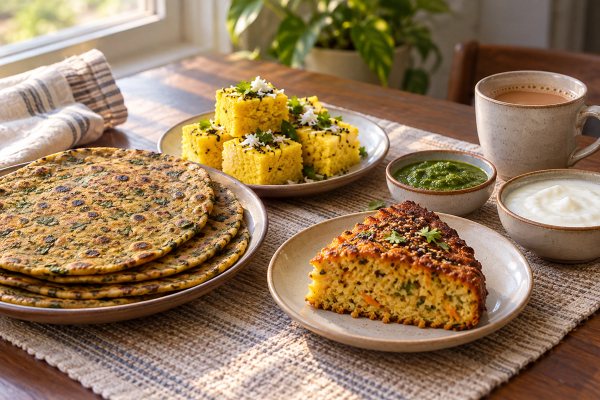
My go-to train breakfast pack is usually dry thepla or paratha without too much oil, a small pickle sachet, banana, roasted chana or peanuts, and something sweet like chikki. If I’m leaving from home, I add boiled eggs sometimes, but only if the weather is cool and the journey isn’t too long. Please don’t be that person opening egg curry at dawn in a sealed AC coach. I love eggs, but there are limits to friendship.
- Best packed foods: thepla, dry paratha, idli with podi, lemon rice, poha made dry, bananas, apples, khakra, chikki, nuts, roasted makhana, and biscuits for emergency hunger.
- Foods I avoid packing: cream sandwiches, very wet chutneys, heavy curries, paneer in hot weather, anything too smelly, and cut fruit from home unless I’ll eat it quickly.
- Small things that matter: tissues, hand sanitiser, a spoon, a trash bag, ORS or electrolyte powder, and your own water bottle.
One of my favourite packed breakfasts was on the Mandore Express to Jodhpur. A Gujarati family in the opposite berth had methi thepla, sukhi aloo, homemade mango pickle, and that soft confidence of people who know they have won breakfast before it even started. They shared some with me after we got talking, and I gave them my sad packet of cashews in return. Terrible trade for them. Beautiful morning for me.
Option 2: Buy Breakfast, The Delicious Gamble
#Buying breakfast on the train or platform is where the fun is. Also where the risk is. You have to use judgement, not just hunger. My rule is simple: buy what is moving fast, hot, and local. If twenty people are grabbing poha from the same vendor and he is making fresh batches, I’m interested. If a lonely tray of bread pakora looks like it has been waiting since yesterday evening, no thank you. I don’t care how charming the vendor’s smile is.
Some of my best train breakfasts have been bought half-awake through the barred window. Ratlam poha with sev, onion, coriander, and lemon is almost unfairly good. At Itarsi, I once had a paper plate of poha so fresh and fluffy that me and a stranger from Bhopal spent ten minutes discussing whether poha is actually the most democratic breakfast in India. We came to no conclusion, but we did order second plates.
In South India, I usually feel safer buying idli than many other things, because steamed food has a certain morning kindness. Idli-vada from a busy station in Tamil Nadu or Karnataka, with hot sambar if available, can make you forgive a delayed train. In Kerala, I’ve had appam and stew near stations, though not always on the platform itself. In Andhra and Telangana, upma, pesarattu near bigger hubs, and spicy vada can wake you faster than coffee.
Platform Breakfasts I Still Think About
#Ahmedabad early morning fafda-jalebi is chaos in the best way. Sweet, salty, crunchy, sticky, and you absolutely will drop some jalebi syrup somewhere. Jodhpur’s mirchi vada and pyaaz kachori are technically too heavy for breakfast, but Rajasthan laughs at such weak ideas. In Bengal, luchi and aloo dum near stations can be lovely if you step out properly and have enough halt time. Around Mumbai and Pune, vada pav at breakfast feels normal after you do it once. Before that it sounds aggressive.
The big caution: station halts can be short. Don’t get heroic. I have seen people jump down for “just one tea” and then sprint like they are auditioning for an action movie. If you don’t know the halt time, stay near your coach. Better yet, ask the chai vendor or check the railway app, but don’t trust your relaxed vacation brain. That brain is how people end up with one slipper on the platform and one inside the train.
What About IRCTC E-Catering and Food Delivery to Seats?
#This is the middle path, and it’s gotten much better on popular routes. If your train stops at a major station and e-catering is available, you can order from listed restaurants or vendors and get food delivered to your berth. I’ve used it for lunch and dinner more than breakfast, but breakfast options are improving in many cities. Think poha, idli, dosa, sandwiches, parathas, sometimes proper regional plates depending on the station.
The good part is that you can check options before the train reaches the station, pay digitally, and avoid the platform scramble. The not-so-good part is timing. If your train is late or reaches early, coordination can get messy. Also, not every listed outlet is amazing. Ratings help, but train hunger makes all ratings look more promising than they are. I usually pre-order only when the halt is at a big station and the restaurant name looks reliable, or if I’m travelling with older family who don’t enjoy platform hunting.
Food innovation in travel right now is all about convenience without losing local flavor. You see it in airport millet bowls, highway cafes serving regional thalis instead of only generic noodles, and train delivery menus trying to include more local breakfast. But the magic is still in fresh food. A hot idli from a busy stall beats a fancy boxed sandwich almost every time, at least for me.
Option 3: Skip Breakfast, Sometimes Wise, Sometimes a Crime
#Skipping breakfast on an Indian night train sounds sad, but sometimes it is correct. If you’re reaching a city famous for breakfast at 8 am, why ruin it with a stale cutlet at 6:30? When I reached Jaipur early once, I skipped train food completely and went straight for pyaaz kachori and lassi. No regrets. In Amritsar, I would rather wait for kulcha. In Mysuru, I’ll hold out for proper dosa and filter coffee. In Varanasi, morning kachori-sabzi after watching the ghats wake up? That is worth patience.
But skipping only works if you’re actually arriving soon and you know where you’re going. If the train is late, your noble plan becomes hangry suffering. Indian trains can be punctual, and then they can also decide to teach you humility. So even when I plan to skip, I keep a banana or chikki. It’s not breakfast, it’s insurance.
My train breakfast rule: never depend on one plan. Pack a backup, buy if it looks fresh, skip only when the destination breakfast is worth the wait.
My Worst Breakfast Mistake, Because Of Course There Was One
#It was on a winter train to Delhi, and I had this romantic idea that I’d buy hot breakfast somewhere in Uttar Pradesh. I packed nothing except a tiny packet of biscuits, because I was being spontaneous, which is just another word for poorly prepared. The train got delayed before dawn. The pantry guy came with tea, but no real food. At some station, I bought what looked like aloo puri. It was cold, oily, and somehow both soggy and sharp. I ate it anyway because hunger makes philosophers of us all.
By noon I was not sick exactly, but I was not happy either. That day I learned the difference between adventurous eating and careless eating. Adventure is trying hot local food from a busy stall. Careless is buying mystery puri from a basket because you didn’t pack one banana. Very different things.
How I Decide in Real Time: My Slightly Unscientific Checklist
#- If the train reaches before 8:30 am and the destination has famous breakfast, I mostly skip and snack lightly.
- If I’m travelling with kids, parents, or anyone with dietary needs, I pack properly. No debate.
- If the route crosses known food stations like Ratlam, Itarsi, Vijayawada, Ahmedabad, Jodhpur, or Chennai side routes, I keep space in my stomach for buying.
- If the weather is very hot, I avoid dairy-heavy and cream-based things unless they are from a trusted place and served fresh.
- If the vendor is busy, the food is hot, and locals are buying it, I usually trust it.
Also, chai is not breakfast, even though Indian trains try very hard to convince us it is. Chai is emotion, caffeine, comfort, and sometimes the only thing between you and a bad mood. But please eat something with it unless you enjoy feeling shaky while dragging luggage over a footbridge.
AC Coach, Sleeper Coach, Pantry Car: Does It Change the Food Plan?
#A little, yes. In AC coaches, especially on premium trains, you may get pre-arranged meals depending on your ticket and train type. Some Rajdhani, Duronto, Shatabdi-type services and newer premium routes have more structured catering, though quality can vary by route and contractor. On many regular night trains, you’re relying on pantry cars if available, onboard vendors, station vendors, or your own food. Sleeper class often has more vendor movement, which can be great for chai and snacks, but it also means more temptation and more noise.
I actually like sleeper class mornings for food watching. Doors open, vendors hop in, someone is sharing mathri, someone else is peeling oranges, and the whole coach smells like chai, soap, and humanity. AC coaches are calmer, sure, but sometimes too sealed off from the food life outside. That said, when I’m tired or on a long route, AC and a packed breakfast feels like luxury. I contradict myself often. Travel does that.
Regional Breakfast Cheat Sheet for Night Train Travellers
#| Region or route | Good breakfast bets | My quick note |
|---|---|---|
| Western India | Thepla, poha, vada pav, fafda-jalebi, kachori | Great for dry snacks and bold flavours, but go easy on fried stuff early morning |
| North India | Aloo paratha, bread omelette, kachori-sabzi, chai | Delicious but can get heavy, especially before a long taxi ride |
| Central India | Poha, samosa, jalebi, tea | Poha at busy stations is usually my safest happy choice |
| South India | Idli, vada, upma, dosa if halt allows, filter coffee | Steamed idli is train breakfast gold |
| East India | Luchi-aloo, ghugni, cutlet, tea, sweets | Best when you can step out and eat fresh near the station |
| Coastal routes | Banana fry, idli, appam, local buns, coffee | Depends heavily on halt timing, but can be wonderful |
Food Safety Without Becoming Paranoid
#People sometimes ask if it’s safe to eat station food in India. The honest answer is: millions do it every day, and also you need to be smart. Both can be true. Choose hot food over cold food. Prefer high-turnover stalls. Avoid pre-cut fruit unless it’s from a very clean, trusted place. Carry your own water or buy sealed bottles from official stalls. Wash or sanitise hands before eating, because trains are basically a public handshake with wheels.
I also avoid experimenting too wildly if I have an important plan right after arrival. Like, if I’m going straight to a wedding, I’m not testing a suspicious chutney at dawn. If it’s a relaxed food trip and I can nap later, I’m more brave. Context matters. Your stomach has an itinerary too.
So, Pack, Buy or Skip? The Final Verdict
#If you force me to choose one, I’d say pack a small backup and buy the real breakfast if the moment feels right. That gives you the best of both worlds. You’re not trapped if the train is delayed, but you’re still open to the joy of platform food. Skipping is excellent only when your destination breakfast is part of the trip, not when you’re just hoping hunger will behave.
My perfect Indian night train morning looks like this: wake up before the rush, splash water on my face, sip hot chai from a paper cup, share a banana or thepla from my bag, then buy something local at a station where the food is fresh and the platform is buzzing. Maybe poha with sev, maybe idli with sambar, maybe a kachori I know I shouldn’t eat but absolutely will. Then I sit by the window, watching fields and towns slide past, and think this is why I travel. Not just to arrive, but to taste the distance between places.
So next time you’re on an Indian night train, don’t overplan it to death. Carry enough to save yourself, stay curious enough to eat what the route offers, and skip only when the city waiting for you has something better. And if you’re collecting more messy, delicious, real-world food travel ideas, have a wander through AllBlogs.in sometime. It’s exactly the kind of rabbit hole I fall into when I should be packing.