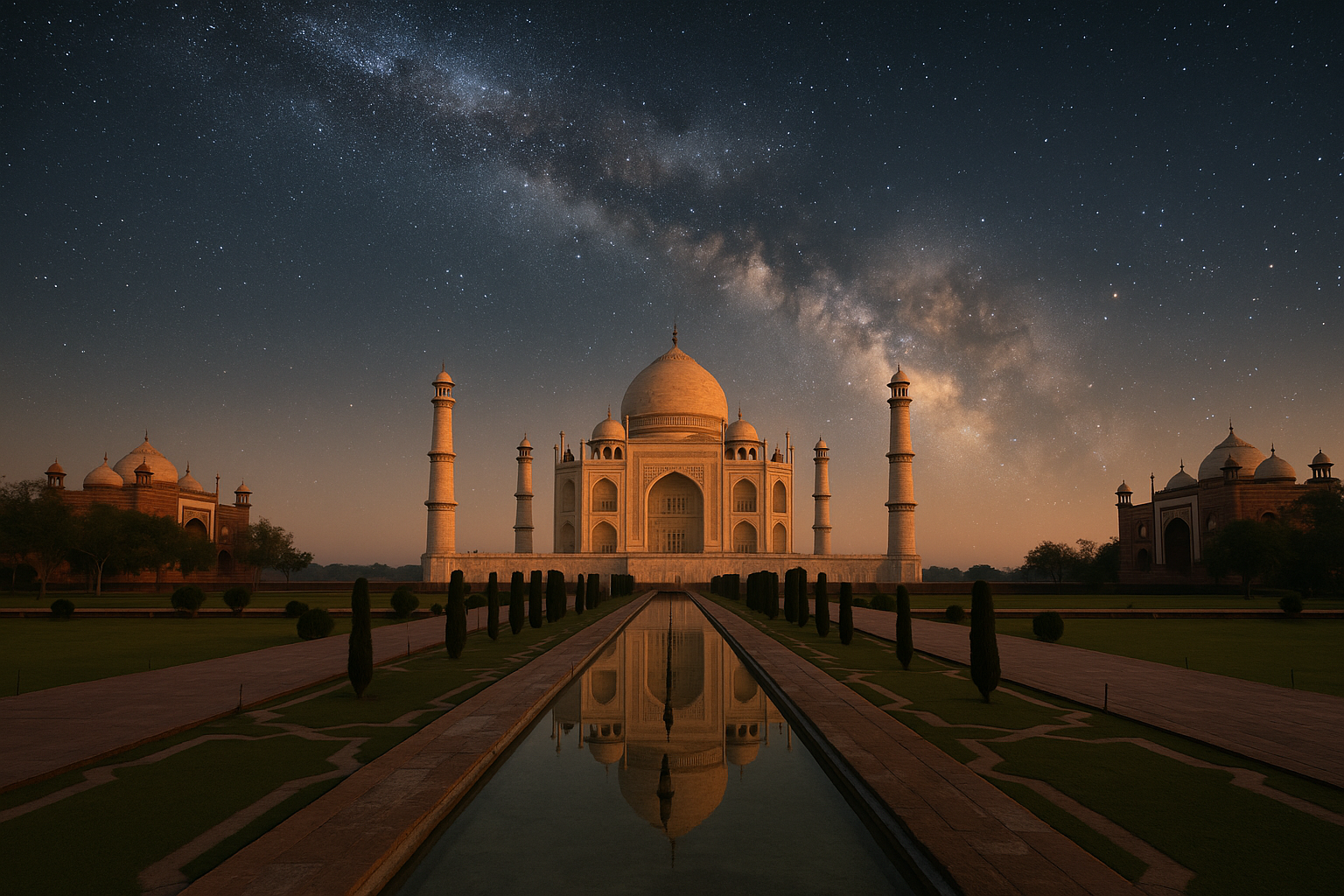
I used to think “night travel” was just… going out for chai at 1am and arguing about which dhaba is best. But the last couple years, I’ve been low-key obsessed with the night sky. Not in a super science-y way (I’m not that guy with 3 lenses hanging from his neck), more like… I want to sit somewhere quiet, freeze a little, and see stars that don’t look like two sad dots behind city smog.
If you’ve never seen a proper dark sky in India, like proper — Milky Way-ish, shooting stars, the whole wow-what-even-is-that — it kind of rewires you. And honestly, noctourism is becoming a real travel style here now. People are booking trips around meteor showers, moon phases, stargazing camps, night safaris, even “astro-villages”.
This post is basically my messy, practical guide to the best dark-sky destinations in India, based on places I’ve actually been (and a couple I’m planning, because ya, I’m human and I’m always planning the next escape). I’ll mix the vibes + the boring-but-important stuff like season, how to reach, stays, prices, safety, what NOT to do. No FAQs, promise.
Before we jump in: what makes a place ‘dark sky’ in India?
#So, quick thing. A “dark sky” spot isn’t just “remote = stars”. Light pollution matters a lot. Even a small town with bright LEDs can ruin it. You want:
- low artificial light (obviously)
- dry air / low humidity (biiig difference)
- higher altitude helps (not mandatory, but helps)
- and timing: new moon week is gold
Also one trend I’m seeing lately (and I love it) is local communities + homestays getting into astronomy as an experience. Not just “campfire + guitar bro”. Some places now have telescopes, guided sky walks, astro-photography sessions. Sometimes it’s super professional, sometimes it’s a local uncle who knows the sky better than any app. Both are awesome, in diff ways.
My very real, slightly painful lessons (aka don’t repeat my mistakes)
#Ok confession: my first “stargazing trip” was a mess. I went on a near-full-moon night thinking moonlight is romantic and all… bro, the moon washed out everything. Like, I could barely see the Milky Way. And I forgot gloves. In the mountains. Genius.
So yeah, learn from me:
- Check moon phase. New moon ± 3 days is the sweet spot.
- Pack layers even if daytime is hot. Nights in deserts and mountains can bite.
- Red light/torch is better (phone flash kills night vision).
- Don’t blast music. Not just etiquette — it scares wildlife in some areas.
- If you’re driving at night in remote areas, be extra careful. Stray cattle + blind curves are a real combo.
Also please, please don’t leave trash. Night tourism spots are getting popular, and popularity in India sometimes means… plastic everywhere. Let’s not do that, ya.
1) Hanle, Ladakh – the ‘are these even real stars?’ place
#Hanle is the poster child for stargazing in India, and for good reason. It’s remote, high altitude, dry air… and you feel like you’re on another planet. The Indian Astronomical Observatory is here (one of the highest in the world), and even if you’re not going inside the facility, the surrounding sky is just ridiculous.
When I went, my body was half complaining (altitude headaches are not cute), but my brain was like: “shut up, look up.” The Milky Way looked like a pale cloud ribbon. Not dramatic like Instagram edits — real, soft, huge.
Practical bits:
- Best months: May to September for access (winter roads can get tricky). For crisp skies, shoulder months are amazing but colder.
- Getting there: Fly to Leh, acclimatise properly (2 days minimum), then road trip via Nyoma / Chumathang side. Don’t rush this.
- Stays: Homestays and small camps. Price range: roughly ₹1,500–₹6,000 per night depending on season and how fancy.
- Safety: High altitude + limited medical facilities. Travel with basics (Diamox only if doc says). Network can be patchy.
Btw, one unexpected thing: silence. Like real silence. It’s beautiful but also a bit unsettling if you’re a city person. First night I kept hearing… nothing… and my brain started creating phantom sounds. Lol.
2) Spiti Valley (Himachal) – Kaza, Langza, Kibber: cold, raw, and insanely clear
#Spiti at night is a different mood. The day is all dusty roads and monasteries and those dramatic brown mountains, and then night comes and suddenly the sky is the main character.
I stayed near Kaza and did a night drive (not too late, don’t be stupid) towards Langza side. There are spots where you can just park safely off the road and stare up. Langza’s that “Buddha statue village”, and at night it feels like the statue is literally watching the galaxy.
Practical bits:
- Best months: April to October. Winter is beautiful but brutal and not for casual travel.
- Getting there: Manali–Kaza route opens seasonally and can be rough. Shimla–Kinnaur–Spiti is longer but steadier.
- Stays: Homestays are the best. ₹1,200–₹4,500-ish per night.
- Food: Thukpa, momos, and simple dal-chawal hits different after a cold evening. Also butter tea is… an acquired taste. I tried, ok.
One more thing: oxygen. You’ll feel it at night. Walk slow. Don’t run around setting up tripods like you’re in a race.
3) Rann of Kutch (Gujarat) – salt desert + night sky + full-on vibe
#People go to the Rann for the white salt flats and that dreamy horizon. But if you stay back after the crowd thins, the sky becomes the show. It’s flat land, so you get this 360-degree open dome feeling.
If you time it around the Rann Utsav season, you’ll get cultural performances, food, handicrafts… but you also get light pollution from the tent city. So my hack: do the festival stuff early evening, then move a little away (with permission / local guidance) for stargazing.
Practical bits:
- Best months: November to February (pleasant nights, low humidity).
- Getting there: Bhuj is the main hub (train/flight), then road to Dhordo / nearby villages.
- Stays: Tent city is pricier (packages can go ₹6,000 to ₹15,000+ per night), while homestays around can be more chill (₹1,500–₹5,000).
- Safety: It’s generally safe, but don’t wander deep into the flats alone at night. Go with locals or a group.
And food, yaar. Kutchi dabeli, bajra rotla, garlic chutney… my mouth is watering typing this.
4) Jaisalmer & Sam Sand Dunes (Rajasthan) – yes touristy, but still magical if you do it right
#Ok I know, Sam dunes is like the Goa of desert tourism. Very crowded in season, lots of loud music camps. But you can still make it work.
I did one night in a standard camp (mistake, too loud) and the next night in a smaller, quieter setup farther from the main cluster. Big diff. The second night, once the noise died down, the sky was full of stars and this warm desert wind was just… nice. Also, desert cold is sneaky. You think you’re fine, then suddenly your ears are freezing.
Practical bits:
- Best months: October to March.
- Getting there: Jaisalmer is well connected by train, and then taxi/jeep to dunes.
- Stays: Camps can be ₹2,000–₹12,000 depending on luxury and inclusions. Try for “quiet camp” / “astro camp” options.
- Tip: Ask about light usage. Some camps keep floodlights on all night (why??), which ruins the whole point.
Small opinion: if a camp advertises “DJ night till 2am” and “stargazing”, choose one, buddy. Both together is nonsense.
5) Coorg / Kodagu (Karnataka) – a different kind of night sky (when the weather cooperates)
#This one surprised me. Coorg isn’t the first place people think of for astronomy, because it’s humid and cloudy half the time. But on clear winter nights (or just lucky nights), if you’re staying on a coffee estate away from town lights… the sky looks pretty damn good.
Also the vibe is softer. Mountains and deserts feel dramatic. Coorg feels cozy. Like you drink coffee, eat pork curry (if you’re into it), and then walk out at 11pm and boom — Orion is hanging there.
Practical bits:
- Best months: November to February for clearer skies. Monsoon = no sky show, but lush as hell.
- Getting there: Road trip from Bengaluru/Mysuru is easiest.
- Stays: Homestays and resorts range ₹1,800–₹10,000+ depending on property.
- Safety: Pretty safe, but estates can be dark with insects and occasional snakes. Carry torch, don’t be careless.
I’ll be honest though: Coorg is a gamble. When it’s clear, it’s beautiful. When it’s cloudy, you’ll just be staring at… black clouds. Still not bad, but ya.
6) Neil Island (Shaheed Dweep), Andamans – stars + bioluminescence (if luck is on your side)
#Andamans at night is a whole vibe. Less street light, sea breeze, and if you’re away from the main market area, you can see a lot more stars than mainland beaches.
Now the cool part: on some nights and some beaches, you might catch bioluminescence — that glowing plankton thing. It’s not guaranteed and it’s seasonal and depends on water conditions, but when it happens it feels like someone spilled glitter in the ocean. I saw it faintly once (not the crazy bright kind), and I still keep talking about it like it was a movie scene.
Practical bits:
- Best months: November to April for calmer seas and clearer nights.
- Getting there: Fly to Port Blair, then ferry to Havelock/Neil.
- Stays: ₹2,000–₹12,000 depending on how close to beach and how boutique.
- Safety: Follow local rules, don’t do late-night swimming. Sea at night is not your friend.
Also, respect the place. Andamans has a fragile ecosystem and strict rules for a reason.
7) Jim Corbett / Terai belt – noctourism isn’t only stars, it’s night sounds too
#Ok so this isn’t a “darkest sky in India” pick. But it’s a very real kind of noctourism: night in the forest edge, sitting quietly, hearing cicadas and owls and sometimes (if you’re lucky/unlucky) distant animal calls.
Some zones around Corbett have decent sky visibility if you’re in a lodge away from Ramnagar lights. You won’t get Hanle-level Milky Way, but you get this mix of stars + jungle ambience. And I swear, the first time I heard a sambar alarm call at night, I was like… should I be inside?? Probably yes.
Practical bits:
- Best months: November to June (park zones have season rules, check before booking).
- Stays: Lots of options: ₹2,500 to ₹15,000+.
- Safety: Don’t roam at night outside designated safe areas. Wildlife corridors are real.
This is one place where I’m strict about rules. Please don’t push for “night safari” illegally. Not worth it, and it messes with animals.
8) Mawlynnong / Meghalaya countryside – when the rain takes a break
#Meghalaya is tricky for stargazing because clouds love that place. But if you hit a clear window in winter, the stars can be stunning, especially in villages away from Shillong.
I stayed in a small homestay near Mawlynnong side, and after dinner (simple rice, dal, local greens), we just sat outside. No big plan. Sky opened up for maybe 40 minutes and we saw so many stars that the kid in the house was pointing like a little tour guide. It was wholesome, honestly.
Practical bits:
- Best months: November to February for best chance of clear skies.
- Getting there: Shillong is the base, then taxi/shared sumo.
- Stays: ₹1,200–₹4,000 typical.
- Tip: Pack rain protection even in “dry” months. Meghalaya can surprise you.
Also, the roads at night in those hills… go slow. Fog can appear out of nowhere, like someone switched it on.
What to pack for a stargazing trip (not a perfect list, just what worked for me)
#I used to overpack. Then I underpacked. Now I do this middle path:
- warm jacket + thermals (even in desert)
- beanie, gloves (I always forget gloves, don’t be me)
- small mat or foldable chair if you hate sitting on rocks
- power bank (night photography eats battery)
- red torch or red paper over your torch
- basic meds, especially if you’re going high altitude
- snacks + water (but don’t leave wrappers, ya)
If you’re into photography: tripod helps a LOT. If you’re not… no stress. Sometimes just looking is better. Not everything needs to become content.
Budget talk: what does a ‘noctourism’ trip usually cost in India?
#This varies wildly. But to make it real:
- Local weekend dark-sky-ish trip (like Coorg outskirts / nearby hills): ₹5,000–₹12,000 per person for 2-3 days if you share stays and drive/bus.
- Desert trip (Jaisalmer) from within India: ₹10,000–₹25,000 depending on train/flight and camp type.
- Spiti/Ladakh style trips: more like ₹25,000–₹60,000+ depending on duration, permits, taxi costs, and how comfy you want it.
- Andamans: flights make it expensive. ₹30,000–₹70,000+ for a week is normal if you’re not doing ultra-budget.
Money-saving tip that’s not glamorous: travel off-peak shoulder season, and share taxis in mountains when possible. Also homestays… they’re not just cheaper, they’re more real.
Safety + current travel reality stuff (because this matters more at night)
#Night travel is fun but it’s also when things go wrong faster.
- In high altitude (Ladakh/Spiti): acclimatisation isn’t optional. If you feel dizzy/nauseous, don’t act tough.
- On highways: avoid super late driving in unknown stretches. Trucks, stray animals, broken road patches… it’s a lot.
- In forests/coasts: follow local guidance. Don’t go off alone to “find the perfect dark spot”. Perfect dark spot can be perfect trouble too.
- Weather: mountains change mood fast, and coastal wind/rain can be sudden.
Also, quick trend: more properties are offering “stargazing nights” as an add-on. Some are genuine with telescopes, some are just marketing. Ask what they actually provide. If they say “we’ll show Milky Way daily”, be slightly suspicious. Nature doesn’t do daily commitments, ok.
If you’re planning your first dark-sky trip, here’s what I’d do (simple, no drama)
#If you’re new to this, don’t start with Hanle unless you’re comfortable with altitude and long road travel. Start smaller.
Maybe do:
- A nearby low-light rural stay near your city (even 2-3 hours away)
- Then a desert trip (easier logistics)
- Then mountains like Spiti/Ladakh
And PLEASE plan around moon phases. I keep repeating this because it’s the difference between “meh” and “holy wow”.
Also, I know everyone wants that perfect Milky Way photo. But half the joy is lying down, letting your eyes adjust, and just being quiet for a bit. Your brain slows down. You’ll sleep better too, oddly.
Final thoughts (and ya, why I think noctourism will keep growing)
#I think noctourism is growing because day-time travel in India is getting… noisy? Crowded? Everything is a queue. The night gives you space back. Even in popular places, once the sun goes, people reduce, and the sky is this free show that doesn’t ask for tickets.
Also, we’re all tired of screens. Kind of funny that we use apps to find stars, then we put the phone away to actually see them. Life is weird.
Anyway, if you’re planning a dark-sky trip soon, take it slow, be respectful, and don’t chase only the ‘best’ destination. Sometimes the best night sky is the one you saw with hot chai in your hand, shivering a little, laughing with your friends because someone forgot socks (again).
If you like travel reads like this, I end up doomscrolling AllBlogs.in sometimes for trip ideas and local itineraries… worth a look.