The morning I almost lost a perfect yogurt parfait to airport security
#I have a weirdly emotional relationship with airport breakfasts. Some people collect passport stamps, some people buy fridge magnets, and apparently I judge entire terminals by whether they can make a decent yogurt parfait that isn't just sad fruit swimming in sugar syrup. My whole obsession started at Chicago O’Hare, early morning, when I was trying to carry a homemade Greek yogurt parfait through security because I’d made it with thick yogurt, honey, toasted walnuts, and strawberries from the market. It was genuinely beautiful. Like, I was proud of it in a way that maybe was too intense for 5:40 a.m.
And then the TSA officer looked at it, looked at me, and did that polite-but-not-really-smiling airport face. You know the one. The face that says, “Ma’am, this is not the first dairy-based heartbreak I’ve witnessed today.” I learned right there that yogurt, even thick yogurt, is treated like a liquid or gel for carry-on purposes. If it’s in your carry-on and you’re going through security in the U.S., it needs to fit the 3-1-1 liquids rule unless you have a legit exemption. That means containers of 3.4 ounces, or 100 milliliters, or less, all packed in that one quart-size bag with your other little toiletries and questionable mini shampoo bottles.
I stood there, half asleep, thinking, but it’s breakfast. It has granola! Surely granola makes it solid? Nope. Granola does not magically save yogurt from being yogurt. I ate half of it in front of the bins with all the dignity of a raccoon behind a cafe, then tossed the rest. Still hurts a bit, actually.
So, can you take yogurt parfait through TSA or not?
#The short answer is yes, but with annoying little conditions. TSA’s current “What Can I Bring” guidance lists yogurt as allowed in checked bags, and allowed in carry-on only if it follows the liquids rule. So if you’re carrying one of those big 5.3-ounce yogurt cups, or a 12-ounce jar parfait you made at home because you are a thoughtful little meal-prep traveler, it’s probably not going through unless you packed it in checked luggage or bought it after security.
This is where people get tripped up because airport food logic feels inconsistent. A sandwich can usually go through. A bagel can go through. A container of dry granola can go through. Whole fruit usually can on domestic U.S. flights, though agriculture rules get fussy on international routes and places like Hawaii, Puerto Rico, and some border crossings. But yogurt? Creamy, spoonable, gel-ish yogurt? That gets treated like the same family as pudding, hummus, jam, peanut butter, dips, and sauces. If you’ve ever had a sandwich spread questioned at security, it’s the same general vibe, and I went deeper into that kind of thing in Airport Sandwich Security Rules: Spreads & Packing, because honestly spreads cause more airport drama than they should.
- Carry-on yogurt or parfait: 3.4 ounces / 100 ml or less per container, and it needs to fit in your quart liquids bag.
- Checked bag yogurt: allowed, but pack it like it’s a tiny dairy grenade. Seal it, bag it, cushion it, maybe pray a little.
- Bought after security: usually fine to take onto the plane, though airlines can still have their own food rules and international arrivals may restrict fresh dairy or fruit.
- Frozen yogurt or parfait: TSA generally allows frozen liquid items if they are frozen solid when screened. If it’s melted, slushy, or has liquid at the bottom, it can be treated as a liquid.
My personal rule now: buy creamy foods after security, unless I’m checking a bag
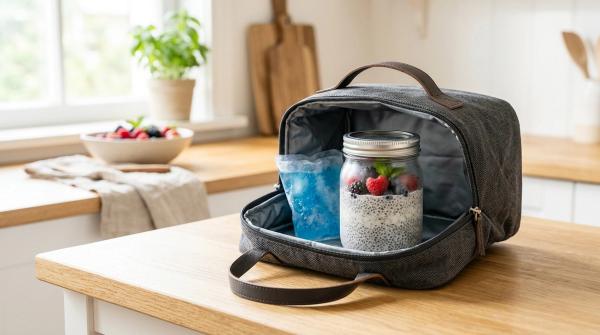
#I used to be stubborn about this. I’d pack jars, little spoons, napkins folded like I was running a boutique breakfast program out of my backpack. Then I missed a connection in Denver once, my ice pack went soft, and my “still totally fine” yogurt started smelling a little too tangy in a way that was not charmingly fermented. Since then, I’ve become very boring and practical: if it’s yogurt, cottage cheese, custard, overnight oats with lots of milk, chia pudding, or anything spoonable and dairy-heavy, I either eat it before security or buy it airside.
And actually, airports have gotten better at this. Not perfect. Let’s not get carried away. There are still terminals where the breakfast options feel like they were planned by someone who hates mornings. But I’ve found pretty solid parfaits in Seattle-Tacoma with berries and decent granola, at Minneapolis-St. Paul where the local food options are way better than expected, and in San Francisco where you can usually find something that feels almost like real breakfast instead of emergency calories. I once had a surprisingly lovely labneh-ish yogurt bowl in a lounge in Doha, with pistachios and dates, and I still think about the texture. Thick, salty, not too sweet. Airport food can be poetry sometimes. Other times it is a $9 banana. Both things are true.
Dairy safety is the boring part, but it’s also the part that saves your trip
#Nobody wants to talk about food safety when they are picturing layers of vanilla yogurt, mango, toasted coconut, and that crunchy granola cluster that somehow lands perfectly on the spoon. But dairy is perishable, and travel is basically a series of situations where dairy gets bullied by time and temperature. USDA and FDA food-safety guidance uses the “danger zone” idea: perishable foods should not sit between 40°F and 140°F for more than about 2 hours, and if the temperature is above 90°F, that window drops to 1 hour. That matters in taxis, security lines, gate delays, hot jet bridges, rental car shuttles, and your tote bag that looks cute but has absolutely no insulation whatsoever.
I learned this the unglamorous way on a summer flight out of Austin. I bought a yogurt parfait before leaving for the airport, thinking I’d eat it at the gate. Then traffic happened, PreCheck was weirdly slow, and I got distracted by coffee because obviously. By the time I opened it, the fruit had bled into the yogurt, the granola was mush, and the whole thing had that warm dairy smell that makes your stomach whisper, “don’t be brave.” I threw it away and ate a packet of almonds instead. Not my finest culinary moment, but also not spending the first day of a trip in a hotel bathroom was a win.
What counts as a risky parfait?
#A plain sealed yogurt cup from a refrigerated case is usually safer than a big open-layered parfait that’s been sitting in a grab-and-go cooler that may or may not be cold enough. I know, the layered one looks prettier. I get seduced by the berry stripes too. But when I’m traveling, I look for a cold case that feels properly cold, containers with tight lids, visible use-by dates if packaged, and fruit that doesn’t look like it gave up yesterday. If the yogurt container is bulging, leaking, warm to the touch, or smells off, no. Just no. You are not being wasteful, you are protecting the trip.
Same idea goes for other perishables. I’m a huge sushi-at-the-airport person when the airport is known for good vendors and turnover is high, but I’m careful about timing and refrigeration. If you’re the kind of traveler who packs fish, dairy, or rice dishes, you’ll probably like my more paranoid notes in Airport Sushi Safety: Time Limits, Ice Packs and What to Skip. Different food, same basic travel truth: cold foods need to stay cold, and optimism is not a cooling method.
The parfaits I still remember, because yes, I remember parfaits
#The best airport parfait I ever had was not in a fancy lounge. It was in Vancouver, on a rainy morning after I’d spent two days eating salmon, coffee, and every pastry in sight. The parfait had thick yogurt, not too sweet, layered with blueberries and a maple-ish granola that tasted like someone actually toasted oats instead of dumping cereal dust in a cup. I ate it by the window watching planes move around in the grey drizzle, and it felt like one of those tiny travel moments nobody photographs properly but you keep anyway.
In Istanbul, I had yogurt with honey near the airport before a flight, not technically a parfait but spiritually the same family. Turkish yogurt culture is serious business, and the yogurt there can be tangier and more savory than the dessert-style cups many of us are used to. That breakfast made me rethink how sweet airport parfaits are in North America. Sometimes they’re basically pudding wearing a health halo. I like a little honey, sure, but if my breakfast has more sugar than a cupcake, we need to have a talk.
And Iceland, oh wow. Skyr in Iceland is one of those foods that makes you realize how much place matters. It’s technically a cultured dairy product with a thick, high-protein texture, and when you eat it there, especially with berries or rhubarb, it tastes different than eating the imported cup at home while standing in front of the fridge in socks. I grabbed skyr at Keflavík before flying back once and it was the kind of clean, simple breakfast that makes airport chaos feel temporarily civilized. Then my gate changed twice, because the universe likes balance.
Packing a homemade parfait, if you insist on being that person
#I say “that person” with love, because I am also that person. Homemade parfaits can be cheaper, tastier, and less sugary than airport versions. You can use full-fat Greek yogurt, roasted peaches, cardamom, pistachios, homemade granola, whatever little food-nerd thing makes your heart happy. But if you’re flying and going through TSA with a carry-on, you need to build the parfait around the rules instead of hoping the rules admire your recipe.
- Pack yogurt in containers that are 3.4 ounces / 100 ml or smaller if it’s going through carry-on security. Not “about 4 ounces but it looks tiny.” Tiny is not a measurement, sadly.
- Keep dry ingredients separate. Granola, nuts, seeds, coconut flakes, dried fruit, and a spoon can go in your food bag without the same liquid drama.
- Use frozen solid ice packs if you need to keep things cold before screening. TSA generally allows frozen ice packs when they are completely frozen solid, but slushy ones may get treated like liquids.
- Eat it within the safe time window. If it’s been unrefrigerated for around 2 hours, or 1 hour in serious heat, don’t play hero.
- For international travel, check agriculture and customs rules before bringing dairy or fresh fruit across borders. This is where people get surprised at arrivals, not just departures.
One trick I actually like: carry dry toppings through security, then buy a sealed yogurt cup after security and assemble your own little airport parfait. It feels oddly luxurious. I’ve done this with toasted almonds and dried cherries in Atlanta, with granola and banana in Boston, and once with crushed sesame brittle in Paris because I was apparently feeling dramatic that day. It’s not always cheaper, but it gives you control over texture, and texture is half the reason parfaits are good. Soggy granola is a crime, or at least a misdemeanor.
Hotel breakfast parfaits before the airport: blessing or trap?
#Hotel breakfast buffets are where yogurt parfait decisions get sneaky. You’re checking out, your ride is waiting, there’s a giant bowl of yogurt on ice, little cups of berries, maybe a dispenser of granola that makes a deeply satisfying clack-clack sound. It feels safe because it’s breakfast and it’s free-ish. But I always do a quick scan. Is the yogurt actually cold? Is the fruit sitting in melted ice water? Are people using the same spoon for everything like tiny chaos goblins? If I wouldn’t feel good eating it there, I definitely don’t pack it for later.
Buffets can be wonderful when managed well, and kind of dodgy when they’re neglected. I’ve had gorgeous hotel yogurt spreads in Copenhagen with rye crumbs, compote, and cultured dairy that made me want to move in. I’ve also seen lukewarm yogurt tubs at budget hotels near highways where the safest option was toast. If you’re making airport breakfast choices from a hotel buffet, this guide to Hotel Breakfast Buffet Safety: What to Eat or Skip pairs really naturally with the parfait question, especially if you’re deciding what to eat now and what not to stash in your backpack for three hours.
What I look for when buying yogurt at the airport
#First, I check the cooler. Not in a scientist way, I’m not pulling out a thermometer like a dairy detective, but I do touch the container and pay attention. It should feel properly cold. I like sealed cups from brands or airport vendors with high turnover, especially in the morning when the breakfast rush is moving product fast. I avoid parfaits where condensation is weird, lids are loose, fruit looks fizzy or broken down, or the granola is already mixed in and has become paste. Also, if there’s a visible time stamp, I love that. More places should do it.
Second, I think about when I’m going to eat it. If boarding starts in 10 minutes, great. If I’m buying yogurt for a four-hour flight and I don’t know when I’ll get to it, maybe not. Planes are not refrigerators, despite feeling like frozen metal caves sometimes. And yes, some premium cabins and lounges can store food or serve chilled items, but your random parfait in seat 32B is mostly relying on the temperature it had when you bought it.
Third, I look at sweetness. This is personal and probably fussy, but I’d rather have plain yogurt with fruit than dessert yogurt pretending to be wellness. Some airport parfaits pile on vanilla yogurt, jammy fruit, sweet granola, and honey drizzle, and at that point I might as well buy a pastry and enjoy myself honestly. No shade. I love pastry. I just don’t like being lied to by breakfast.
Tiny TSA details people forget until they’re standing in line
#The TSA officer has the final say at the checkpoint. That’s not me being vague, that’s how the system works. Even if something is listed as allowed, screening decisions can depend on how it looks on the X-ray, how it’s packed, and whether it raises questions. If you have yogurt in a carry-on, make it easy to inspect. Don’t bury it under electronics, socks, and a souvenir jar of jam from some charming farm shop in Vermont. Put liquids together. Keep labels visible if possible. Be normal and polite. Airport security is not the place to perform a one-person courtroom drama about dairy.
Also, baby food, breast milk, formula, and medically necessary liquids have different TSA allowances, and they do not have to fit the normal 3.4-ounce rule when declared for screening. But that’s not a loophole for your mango-lime parfait unless it genuinely falls into one of those categories. I know someone somewhere has tried it. People get creative when breakfast is involved.
And checked luggage is not a magic freshness box. Yes, you can pack yogurt in checked bags under TSA rules, but checked bags can sit around unrefrigerated, get jostled, and sometimes take scenic emotional journeys without you. If you pack dairy in checked luggage, use a leakproof container inside a zip bag, maybe inside another bag, and include enough cold packs if the timing makes sense. Personally, I only do this for short hops or when I’m transporting something special and I know exactly how long it’ll be out.
My favorite “safe-ish” airport parfait formula
#If I’m building one for travel day, I keep it simple: plain Greek yogurt bought after security, banana or berries if I’m eating it soon, toasted nuts, dry granola, and maybe a honey packet. If I’m at home before leaving, I eat the yogurt part before I go and pack the crunchy bits for later. If I’m in a hotel, I make it and eat it at the table, not in the Uber, because balancing yogurt in a moving car is how you become the person with blueberry stains on your passport.
For long travel days, I sometimes skip dairy entirely and do a “parfait idea” without yogurt: granola, dried fruit, nuts, maybe a shelf-stable nut butter packet under 3.4 ounces if carrying on, and then I buy coffee or milk after security. It’s not the same. I won’t pretend it is. But it scratches the crunchy-sweet breakfast itch and doesn’t make me worry about warm dairy while my flight gets delayed for “paperwork,” which is airline language for nobody knows what’s happening.
The best travel breakfast is the one that tastes good, survives the journey, and doesn’t turn your first vacation memory into food poisoning regret.
Final spoonful, before we all overthink breakfast forever
#Airport yogurt parfaits live in this funny little overlap between food pleasure and travel rules. They’re simple, but not that simple. TSA sees yogurt as a liquid or gel for carry-on screening, so keep it 3.4 ounces or under unless you’re checking it or buying after security. Food safety folks care about time and temperature, so keep dairy cold and respect that 2-hour rule, or 1 hour if it’s hot out. Your stomach does not care that the parfait was expensive or artisanal.
Still, I love them. I love the ritual of finding a cold little cup of something creamy and bright before a flight. I love how yogurt tastes different in different places, from Icelandic skyr to Turkish yogurt with honey to Greek-style bowls piled with walnuts and fruit. I love that a humble airport breakfast can tell you something about a city, a terminal, even your own travel habits. Just pack smart, buy cold, eat soon, and don’t argue with TSA over a parfait. You will not win, and your granola deserves better. For more food-travel rabbit holes and practical little travel bites, I’d definitely poke around AllBlogs.in sometime.