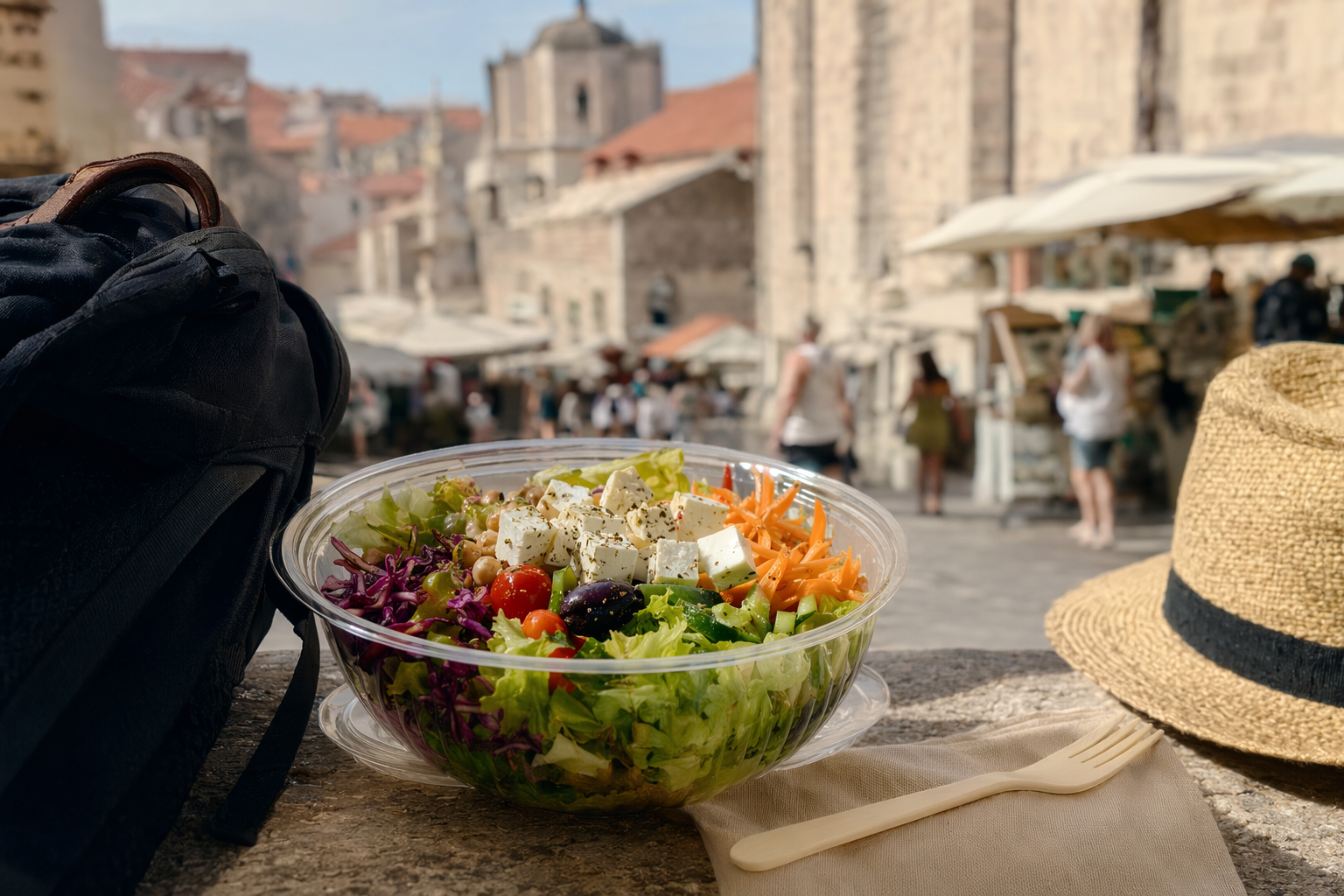
I have a complicated relationship with packed salads on the road. Like, I want to be the person who lands in Lisbon, skips the airport pastry, and calmly eats a quinoa-kale thing with roasted chickpeas while everyone else is panic-buying fries. But I am also the person who once ate a sad chicken Caesar on a delayed train from Paris to Lyon and spent the next day staring at a hotel ceiling fan, bargaining with every god of digestion. So yeah. Packed salads while traveling: safe or skip? My answer is annoying but honest... it depends. It depends where you bought it, how cold it stayed, what’s in it, how long it’s been sitting around, and whether you’re about to board a 9-hour flight with no escape plan.
Food travel in 2026 has gotten weirdly good for salad people, though. Airports have better grab-and-go fridges than they used to, train stations in Japan and Europe can be shockingly decent, and the whole wellness-travel thing is still going strong. You see more plant-forward bowls, QR codes showing ingredient origins, little compostable forks, dressing in separate pots, and fancy “protein greens” boxes that cost more than my first hostel bed in Bangkok. But the old food safety rules didn’t magically disappear because the packaging got cute. Leafy greens are still delicate. Chicken is still chicken. Mayo-based dressings are still a little drama queen if they get warm.
The First Rule: Cold Is Not a Vibe, It’s a Requirement
#If there is one thing I’ve learned from traveling with salads, it’s this: the fridge has to actually feel cold. Not “cool-ish.” Not “well, it’s near the air conditioning.” Cold. Food safety folks usually talk about keeping perishable food under 40°F, or about 4°C, and not letting it hang out in the danger zone between 40°F and 140°F for more than 2 hours. If it’s hot out, like 90°F or above, that window shrinks to about 1 hour. This matters so much when you’re dragging a backpack through Rome in July or waiting at a bus station in Oaxaca with your lunch slowly becoming a science project.
I now do this slightly embarrassing thing where I touch the salad container before buying it. Not aggressively, I’m not cuddling the thing, but I pick it up and check if the plastic feels properly chilled. If the greens look foggy and wet, the cucumber is going translucent, or the container has that swollen tight-lid look, I skip it. Same if the use-by date is today and it’s already evening. Could it be fine? Maybe. But when I’m traveling, I don’t gamble with my stomach unless the reward is something magnificent, like smoky yakitori under the tracks in Tokyo or ceviche in Lima from a place that knows exactly what it’s doing.
My Tokyo Convenience Store Salad Era
#Tokyo kind of ruined me for travel salads, honestly. The first time I bought a packed salad from a konbini, I expected it to be bland airport food pretending to be healthy. Instead it was crisp cabbage, sweet corn, shredded carrot, a tiny packet of sesame dressing, and boiled egg that tasted like someone had actually cared. I ate it in my hotel room in Shinjuku, sitting on the edge of a bed barely bigger than my suitcase, and I remember thinking, why can’t every place do this? The turnover in those stores is fast, the fridges are cold, and the packaging is usually tidy and practical. Not perfect, obviously, but it felt trustworthy.
That said, I still wouldn’t carry one around all day. I’ve seen travelers buy sushi, salads, and cream-filled pastries in the morning, then let them ride around in a tote bag until dinner. No no no. Tokyo is amazing, but your tote bag is not a refrigerator. If I buy a packed salad there, or in Seoul, Singapore, Copenhagen, Amsterdam, wherever, I eat it pretty soon. Usually within an hour if I’m not going straight back to a hotel fridge. It sounds fussy, but it’s the difference between “cute lunch” and “why am I sweating at 3 a.m.?”
The Ingredients That Make Me Nervous
#Not all packed salads are equal. A plain veggie salad with dressing sealed separately is one thing. A chicken pasta salad with creamy dressing that has been sitting on a warm shelf in a tourist shop near a ferry dock is another beast entirely. I’ve become very picky about ingredients while traveling, partly because I’ve learned the hard way and partly because I am not 22 anymore and my stomach has opinions.
- Leafy greens: romaine, spinach, arugula, mixed leaves. Delicious, but they can carry bacteria if handling or washing goes wrong.
- Pre-cut melon or fruit: refreshing, yes, but once fruit is cut it needs to stay cold and clean. Whole fruit is usually safer.
- Cooked chicken, tuna, eggs, shrimp: only if the salad is properly chilled and from somewhere with good turnover.
- Creamy dressings: I prefer these sealed separately. Warm ranch is not a travel memory I need.
- Sprouts: I skip raw sprouts almost always when traveling. They’re risky little noodles of chaos.
I know people who never worry about any of this and they seem to live charmed lives. Good for them, genuinely. But I’ve met too many backpackers who lost two days in Chiang Mai or Barcelona because they trusted something limp and lukewarm. And missing a food market because of a bad packed lunch? Tragic. Actually tragic.
Airports in 2026 Are Better, But Still Sneaky
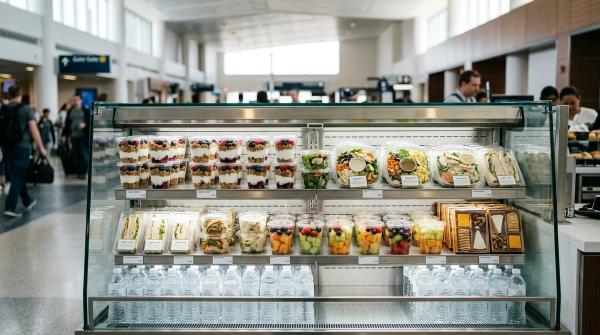
#Airport food has changed a lot. The current travel-food mood is all about fresh bowls, protein snacks, vegan options, fermented things, “functional” drinks, and salads that look like they were designed for someone going straight to a Pilates retreat. In bigger airports, you’ll often find pre-order apps, smart fridges, and grab-and-go shelves with better labeling than before. I’ve seen decent salads in London, Singapore, Doha, Tokyo, New York, and Amsterdam. Some are genuinely good. Some are just expensive lettuce in a plastic hat.
Here’s the airport trick nobody wants to admit: the timing matters more than the branding. A beautiful salad from a busy, well-stocked fridge at noon is not the same as the last lonely couscous box at 10:45 p.m. after three flight delays. I check how full the fridge is, whether the staff are restocking it, whether cold air hits my hand when I open the door, and whether the greens look alive. Also, if you’re flying internationally, fresh produce can become a customs issue. I’ve eaten many emergency salads at the gate because I knew I couldn’t bring the leftovers into the next country. Border rules change, but fresh fruit, vegetables, meat, dairy, and seeds are often restricted, so don’t tuck half a salad in your bag and forget about it.
TSA, Dressings, and the Tiny Sauce Problem
#A quick practical thing for carry-on travelers: solid food is usually fine through airport security in the U.S., but liquids and gels are where things get annoying. Salad dressing counts if it’s liquidy, so keep it at 3.4 ounces or less if it’s in your carry-on, and it needs to fit with your liquids if security is being strict. I’ve had a perfectly good dressing cup tossed once, and yes, I was weirdly sad about it. Dry salad without dressing is just punishment. If I’m packing my own salad, I use a tiny leak-proof container or bring something like lemon wedges, olive oil packets, or buy dressing after security. Not glamorous, but it works.
Train Salads: My Favorite and Most Dangerous Category
#Train travel makes me romantic about food. Give me a window seat, a paper-wrapped sandwich, a salad with crunchy vegetables, and countryside sliding by, and suddenly I’m the main character in a film nobody asked for. Europe is great for this. I’ve had lovely packed salads from Marks & Spencer before trains in the UK, a surprisingly good lentil salad near Amsterdam Centraal, and a goat cheese beetroot situation in Copenhagen that I still think about. The 2026 trend I’m seeing in train stations is “better fast food,” not necessarily fancy, but more local-ish, more plant-based, more transparent labels, less beige.
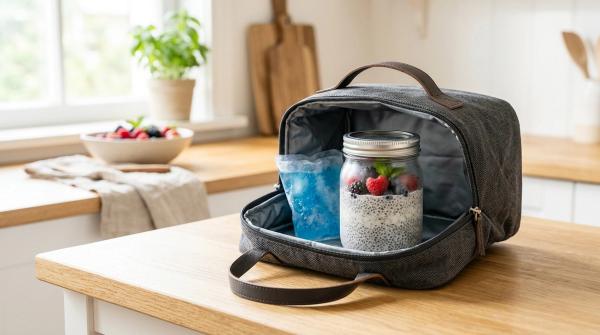
But trains also create the classic problem: you buy food too early. You think, I’ll grab lunch now before boarding, then the platform changes, the train is late, your carriage is at the other end of the universe, and suddenly your salad has been in your backpack for two and a half hours. If I’m doing a long train ride, I bring an insulated lunch bag and a small ice pack if I can. If I can’t, I choose foods that tolerate time better: bread, hard cheese if allowed and reasonable, nuts, whole fruit, roasted chickpeas, crackers, tinned fish only if I’m not going to offend an entire carriage. Please don’t open sardines on a packed train. We live in a society.
Markets Are Better Than Packed Salads... Usually
#When I’m in a real food city, I’d rather eat from a market than buy a packaged salad, most of the time. Borough Market in London, La Boqueria in Barcelona, Mercado de San Miguel in Madrid, Tsukiji Outer Market in Tokyo, Gwangjang Market in Seoul, Mercado Roma or neighborhood markets in Mexico City, these places make packed salad feel a bit like giving up. You can get grilled things, fresh bread, fruit, soups, pickles, dumplings, skewers, whatever the city does best. And you can watch turnover happen right in front of you, which is comforting.
But markets have their own risks too. I don’t automatically trust something just because it’s artisanal and has a handwritten sign. I look for busy stalls, clean handling, food kept hot-hot or cold-cold, and vendors who aren’t touching money then grabbing salad greens with bare hands. In hot destinations, I’m extra careful with raw salads unless I’m at a place known for good hygiene. In Mexico City, for example, I will happily eat tacos, tlacoyos, tamales, pozole, esquites, and a million other things before I choose a raw packed salad from a random corner shop. Not because salads are bad, but because travel is about choosing the right food for the place. Eat what the place does well.
A Little Safety Cheat Sheet I Actually Use
#| Situation | Safe or Skip? | My honest move |
|---|---|---|
| Cold salad from a busy supermarket fridge, eaten soon | Usually safe | Buy it, keep dressing separate, eat within 1 to 2 hours |
| Chicken or egg salad from a warm kiosk | Skip | Not worth losing a travel day |
| Salad kit in a hotel room with a real fridge | Usually safe | Check date, don’t leave it out, use clean fork |
| Packed salad for a long bus ride with no cooler | Skip or modify | Take nuts, bread, whole fruit, shelf-stable snacks instead |
| Airport salad before international arrival | Maybe | Eat before landing or check customs rules |
| Raw sprouts in any travel salad | Skip | I’m not brave like that |
| Prewashed greens labeled ready-to-eat | Okay if cold and fresh | Don’t rewash in a questionable hostel sink |
That last one surprises people. If a bag says ready-to-eat or triple-washed, rewashing it in a sketchy Airbnb sink might not make it safer. You could actually add germs from your hands, the sink, or the colander that has seen things. If I don’t trust the kitchen setup, I don’t do salad prep there. I eat something cooked, or I buy whole produce I can peel. Bananas are the unsung heroes of travel food, honestly.
My Worst Packed Salad Mistake Was in a Beautiful Place
#The bad Caesar incident happened years ago, but I still remember it because the day itself had been perfect. Morning coffee in Paris, a walk by the Seine, buying cheese I could barely pronounce, feeling very smug about life. Then I grabbed a packed chicken Caesar from a station shop because I was trying to be “balanced.” The fridge wasn’t that cold, but I ignored it. The lettuce was a little tired, but I ignored that too. I ate it on the train because I was starving and because travel hunger makes you dumb. By midnight I was in Lyon, curled up in a tiny hotel bathroom, questioning every decision I’d ever made.
Was it definitely the salad? I can’t prove it. Maybe it was something else. But my body remembers, and now my body gets a vote. Since then I’ve had hundreds of good travel meals, many of them messy and adventurous, but I’m weirdly more conservative with packaged raw food than with steaming street food. Hot food cooked in front of you often feels safer to me than cold food of unknown history. A sizzling dosa in Bengaluru, a bowl of pho in Hanoi, a fresh tortilla puffing on a comal in Oaxaca, that stuff has life and heat and rhythm. A lukewarm salad box has... questions.
What I Pack Instead When I’m Not Sure
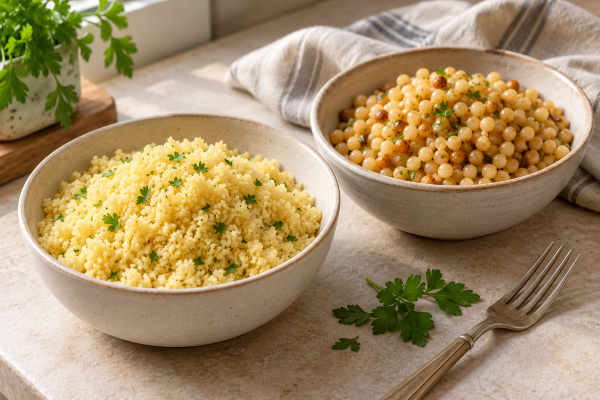
#I still pack salads sometimes, but I build them differently now. Less delicate greens, more sturdy ingredients. Think cooked grains, roasted vegetables, chickpeas, cabbage, carrots, cucumbers if they’ll stay cold, herbs, lemon, olive oil, maybe feta if I’ve got refrigeration. Cabbage is a travel champion because it doesn’t collapse in 12 minutes like baby spinach. I also avoid mixing dressing in too early. Soggy salad is not dangerous by itself, but it makes me suspicious and also sad.
- For flights: grain salad with dressing under 3.4 oz, no super smelly ingredients, eaten early.
- For road trips: cooler bag, ice packs, sealed containers, and no digging around with dirty hands.
- For hostels: whole fruit, instant oats, nuts, tomatoes, bread, cheese if there’s a clean fridge, and cooked meals when possible.
- For hot countries: I lean into local cooked breakfasts and save salads for trusted restaurants.
One of my favorite travel lunches lately is not really a salad but close: a crusty roll, cherry tomatoes, olives, a tin of beans or tuna, and a lemon. I ate that on a bench in Lisbon once, watching trams grind up the hill, and it beat half the restaurant meals I had that week. Food doesn’t have to be complicated when the place around you is doing the seasoning.
Destination-by-Destination: Where I Trust Packed Salads More
#I’m careful everywhere, but I do trust packed salads more in places where refrigeration, labeling, and turnover tend to be strong. Japan is high on my list, especially convenience stores and department store food halls. South Korea’s convenience stores and train stations can be great too, though I’m usually distracted by kimbap and hot fish cake. In the UK, M&S and Pret-style grab-and-go changed the whole salad-as-travel-meal game, even if the prices make me grumble. In Scandinavia, I’ve found packed salads that are almost annoyingly wholesome: rye grains, smoked fish, dill, crisp veg, all very clean and efficient.
In places where raw salads aren’t central to the food culture, I don’t force it. In Bangkok, I want som tam from a busy vendor who knows their mortar and pestle, not a plastic lettuce bowl from a tourist mini-mart. In Istanbul, give me lentil soup, simit, grilled fish, menemen, stuffed vegetables. In Lima, I’ll choose a reputable cevichería for lunch over random packed seafood salad every single time. In Marrakech, I’m looking for tagine, harira, grilled skewers, fresh orange juice from a busy stall, not imported leaves wilting under a weak fridge light. This is maybe my biggest travel food rule: don’t eat against the grain of a place unless you have a good reason.
The 2026 Food Travel Trend Nobody Talks About Enough
#Everyone talks about regenerative dining, zero-waste kitchens, functional beverages, solo dining counters, sleep tourism menus, and all that. And I love those trends, mostly. But the trend I care about most when I’m actually moving through the world is reliable everyday food. The good salad in the train station. The fresh fruit cup kept properly cold. The airport bowl that doesn’t taste like cardboard. The hotel lobby fridge with clear dates and decent vegetarian options. Not every meal can be a tasting menu or a legendary street-food discovery. Sometimes you just need lunch that won’t betray you.
I’ve noticed more travel hubs offering local-ish grab-and-go now, which is great when done well. A quinoa bowl with Peruvian flavors in Lima airport, soba salad in Tokyo, lentil and roasted veg pots in London, kimchi rice bowls in Seoul, chickpea and herb salads in Lisbon. The best versions borrow from local food habits instead of pretending every traveler wants the same Caesar salad from 1998. The worst versions just slap “Mediterranean” on some cucumbers and charge thirteen euros. You know the ones.
So... Safe or Skip?
#Here’s my final answer, after too many airports, train platforms, night buses, ferry terminals, and hotel-room fork dinners: packed salads are safe when they are fresh, properly chilled, clearly labeled, handled well, and eaten soon. They are a skip when they’re warm, old-looking, overloaded with risky proteins, bought from a place with slow turnover, or expected to survive a whole day in your bag. It’s not about fear. It’s about protecting the trip. I will take huge culinary risks for something meaningful, but I refuse to be defeated by mediocre lettuce.
- Buy from busy places with real refrigeration, not random warm shelves.
- Check dates, smell, texture, and whether the container feels cold.
- Eat it soon, especially if it has chicken, eggs, seafood, dairy, or creamy dressing.
- Keep dressing separate when possible, and don’t mess with raw sprouts.
- When in doubt, choose cooked local food. It’s usually better anyway.
My personal rule: if I wouldn’t trust the salad before a long bus ride with no bathroom, I don’t buy it. Harsh, but travel teaches you these things.
The Salad Isn’t the Point, Really
#Food travel is funny because the little meals become part of the story. Not just the famous restaurant or the market tour, but the salad you ate on a ferry in Greece, the convenience store cabbage bowl in Tokyo, the emergency airport quinoa that saved you from becoming a monster, the peach you bought from a roadside stand and ate over the sink. Packed salads can absolutely have a place in that story. Just don’t let them become the villain.
If I’m honest, I’ll keep buying them. Carefully. Suspiciously. With one hand on the fridge door and one eye on the use-by date. Because travel is better when you feel good, and sometimes a crisp salad after five days of fried snacks feels like being reborn. But if the choice is between a questionable plastic salad and a hot bowl of something local made by someone who’s been cooking it all morning? I’m skipping the salad, grabbing the bowl, and not looking back. For more rambling food-travel thoughts and practical little eating-on-the-road guides, I’d casually point you toward AllBlogs.in.