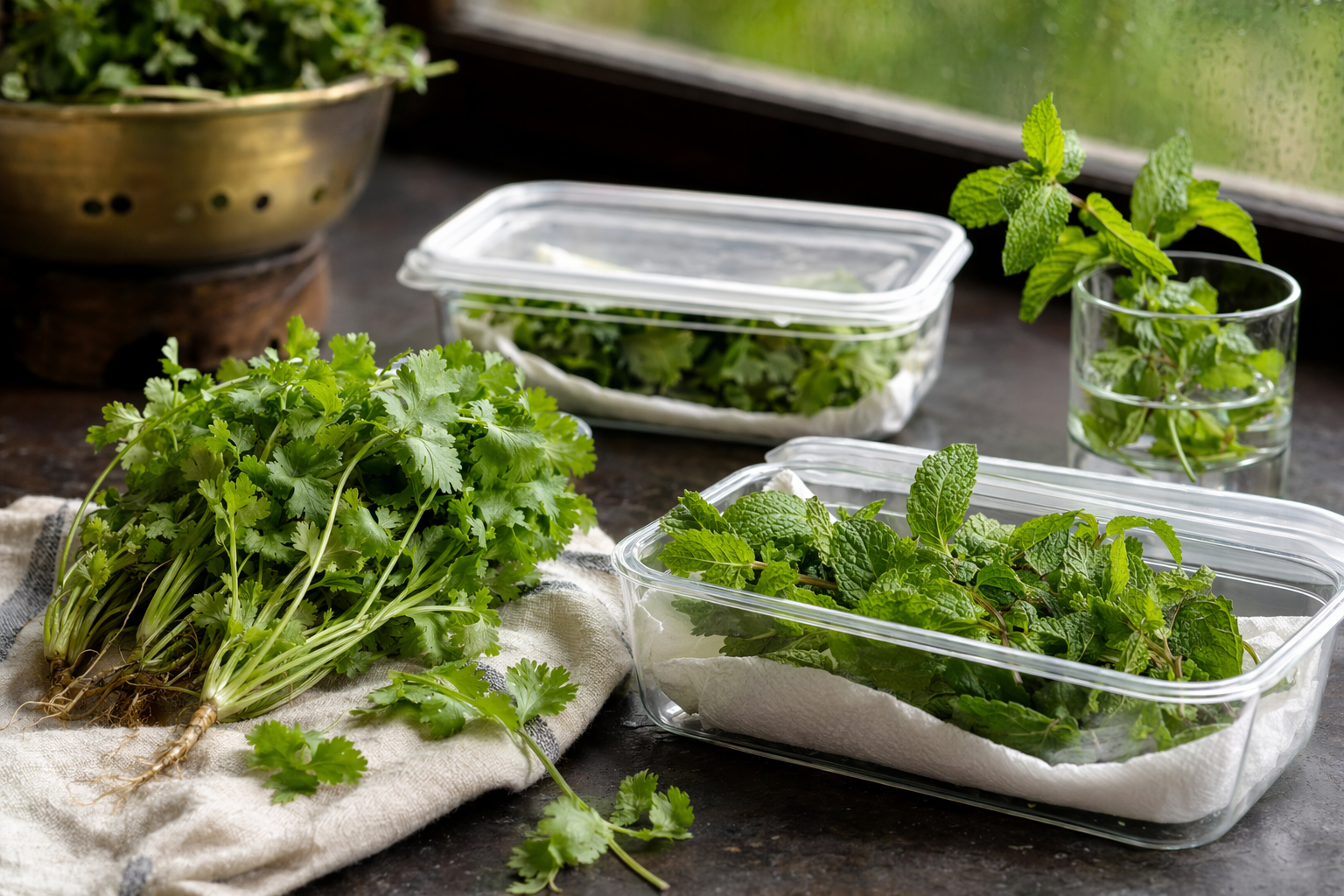
The monsoon herb panic is real, and my fridge has seen things
#Every June, like clockwork, I become that person standing in the sabzi mandi holding three bunches of dhania and two of pudina like I’m making some life changing decision. The vegetable guy is shouting over the rain, someone’s umbrella is dripping onto my foot, and I’m sniffing coriander like a slightly dramatic aunty. Because in Indian cooking, coriander and mint are not garnish. Please. They are mood, memory, freshness, chutney, Sunday poha, pani puri water, kebab ka dost, biryani’s last perfume. And in monsoon? They are also heartbreak in leafy form.
If you live anywhere humid, you know. You buy a fresh, perky bunch in the morning and by next day it’s gone limp, black at the edges, smelling like wet socks and regret. I used to blame the vendor. Then the fridge. Then my mother, once, very unfairly, because she had put the wet methi bag on top of my mint. Sorry, Ma. Actually the problem is simple and annoying: monsoon moisture plus delicate leaves plus our habit of washing everything immediately and stuffing it into a plastic bag. Basically we create a tiny swamp and then act shocked when the herbs rot.
Why coriander and mint behave so badly in rainy season
#Coriander, or dhania, has soft leaves and thin stems that bruise easily. Mint is tougher in attitude but honestly more moody, especially if the bunch is already damp from rain or market sprinkling. Both herbs have a lot of surface area, which means water sits on them beautifully, like dew in a food photography shot, except in real life that water speeds up decay. During monsoon, air humidity is already high, kitchen counters stay slightly damp, and fridges are opened every ten minutes because someone wants cold water. So the leaves go from fresh to fungal-looking very fast.
I learnt this the embarrassing way in my first rented flat in Pune. Me and my roommate had this big plan to make green chutney sandwiches for a rainy movie night. We bought mint and coriander in the afternoon, washed it like responsible adults, rolled it vaguely in newspaper, and shoved it into the fridge. By evening the mint had gone black in patches. We still made chutney, because student budget and overconfidence, but it tasted muddy and sad. Not dangerous exactly, but not that bright, chatpata thing you want with hot pakoras. That day I realised storage is not some boring housekeeping topic. It’s the difference between “wah chutney!” and “hmm, is this okay?”
My basic rule now: moisture is the villain, but dryness is also not the hero
#This is where people get confused. You don’t want wet herbs. But you also don’t want them bone dry and exposed, because then they wilt and become like those tired coriander bits you see stuck to the back of a fridge drawer. The sweet spot is cool, slightly humid, but not wet. Like a good hill station morning, not a flooded Mumbai lane. Sorry Mumbai, I love you, but you know.
So these days when I come home with dhania and pudina, I don’t wash them immediately unless I’m using them the same day. I open the bunch, remove the rubber band or thread, shake out any mud gently, and spread the leaves on a plate or clean towel for ten minutes. If the stems are visibly wet, I let them sit under the fan for a bit. Not until they become papad, just until the surface moisture is gone. This one tiny step has saved me so much money and so many green chutney dreams.
The monsoon fridge rule in my house: never store herbs wet, never store them suffocated, and never trust a plastic bag that already has water droplets inside.
The paper towel box method, aka my everyday dhania saver
#For coriander, my most reliable method is the box and paper towel thing. It sounds too simple, and it is, but it works. I take a clean airtight container, line it with a paper towel or a thin cotton cloth, place the coriander loosely inside, then put another towel on top before closing the lid. Not pressed down. Not packed like luggage before a family trip. Loose. The towel absorbs extra moisture, while the box prevents the fridge from drying everything out.
If the coriander is muddy, I trim the roots and only wash what I need for that meal. If it’s very dirty and I absolutely have to wash the whole bunch, I wash it in a large bowl of water, lift the herbs out instead of pouring muddy water over them again, repeat once if needed, then dry it properly. Salad spinner if you have one. If not, use a clean cloth, spread it out, and be patient. I know patience is hard when pakoda batter is already mixed, but wet dhania stored in a box is basically an invitation for black slime.
- Line the box with paper towel or a dry cotton napkin, not newspaper if the leaves are wet because ink and moisture feels a bit ew.
- Change the towel every couple of days in heavy monsoon, especially if you see it getting damp.
- Keep the box in the main fridge area, not shoved at the very back where things sometimes freeze and become weird.
- Don’t chop coriander before storing unless you’re going to use it very soon. Chopped leaves spoil faster, atleast in my kitchen.
Mint needs different treatment, because mint has drama
#Mint looks sturdy but it bruises quickly. The leaves darken, the smell turns sharp, and then suddenly the whole bunch feels like it has given up on life. I treat mint more like flowers than coriander. If the stems are long and fresh, I trim the ends and place them in a glass or jar with a little water, like a mini bouquet. Then I cover the leaves loosely with a bag or a container lid and keep it in the fridge. The stems drink just enough water, and the leaves don’t sit in wetness. It’s strangely satisfying, like keeping a tiny pudina plant without the responsibility of actual gardening.
But this only works if the mint is fresh to begin with. If the bunch is already crushed and damp from the market, the jar method can go wrong because the lower leaves touch water and rot. So I always remove the bottom leaves first. Those leaves go straight into chai, raita, or chutney. Nothing wasted. Well, mostly nothing wasted. Sometimes I forget the jar behind the milk packets and find it four days later looking like a science project, but we don’t need to discuss that.
My tiny mint jar routine
#- Trim the stem ends, just a small snip, so they can drink water better.
- Remove yellow, black, or mushy leaves right away. One bad leaf can make the bunch smell off.
- Put 1 to 2 inches of water in a jar, not a full swimming pool situation.
- Cover loosely and refrigerate. Change the water daily or every other day during monsoon.
- Use the tender top leaves first for garnish, and older leaves for chutney, jaljeera, or masala chaas.
The big washing debate: wash now or wash later?
#My mother washes everything immediately. My aunt says never wash greens before storing. My neighbour washes, dries, wraps, labels, and somehow her fridge looks like a hotel prep kitchen. I fall somewhere in the middle, depending on how dirty the bunch is and how much time I have before the pressure cooker whistles.
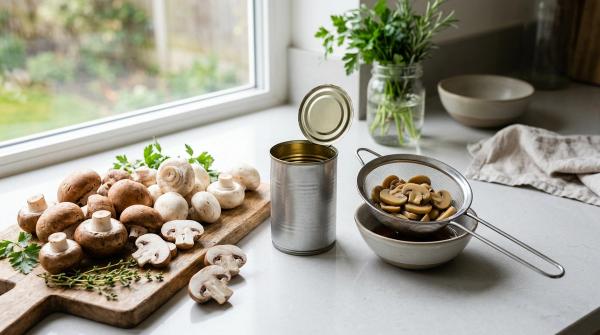
In monsoon, I prefer “clean, don’t soak” as a general mood. Remove mud, dead leaves, and slimy stems as soon as you get home. If the herbs are only slightly dusty, store them unwashed and wash just before using. If they are actually muddy, wash them properly but dry them like your chutney depends on it, because it does. The same moisture logic applies to other delicate ingredients too. I was reading this useful guide on Can You Eat Mushrooms in Monsoon? Cleaning, Cooking and Spoilage Safety, and honestly mushrooms and herbs have the same monsoon enemy: excess water sitting around and making everything spoil faster.
One mistake I made for years was soaking coriander and mint for too long in water “to clean it nicely.” Five minutes became twenty because I’d get distracted frying onions or scrolling reels. By the time I remembered, the leaves were waterlogged. Now I dunk, swish, lift, repeat if needed, then dry. That’s it. No spa treatment.
How I store coriander for different Indian cooking moods
#Not all coriander in my kitchen has the same destiny. Some is for garnish, some for chutney, some for stuffing parathas, and some for that emergency “food looks dull, throw dhania” moment. So I store it differently depending on how I plan to use it. This sounds fussy but it actually makes weekday cooking easier, especially when it’s raining and I’m not going back to the market for one bunch of herbs. Absolutely not.
For garnish, keep leaves whole and happy
#If I want pretty fresh leaves for dal tadka, poha, kanda bhaji, sev puri, or that last sprinkle on egg curry, I keep coriander unchopped in the paper towel box. Whole leaves hold better. Chopped coriander loses aroma quickly and gets wet around the cut edges. Also, whole coriander makes me feel rich. Like, look at me, I have fresh herbs on a Wednesday.
For chutney, stems are gold
#Please don’t throw coriander stems unless they’re rotten or too tough. The stems have so much flavour. In fact, some of the best chutneys I’ve had at old-school South Indian places had that deep green, slightly earthy coriander-stem taste. There’s one tiny Udupi-style restaurant near my old office where the coconut chutney was fine, the sambar was average, but the green chutney with idli? Boss. It had coriander stems, mint, green chilli, lemon, and something roasted, maybe chana dal. I still think about it during rain.
For chutney batches, I store cleaned stems and less-perfect leaves separately in a small box, and use them within a day or two. Mint stems can be woody, so I’m more selective there. Tender mint stems are okay in chutney, but thick ones can make it taste grassy and slightly bitter.
Freezing herbs: not glamorous, but very useful when rain won’t stop
#Fresh is best, yes yes, we all agree. But when it rains for five days and the market coriander is either expensive, muddy, or looking like it survived a wrestling match, frozen herbs save dinner. I don’t freeze coriander for garnish because thawed coriander is limp and not cute. But for chutney, dal, pulao, soups, marinades, and green masala, frozen works nicely.
My easiest method is green cubes. I blend coriander, mint, green chillies, ginger, a little salt, and lemon juice with barely enough water to move the mixer blade. Then I freeze it in an ice tray. Once frozen, I pop the cubes into a freezer bag or box. One cube goes into raita, two into chutney, three into hara bhara marinade, depending on my mood. The lemon helps the flavour stay brighter, though the colour will still darken a bit. That’s normal. Don’t expect restaurant neon green unless you’re doing other tricks.
- Freeze herb paste in small portions, because thawing and refreezing is just asking for trouble.
- Label the box if you make many green things. Mint chutney cube and palak puree cube can look suspiciously same at 7 am.
- Use frozen herb cubes for cooking or chutney, not for sprinkling over bhel unless you enjoy sad leaves.
- Add roasted peanuts, coconut, or curd after thawing, not before freezing, if you want a fresher taste.
Chutney as storage, because Indian kitchens already knew this
#Sometimes I think our grandmothers solved food storage before we started calling everything a hack. Coriander going soft? Make chutney. Mint too much? Make pudina chutney. Leaves slightly tired but not spoiled? Into the mixer with lemon, salt, chilli, garlic, roasted jeera. Done. Chutney is storage, flavour, and emotional support.
During monsoon, I make chutney thicker than usual. Less water means it lasts better in the fridge. I also use lemon juice generously, and I keep it in a clean glass jar, not the same steel katori where everyone dips a spoon and then wonders why it smells funny next day. Use a dry spoon. I sound strict here because I have suffered. Once for a family chaat night I made a big batch of mint coriander chutney in the morning. By evening it had gone fizzy because someone, no names, used a wet spoon and left it out near the stove. The pani puri was still eaten because my family is brave, but I was personally offended.
My rainy-day mint coriander chutney formula
#A big handful coriander, half handful mint, 2 green chillies, small piece ginger, lemon juice, salt, roasted cumin, and either a spoon of roasted chana dal or peanuts if I want body. Sometimes garlic. Sometimes a pinch of sugar, especially if the mint is bitter. I don’t measure properly, which is why my chutney is either excellent or “interesting.” But the main storage trick is thick texture, clean jar, cold fridge, and finishing it in two to three days. If it smells fermented, has mold, or tastes oddly fizzy, don’t argue with it. Throw it.
What spoilage looks like, smells like, and feels like
#This part is not sexy food writing, but it matters. Monsoon makes us romantic about chai and bhutta, but it also makes food spoil quicker if we’re careless. With coriander and mint, warning signs are usually obvious if you actually look. Black slimy leaves, sour or rotten smell, fuzzy mold, mushy stems, and liquid collecting in the storage box are all bad signs. Yellow leaves are not always dangerous, just old and less tasty, but slimy yellow leaves? Nope.
I do a quick check before using stored herbs. Open the box, smell first. Fresh coriander smells citrusy and green. Fresh mint smells cool and sharp. If it smells musty, sour, or like wet cloth forgotten in a bucket, I don’t use it raw. Honestly, if it’s slimy I don’t use it at all. Cooking can hide flavour but it doesn’t magically make spoiled food nice again. And raw chutneys, raitas, salads, chaats, and garnishes need extra care because they don’t get a heat step.
This is also why I’ve become a bit nerdy about drying ingredients. Not perfectly nerdy, but enough. If you’re comparing how different delicate foods handle water, this piece on How to Clean Mushrooms Before Cooking: Wash, Wipe, Peel, or Soak? is a good parallel read, because mushrooms also punish you for leaving extra moisture around.
Tiny restaurant lessons I stole without shame
#I love watching restaurant prep when they let you see it. Not fancy open-kitchen drama, I mean the small practical stuff. At a chaat counter in Ahmedabad, I once noticed the bhaiya kept coriander wrapped in a damp-not-wet cloth inside a steel dabba under shade, and he kept taking small portions out instead of exposing the whole bunch. His green chutney was bright and spicy and made my eyes water in the best way. When I asked him, he laughed and said, “Paani se sab kharab hota hai madam, par bilkul sukha bhi nahi.” Exactly. Not too wet, not too dry.
At a kebab place in Lucknow, the mint was kept stem-down in water, but the leaves were covered and cool. Their pudina chutney had that clean bite that cuts through oily kebabs. I’m not saying every restaurant has perfect hygiene, let’s not be naive. Some places are chaos. But good busy kitchens understand turnover and moisture. They buy fresh, sort fast, store small, and use herbs quickly. Home cooks can steal that idea: don’t keep opening the big box twenty times. Take out what you need, close it, put it back.
My monsoon herb storage cheat sheet, imperfect but honest
#| Herb situation | What I do | How I use it |
|---|---|---|
| Fresh dry coriander | Paper towel in airtight box | Garnish, chutney, tadka finish |
| Muddy coriander | Wash, swish, dry fully, then box | Use within 2 to 4 days if possible |
| Fresh mint with long stems | Jar with little water, loose cover, fridge | Chai, chutney, raita, drinks |
| Crushed damp mint | Sort leaves, dry gently, use soon | Chutney or pudina paratha stuffing |
| Too many herbs | Blend into thick cubes and freeze | Marinades, pulao, dal, quick chutney |
| Slimy or moldy herbs | Throw, no heroics | None. Goodbye. |
The timeline changes depending on your fridge, your city, and the quality of the bunch. In Bengaluru I found herbs lasted a bit longer for me than in coastal humidity. In Kolkata during heavy rain, my mint gave up faster. In Delhi, the fridge dryness sometimes wilts coriander if I don’t wrap it properly. So don’t treat any storage tip like a law carved into stone. Watch your herbs. They will tell you. Dramatic, but true.
Little things that make a surprisingly big difference
#First, don’t store coriander and mint with heavy vegetables crushing them. I used to put a lauki on top of everything because the fridge drawer was full and I was lazy. Then I’d complain my herbs were bruised. Obviously. Second, remove rubber bands. They trap moisture and damage stems. Third, sort the bunch before storing. One rotten stem hidden inside can spoil the party.
Fourth, stop keeping herbs in the thin wet plastic bag from the vendor. That bag is fine for getting home, not for storage. If you must use plastic, at least wrap the herbs in a towel first and keep the bag loose, with some air. Fifth, don’t wash herbs with very warm water. I don’t know why I did this once, maybe I thought it was cleaner. The coriander wilted instantly and looked personally betrayed.
- Buy smaller bunches in peak monsoon if your household doesn’t use herbs daily.
- Shop earlier in the day if possible, before the greens sit in rainwater and market heat for hours.
- Smell before buying. Mint should smell like mint even before you crush it slightly.
- Choose coriander with firm stems and bright leaves, not bunches that are dark, sticky, or already yellowing inside.
How these herbs change my rainy day food
#The reason I care so much is not because I enjoy organizing fridge boxes. I don’t. I care because coriander and mint make monsoon food sing. Hot moong dal chilla with mint chutney. Masala chai with one crushed pudina leaf when I have a cold. Steaming khichdi with ghee, papad, achar, and a fistful of chopped coriander. Corn bhel with mint, onion, chilli, lemon, and that smoky bhutta smell still hanging around. Tell me that isn’t happiness.
There is also something very Indian about this green freshness against rain-heavy food. Monsoon makes us fry everything. Pakoras, vadas, cutlets, bread rolls, chilli bhajji. Lovely, no complaints. But without chutney, without that herb hit, fried food feels flat after two bites. Mint cools, coriander lifts, lemon wakes everything up. Even a boring leftover aloo sabzi can become sandwich filling if you add coriander, mint chutney, onions, and a little sev. I have made this dinner more times than I’ll admit publicly, except I just did.
My final storage routine, the one I actually follow
#When I come back from the market in monsoon, I make tea first. Important. Then I deal with the herbs before they sit around sweating in the bag. Coriander gets opened, sorted, and dried. If clean, it goes unwashed into a towel-lined box. If muddy, it gets washed and dried properly before storage. Mint gets sorted, bottom leaves removed, stems trimmed, and into a jar with little water. Anything broken or tired becomes chutney that day. Anything extra becomes freezer cubes. That’s the whole system.
Is it perfect? No. I still find a sad bunch sometimes. I still buy too much coriander when it looks beautiful and cheap. I still forget to change mint water because life happens and sometimes biryani is more urgent. But compared to my old plastic-bag-swamp method, this is a revolution. My chutneys taste brighter, my garnish doesn’t embarrass me, and my fridge smells less like monsoon regret.
A rainy little goodbye, with green chutney on the side
#If you take only one thing from this whole ramble, take this: in Indian monsoon, coriander and mint don’t need complicated treatment, they need attention. Remove the bad bits, control moisture, keep them cool, use them quickly, and turn extras into chutney or cubes before they collapse. These are small kitchen habits, but they change everyday food so much. A bowl of dal with fresh dhania, a plate of pakoras with proper pudina chutney, a rainy evening sandwich that actually tastes alive… this is why we bother.
And now I’ve made myself hungry, obviously. I’m going to check if my mint jar is still behaving and maybe make chaas with roasted jeera. If you’re also the kind of person who gets weirdly emotional about herbs, chutneys, monsoon snacks, and kitchen jugaad, you’ll probably enjoy wandering through more food stories on AllBlogs.in. Take your chai with you.