The laundry fight nobody warned me about while travelling
#If you travel in India with one backpack and a little overconfidence, laundry becomes a full-time side quest. Not joking. People talk about flights, hotels, food, permits, weather, all that. But nobody tells you about standing in a tiny bathroom in Mcleodganj at 11 pm, trying to wash two sweaty T-shirts with hotel shampoo because your liquid detergent leaked inside your pouch. That was me. Very glamorous traveller life, haan.
This whole travel laundry detergent sheets vs liquid wash thing sounds like a small topic, but trust me, it can decide whether your bag smells like fresh clothes or like a damp local bus seat after monsoon. I have used both across train journeys, beach trips, Himalayan stays, workations, and those chaotic family trips where everyone packs snacks but nobody packs soap. And my honest answer is not a clean one-line answer. Detergent sheets are brilliant for some trips. Liquid wash still wins in some situations. And sometimes, the best option is whatever you remembered to pack before leaving home at 5 in the morning.
For Indian travellers especially, laundry is different from what foreign packing blogs assume. We are not always staying in fancy hotels with coin laundry. Many times it is OYO-type budget rooms, Zostel-style dorms, dharamshalas, homestays, railway retiring rooms, overnight trains, or a cousin’s flat where the washing machine is already overloaded. So your detergent choice needs to survive Indian bathrooms, Indian weather, Indian luggage handling, and Indian jugaad.
My first proper lesson: liquid wash leaks when it wants to leak
#I was travelling from Mumbai to Goa by train years back, carrying one small backpack because I wanted to feel like those minimalist travel people on YouTube. I had packed a tiny bottle of liquid laundry wash, maybe 100 ml or something, inside a plastic pouch. Very smart, I thought. By the time I reached Madgaon, the cap had opened slightly. Not fully. Just enough to make everything slippery and weirdly perfumed. My socks smelled clean before I even washed them, which sounds nice, but it was actually disgusting.
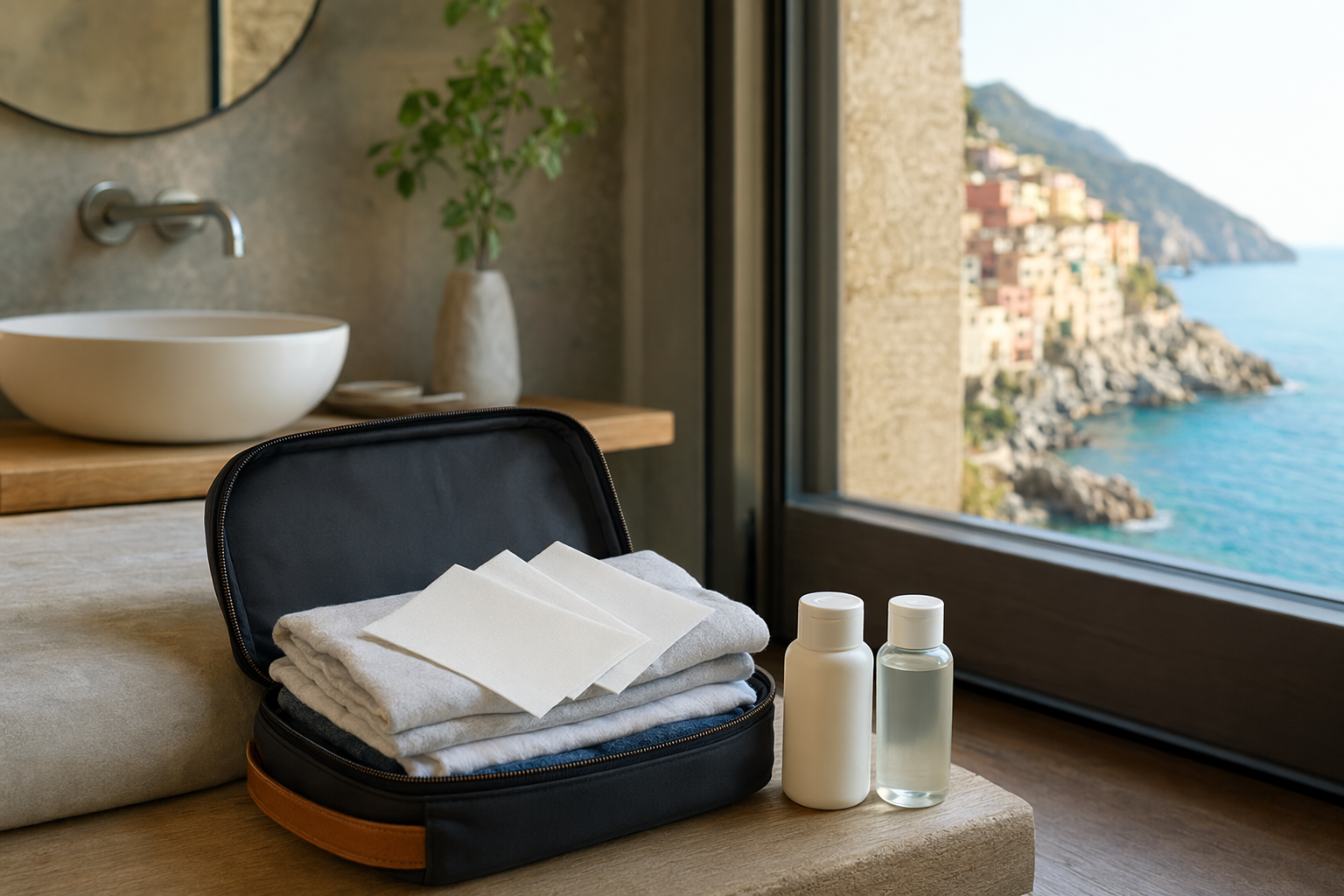
That was the day I started taking detergent sheets seriously. At first I thought they were some fancy eco product for people who say “capsule wardrobe” without laughing. But then I tried them on a Rajasthan trip where I was moving from Jaipur to Pushkar to Jodhpur, and suddenly it made sense. No bottle. No leak. No liquid limit problem at airport security. No sticky pouch. Just thin sheets in a zip packet. Tear one, wash two tees in a bucket, done.
Still, I won’t act like sheets are magic. They can get soft if your bag gets wet. Some brands don’t dissolve well in cold water, especially in hill stations where tap water feels like it came straight from a glacier. And if your clothes are properly dirty, like after a muddy trek or beach football, liquid wash sometimes feels stronger. Maybe it is psychological, but that thick liquid gives confidence, no?
Quick comparison: detergent sheets vs liquid wash for travel
#| Feature | Detergent sheets | Liquid wash |
|---|---|---|
| Leak risk | Almost none if kept dry | High if cap opens or bottle cracks |
| Airport carry-on | Very easy because not liquid | International hand baggage usually needs small containers, commonly 100 ml type rules |
| Weight and space | Super light, flat packet | Heavier, bottle takes fixed space |
| Washing power | Good for sweat, light dirt, daily clothes | Often better for stains, socks, heavy grime |
| Monsoon travel | Good if stored in zip pouch, but keep dry | Works fine, but bottle leakage is annoying |
| Hostels and shared bathrooms | Very convenient, no measuring drama | Can spill, but easy to pour into bucket |
| Cost per wash | Depends on brand, usually moderate | Can be cheaper if buying local small bottle |
| Best for | Flights, backpacking, train travel, short trips | Long stays, family trips, rented apartments |
If you want the short version, detergent sheets are better for packing and movement. Liquid wash is better when you know you’ll wash a lot and have a proper bathroom or bucket setup. But travel is never that tidy. One week in Kerala during monsoon and you’ll start questioning every packing decision you ever made.
Why Indian trips make laundry complicated
#Laundry on Indian trips depends so much on where you are going. In Rajasthan or Gujarat winter, clothes dry fast. Like, you wash a T-shirt at night and by late morning it is wearable if the room has air flow. In Goa in August, forget it. Your clothes may stay damp for two days and develop that sad smell which no perfume can hide. In Himachal during winter, washing jeans is basically a crime against yourself. It will not dry, you will suffer, and then you will buy a cheap pair of track pants from the market.
Transport also matters. Flights are strict with liquids, especially on international routes where liquids, aerosols and gels in cabin baggage are usually expected to be in small containers and packed properly. Even on domestic flights, I prefer not carrying random bottles because security rules and airline staff can be unpredictable, plus it’s one more thing to explain. If you already carry skincare, sunscreen, perfume, hair serum and all that, your liquid allowance and pouch space gets crowded fast. I wrote down my own packing logic after too many airport repacking scenes, and this Airport Beauty Liquids India: Makeup & Skincare Guide is useful if your toiletry bag is always one zip away from disaster.
Trains are a different story. In Indian trains, liquid wash is not banned obviously, but it can leak in the bag because bags get pushed, pulled, sat on, thrown under seats, and sometimes used as pillows by relatives. Detergent sheets are so peaceful here. For overnight journeys, I keep one or two sheets with a small soap strip, tiny towel, safety pins and a spare polybag. If you are building a basic hygiene pouch, especially for long routes like Delhi to Kerala or Mumbai to Varanasi, this Indian Train Toiletry Kit: Overnight Packing Checklist fits nicely with the whole sink-washing idea.
Detergent sheets: what I genuinely like
#The biggest win is space. Detergent sheets sit flat. They don’t fight with your clothes, charger, medicines, snacks, extra chappal, and that one book you carried but never read. I usually cut sheets into halves because one full sheet is sometimes too much for two T-shirts and underwear. Depends on brand, water and how dirty clothes are, but half-sheet works for daily sweat clothes.
- They are light enough that you can carry them even on a weekend trip without feeling silly.
- No leakage. This point alone is worth money if you travel with electronics or documents.
- Easy for flights, buses and trains because there is no bottle drama.
- Good for sink wash, bucket wash, and quick hostel bathroom wash.
- Less plastic waste usually, though packaging differs by brand, so check properly.
Another thing I like is portion control. With liquid wash, I always pour too much. Then I’m rinsing one T-shirt for ten minutes and wasting water like an idiot. Sheets force you to use less. For travel, less foam is actually better, because most budget bathrooms don’t have fancy drainage or a big sink. Sometimes there is only a bucket, mug and hope.
Btw, if you are already trying to pack lighter, detergent sheets pair well with proper luggage organisation. Keep clean clothes separate, dirty clothes separate, and one breathable pouch for half-dry items if you have to move early morning. I used to just throw everything together and then complain. Now I use cubes or compression pouches depending on trip type. This comparison on Packing Cubes vs Compression Bags: Which Saves Space? is actually helpful for deciding how to manage laundry inside luggage without making the whole bag smell weird.
Where liquid wash still beats sheets
#Liquid laundry wash has not left my packing list fully. For longer stays, I still like it. If I am staying in one place for a week or more, say a homestay in Rishikesh, a rented apartment in Goa, or a workation room in Bir, I buy a small bottle from a local shop. It feels easier when washing multiple clothes together. For socks, collars, underarms, and food stains, liquid is easier to rub directly. Sheets can also be rubbed but they get awkward and slippery.
Liquid wash also dissolves better in a bucket if water is cold and you don’t want to wait. Some detergent sheets need a little warm water or extra rubbing. In places like Spiti, Ladakh, Manali winter, or even Ooty on a cold evening, the water can be freezing. You don’t want to stand there convincing a sheet to dissolve while your fingers are going numb. Liquid wins there.
Also, for family trips, liquid wash makes more sense. Indian family travel means someone will spill chai, someone’s kurta will get chutney, children will create their own weather system, and suddenly two T-shirts become twelve items. Sheets are fine, but they can get used up fast. A small 250 ml bottle bought locally can be cheaper and more practical, especially if you have a balcony or washing line at the stay.
My travel laundry kit now, after many bad decisions
#I keep it simple now. Not minimalist in that perfect Instagram way, but realistic. My kit changes by trip, but for most Indian travel I carry detergent sheets, one small stain soap or laundry bar, a few safety pins, two clips, one light rope, and a waterproof pouch. That’s it. If I’m travelling for more than ten days and staying put somewhere, I buy liquid wash locally.
- For weekend trips: 2 to 3 detergent sheets, usually cut into halves.
- For 5 to 7 day backpacking: 5 to 6 sheets, one small soap bar, clothesline.
- For beach trips: sheets plus extra plastic or dry bag because wet swimwear ruins everything.
- For winter hill trips: fewer washes, more inner layers, and honestly I avoid washing thick stuff.
- For long stays: buy liquid wash locally instead of carrying full bottle from home.
One small tip: keep detergent sheets inside a ziplock, then inside another pouch. Not because they leak, but because humidity is sneaky. In Kerala, Goa, Andamans, coastal Karnataka, even Mumbai monsoon, paper-like products absorb moisture quickly. If the sheet packet becomes damp, sheets stick together and then you are peeling detergent like old stamp paper. Very irritating.
Accommodation and laundry options in India, the real picture
#Where you stay changes everything. Hostels in India, especially in places like Rishikesh, Manali, Jaipur, Udaipur, Goa, Kochi and Varkala, often have paid laundry or a local laundry contact. Dorm beds can range roughly from ₹400 to ₹1,500 depending on city, season and how fancy the hostel is. Some hostels charge laundry per kg, often around ₹80 to ₹200 per kg, but it varies a lot. Budget hotels around ₹1,200 to ₹3,500 per night may offer laundry per piece, which can become expensive if you hand over every sock separately.
Homestays are unpredictable in a good way. In Himachal or Uttarakhand, many hosts will let you use a washing area or drying line if you ask nicely. In Kerala homestays, I have seen proper washing machines, but drying is the battle because humidity. In business hotels, laundry is neat but costly. A single shirt wash can sometimes cost what a street-side meal costs, and as Indians we immediately calculate that, don’t we?
Laundromats are growing in some cities and tourist areas, especially near student neighbourhoods, hostels and service apartments. Goa, Bengaluru, Pune, Delhi, Mumbai, Kochi and parts of Hyderabad have more options than small towns. But if your trip includes remote places, don’t depend on laundromats. Local dhobi services are still common, and they are affordable, but timing can be uncertain. If they say evening, it may mean evening today or evening in a philosophical sense.
Season-wise advice, because drying is the actual boss
#People compare detergent only by washing power, but while travelling, drying power is the real problem. A bad detergent can still clean okay. A damp T-shirt in your bag can ruin your whole mood. So choose laundry plan according to season, not only product.
Summer travel
#For summer trips in Rajasthan, Madhya Pradesh, Gujarat, Delhi, or most dry regions, detergent sheets are perfect. Clothes dry fast if there is ventilation. Carry quick-dry T-shirts, wash at night, squeeze properly in a towel, hang near fan. Done. Liquid wash also works, but why carry weight when sheets do the job?
Monsoon travel
#Monsoon is where travel laundry becomes emotional damage. Western Ghats, Goa, Konkan, Kerala, North East, Mumbai, coastal Odisha, all beautiful, all damp. Sheets are still better for packing, but wash fewer clothes at a time. Don’t wash jeans unless you have sunlight or dryer access. Carry synthetic quick-dry clothes. Cotton feels nice but dries slowly and starts smelling. Also, never pack wet clothes in closed plastic for more than a few hours. It becomes a science experiment.
Winter and hill stations
#In winter hill trips, I wash innerwear and socks, maybe one thermal if needed, but I don’t wash heavy clothes. Detergent sheets are easy to carry, but liquid helps if water is too cold. In places like Shimla, Manali, Darjeeling, Sikkim, Kashmir, Spiti side, drying can take ages. Ask your stay if they have a sunny terrace, heater area, or paid laundry. Don’t assume.
How I wash clothes in hotel sinks and buckets without making a mess
#This is my rough method, not some professional laundry science. First, I rinse the clothes once if they are very sweaty. Then I fill half bucket or sink with water, add half detergent sheet or a tiny amount of liquid wash, soak for 10 to 15 minutes, rub underarms and collars, rinse twice, squeeze gently. Then I roll clothes in a towel and press. Not twist like you are angry with it. Press. It removes extra water and drying becomes much faster.
If using detergent sheets, tear them before adding. Smaller pieces dissolve better. If the sheet is not dissolving, rub it between your palms in water. If using liquid, use less than you think. Seriously. Indian bucket washing with too much detergent becomes foam festival and then you’ll spend more time rinsing than sightseeing.
My rule now is simple: wash small, dry smart, and never trust hotel bathroom ventilation blindly.
Many budget hotel bathrooms have exhaust fans that sound powerful but do nothing. Hang clothes near a window or fan if allowed. Use hangers from the wardrobe. Carry two clips because hotel hangers are slippery and your underwear falling from balcony into a restaurant courtyard is not a travel memory you want. I am not saying this happened to me. Okay fine, it happened.
Safety, hygiene and small etiquette things nobody says
#In shared dorms, don’t hang wet clothes everywhere like you own the room. Use designated drying areas. Also don’t leave expensive clothes unattended outside overnight, especially in crowded hostels. Most travellers are decent, but mix-ups happen. I once lost a black Uniqlo-type T-shirt in a hostel because apparently every second person owns the same black T-shirt.
In hotels, ask before using balconies or railings for drying. Some properties don’t allow clothes on front-facing balconies because it looks messy. In religious towns or traditional homestays, be a little mindful about where you dry innerwear. It’s basic respect. Also, don’t pour detergent water into garden areas unless the host says it’s fine. Many detergents are not plant-friendly, even if the packet looks green and natural.
For sensitive skin, test the detergent before a long trip if you can. Travel already brings sweat, dust, sunscreen, mosquito repellent and random water changes. No need to add itchy detergent drama. I prefer fragrance-light products now. Strong perfume detergent feels nice for five minutes, then in humid weather it becomes too much.
Cost: what actually feels worth it
#Detergent sheets can look expensive when you compare packet price with a normal detergent bottle at home. But travel cost is not only product cost. It is also leakage risk, baggage space, airport hassle, and convenience. For a solo traveller, sheets are worth it for short and medium trips. For couples or family, carrying only sheets can become costly if everyone is washing daily.
Liquid wash bought locally is usually budget-friendly, especially in India where small sachets and small bottles are easy to find in general stores. In tourist towns, prices may be slightly higher near beaches or main markets, but still manageable. Laundry service is worth paying for when weather is bad or when you have heavy clothes. I don’t hand over delicate or expensive clothes unless I trust the place. Local laundry can be rough, and sometimes clothes come back with that high-heat iron shine.
My practical formula is this: carry sheets from home for emergency and daily sink wash, buy liquid locally if the trip becomes laundry-heavy, and use paid laundry only when drying is impossible or time is short. Not fancy, but it works.
So, which one should you pack?
#If you are flying with carry-on only, pack detergent sheets. If you are backpacking through multiple places, pack detergent sheets. If you are doing overnight trains, buses, hostel hopping, treks with limited luggage, again sheets. They are simply easier. For most Indian solo travellers, students, budget backpackers and workation people moving between places, detergent sheets are the better default.
If you are staying in one apartment, travelling with kids, doing a long beach stay, or you know there is a washing machine, liquid wash makes sense. Buy a small bottle after arrival if possible. That way you don’t carry extra weight and don’t risk leakage during travel. For road trips with your own car, liquid is fine because luggage pressure is less, but still put it in a sealed pouch. Indian roads will test every bottle cap.
For trekking, I’d say carry sheets or a tiny soap bar, but wash carefully and away from natural water sources. Don’t put detergent directly into streams, lakes or waterfalls. Even “eco” products need responsible use. In mountain areas, water is precious and local communities deal with our tourist waste after we leave, so we should not behave like careless guests.
My final verdict after enough smelly bags
#For me, detergent sheets win for travel. Not because they clean better than liquid every time, but because they fit the way I travel now. Trains, flights, buses, budget stays, hostels, homestays, sudden plan changes, rainy days, early check-outs. Sheets handle chaos better. Liquid wash is still useful, but I treat it like something to buy at destination, not something to carry everywhere.
If you’re packing for your next trip, don’t overthink it too much. Take 4 to 6 detergent sheets in a zip pouch, carry one small laundry bar if you are particular about stains, and plan your clothes around drying speed. Quick-dry beats stylish-but-damp, sadly. Also pack fewer clothes than your fear tells you. You can wash. You can repeat outfits. Nobody cares as much as we think, except maybe aunties in family photos, but they will comment anyway.
And yeah, laundry is not the most romantic travel topic, but it is one of those small things that makes travel smoother. Clean socks can change your mood. A dry T-shirt can save a day. A leak-free bag can save your sanity. If you want more practical, Indian-style travel packing stories and less showroom-perfect advice, I keep finding useful reads on AllBlogs.in, so maybe wander there before your next packing panic.