The first time I booked a self-transfer flight, I thought I was being very smart
#I’ll be honest, self-transfer flights look too tempting when you’re searching from India with a tight budget. You type Delhi to Istanbul, Mumbai to Bali, Bengaluru to Paris, whatever, and suddenly one option is ₹18,000 cheaper than the normal airline connection. Your brain immediately goes, bas ho gaya, book it. That’s exactly how I fell for it the first time. My route was Kochi to Bangkok and then Bangkok to Hanoi on two different airlines, two different PNRs, and me sitting at home thinking 3 hours 20 minutes is more than enough. Spoiler: it was not exactly enough, but somehow I survived without crying in public, which I consider a win.
Self-transfer basically means you are not on one protected ticket. You land at the layover airport, collect your checked baggage if you have any, clear immigration if needed, go to departures again, check in again, clear security again, and board the next flight like it’s a fresh journey. Airlines don’t coordinate for you. If the first flight is late and you miss the second one, the second airline usually says, very politely or not so politely, sir that is your problem. This is why those cheap fares are cheap. They’re not always bad, trust me, but you need to know what you’re signing up for.
What self-transfer actually means, in normal Indian traveller language
#When you book through some flight search apps, they sometimes show “self-transfer”, “separate tickets”, “change airport”, “recheck baggage”, or “not protected by airline”. Don’t ignore these small lines. They are not decoration. On a regular connecting ticket, like Air India Delhi to Frankfurt to Rome on one PNR, your bag is mostly checked through to the final destination and if the first flight is delayed, the airline has to help you with rebooking. On a self-transfer, your journey is like two separate trips stitched together with Fevicol, and sometimes that Fevicol is very weak.
For us Indians, it matters even more because visa rules can be a full drama. A European, Singaporean, or Malaysian passport holder may casually walk through many transit situations, but we often need to check airport transit visa, regular visa, e-visa, visa-on-arrival, and whether we must enter the country to collect bags. The confusing part is this: even if you are “just transiting”, baggage collection may require you to cross immigration. If your second flight is from another terminal that is landside, same issue. If your airlines don’t have an interline baggage agreement, again same headache. So don’t only ask, “Do I need visa for transit?” Ask, “Do I need to enter the country during this self-transfer?” Big difference.
My Bangkok layover lesson: cheap ticket, expensive stress
#On that Kochi-Bangkok-Hanoi trip, I had checked baggage because obviously I packed like I was shifting house. One big trolley, one backpack, snacks from home, and my mother’s emergency thepla packet though I’m not even Gujarati. The first flight landed around 35 minutes late. Not a disaster, but the minute you land late on a self-transfer, your body starts producing pure anxiety. I had to wait at baggage belt, then go through immigration, then find the check-in counters for the next airline. Bangkok airport is efficient, but it is still a massive airport. You don’t just teleport from arrivals to departures.
The worst part was not knowing if the airline counter would close before I reached. Many airlines close international check-in 60 minutes before departure, sometimes earlier depending on airport and route. Online check-in helps, yes, but checked baggage still needs bag drop. I reached with barely enough time. My shirt was stuck to my back, I was sweating like I had run a marathon in Chennai summer, and the staff just looked at me like, “Why do people do this to themselves?” Fair question actually.
Baggage is the biggest villain in self-transfer flights
#If you can do cabin baggage only, self-transfer becomes 50 percent easier. Not always easy, but easier. Checked bags create the most risk because you must wait at the belt, sometimes report damaged luggage, sometimes walk to another terminal, and then recheck the same bag. If the first airline delays baggage or your bag doesn’t arrive, your second airline won’t care much. They didn’t take responsibility for that bag earlier. This is why I now avoid checked luggage on self-transfer unless the layover is very long or I’m staying overnight.
Also, baggage allowance can be totally different on separate tickets. One airline may allow 30 kg checked bag from India, another low-cost airline may allow only 7 kg cabin and charge for every extra kilo like it’s gold. I’ve seen people at Kuala Lumpur repacking bags on the floor, wearing three jackets, stuffing chargers into pockets, arguing with staff, all that airport circus. Please check the baggage rules for each flight separately. Not the first airline, not the booking app summary, each airline separately. And weigh your bag at home if possible. Indian families have this dangerous confidence that “thoda adjust ho jayega”. At airport counters, thoda does not always adjust.
- Cabin-only self-transfer is best for short layovers, especially under 4 hours.
- Checked baggage self-transfer needs a bigger buffer, usually 5 to 6 hours minimum for international airports if you ask me.
- If changing airports, like London Heathrow to Gatwick or Bangkok Suvarnabhumi to Don Mueang, don’t act brave. Keep 8 hours or more, sometimes even overnight.
- Keep one full set of clothes, medicines, chargers, and basic toiletries in your cabin bag. Learned this the sweaty way.
Visa and immigration: this is where Indian passports need extra homework
#Visa is the part where many self-transfer plans quietly collapse. Let’s say you are flying Mumbai to Paris via London on two separate tickets. If you have to collect baggage in London and recheck, you may need permission to enter the UK, depending on your passport, visa status, route, airline, and terminal situation. Same with Schengen airports, Gulf airports in certain cases, and even some Southeast Asian routes where the low-cost terminal setup forces you to clear immigration. Rules change, exemptions exist, and airline staff are not always trained to explain your exact case patiently at 2 am.
My simple rule now: if the layover country needs Indian travellers to have a visa for entry, I treat self-transfer as risky unless I have confirmed that I can remain airside and my baggage is checked through. But with separate low-cost airlines, baggage checked through is rare. Sometimes you may also need proof of onward ticket, hotel booking, funds, or return ticket even during a short entry. Keep everything ready offline, not only in Gmail. I use a boring but life-saving folder system on my phone after one immigration officer asked for my next booking and airport Wi-Fi decided to behave like BSNL from 2008. This Digital Travel Wallet Checklist: Save Travel Docs Offline is honestly the kind of checklist I wish I had followed earlier.
Documents I keep ready before any self-transfer
#- All flight tickets with PNRs, not just screenshots from the booking app.
- Hotel booking for the final destination, and also airport hotel booking if I’m staying overnight during layover.
- Visa copies, e-visa approvals, passport scan, travel insurance policy, and emergency contacts.
- Proof of funds or credit card screenshot if a country is known to ask, but blur what you don’t need to show.
- Baggage receipts and airline app logins, because baggage problems never happen at convenient times.
How much layover time is enough? My not-so-perfect formula
#People ask this a lot: “Bro, is 2 hours enough for self-transfer?” For domestic-to-domestic with cabin bag in the same small airport, maybe. For international with checked baggage, visa control, terminal change, and a low-cost airline counter closing early, 2 hours is basically gambling. I know someone will comment saying they did it in 55 minutes in Singapore. Good for them. But I don’t plan my trips based on miracle stories.
For Indian travellers, I’d say keep 4 hours minimum for international self-transfer with cabin baggage in the same airport, and 5 to 6 hours if checked luggage is involved. If immigration queues are famous for being slow, add more. If you’re landing during peak travel season, add more. If you are travelling with parents, kids, or that one cousin who disappears to buy coffee when boarding starts, add much more. During school holidays, Christmas-New Year period, summer Europe rush, and long weekends in India, airports can feel like railway stations but with more perfume shops.
Also calculate the final arrival-day buffer. Suppose you land in Istanbul or Dubai or Bangkok after doing a risky self-transfer, then still need to reach city hotel at midnight. Your stress doesn’t end at the runway. Airport-to-city transport, taxi queues, late-night bus timings, SIM card, currency, all these small things eat energy. I usually check this part using a checklist style approach like Airport-to-City Transfer Checklist: Train, Taxi or Bus?, because no one wants to save ₹6,000 on flights and then spend ₹5,000 on panic taxi plus one missed hotel night.
Same airport vs different airport: please don’t underestimate this
#Same airport self-transfer is manageable if the airport is well-connected internally. Singapore Changi, Doha, Dubai, Bangkok Suvarnabhumi, Kuala Lumpur KLIA, and many big airports have decent signage, though “decent” depends on your sleep level also. But different airport transfer is a whole different animal. In London, Paris, Tokyo, Bangkok, New York, and even some Indian city pairings if you’re combining odd routes, you may have to take train, bus, taxi, or airport shuttle with bags. Traffic doesn’t care that your next flight is cheap.
In India also we casually assume domestic connections are simple, but even Delhi T1 to T3 or Mumbai terminal changes can take proper time depending on shuttle, road traffic, and security queues. Bengaluru’s airport is far from the city, so if your self-transfer somehow involves an overnight city stay, don’t book a hotel in Indiranagar just because it sounds fun. You’ll spend half your soul on the road next morning. Airport-side hotels near Delhi Aerocity, Mumbai airport, Bengaluru airport area, Hyderabad airport zone, and Chennai airport/Meenambakkam side can be more practical, even if slightly boring.
Accommodation during long layovers: airport hotel, lounge, or just suffer?
#Overnight self-transfer can actually be nice if you plan it properly. I’ve started preferring overnight layovers for risky routes, especially when the fare difference is big. Airport hotels in India and popular Asian transit cities can range widely. Basic airport-area hotels may start around ₹1,500 to ₹3,500 per night in many Indian cities, though quality varies a lot. Proper branded airport hotels can be ₹6,000 to ₹15,000 or more. In places like Singapore, Dubai, Doha, or Europe, transit hotels and capsule rooms can feel expensive for Indian budgets, but they save you from sleeping like a folded bedsheet on metal chairs.
Lounges are another option, but don’t blindly depend on free card access. Some lounges don’t allow entry if you’re landside, some are packed, some have time limits, and some food counters look like they gave up on life. Paid lounges may cost roughly ₹1,500 to ₹4,000 depending on airport and hours, sometimes more internationally. If you have a 9-hour daytime layover and don’t need a visa, a lounge is fine. If you have an overnight layover before a long flight, a bed is worth it. I used to think sleeping on airport chairs was adventurous. Now my back gives strong political opposition.
My honest view: a self-transfer is only cheap if you include the cost of food, lounge, hotel, visa, transport, baggage fees, and the emotional damage of sprinting through an airport.
Travel insurance, refunds, and the money side nobody wants to discuss
#This is where people get irritated, including me, because insurance wording is boring and full of tiny conditions. But self-transfer is a financial risk. If Flight A is delayed and you miss Flight B on a separate ticket, many basic travel insurance policies may not cover it unless the delay reason and policy terms match. Some booking platforms offer “connection protection”, but read what it actually covers. Is it refund only? Rebooking? Hotel? Meals? How fast do they respond? Because when you’re standing at an airport counter, a chatbot saying “we value your concern” is not exactly comforting.
I now keep flexible hotel booking for the first night if the arrival depends on a risky self-transfer. Sometimes refundable hotels cost more, but they save you from losing the full amount if your plan goes sideways. Same with activities. Don’t book a non-refundable food tour at 8 am after landing at 6 am from a two-ticket international self-transfer. That is not optimism, that is self-harm with better photos. If you’re confused between booking flexibility and insurance, this piece on Refundable Hotel Booking vs Travel Insurance explains the trade-off in a very practical way.
Food, culture, and small layover joys, because travel is not only panic
#One nice thing about self-transfer layovers, especially long ones, is you sometimes get a tiny taste of another city. In Kuala Lumpur, I used a long layover to eat nasi lemak outside the airport instead of paying airport prices for a sad sandwich. In Bangkok, if your visa situation allows and timing is sensible, even a short hotel stay with proper Thai food nearby feels like a bonus mini-trip. In Dubai, many Indians use long layovers to meet relatives, buy dates, or do a quick mall run, though again, visa and timing first. Don’t be filmy and assume everything will work out.
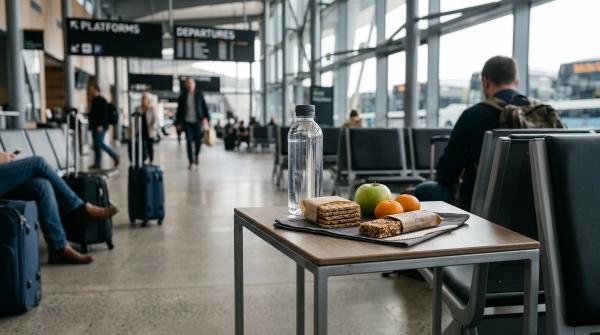
Food inside airports has improved, but prices are still airport prices. I always carry some dry snacks from India: khakhra, protein bar, peanuts, maybe a small packet of namkeen. Not a full dabba of achar, please. Security rules for liquids and food differ by airport, and some countries are strict about bringing fresh fruits, seeds, meat, dairy, and plant products. Eat it before arrival or don’t carry. A water bottle you can refill after security is useful, and if you’re travelling with elders, keep their regular snacks because finding suitable food at 1 am is not guaranteed.
Seasonal tips: when self-transfer becomes more risky
#Weather and seasons matter more than people think. Monsoon delays in India can affect flights from Mumbai, Kochi, Goa, Kolkata, and other cities. North Indian winter fog can mess with Delhi and nearby airports. Europe in peak summer can have crowded airports, long queues, and sometimes baggage handling delays. Around Christmas, New Year, Eid holidays, Diwali, school vacations, and big sale periods, airports get heavy. If your self-transfer is during these windows, don’t book tight layovers just because the app shows it as “possible”.
Best months depend on your route, but generally shoulder seasons are calmer: after major holidays, before school vacation rush, and outside extreme weather periods. For Europe, spring and autumn are usually more pleasant, though not always cheaper. For Southeast Asia, check rainy seasons country-wise because Bangkok, Bali, Vietnam, and Malaysia don’t behave exactly the same. For Gulf routes, summer heat won’t affect the airport much, but stepping outside during a layover can feel like opening an oven. Basically, check both flight delay patterns and human comfort. We are not machines, even if airlines treat us like boarding groups.
My self-transfer checklist before I click pay
#These days I don’t book a self-transfer just because it’s cheap. I make a small calculation, like a proper middle-class Indian with Excel in my head. How much money am I saving? How much time am I losing? Do I need a visa? What happens if the first flight is 2 hours late? Is there another flight later that day if I miss mine? Can I afford a last-minute ticket? Is the second airline strict with baggage? Is the layover airport easy or a maze? If the saving is only ₹2,000 to ₹4,000, I usually don’t take the headache for international routes. If the saving is ₹15,000 or more and I can build a safe buffer, then maybe yes.
| Self-transfer situation | My comfort level | Why |
|---|---|---|
| Same airport, cabin bag, 5+ hour layover | Good | Enough time for delays, security, and food without running |
| Same airport, checked bag, 6+ hour layover | Okay | Baggage belt and recheck still add risk |
| Different airports, international route | Risky | Traffic, immigration, transport, and baggage can ruin the plan |
| Transit country needs visa and I don’t have it | Nope | One rule change or counter issue can block the whole trip |
| Overnight layover with airport hotel | Good if planned | More expensive, but safer and less stressful |
Final thoughts: self-transfer is not bad, but it’s not for lazy planning
#I still book self-transfer flights sometimes. I’m not against them. For budget travellers from India, students, backpackers, people doing multi-city trips, or anyone trying to stretch rupees, they can be genuinely useful. But you have to treat them like a DIY project. Read the visa rules. Check baggage. Add layover buffer. Save documents offline. Don’t assume the airline will rescue you. And please don’t book a 90-minute international self-transfer with checked luggage and then ask the universe for blessings.
If you’re calm, organised, and okay with a bit of airport jugaad, self-transfer can open cheaper routes and even fun stopovers. If you get anxious easily or you’re travelling with family who will blame you for every delay till 2035, book a protected connection. Peace of mind is also a travel expense, just not shown on fare comparison sites. Anyway, that’s my slightly sweaty, slightly wiser take on self-transfer flights. If you like practical travel stories without too much fancy gyaan, I keep finding useful reads on AllBlogs.in, and it’s worth browsing before your next trip.