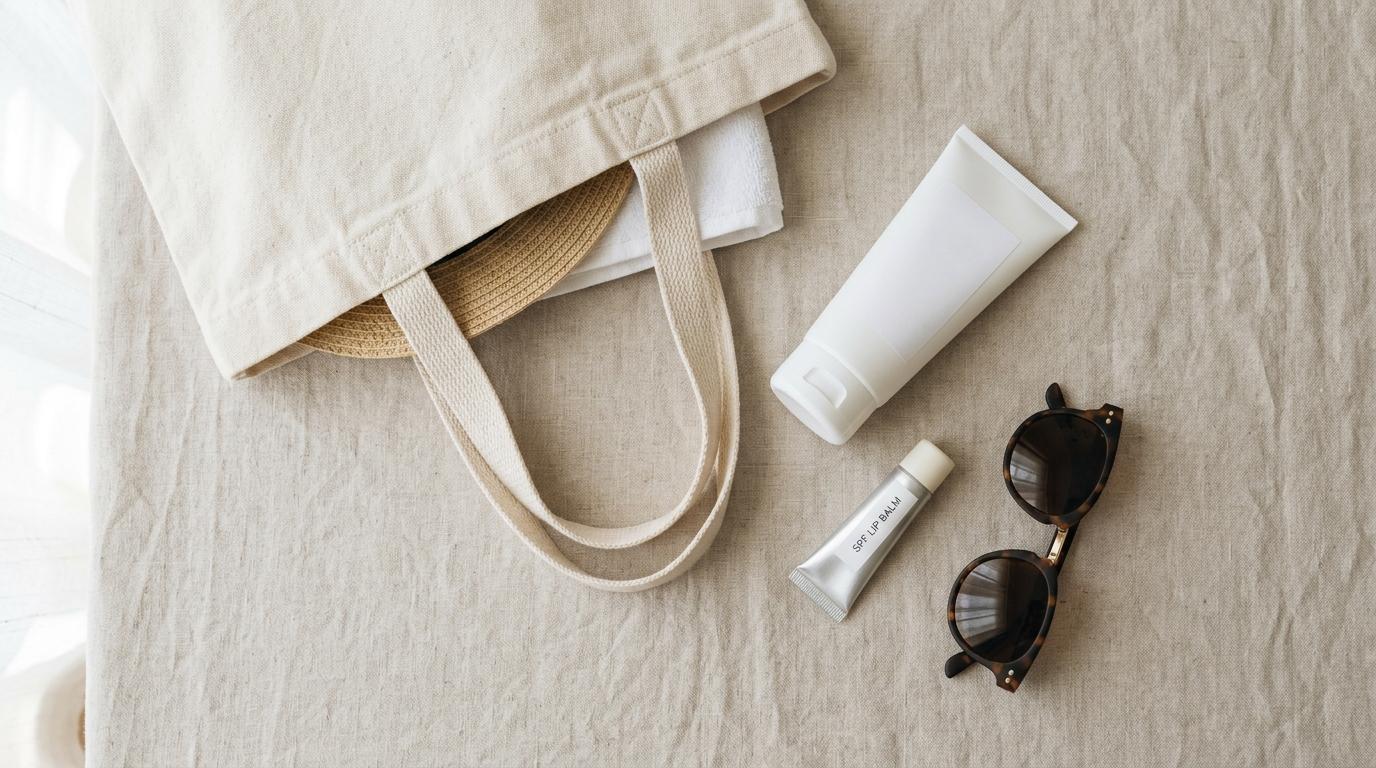
SPF lip balm is exactly what it sounds like: lip balm with sun protection built in. It still helps your lips feel soft and moisturised, but it also protects them from UV rays when you’re out during the day.
Use it when you’re commuting, going to college, heading to work, stepping out for lunch, travelling, sitting outdoors, or spending time at the beach or pool.
For everyday use, a broad spectrum SPF 30 lip balm or higher is a good pick. Regular lip balm or petroleum jelly is better for indoor comfort, dry lips, and nighttime use, unless the label clearly says it has SPF.
Most of us remember sunscreen for the face, neck, and arms. Lips are easy to forget. But they are exposed too, and they can get dry, irritated, tanned, or sunburned faster than you might expect. That’s where lip sunscreen comes in.
This guide keeps it simple: what to buy, when to use it, how often to reapply it, and how to compare regular lip balm vs SPF lip balm without turning your routine into a project.
Why your lips need sunscreen too
#Your lips are exposed almost every time you step outside. And they are not quite the same as the rest of your facial skin, which is why they can feel dry, tight, or sore so quickly.
A few reasons lips need extra care:
- Lip skin is delicate. It is thinner and more exposed than many other areas of the face.
- Lips dry out easily. They do not have the same natural oil support as the rest of your skin.
- UV exposure still affects them. Sun damage does not stop at your lip line.
- Small exposures add up. Walking to class, waiting for a cab, sitting near a bright window, eating lunch outside, or travelling during the day all count.
This does not mean you need a complicated lip routine. It simply means that daytime lip care should include sunscreen for lips, not just moisture or shine.
SPF lip balm vs regular lip balm vs petroleum jelly vs lipstick or gloss
#Here’s the easy way to compare them.
The main rule is simple: if you are going outside during the day, apply SPF lip balm first. If you are indoors or getting ready for bed, regular balm or petroleum jelly is usually enough for comfort.
Regular lip balm vs SPF lip balm: what’s the real difference?
#The real difference is UV protection.
Regular lip balm
#Regular lip balm is mainly for moisture and comfort. It may contain waxes, oils, butters, or other ingredients that make your lips feel smoother. It can help when your lips feel dry because of AC, cold weather, flights, dehydration, or general dryness.
But unless the label clearly says SPF, regular lip balm does not work as lip sunscreen.
Use regular lip balm when:
- You are indoors most of the day.
- You want something for your bedside table.
- Your lips feel dry at night.
- You need a soft base under lipstick for an indoor event.
- You are not relying on it for sun protection.
SPF lip balm
#An SPF lip balm does two jobs at once. It moisturises your lips and helps protect them from UV rays. For daily wear, especially in sunny or humid weather, it is usually the more practical daytime option.
Use SPF lip balm when:
- You are commuting.
- You are walking to college or office.
- You are stepping out for lunch, errands, or shopping.
- You are travelling.
- You are at the beach, pool, sports ground, or an outdoor event.
- You are wearing lipstick or gloss in the daytime and still need protection underneath.
For most people, the easiest routine is: SPF lip balm by day, regular lip balm or petroleum jelly by night.
What does broad spectrum mean?
#When a lip balm says broad spectrum, it means the product is designed to protect against both UVA and UVB rays.
- UVA rays are linked with longer-term skin damage and ageing effects.
- UVB rays are linked with sunburn.
For lips, you want protection from both. So don’t only look at the SPF number. Look for the words broad spectrum on the label too.
Is SPF 30 lip balm enough for everyday use?
#For everyday use, an SPF 30 lip balm is a sensible baseline. Dermatology guidance commonly recommends SPF 30 or higher for sun protection products, and the same idea applies when you are choosing a lip balm with sunscreen.
You can choose a higher SPF if you prefer, but don’t let the number make you careless. Lip products wear off quickly because you talk, eat, drink, wipe your mouth, and sometimes lick your lips without realising it.
So yes, SPF matters. But reapplication matters just as much.
Checklist for buying SPF lip balm
#Before you add a lip sunscreen to your cart, check these basics.
- SPF 30 or higherChoose an SPF 30 lip balm or higher for daily daytime use.
- Broad spectrum protectionThe label should say broad spectrum, so you know it is meant to protect against both UVA and UVB rays.
- A texture you actually likeThis matters more than people think. If it feels too sticky, waxy, bitter, heavy, or uncomfortable, you probably will not reapply it.
- Water resistance, if neededFor swimming, sweating, beach days, humid weather, or outdoor plans, check whether the label says water-resistant. Follow the product’s reapplication instructions.
- A moisturising feelA good SPF balm should still feel like lip care, not just sunscreen in a tube. Pick something that keeps your lips comfortable.
- Low irritation for sensitive lipsIf your lips react easily, be careful with strong fragrance, flavour, or tingling formulas. Simple formulas are often easier to tolerate.
- Easy to carryLip sunscreen only works if it is with you. Keep one in your handbag, desk drawer, college bag, office pouch, or travel kit.
- Clear or tinted finishClear works for everyone. A tinted SPF lip balm can also replace casual lipstick on college, office, or travel days.
How to use SPF lip balm correctly
#Using sunscreen for lips is easy, but one tiny swipe in the morning is not enough for the whole day.
Morning routine
#Apply SPF lip balm as the last step of your basic skincare routine, after face sunscreen and before lipstick or gloss.
A practical order:
- Cleanse or rinse your face.
- Apply moisturiser, if you use one.
- Apply face sunscreen.
- Apply SPF lip balm generously.
- Add lipstick, tint, or gloss on top if you want colour or shine.
Give the balm a minute to settle before layering other lip products. It usually sits better that way.
During the day
#Reapply your lip sunscreen:
- About every 2 hours when you are outdoors.
- After eating.
- After drinking, especially if you wipe your mouth.
- After swimming or sweating, according to the product label.
- After towel drying or using a tissue.
This is the step most people forget. Lips lose product faster than cheeks or forehead because they are constantly moving.
Can you put face sunscreen on your lips?
#In a pinch, you might think of dabbing face sunscreen on your lips. But for everyday use, a dedicated SPF lip balm is usually more comfortable.
Face sunscreen can taste strange, feel heavy, move around, or not sit nicely under lipstick. Lip products are made for the texture and movement of the mouth area, so they are usually easier to wear.
If you want a simple routine, keep face sunscreen for your face and lip sunscreen for your lips.
Is petroleum jelly enough in the sun?
#Petroleum jelly is useful for sealing in moisture, especially at night. It can make dry lips feel softer and more protected. But plain petroleum jelly is not sunscreen.
If the jar or tube does not clearly list SPF, do not count it as UV protection.
A simple way to use it:
- Daytime outdoors: SPF lip balm.
- Nighttime dryness: Regular lip balm, petroleum jelly, or both.
- Very dry lips: Hydrating balm first, petroleum jelly on top at night.
Can lipstick or gloss replace lip sunscreen?
#Usually, no. Most lipsticks and glosses are made for colour, shine, or finish, not UV protection. Some lipsticks and tinted balms do include SPF, but you have to check the label properly.
If your lipstick does not say SPF, use SPF lip balm underneath during the day.
For a simple daytime look:
- Apply SPF lip balm.
- Wait briefly.
- Add lipstick, tint, or gloss if you like.
That way, you get colour without skipping protection.
What about humid weather, travel, college, and office days?
#This is where SPF lip balm becomes genuinely useful. You may not feel like you are “out in the sun,” but small exposures happen throughout the day.
For humid weather
#Choose a balm that feels light and comfortable. If you sweat a lot or spend time outside, check for water resistance and reapply as directed.
For travel
#Keep a tube in your hand luggage, handbag, or backpack. Travel days often include outdoor waiting, bright windows, walking between terminals, sightseeing, and sudden weather changes.
For college
#A clear or tinted SPF balm is easy to use between classes. It is low effort and does not feel like a full makeup step.
For office
#Use SPF lip balm before your commute and reapply before stepping out for lunch or evening travel. If you wear lipstick, layer it over the balm.
For outdoor days
#Beach days, pool time, treks, sports, markets, and outdoor weddings need more careful reapplication. Reapply about every 2 hours outdoors and after swimming or sweating, following the label.
Quick decision guide
#Choose SPF lip balm if:
- It is daytime.
- You are going outdoors.
- You are travelling.
- You will be near strong sun.
- You are wearing gloss or lipstick outside.
- You want one lip product for moisture and UV protection.
Choose regular lip balm if:
- It is nighttime.
- You are indoors.
- Your main concern is dryness.
- You do not need UV protection at that moment.
Choose petroleum jelly if:
- You want to seal in moisture at night.
- Your lips feel very dry.
- You are layering it over a balm before sleep.
Choose lipstick or gloss if:
- You want colour or shine.
- You have already applied SPF lip balm underneath for daytime wear.
- The product itself has SPF and you are applying enough, though many people still prefer a dedicated SPF balm as the base.
Common mistakes to avoid
#- Using regular balm outdoors and assuming it protects from the sun. It does not, unless SPF is listed.
- Buying SPF but ignoring broad spectrum. You want protection against both UVA and UVB rays.
- Applying once and forgetting it. Lip products wear off quickly.
- Using lipstick as protection without checking the label. Colour alone is not enough.
- Saving SPF lip balm only for beach days. Daily exposure matters too.
- Ignoring comfort. If you hate the texture, you will not reapply it. It really is that simple.
Final takeaway
#For daytime, choose SPF lip balm. For night, choose regular lip balm or petroleum jelly. That one small switch makes your lip care routine more practical without making it complicated.
The best everyday lip sunscreen is simple, comfortable, broad spectrum, SPF 30 or higher, and easy to reapply. Keep it somewhere you will actually use it: your bag, desk drawer, travel pouch, or college backpack.
This guide is for general education and everyday personal-care planning. For ongoing lip irritation, unusual changes, or serious sun damage concerns, speak with a qualified dermatologist.