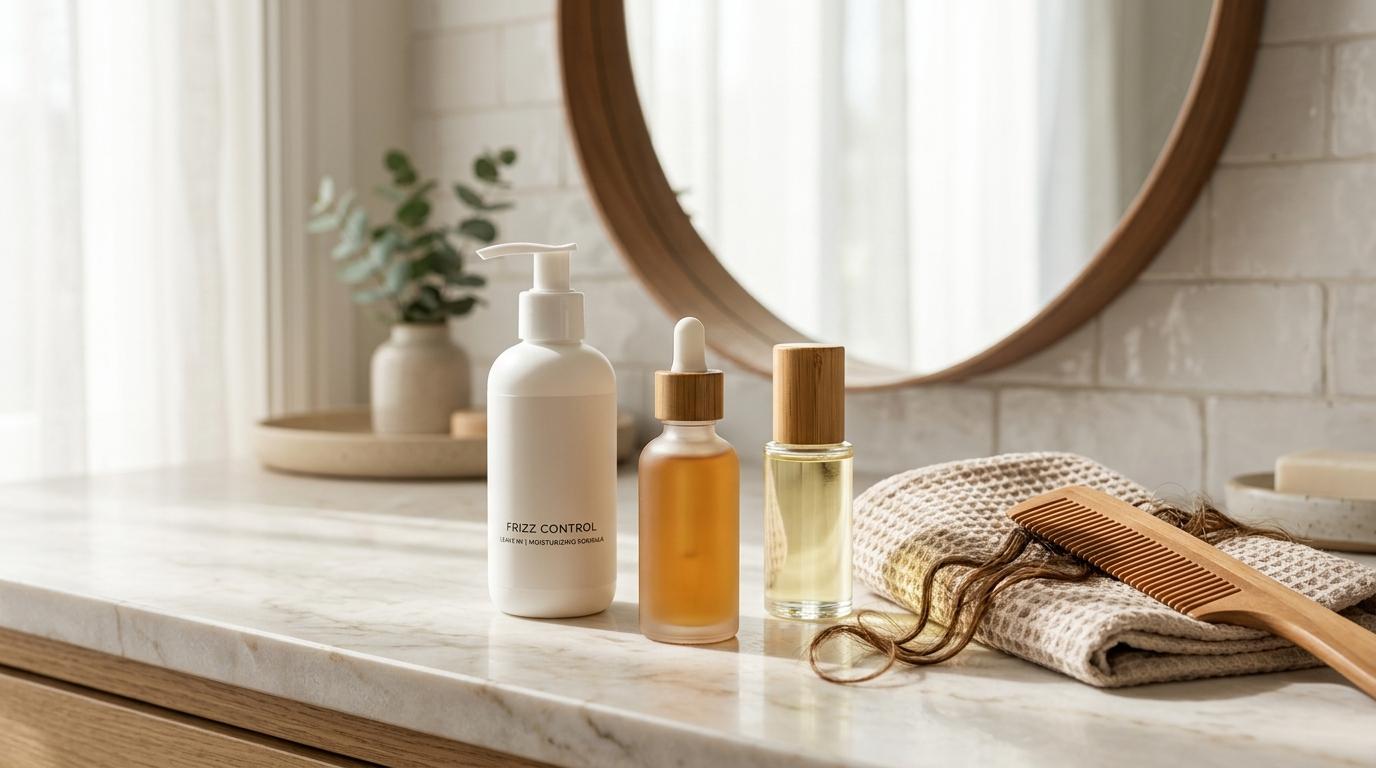
If your hair feels dry, rough, and tangles easily, start with a leave-in conditioner.
If your hair looks fine indoors but turns into a puffball the moment you step outside, you’ll probably get more help from a hair serum.
And if your hair is thick, coarse, curly, porous, or your ends get dry five minutes after styling, a hair oil can help seal everything in.
So when it comes to leave-in conditioner vs hair serum vs hair oil, there isn’t one “best” product for everyone. The right one depends on what your hair is actually missing.
This AllBlogs.in Style & Fashion guide is for anyone who has ever stood in the haircare aisle staring at three bottles that all say “anti-frizz” and thought, “Okay… but which one do I actually need?”
Quick Answer: Which One Should You Buy?
#Leave-in conditioner
- Best for: dryness, tangles, rough texture
- What it does: adds moisture, softness and slip
- Buy it if: your hair feels dry, tangles easily or frizzes after drying
Hair serum
- Best for: flyaways, shine, humidity and sleek styling
- What it does: smooths the outer layer of the hair
- Buy it if: your hair behaves indoors but expands outside
Hair oil
- Best for: dry ends, sealing, coarse or porous hair
- What it does: helps lock in moisture and soften ends
- Buy it if: your hair is thick, coarse, porous or dry at the ends
Simple rule: use a leave-in conditioner to hydrate, a serum to smooth and an oil to seal.
If you’re buying just one product for frizzy hair, start with a leave-in conditioner. For most people, frizz begins with dryness, roughness or lack of manageability.
Who This Guide Is For
#This guide is for you if your hair gets frizzy, fluffy, dull, dry, puffy, tangled or just refuses to sit nicely after washing.
It’s especially helpful if your hair is:
- Wavy
- Curly
- Coarse
- Color-treated
- Bleached
- Heat-styled often
- High-porosity
- Dry at the ends
It’s also for you if you keep buying “anti-frizz” products but still don’t fully understand why one makes your hair soft, another makes it shiny and another somehow makes it greasy by lunchtime.
Who Should Be Careful
#If your hair is very fine, straight, naturally oily or gets flat easily, you can still use frizz-control products. You just need to be a little picky.
Look for lighter textures like:
- Sprays
- Mists
- Lightweight milks
- Light serums
- Very thin lotions
Heavy oils and thick creams can make fine hair look limp instead of smooth. Annoying, yes. But very real.
Leave-In Conditioner vs Hair Serum vs Hair Oil: What’s the Difference?
#All three can make frizzy hair look better, but they don’t do the same thing.
This is where a lot of people waste money. They buy oil when their hair actually needs hydration. They buy serum when their hair needs detangling. They buy leave-in conditioner when the real issue is humidity and surface frizz.
Here’s the simple breakdown.
1. Leave-In Conditioner: Best for Dry, Frizzy, Tangled Hair
#A leave-in conditioner is usually the best first product to try if your hair is frizzy because it helps with moisture, softness and detangling.
A lot of frizz happens because the outer layer of the hair is rough, raised or not conditioned enough. When hair is dry, it tends to look puffy, feel scratchy and tangle more easily. A leave-in conditioner helps calm that down and makes your hair easier to manage.
What Leave-In Conditioner Does
#A leave-in conditioner is a conditioning product you don’t rinse out. Most people apply it after washing, while the hair is still damp.
It can help:
- Add lightweight moisture
- Reduce roughness
- Make detangling easier
- Improve softness
- Prep hair before styling
- Reduce that dry, fluffy look after washing
It’s not just about making hair “look” better for a few hours. A good leave-in can make your hair feel easier to handle overall.
What to Look For
#Most leave-in conditioners are water-based. You’ll often see water or aloe near the top of the ingredient list.
Common textures include:
- Spray
- Milk
- Lotion
- Cream
If your hair is fine, sprays and milks usually work better. If your hair is thick, curly, coarse or very dry, a creamier leave-in may suit you more.
Best For
#Choose a leave-in conditioner if your hair:
- Feels dry even after using regular conditioner
- Tangles easily
- Looks frizzy right after air-drying
- Feels rough, crunchy or straw-like
- Needs softness more than shine
- Has been colored, bleached or heat-styled often
Buying Verdict
#If you’re asking, “What’s the best product for frizzy hair if I only buy one?” the safest answer is usually leave-in conditioner.
Think of it as the foundation. Serums and oils often work better when your hair already has some moisture in it.
2. Hair Serum: Best for Shine, Flyaways, Humidity and Sleek Styling
#A hair serum is often confused with leave-in conditioner, but it has a different job.
Serum is mainly a surface smoother. It sits on the outside of the hair and helps create a sleeker, shinier finish. Many serums are silicone-based or use similar smoothing ingredients that lightly coat the hair.
That’s why serum gives that instant glossy, slippery feeling.
What Hair Serum Does
#Hair serum can help:
- Smooth flyaways
- Add shine
- Reduce surface frizz
- Make hair look sleeker
- Protect a finished style from humidity
- Add slip before blow-drying or heat styling, depending on the formula
But it usually does not hydrate hair the same way a water-based leave-in conditioner does.
Think of it like this:
A leave-in conditioner helps with moisture and softness.A serum helps with polish, shine and control.
What to Look For
#Serums are usually slippery liquids. Many contain silicones such as dimethicone or other smoothing ingredients.
Some people love silicones because they make hair look smooth and shiny. Some people avoid them because they can build up if hair isn’t washed properly. Honestly, it doesn’t need to be dramatic either way. The right choice depends on your hair type, how often you wash and how your hair responds.
Best For
#Choose hair serum if your hair:
- Gets frizzy in humid weather
- Looks dull and needs shine
- Has flyaways around the crown or ends
- Looks smooth indoors but puffs up outside
- Needs a polished finish after styling
- Is blow-dried, straightened or curled often
Buying Verdict
#In the hair serum vs leave-in conditioner decision, choose serum if your main problem is surface frizz, shine and humidity.
Choose leave-in conditioner if your main problem is dryness, tangling and rough texture.
3. Hair Oil: Best for Sealing Dry Ends and Coarse Hair
#Hair oil is probably the most misunderstood product in the frizz-control world.
Oil can make hair softer, smoother and shinier, but it does not add water-based moisture. So if your hair is genuinely dehydrated, oil alone may not fix the problem.
That doesn’t mean oil is useless. It just means you need to use it at the right time.
What Hair Oil Does
#Hair oil can help:
- Seal in moisture after conditioning
- Add softness to dry ends
- Reduce roughness on coarse hair
- Add shine
- Make hair feel more flexible
- Create a protective layer over the hair
Some oils can help reduce moisture loss and support the outer layer of the hair, but they should not replace conditioner or leave-in conditioner.
In simple terms: oil is better at keeping moisture in than adding moisture by itself.
What to Look For
#Hair oils can be lightweight or heavy.
Common options include:
- Argan oil
- Jojoba oil
- Coconut oil
- Squalane
- Castor oil
Light oils are usually better for fine or medium hair. Heavier oils tend to suit thick, coarse, curly or very dry hair better.
Best For
#Choose hair oil for frizz if your hair:
- Is thick or coarse
- Has dry ends
- Feels rough after styling
- Is porous and loses softness quickly
- Needs sealing after leave-in conditioner
- Looks dull but gets greasy if product goes near the roots
Buying Verdict
#Buy hair oil if your hair already has moisture but struggles to keep it in.
For a lot of people, oil works best as the last step, not the first one.
Side-by-Side Buying Checklist
#Main job
- Leave-in conditioner: hydrate and detangle
- Hair serum: smooth and add shine
- Hair oil: seal and soften
Best use time
- Leave-in conditioner: after washing, on damp hair
- Hair serum: damp or dry hair, before or after styling
- Hair oil: usually last step, mid-lengths to ends
Best for dryness
- Leave-in conditioner: yes
- Hair serum: not mainly
- Hair oil: helps seal, but does not hydrate much by itself
Best for humidity
- Leave-in conditioner: some help
- Hair serum: yes
- Hair oil: some help
Best for detangling
- Leave-in conditioner: yes
- Hair serum: some slip
- Hair oil: limited
Most likely to weigh hair down
- Leave-in conditioner: if too rich
- Hair serum: if overused
- Hair oil: very easily if too heavy
What Should You Buy Based on Your Frizz Type?
#If Your Hair Is Dry and Frizzy After Washing
#Buy a leave-in conditioner.
This usually means your hair needs more conditioning support before styling. Apply it to damp hair, focus on the mid-lengths and ends, then style as usual.
If Your Hair Is Smooth at Home but Frizzy Outside
#Buy a hair serum.
This usually means humidity is a big trigger for your frizz. A serum can help coat the hair and reduce how much it reacts to damp air.
If Your Ends Are Dry, Rough, or Puffy
#Buy a hair oil.
Use a small amount after leave-in conditioner or after styling. Keep it mostly on the ends, not near your scalp.
If Your Hair Is Thick, Curly, or High-Porosity
#You may need both a leave-in conditioner and hair oil.
The leave-in adds moisture and slip. The oil helps seal that softness in so your hair doesn’t dry out as quickly.
If Your Hair Is Fine and Frizzy
#Start with a light leave-in spray or a tiny amount of lightweight serum.
Avoid heavy oils unless you’re using only one drop on the very ends. And even then, go slowly. Fine hair gets greasy fast.
How to Layer Them Without Making Your Hair Greasy
#The easiest order is:
- Leave-in conditioner on damp hair
- Hair serum before styling or after styling for flyaways
- Hair oil last, only on the mid-lengths and ends
You don’t always need all three.
For everyday styling, many people only need one or two products. If your hair is fine, using all three at once may feel too heavy. If your hair is thick, coarse, curly or very dry, layering can work really well as long as you use small amounts.
What to Check Before Buying Hair Products
#A good frizz-control buying guide has to go beyond the front label. Because honestly, almost every bottle says some version of “smooth,” “shine,” “repair” or “anti-frizz.”
The back label usually tells you more.
1. Check the First Few Ingredients
#For a leave-in conditioner, look for a water-based formula. Water or aloe is often near the top.
For a hair serum, expect smoothing ingredients like silicones or polymers.
For a hair oil, check whether it is mostly oil or a blend that also contains fragrance, silicones or other additives.
None of these are automatically bad. You just want to know what you’re paying for.
2. Check Your Hair Thickness
#- Fine hair: sprays, mists, lightweight serums
- Medium hair: lotions, milks, light creams
- Thick or coarse hair: creams, richer leave-ins, oils
If your hair gets greasy quickly, choose lighter formulas.
3. Check Your Hair Porosity
#Low-porosity hair often resists water and can feel coated easily. It usually does better with lightweight products.
High-porosity hair absorbs moisture quickly but loses it quickly too. It often benefits from richer leave-ins and sealing products like oils.
4. Check Your Climate
#Humid weather usually calls for a serum or another smoothing product that helps control surface frizz.
Dry weather can make hair feel brittle, so a leave-in conditioner and a small amount of oil may be more useful.
5. Check Your Styling Habits
#If you blow-dry, straighten or curl your hair often, a serum may fit your routine better than oil alone.
If you air-dry and mainly want softness, start with a leave-in conditioner.
6. Check the Product Weight
#Words like rich, butter, intense or deep usually suggest a heavier product.
Words like weightless, mist, milk or lightweight usually suit finer hair better.
Related AllBlogs Reads
#If you are building a practical personal-care routine, you may also find these useful:
- Sunscreen Stick vs Lotion vs Spray: Best SPF Format
- Mineral vs Chemical Sunscreen: Which One Should You Buy for Daily Use?
- Solid Perfume vs Rollerball vs Travel Atomizer: Which One Should You Buy?
Common Mistakes to Avoid
#Mistake 1: Using Oil on Dry, Unconditioned Hair
#Oil is best at sealing. If you apply it to hair that has no moisture or conditioning underneath, your hair may look greasy but still feel dry.
Better approach: apply leave-in conditioner first, then use a small amount of oil on the ends if needed.
Mistake 2: Thinking Serum Replaces Conditioner
#Serum can make hair look smoother, but it does not replace conditioning. If your hair is dry underneath, serum may only give temporary shine.
Better approach: use leave-in conditioner for moisture, then serum for polish.
Mistake 3: Applying Everything Near the Roots
#Most frizz products should go on the mid-lengths and ends, not the scalp.
Roots get oily faster and can look flat when coated with serum, cream or oil.
Mistake 4: Using Too Much Product
#More product does not always mean less frizz. Sometimes it just means sticky, limp or greasy hair.
Start with a small amount. Add more only if your hair actually needs it.
Mistake 5: Buying Only Because the Label Says “Anti-Frizz”
#“Anti-frizz” can mean many things. It might be a conditioner, serum, oil, cream or styling product.
Always check what the product actually is before buying.
Final Takeaway
#When choosing between leave-in conditioner vs hair serum vs hair oil, don’t buy a product just because the bottle promises shine or has pretty packaging.
Buy based on what your hair actually needs.
- Need moisture and detangling? Choose leave-in conditioner.
- Need shine and humidity control? Choose hair serum.
- Need to seal dry ends and soften coarse hair? Choose hair oil.
For most frizzy hair, the smartest starting point is a leave-in conditioner. Once your hair feels softer and more hydrated, you can add serum for a smoother finish or oil to seal the ends.
That way, you’re not just covering up frizz. You’re choosing the right product for the reason your frizz is happening in the first place.