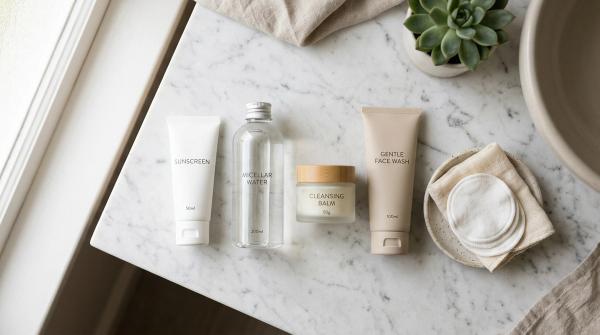
Fragrance-free and unscented sound like they should mean the same thing. They don’t. Fragrance-free usually means no ingredients were added just to make the product smell nice. Unscented means the product doesn’t have an obvious smell, but it may still contain ingredients that hide or mask the natural scent of the formula. If your skin is sensitive, reactive, or easily annoyed, fragrance-free is usually the safer place to start.
Buying skincare should be simple.
You need a cleanser. Maybe a moisturiser. Definitely sunscreen. Done.
Except then you’re standing in the aisle, staring at twenty different bottles, and every single one is making a different promise.
“Gentle.”
“Clean.”
“For sensitive skin.”
“Unscented.”
“Dermatologist tested.”
“Calming.”
“Natural.”
Then you turn the bottle around and the ingredient list looks like something from a science textbook.
If your skin already gets red, itchy, stingy, tight, bumpy, or irritated, this can feel exhausting. You’re not trying to build a complicated routine. You’re just trying to buy a moisturiser without making your face angry.
The good news: you don’t need to become a skincare expert.
You just need to know what a few common label claims actually mean. And one of the most useful ones to understand is the difference between fragrance-free and unscented.
The short version: choose fragrance-free first
#If your skin is sensitive or easily irritated, fragrance-free is usually a better first choice than unscented.
Here’s the simple reason:
Unscented means you probably won’t smell anything. Fragrance-free means fragrance ingredients usually weren’t added in the first place.
That difference matters.
Unscented products are designed to smell neutral. But sometimes, brands use masking ingredients to cover up the natural smell of the formula. So the product may smell like “nothing,” while still containing fragrance-related materials.
Fragrance-free products can still have a smell, though. This is where it gets confusing.
A fragrance-free cream might smell a little waxy, earthy, medicinal, oily, or just kind of plain. That doesn’t automatically mean perfume was added. It may just be the natural smell of the ingredients.
So if you remember only one thing, make it this:
For sensitive skin, look for “fragrance-free” first, then check the ingredient list anyway.
Not exciting. Very useful.
Fragrance-free vs unscented skincare: what’s the real difference?
#These two terms are easy to mix up because they both sound like they’re talking about smell. But they mean different things.
What “fragrance-free” usually means
#A fragrance-free product is generally made without ingredients added specifically to scent the product.
That can include:
- Synthetic fragrance blends
- Perfume
- Natural fragrance materials
- Some aromatic ingredients used mainly for scent
But fragrance-free does not always mean the product has no smell at all.
Skincare ingredients have their own natural odors. Oils, waxes, clays, sunscreen filters, preservatives, plant extracts, and other formula ingredients can all smell like something.
That’s why a fragrance-free product might not smell “pretty,” but it can still be a better option for reactive skin.
One more thing: a product may be labelled fragrance-free and still contain a botanical extract that naturally has a scent, especially if that extract is included for another purpose. That doesn’t automatically make the product bad. But if your skin reacts to plant extracts, essential oils, or “natural” products in general, it’s a good reason to read the full ingredient list.
What “unscented” usually means
#Unscented means the product has been made so it doesn’t have an obvious smell.
That sounds perfect if you hate strong fragrances. And sometimes it’s fine.
But unscented is mostly about your nose. It doesn’t always tell you what’s best for your skin.
Some unscented products use masking ingredients to hide the natural odor of the formula. So you may not smell anything, but your skin may still be exposed to fragrance-related ingredients.
That’s the part a lot of people miss.
A product can smell like nothing and still not be truly fragrance-free.
Quick comparison table
#Why fragrance can be tricky for sensitive skin
#Fragrance is not always one single ingredient.
It can be a blend of many scent components. On cosmetic labels, fragrance may show up as:
- Fragrance
- Parfum
- Perfume
- Aroma
- Flavor
The tricky part is that “fragrance” or “parfum” can represent a whole mixture, and the label may not list every individual component inside that blend.
For some people, this is not a big deal. Their skin handles scented products just fine.
But if your skin often reacts with redness, itching, burning, stinging, rashes, bumps, or irritation, fragrance is worth paying attention to.
You don’t need to be scared of every product. You just need to simplify your choices.
Start with fewer scented products. Read labels. And don’t assume a product is fragrance-free just because the front says “gentle.”
A beginner-friendly label checklist for sensitive skin
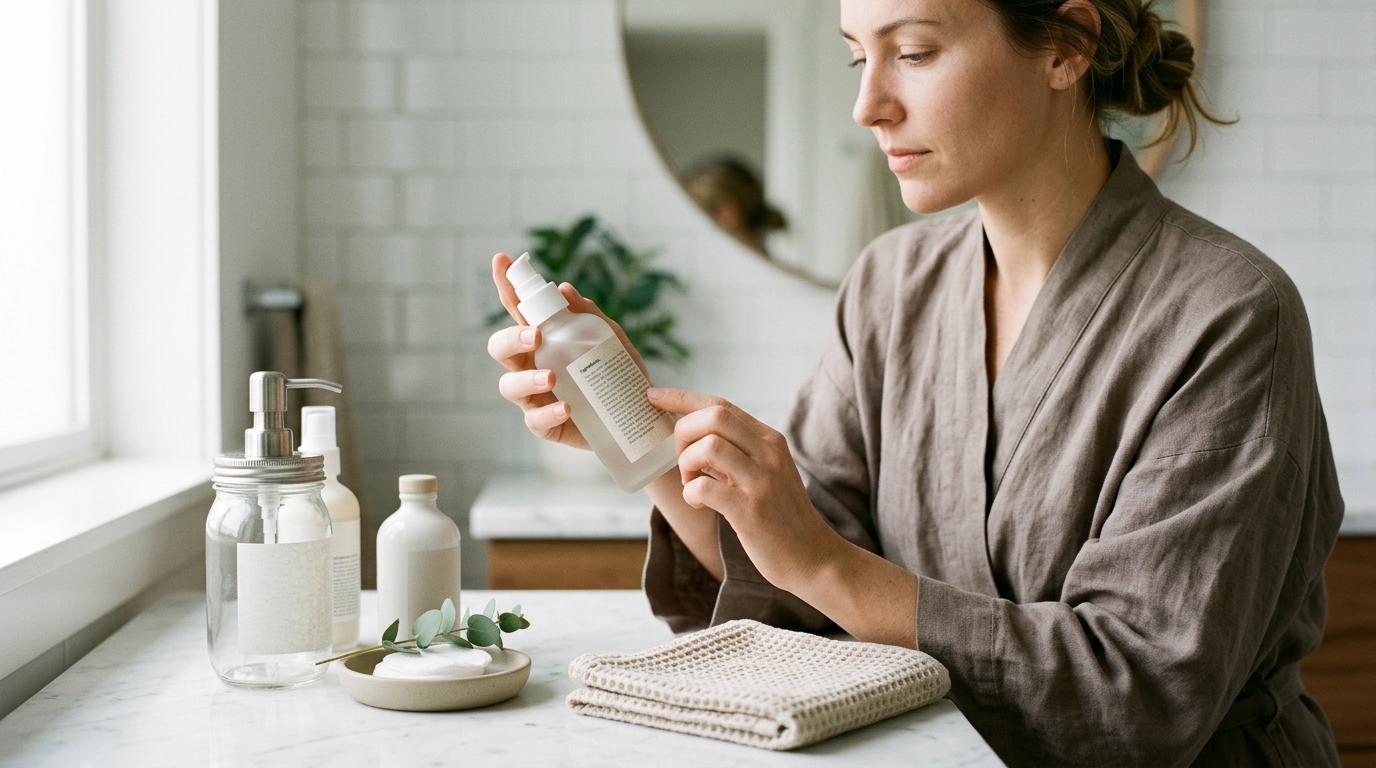
#Before you buy a cleanser, moisturiser, sunscreen, hand cream, body lotion, or body wash, flip the product over.
The front of the bottle is where the marketing happens.
The back of the bottle is where the useful clues are.
1. Look for obvious fragrance words
#Start by scanning the ingredient list for:
- Fragrance
- Parfum
- Perfume
- Aroma
- Flavor
If you’re trying to avoid fragrance, these words are your first red flags.
That doesn’t mean every product with fragrance is evil. Plenty of people use scented skincare with no problem.
But if your skin is reactive, irritated, or unpredictable, it’s usually smarter to skip those products at first.
2. Don’t assume unscented means fragrance-free
#This is the big one.
If the front of the product says unscented, still check the ingredient list.
Unscented products may include ingredients that mask or neutralize the formula’s natural smell. So they may be pleasant for your nose, but not necessarily ideal for sensitive skin.
Think of it this way:
Fragrance-free is about what was added. Unscented is about what you can smell.
Those are not the same thing.
3. Be careful with essential oils
#Natural does not always mean gentle.
Skincare marketing loves to make “natural” sound automatically safer, but your skin does not care whether an ingredient came from a plant or a lab. It only cares whether it can tolerate it.
Essential oils are natural, but they are also fragrant. Some people with sensitive skin do fine with them. Others don’t.
Common essential oils and fragrant plant oils include:
- Lavender oil
- Citrus oils
- Eucalyptus oil
- Peppermint oil
- Tea tree oil
- Rose oil
You may also see fragrant components such as:
- Limonene
- Linalool
- Citral
- Geraniol
- Eugenol
If scented products often bother your skin, these are worth noticing.
4. Don’t rely only on “for sensitive skin”
#“For sensitive skin” can be helpful, but it is not a guarantee.
A product can be marketed as gentle and still contain fragrance, essential oils, or aromatic extracts.
Annoying? Yes.
Common? Also yes.
So don’t ignore the claim completely, but don’t let it be the only thing you check. The ingredient list still matters.
5. Think about rinse-off vs leave-on products
#Not all products stay on your skin for the same amount of time.
A cleanser gets rinsed off. A moisturiser, sunscreen, body lotion, or hand cream stays on your skin for hours.
For sensitive skin, leave-on products usually matter more because your skin has longer contact with them.
That does not mean scented cleansers can’t cause problems. They can. If your face feels hot, tight, itchy, or stingy after washing, your cleanser might be part of the problem.
But if you’re trying to reduce irritation, start with the products that sit on your skin the longest.
That usually means:
- Moisturiser
- Sunscreen
- Body lotion
- Hand cream
- Face cream
- Leave-on treatments
6. Don’t forget body care
#A lot of people switch to fragrance-free face products but keep using scented body wash, shaving cream, deodorant, body lotion, or hand cream.
Then they wonder why their neck, chest, arms, hands, or legs are still irritated.
If your body skin is itchy, dry, bumpy, or red, check your body products too.
Body lotion especially matters because you usually apply it over a large area. A scented face cream is one thing. A strongly scented lotion spread over both legs and arms is a lot more exposure.
Product-by-product guide: what to choose
#You don’t need a huge routine, especially if your skin is sensitive.
In fact, sensitive skin often does better with fewer products, not more.
Start with the basics:
- Cleanser
- Moisturiser
- Sunscreen
- Simple body care if needed
Cleanser: gentle and not stripping
#A good cleanser should clean your skin without leaving it tight, squeaky, hot, or uncomfortable.
For sensitive skin, look for:
- Fragrance-free on the label
- No fragrance or parfum in the ingredient list
- A cream, milk, lotion, or gentle gel texture
- A formula that does not make your skin feel dry or stretched afterward
For example, if you’re choosing between an unscented foaming cleanser and a fragrance-free gentle cream cleanser, the fragrance-free cream cleanser is usually the calmer first pick.
Yes, cleanser gets rinsed off. But it can still cause irritation.
If your skin feels worse right after washing, your cleanser should be one of the first products you check.
Moisturiser: fragrance-free matters more when it stays on your skin
#Moisturiser sits on your skin for hours, so this is one category where fragrance-free can make a big difference.
For sensitive skin, look for:
- Fragrance-free labelling
- No fragrance, parfum, or perfume in the ingredient list
- A texture your skin likes, such as lotion, cream, or balm
- Barrier-supporting ingredients like glycerin, ceramides, petrolatum, hyaluronic acid, or squalane
If a cream smells like vanilla, rose, coconut, lavender, sandalwood, citrus, or “fresh linen,” it’s probably not the best first choice for easily irritated skin.
That does not mean the product is bad. It just means it may not be the safest starting point if your skin is already touchy.
A plain fragrance-free moisturiser is usually a better bet.
Sunscreen: broad spectrum first, fragrance-free if you’re reactive
#Sunscreen has its own rules. You want proper protection first.
For sensitive skin, look for:
- Broad spectrum on the label
- A sunscreen you will actually wear
- Fragrance-free if your skin reacts easily
- No fragrance, parfum, or perfume in the ingredient list
If one sunscreen is “tropical scented” and another is “fragrance-free broad spectrum,” the fragrance-free broad-spectrum one is usually the better first test for sensitive skin.
Sunscreen can be frustrating because texture, finish, eye-stinging, and white cast all matter. But don’t skip the basics: choose broad-spectrum protection, apply enough, and reapply when you’re outdoors.
Common mistakes to avoid
#Mistake 1: Buying only because the front label sounds nice
#Words like “clean,” “gentle,” “mild,” “calming,” “dermatologist tested,” and “for sensitive skin” can sound reassuring.
But they don’t replace the ingredient list.
Always turn the product around.
Yes, every time.
Even when you’re tired. Even when the packaging looks trustworthy. Even when the front label seems perfect.
Mistake 2: Thinking unscented automatically means fragrance-free
#This is probably the most common mix-up.
Unscented means you may not smell anything. It does not always mean the product is free from fragrance materials or masking ingredients.
If fragrance is a concern for your skin, look specifically for fragrance-free.
Mistake 3: Trusting “natural” products too much
#Natural skincare can be lovely.
It can also be full of fragrant plant oils, essential oils, and botanical extracts that sensitive skin may not like.
Your skin does not react based on whether an ingredient sounds natural or scientific. It reacts based on whether it tolerates that ingredient.
Unfair, but true.
Mistake 4: Changing your entire routine at once
#When your skin is irritated, it’s tempting to replace everything immediately.
New cleanser. New serum. New moisturiser. New sunscreen. New toner. New body wash. New laundry detergent.
The problem is, if your skin gets better, you won’t know what helped. And if your skin gets worse, you won’t know what caused it.
A better approach is to change one product category at a time.
Start with the products that stay on your skin the longest, such as:
- Moisturiser
- Sunscreen
- Body lotion
- Hand cream
Give your skin a little time before changing the next thing.
Mistake 5: Ignoring irritation that keeps coming back
#If one product stings once, maybe it just isn’t for you.
But if your skin keeps reacting, gets worse, develops a rash, or starts burning with many different products, don’t keep guessing forever.
Label-reading can help, but it is not medical care.
When to see a dermatologist
#Consider seeing a dermatologist if you notice:
- A rash that spreads or keeps coming back
- Swelling
- Severe itching
- Signs of an allergic reaction
- Irritation that does not calm down after simplifying your routine
- Burning or stinging with many different products
- Skin discomfort that affects your daily life
A dermatologist can help figure out whether you’re dealing with irritation, allergy, eczema, rosacea, contact dermatitis, or something else. They can also help you narrow down which ingredients may be causing problems.
And please don’t “push through” a product that keeps making your skin angry.
Skincare is not supposed to feel like a punishment.
A simple shopping rule for beginners
#If you’re standing in a store or scrolling online and you feel overwhelmed, use this order:
- Choose the product type you actually need: cleanser, moisturiser, sunscreen, or body care.
- Look for fragrance-free, not just unscented.
- Turn the product around and read the ingredient list.
- Avoid obvious fragrance terms like fragrance, parfum, perfume, aroma, and flavor.
- Be cautious with essential oils and aromatic plant extracts if your skin reacts easily.
- For sunscreen, make sure it says broad spectrum.
- If irritation continues, check in with a dermatologist.
That’s enough to start.
You do not need a perfect routine. You need a routine your skin can tolerate.