The monsoon taught me to respect my masala dabba
#I used to think spice storage was one of those boring kitchen-aunty topics, like wiping the underside of pressure cooker lids or keeping three seperate jars for three kinds of salt. Useful, sure, but not exactly thrilling. Then one July, during that sticky, wet, smells-like-damp-clothes kind of weather, I opened my masala dabba to make a quick aloo fry and my red chilli powder had turned into a sad brick. Not a cute brick. A hard, clumpy, slightly musty little disaster. I poked it with a spoon, and it cracked like old plaster. Honestly, I nearly cried because that chilli was from my cousin’s trip to Byadgi, and if you know, you know. It had that deep red color and gentle heat that makes even plain dal look like it got dressed up for a wedding.
Since then, I’ve become a bit obsessive about storing masala and spices in humid weather. Not in a fancy lab-coat way. More like, I will side-eye anyone who leaves the coriander powder jar open while making chai. Humidity is sneaky. It doesn’t crash into your kitchen yelling. It just floats around, gets into your jars, softens your papad, makes your sugar clump, and slowly steals the soul out of your spices. And spices are not just pantry things to me. They are memories. They’re the smell of my mother tempering mustard seeds on Sunday morning, the roasted cumin from roadside chaas, the smoky garam masala in a tiny restaurant where the tables were always sticky but the food was pure heaven.
Why humid weather is such a drama queen with spices
#Spices are dry by nature, and that dryness is what keeps them fragrant, pourable, and safe for longer. Humid air brings moisture, and moisture does three annoying things. First, it makes powders clump. Second, it dulls the aroma, because those beautiful volatile oils in spices don’t like being exposed to air, heat, and dampness again and again. Third, if things get damp enough, especially if you’re dipping wet spoons or keeping jars near steam, you can end up with mold or a weird stale smell. And once a spice smells musty, please don’t be brave. Throw it out. No biryani deserves that energy.
This is why kitchens in coastal cities and monsoon-heavy places need a slightly different spice routine. My friend in Mumbai once told me she buys turmeric in small packets because the big jar gets clumpy before she finishes it. At first I laughed because I was in my bulk-buying phase, like some spice-hoarding squirrel. But she was right. In humid weather, smaller quantities often beat the big economical pack, unless you really cook daily for a crowd. I hate admitting it, but yes, sometimes the aunty wisdom wins.
The biggest mistake: keeping masalas near heat, steam, and “just for convenience” spots
#I get it. The stove-side shelf feels perfect. You’re cooking tadka, you need cumin, chilli, hing, turmeric, garam masala, boom boom boom. But that shelf right above or beside the stove is basically a spa treatment for your spices, and not the good kind. Steam from dal, heat from the flame, condensation from lids, oily hands, wet spoons, all of it gets into your jars. I had a cute little wooden spice rack once, sitting right next to the hob because it looked very food-blogger-ish. Within two months, the labels were greasy, the jar lids were sticky, and my cumin powder smelled like nothing. Like dust with ambition.
Now I keep daily spices in a drawer that’s close enough to reach but not close enough to get steamed every time I boil rice. Whole spices sit in a darker cabinet. The bulk packets live in an airtight box in the pantry cupboard. If your kitchen gets damp walls or that cold morning condensation thing, don’t ignore it. Moisture on surfaces is a warning sign that the air is carrying more water than your food storage wants. I went down a whole rabbit hole after noticing water droplets inside my fridge and even wrote notes from this helpful read on Fridge Condensation: Causes, Fixes and Food-Safety Checks, because the same basic villain shows up everywhere: wet air touching food and containers.
Airtight containers are not optional, sorry
#There are people who will say, “Oh my grandma kept spices in old biscuit tins and nothing happened.” Fine. Grandmas are built different. Also, they cooked through ingredients faster, roasted and ground fresh masalas more often, and somehow knew the weather by sniffing the air at 6 am. Me? I need airtight containers. Glass jars with good lids, stainless steel dabbas that shut properly, or decent food-grade plastic containers if that’s what the budget allows. The main thing is that air should not casually enter and leave like it owns the place.
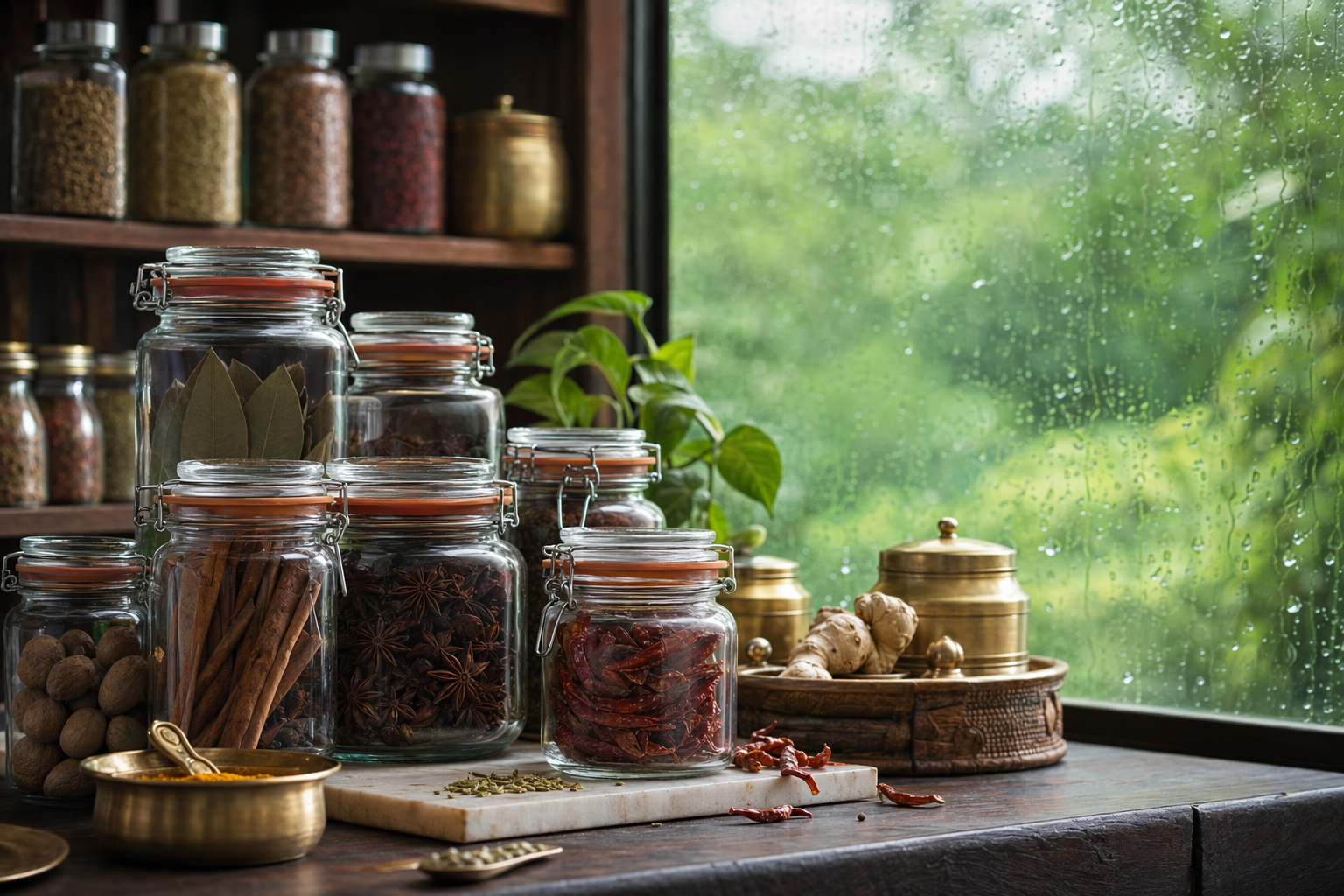
I prefer glass for whole spices because I like seeing the cinnamon, cloves, bay leaves, star anise, all sitting there like tiny treasure. But glass is only useful if you keep it away from light. Sunlight fades color and flavor. So if you use clear jars, put them inside a cabinet or drawer. For powders, I actually like opaque tins or amber glass jars better. They protect from light and feel slightly old-school, which I love. My masala dabba is stainless steel, and yes, it has scratches and a turmeric stain that will probably outlive me. That’s character, no?
My basic jar rules, learned the annoying way
#- Always dry the jar completely before refilling it. Like, completely. Not “looks dry-ish.” I leave washed jars upside down overnight, then wipe and air them again.
- Don’t pour new spice over old spice unless the old one is still fresh and smells right. Otherwise you just contaminate the new batch with stale vibes.
- Use small jars for daily cooking and keep the refill pack sealed seperately. Opening one big packet every day is asking humidity to come party.
- Label the purchase month if you can. I’m not perfect at this, but when I do it, future me is very grateful.
- Never use a wet spoon. This sounds obvious until someone is making curry in a hurry and dips the same damp spoon into salt, chilli, and coriander powder. Crimes.
Whole spices are your humid-weather best friends
#If you live somewhere damp, buy more whole spices and grind smaller amounts. Whole cumin keeps its personality longer than cumin powder. Whole coriander seeds stay fresher than ground dhania. Whole black pepper, cardamom, cloves, cinnamon, fennel, mustard seeds, ajwain, methi, all of them hold onto aroma better because less surface area is exposed to air and moisture. Ground spices are convenient, absolutely, and I use them everyday. But they’re also delicate. They fade faster, clump faster, and forgive you less.
One of my happiest food memories is sitting in my nani’s kitchen while she roasted coriander seeds, cumin, dry red chillies, and a little pepper for her everyday masala. Nothing dramatic, just a dry kadhai, low flame, patient stirring. The house smelled nutty and warm and slightly smoky. She would cool everything on a steel thali, then grind it. I was the official spoon-licking child, even though that makes no sense because dry masala from a spoon is basically cough powder. Still, I loved it. That freshly ground masala made her potato curry taste like something you’d chase with hot rotis until you regret nothing.
Dry roasting helps, but don’t overdo it
#A gentle dry roast can reduce surface moisture and wake up flavor, especially for whole spices before grinding. But please don’t roast powders every time they clump. That doesn’t magically make them new again, and if there’s any musty smell, heat won’t make it safe or delicious. Also, over-roasting turns coriander bitter and cumin harsh. Low flame, keep stirring, stop when aromatic, cool fully before storing. Fully means fully. Warm spices in a closed jar create condensation inside, and then you are back to the same humid mess, just with more effort.
The fridge question, because everyone asks this
#Should you keep masala in the fridge during humid weather? My short answer: usually no. My longer answer: only for certain items, only if sealed very well, and only if you understand condensation. Fridges are moist places. Every time you take a cold jar out into a warm kitchen, water can condense on the jar and sometimes around the lid. If you open it right away, that moisture can get inside. Ground spices hate that. They really do.
I don’t refrigerate regular turmeric, chilli powder, coriander powder, cumin powder, garam masala, pav bhaji masala, sambar powder, chaat masala, or my chai masala. They stay in airtight containers in a cool dark cabinet. The only things I sometimes refrigerate are fresh pastes like ginger-garlic paste, wet masala blends, coconut-based masalas, or homemade chutney powders with higher oil or nut content if I won’t finish them quickly. Even then, I portion them. Small container, minimal opening, clean spoon. For dry spices, fridge storage often causes more problems than it solves, specially in monsoon.
Freezer? Sometimes, but don’t treat it like magic
#The freezer can help with longer storage of some whole spices, nuts, seeds, curry leaves, dried coconut, or homemade masala mixes that have oily ingredients. I keep extra dried red chillies in the freezer sometimes, especially if I’ve bought too many from a spice shop and got carried away, which happens more than I’d like to admit. But you need tight packaging. Double bag, airtight box, or vacuum-sealed if you’re that organized person I admire from a distance.
The trick is not to keep taking the same packet in and out. Portion it. Take out what you need for a month and leave the rest frozen. Repeated thawing invites condensation and flavor loss. It’s similar to why frozen foods get sad and dry when storage goes wrong. If you’re already thinking about frozen curry leaves, grated coconut, or even leftovers, this guide on How to Prevent Freezer Burn and Keep Food Better is genuinely useful. Different food, same lesson: air and moisture are not your friends when you want food to taste alive.
My monsoon masala routine, messy but it works
#- First, I check the smell. I open every jar and sniff. Good spices smell clear and direct. Cumin should smell earthy and warm. Turmeric should smell slightly bitter and woody. Chilli should smell fruity or sharp, depending on type. If it smells like cardboard, cupboard, or damp socks, it’s gone.
- Then I check texture. A few soft clumps are not the end of the world if the spice smells fine and breaks easily. Hard clumps, wet-looking patches, or powder stuck to the side of the jar are warning signs.
- I wipe the cabinet. Not with a soaking wet cloth right before putting jars back, please. I clean, then dry it properly. Sometimes I leave the cabinet door open with the fan running, very glamorous chef behavior.
- I move bulk packs into airtight boxes. Those thin plastic packets from the market are okay for transport, not for long monsoon storage. Once opened, they need backup.
- I roast and grind only small batches. My “one month masala” rule is not always followed because life, but when I follow it, food tastes better.
About silica gel, rice grains, and other kitchen hacks
#Okay, so. People put rice grains in salt shakers, and it works because rice absorbs some moisture. But I don’t put loose rice inside spice powders because then you’re fishing rice out of chilli powder like a confused person. If you want to use food-safe moisture absorbers, keep them outside the spice itself, like inside a larger storage box that holds multiple sealed jars. Those little silica gel packets can help reduce moisture in a container, but only use ones that are clearly food-safe and never tear them open. Also, don’t put random packets from shoe boxes with your spices. I know someone who did this. We are still discussing it as a family scandal.
Another thing I do, which sounds extra but isn’t: I keep my spice refills in a bigger airtight bin with a small moisture absorber placed in the corner, not touching food directly. This bin lives on a higher shelf, away from the sink. Under-sink storage is not for spices. Under-sink storage is where forgotten scrubbers and mysterious plumbing smells go to retire.
How restaurants handle spices, and what home cooks can steal from them
#I love watching restaurant kitchens when they let me peek, which is not often because apparently “can I stare at your masala system?” is not a normal dining request. But in good places, especially the small regional restaurants that cook fast and fresh, spices move quickly. That’s one reason food tastes brighter. There’s this little South Indian place I adore, not fancy at all, where their rasam powder always tastes like it was made that morning. I once asked the owner what brand they used, and he laughed. “Brand? My mother will beat me.” They roast and grind in small batches twice a week. Twice! No wonder the rasam made me emotional.
On the other hand, I’ve eaten at shiny restaurants where the food looked beautiful but the masala tasted flat. You can plate a curry with microgreens and a swirl of cream, but if the garam masala is dead, it’s dead. That’s my slightly harsh opinion. Home cooks can learn from both kinds of places: don’t store too much, don’t expose spices to steam all day, and refresh blends before they lose their voice.
The masalas that need extra attention in damp weather
#Not all spices behave the same. Plain whole spices are generally tougher. Powdered blends are more vulnerable because they contain many ground spices, sometimes salt, dried mango powder, black salt, sugar, dried herbs, or other ingredients that pull moisture. Chaat masala clumps if you look at it wrong. Sambar powder can get dull if stored near heat. Goda masala, garam masala, meat masala, kitchen king, pav bhaji masala, all these blends need tight lids and smaller batches.
Chilli powder is another delicate one. It can lose color and aroma with light and air. If it smells musty, don’t risk it. Turmeric usually feels sturdy, but it can still clump and turn stale. Hing is a whole personality. Keep it tightly closed unless you want your entire cabinet smelling like a temple kitchen and a chemistry lab had a baby. I love hing, by the way. Just respectfully.
Quick spice-by-spice storage notes from my kitchen
#- Red chilli powder: opaque airtight jar, away from sunlight. Buy smaller amounts if your kitchen is very humid.
- Turmeric: dry spoon always. It stains lids, hands, souls, everything. Accept it.
- Coriander powder: fades fast, so I prefer grinding monthly from whole coriander seeds.
- Cumin powder: best freshly roasted and ground. Store small because it goes flat and slightly bitter with age.
- Garam masala: use a tiny jar for daily cooking and keep the rest sealed. It’s usually added at the end, so aroma matters alot.
- Chaat masala: close the lid immediately. The salt and tangy bits love moisture.
How to tell if your spice is still usable
#I use the three-test method: smell, look, taste. Smell first. If there’s no aroma, it won’t poison you necessarily, but it also won’t do much for your food. You may need more of it, but honestly, adding more stale spice just gives you more stale flavor. Look for mold, damp patches, webbing, bugs, unusual color changes, or clumps that don’t break. Taste a tiny pinch only if it looks and smells normal. If it tastes dusty, bitter in a wrong way, or just tired, let it go.
Food waste makes me feel guilty, I won’t lie. I have kept old spice jars out of sentiment, especially masalas gifted by relatives after travel. But spices are meant to season food, not become museum items. Now if something is past its best but not spoiled, I use it in non-delicate cooking: marinades, roasted vegetables, big pot dals, maybe a spice rub where I can boost it with fresher ingredients. If it’s moldy or musty, bin. No argument.
Don’t forget the rest of the humid kitchen
#Spice storage doesn’t happen in isolation. If your kitchen is damp, everything suffers. Onions sprout faster, garlic gets soft, tea loses aroma, biscuits become emotional, and fresh fruit can spoil before you even remember you bought it. During monsoon I do a small weekly check: wipe shelves, dry the dish rack, keep sink areas clean, and avoid leaving wet towels near pantry shelves. It sounds boring, but it makes a difference. If you’re fighting moisture with fruit too, the tips in How to Store Fresh Berries So They Last Longer actually overlap with spice logic more than you’d think: dry storage, airflow where needed, and not trapping extra water around food.
Also, exhaust fans matter. Open a window if the weather allows, run the chimney while cooking, don’t let steam roll straight into your spice shelf. In my old apartment, the kitchen had one tiny window that opened into a wall, very poetic and useless. I started moving my masala dabba away before boiling pasta or making stock. Tiny habit, big improvement. Sometimes storage is less about buying new containers and more about noticing where the steam goes.
My favorite way to revive dinner when spices are losing power
#When I suspect my spices are getting a little dull but still usable, I build flavor in layers. Fresh ginger, garlic, green chillies, onions browned properly, tomatoes cooked until oil separates, then spices bloomed briefly in fat. That blooming part matters. Add ground spices to hot oil for a short time, not forever, and not on high flame where they burn. A dull coriander powder won’t become brand new, but fat helps carry whatever aroma is left. Then finish with something fresh: chopped coriander, lemon, a pinch of fresh garam masala, toasted kasuri methi crushed between palms. That last-minute freshness can save a weeknight curry from tasting like homework.
One rainy evening I made chana with old-ish chole masala and it tasted flat, just sitting there like it had given up. So I roasted cumin, crushed it, added black salt, ginger juliennes, lemon, and a spoon of ghee with chilli. Suddenly it woke up. Not restaurant-perfect, but cosy. The kind of food you eat in an old T-shirt while rain hits the window and rice steam fogs your glasses. That’s the goal sometimes. Not perfection. Just a bowl that loves you back.
A simple storage setup I’d suggest to anyone
#If you’re starting from scratch, don’t overcomplicate it. Get one masala dabba or a set of small airtight jars for daily spices: turmeric, chilli, coriander, cumin, mustard seeds, garam masala, maybe hing or your regional essentials. Keep it in a drawer or cabinet away from the stove. Then get medium jars for whole spices: cumin seeds, coriander seeds, pepper, cloves, cardamom, cinnamon, fennel, bay leaf, dry chillies. Keep refill packets sealed in a larger airtight container. Add labels if you can tolerate being that person. I pretend I can, then forget, then sniff everything like a detective.
Buy from stores with good turnover. This is huge. A dusty packet sitting in a shop window for months has already lost half its charm before it reaches you. I like spice shops where the owner argues passionately about chilli types and scoops coriander seeds from bins that smell fresh. Supermarket packets are fine too, especially if sealed well and not close to expiry, but don’t buy giant packs just because they’re on offer. Humid weather punishes optimism.
The best spice storage advice I can give is this: treat masala like flavor, not like inventory. It’s not something to hoard forever. It’s alive in its own dry, fragrant way, and it needs protection.
Final thoughts from my slightly stained kitchen
#Storing masala and spices in humid weather is not glamorous, but it changes your cooking more than people admit. Fresh spices make simple food taste intentional. A pinch of good roasted cumin in curd rice, bright chilli in tadka, fragrant garam masala over dal, pepper crushed into rasam, cardamom in chai on a wet evening... these are small things, but small things are basically what home cooking is made of.
So keep your jars dry, your spoons clean, your spices away from steam, and your bulk-buying instincts under control. Roast whole spices gently, grind in small batches when you can, and don’t feel bad about throwing away anything that smells musty. I learned all this after ruining enough masala to feel personally attacked by the monsoon. If you’ve got your own spice-storage tricks, I’d honestly love to hear them, because food people always have the best little secrets. And if you’re in the mood for more kitchen stories, storage ideas, and proper food-obsessed reading, wander over to AllBlogs.in sometime. I do, usually with chai.