A Taiwan convenience store breakfast is one of those small travel wins you appreciate immediately. You’re tired, maybe a little jet-lagged, maybe on your way to a train station, and you can still walk into a 7-Eleven, FamilyMart, or Hi-Life and come out with something warm, cheap, filling, and very Taiwanese.
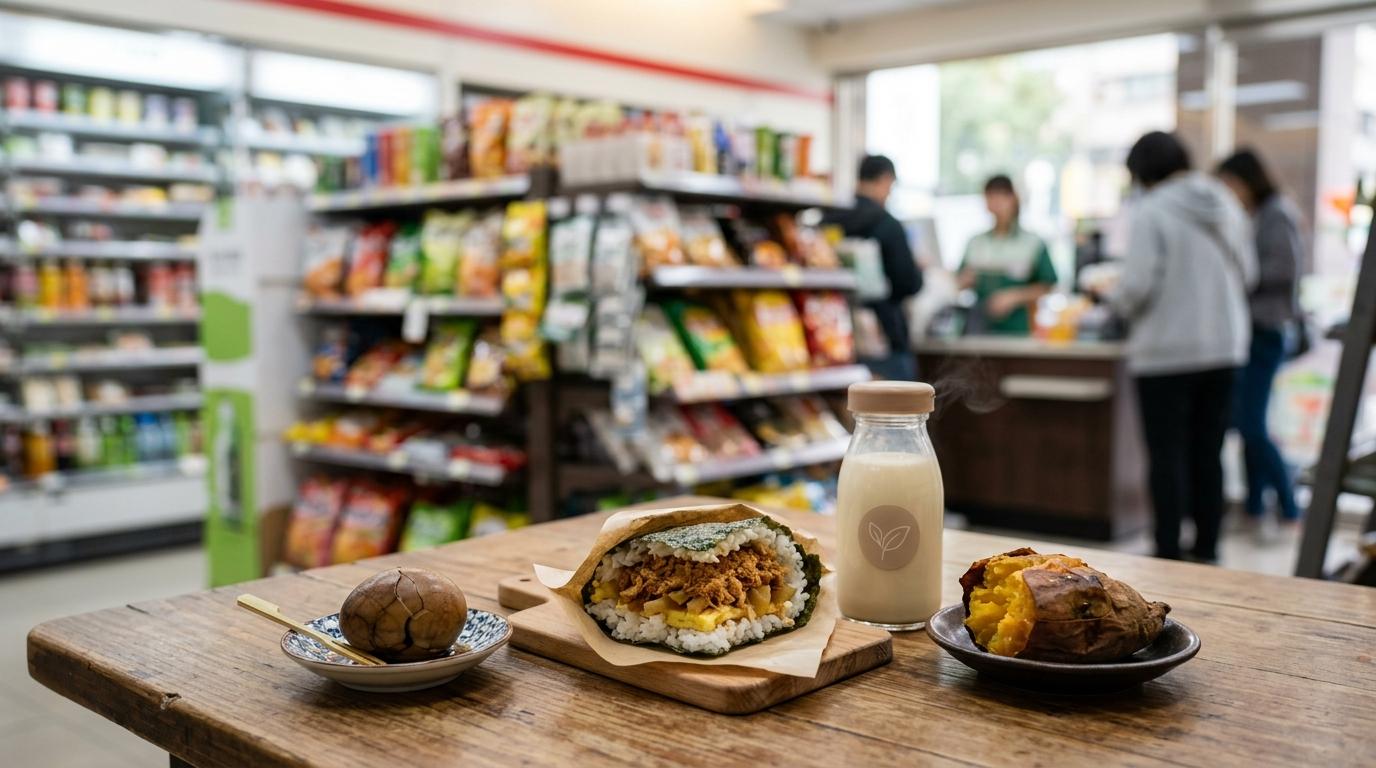
If it’s your first time in Taiwan, the convenience store breakfast scene might surprise you. These shops are not just for bottled water and emergency snacks. In the morning, they work almost like mini breakfast counters: hot tea eggs near the cashier, chilled rice balls and sandwiches in the fridge, soy milk along the drink wall, roasted sweet potatoes keeping warm, and staff who can heat certain meals for you.
If you’ve had a convenience store breakfast while traveling elsewhere in Asia, the setup will feel familiar. And if you already love a Japan konbini breakfast, Taiwan will be easy to figure out, though the flavors are different. Expect more soy milk, tea eggs, sticky rice, sesame sauces, pork floss, pickled vegetables, and local-style breakfast items.
This guide walks through what to buy, what to check, what to skip, and how to make safer choices if you’re vegetarian, vegan, allergic, or just not sure what you’re looking at yet.
Quick answer
#If you want the easiest Taiwan convenience store breakfast, get:
- Tea egg: warm, savory, cheap, and usually near the cashier.
- Rice ball: either Taiwanese-style fan tuan or Japanese-style onigiri.
- Soy milk: sweetened, unsweetened, black soybean, or flavored versions from the drink fridge.
That simple combo works well for a Taiwan 7-Eleven breakfast or FamilyMart Taiwan breakfast. It’s filling without being too heavy, easy to carry, and very affordable.
The one thing to remember: don’t judge packaged food by the front photo alone. A rice ball or noodle pack can look meat-free but still contain pork floss, fish sauce, bonito, chicken powder, gelatin, animal fat, or seafood seasoning.
If you’re vegetarian, vegan, or allergic to anything, check the label carefully. Use a translation app if needed, and when in doubt, choose something simpler.
What to buy
#Taiwanese convenience stores pack a lot into a small space, so the first visit can feel like a lot. The easiest breakfast route is:
- Check the hot food area near the counter.
- Look through the chilled rice balls, sandwiches, and noodles.
- Grab a drink from the fridge.
- Ask for heating if the item needs it.
Here are the breakfast items most travelers should know.
Tea eggs
#Tea eggs, or chaye dan, are one of the classic Taiwan convenience store foods. You’ll usually spot them in a warm metal pot near the cashier, sitting in a dark broth made with tea, soy sauce, and spices.
They’re simple but satisfying: warm, salty, gently spiced, and full of protein. They’re also one of the easiest local foods to try because you don’t need to decode a complicated package.
How to buy one:
- Use the tongs next to the pot.
- Pick an egg.
- Put it in the small bag or cup provided.
- Take it to the cashier with the rest of your breakfast.
The shell is usually cracked from simmering, but you peel it yourself before eating.
Skip tea eggs if you avoid egg or soy, since the broth usually contains soy sauce.
Rice balls
#Rice balls are one of the best Taiwan convenience store breakfast options because they’re portable, filling, and easy to eat on a train, bus, or park bench.
You’ll usually see two main types:
- Taiwanese fan tuan: sticky rice wrapped around savory fillings.
- Japanese-style onigiri: triangular rice balls wrapped in seaweed packaging.
Taiwanese fan tuan can include things like pork floss, pickled vegetables, egg, fried dough, or savory sauces. Onigiri fillings might include tuna mayo, salmon, chicken, pork, or other seasoned ingredients.
Rice balls are great if you eat everything. If you’re vegetarian, vegan, allergic to seafood, or avoiding pork, this is where you need to slow down and check the label. The filling is hidden until you open it, and the front image may not tell the full story.
Soy milk
#Soy milk, or doujiang, is a big part of Taiwanese breakfast culture. In convenience stores, you’ll find it in bottles or cartons in the refrigerated drink section.
Common choices include:
- Sweetened soy milk
- Unsweetened soy milk
- Black soybean milk
- Soy milk with grains or added flavors
Soy milk plus a tea egg or rice ball makes an easy, not-too-heavy breakfast. If you’re watching sugar, look for unsweetened versions. If you have a soy allergy, avoid it completely and choose bottled tea, water, coffee, or another sealed drink instead.
Strict vegans should still check the ingredient list, especially with flavored or mixed-grain drinks, just in case there are dairy-based additives.
Breakfast sandwiches
#Taiwanese 7-Eleven, FamilyMart, and Hi-Life stores usually have soft packaged sandwiches in the chilled section. They’re not the most local choice, but they’re useful when you want something familiar and easy to eat.
Common fillings include:
- Egg salad
- Ham and cheese
- Chicken
- Tuna
- Cheese-based fillings
They’re neat, convenient, and good for buses or trains. But vegetarians should still check the label. Even a sandwich that looks like egg or cheese may include ham, fish-based seasoning, gelatin, or other animal-derived ingredients depending on the product.
Cold noodles
#Cold noodles are especially appealing in Taiwan’s humid weather. Convenience store versions usually come in a tray with sauce packets, often sesame-based or savory.
They can be really good for breakfast if you want something cool and filling. The catch is the sauce. A noodle pack might look vegetarian at first glance, but the dressing can contain fish sauce, bonito, meat extract, oyster sauce, or seafood seasoning.
If you’re vegetarian or vegan, don’t assume cold noodles are safe unless there’s a clear vegetarian marking or you’ve checked the ingredients carefully.
Roasted sweet potatoes
#Roasted sweet potatoes are one of the best simple breakfasts in Taiwan convenience stores. They’re often kept warm near the hot food area, and you can usually smell them before you see them.
They’re filling, comforting, and not overly processed. They’re also a good option if you’re vegetarian, vegan, or tired of reading long ingredient labels.
If you have severe allergies, remember that store handling spaces are shared, so use your own judgment. But for most travelers, a warm sweet potato is one of the lowest-stress breakfast choices.
Buns and bakery items
#You may see steamed buns, packaged breads, taro buns, red bean breads, custard breads, and savory baked goods. These are easy to pair with soy milk, coffee, or tea.
Just don’t assume a bun is vegetarian because it looks plain. Savory buns can contain pork, chicken, egg, dairy, meat seasoning, or animal fat. Sweet breads are usually easier, but they may still contain milk, egg, butter, cream, or gelatin.
If you have dietary restrictions, packaged buns are another label-check item.
Vegetarian label checks
#Finding a vegetarian breakfast in Taiwan is very possible, but convenience stores require more caution than vegetarian restaurants. Taiwan has a strong vegetarian food culture, and many packaged foods do have helpful markings. The tricky part is that some breakfast items contain hidden animal ingredients, especially in sauces and fillings.
If you’re vegetarian, vegan, or avoiding specific animal products, don’t rely on the package photo alone.
Useful vegetarian words to know
#Look for these terms on packaged foods:
- 素: vegetarian
- 素食: vegetarian food
- 全素: fully vegetarian or vegan-style, depending on labeling context
- 蛋素: ovo-vegetarian, may contain egg
- 奶素: lacto-vegetarian, may contain dairy
- 蛋奶素: may contain egg and dairy
These markings are helpful, but if you’re strict vegan, still scan the ingredient list when possible. Labeling can vary by brand and product.
Ingredients vegetarians should watch for
#Some animal-based ingredients show up in foods that don’t look meaty. Be careful with:
- Fish sauce
- Bonito or fish extract
- Meat extract or broth
- Pork floss
- Chicken powder or chicken extract
- Lard or animal fat
- Gelatin
- Seafood seasoning
- Oyster sauce
- Shrimp or dried seafood
The biggest places to check are rice balls, cold noodles, sandwiches, sauces, soups, and ready meals.
Use a translation app, but stay skeptical
#A camera translation app is very useful in Taiwan convenience stores. Point it at the ingredient list and allergen panel, then look for meat, fish, seafood, egg, dairy, or anything you need to avoid.
Just remember that translations can be clumsy. Sometimes an ingredient comes through awkwardly or incompletely. If the translation looks strange and you can’t confirm what the item contains, choose something clearer.
Good fallback options include:
- Roasted sweet potato
- Bottled tea or water
- Clearly marked vegetarian packaged food
- Sealed soy milk, if soy is okay for you
- Fruit or simple packaged snacks with short labels
Ask staff if you need help
#Convenience store staff may be able to help, though English levels vary. A translated question on your phone can make things easier.
For example:
“Does this contain meat, fish, or seafood?”
If you’re vegan, also ask about egg and dairy. Still, keep in mind that staff may not know every ingredient in factory-packaged food. The printed label is usually more reliable.
For more plant-based travel planning in Asia, you may also like AllBlogs’ guide to vegetarian street food in Vietnam, Taiwan and Thailand.
What to skip
#Most Taiwan convenience store breakfast foods are worth considering, but some are easy to misunderstand. These are the items to be more careful with, especially if you have dietary needs.
Skip unlabeled “vegetarian-looking” noodles
#Cold noodles are the classic trap. They may look like plain noodles with sesame sauce, but the sauce can include fish, meat broth, bonito, oyster sauce, or other animal-based seasonings.
If there’s no clear vegetarian marking and you can’t confirm the ingredients, skip them.
Skip rice balls with unclear fillings
#Rice balls are convenient, but you can’t see the filling until you open them. If you eat meat and seafood, that’s usually fine. If you’re vegetarian, vegan, allergic to fish, or avoiding pork, check the back label carefully before buying.
Skip mystery sauces
#Sauces are where many hidden ingredients live. A salad, noodle pack, sandwich, or rice meal can seem safe until you look at the dressing or sauce packet.
If the main food looks okay but the sauce is unclear, either skip the sauce or choose something else.
Skip chilled foods if you won’t eat them soon
#If you’re about to spend hours walking around in hot weather, be practical. Chilled sandwiches, rice balls, dairy drinks, and cold noodles are best eaten soon after purchase.
For a long morning outside, choose food you can eat immediately, or go for sealed drinks, packaged snacks, and roasted sweet potatoes.
Skip anything uncertain if you have severe allergies
#If you have a serious allergy, don’t gamble on a label you can’t read. Convenience store foods are convenient, but shared manufacturing and handling can still be an issue.
When in doubt, choose the simplest sealed item with the clearest label, or buy basic foods from somewhere you can verify ingredients more confidently.
Food safety
#Taiwan convenience stores are generally reliable places to buy quick meals. Refrigerated foods are kept chilled, hot foods are held in warmers, and packaged items usually have printed dates.
Still, a few basic checks are worth doing.
Check dates and packaging
#Before buying chilled breakfast items, look at:
- The printed date or time
- Whether the item is properly chilled
- Whether the package is sealed
- Whether anything looks swollen, leaking, or damaged
If something looks off, just choose another one.
Ask for heating when needed
#Some chilled meals can be heated at the counter. The cashier may ask if you want it warmed, or you can point to the microwave area and ask.
Rice meals and some prepared dishes are often heated behind the counter. Rice balls and cold noodles are usually meant to be eaten as packaged, depending on the item.
Eat refrigerated foods soon
#If you buy chilled noodles, sandwiches, rice balls, or dairy drinks, don’t carry them around for hours. Eat them soon, especially in warm or humid weather.
Take allergens seriously
#Common allergens in Taiwan convenience store breakfast foods include:
- Soy
- Wheat
- Egg
- Milk
- Sesame
- Peanuts
- Fish
- Shellfish
Sesame sauces, seafood seasonings, egg fillings, soy marinades, wheat noodles, and dairy-based drinks are all common. If you have a severe allergy, use a translation app, check allergen warnings, and avoid anything uncertain.
Keep it simple when you’re tired
#If you’re jet-lagged, rushed, or overwhelmed by labels, there’s nothing wrong with a very basic breakfast.
Good low-stress choices include:
- Tea egg, if you eat egg and soy
- Roasted sweet potato
- Sealed soy milk, if you tolerate soy
- Bottled tea or water
- Clearly labeled vegetarian packaged food
A simple breakfast is better than guessing wrong.
Budget breakfast ideas
#A Taiwan convenience store breakfast can be very affordable, though prices vary by store, city, brand, and promotions. Instead of focusing on exact prices, think in combinations: one main item, one side or protein, and one drink.
Here are a few easy breakfast builds.
Classic local breakfast
#- Tea egg
- Rice ball
- Soy milk
This is the easiest all-around choice. You get something warm, something filling, and something to drink. It works before sightseeing, a train ride, or a busy market morning.
Light breakfast before a food-heavy day
#- Unsweetened soy milk
- Tea egg
- Small fruit cup or simple snack, if available
Choose this if you’re planning to eat more later and just need something to get started.
Vegetarian convenience store breakfast
#- Clearly labeled vegetarian rice ball or sandwich
- Soy milk
- Roasted sweet potato
This can be a solid vegetarian breakfast in Taiwan, but only if the packaged item has a clear vegetarian label or you’ve checked the ingredients. If not, stick with the sweet potato and a sealed drink.
Vegan-leaning simple breakfast
#- Roasted sweet potato
- Unsweetened soy milk or black soybean milk, if suitable
- Clearly labeled vegan or full-vegetarian packaged item, if available
If you’re strict vegan, check soy milk ingredients too, especially flavored versions.
Familiar breakfast for cautious eaters
#- Egg sandwich or cheese sandwich, if suitable
- Bottled tea, coffee, or soy milk
- Packaged fruit or snack
This is useful if you’re still getting used to Taiwanese labels and flavors but want something easy.
No-label-stress breakfast
#- Roasted sweet potato
- Bottled water or tea
- Banana or simple packaged item with a clear label, if available
This is the best choice when you’re rushed, managing allergies, or just don’t have the energy to decode a long ingredient list first thing in the morning.
Final tips for your first Taiwan convenience store breakfast
#Your first Taiwan convenience store breakfast doesn’t need to be complicated. Start with the basics: a tea egg, rice ball, soy milk, roasted sweet potato, or clearly labeled sandwich. Once you get more comfortable with labels and common fillings, you can branch out into cold noodles, buns, seasonal items, and ready meals.
For vegetarians and vegans, Taiwan is a rewarding place to eat, but convenience store packaging deserves attention. Look for vegetarian markings, scan ingredient lists, and be especially careful with sauces, noodles, and rice ball fillings.
For everyone else, don’t overthink it. A warm tea egg, a cold soy milk, and a rice ball from 7-Eleven, FamilyMart, or Hi-Life can be one of the most useful breakfasts of your trip: quick, cheap, easy to find, and very much part of everyday Taiwan.