Why I Started Carrying My Own Spoon Like a Slightly Overprepared Aunty
#I’ll be honest, my reusable travel cutlery kit started because of one very sad plate of poha at Bhopal station. The poha was actually nice, full of sev and that lemony smell, but the plastic spoon was so bendy it kept folding like it had given up on life. I was trying to eat fast because my train was about to leave, my backpack was slipping from one shoulder, and half the poha fell on my jeans. That was the day I thought, bas, enough. I’m carrying my own spoon now. Sounds dramatic, no? But if you travel even a little in India, by train, bus, flight, road trip, whatever, you’ll understand. Food is everywhere, but good cutlery is not. Sometimes you get wooden spoons that taste like cardboard, sometimes thin plastic forks, sometimes nothing at all because the vendor is like “haath se kha lo madam”. Which is fine for vada pav, not so fine for curd rice in a moving bus.
Since then my small reusable cutlery pouch has gone with me to Goa beach shacks, Himachal homestays, Kerala train journeys, airport lounges where the food looked fancy but the spoons vanished, and even one office trip to Bengaluru where dinner was eaten from a takeaway box on the hotel bed. It’s not some big eco-warrior statement every single time, though yes, reducing single-use plastic matters. For me it’s also comfort. Hygiene. Convenience. And honestly, a little dignity when you’re eating dal-chawal from a foil container at 11 pm after a delayed flight.
What a Reusable Travel Cutlery Kit Actually Needs, Not Instagram Fancy Stuff
#There are many cute travel cutlery kits online now, bamboo ones, stainless steel ones, pastel colour ones, collapsible ones that look like space equipment. I have tried too many because I get influenced easily, not proud of it. But after enough trips, I realised a good reusable travel cutlery kit is not about looking aesthetic in a flatlay. It has to survive Indian travel. Dust, chai spills, being thrown into a rucksack, getting washed in a railway station sink, and sometimes being used to cut an over-stuffed aloo paratha because the hotel forgot to send a knife.
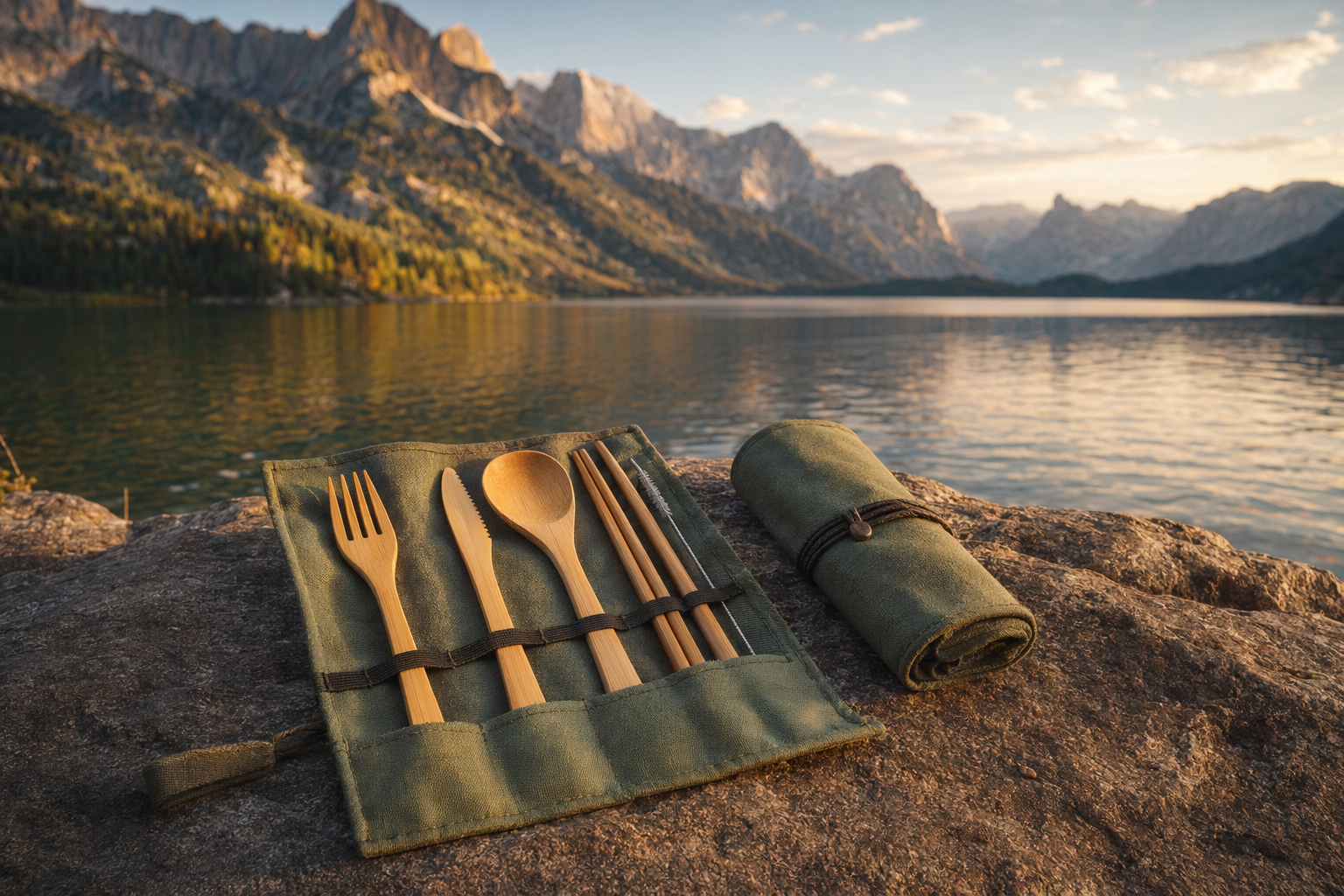
My basic kit now is simple: one medium spoon, one fork or spork, one blunt butter knife only if I’m not flying with cabin baggage, a pair of small chopsticks when I’m going to places with noodles or Asian food, a metal straw sometimes, and a cloth napkin. That’s it. I keep it in a washable zip pouch, not those hard boxes that open inside the bag and make noise like a tiffin orchestra. For most Indian trips, especially trains and budget hotels, a spoon and fork are enough. If you eat South Indian meals often, you may not even use the fork much. But when you need it, you really need it. Like for Maggi at 2 am in a mountain hostel. Important life moment.
My Current Kit, After Many Small Failures
#- Stainless steel spoon, medium size. Not tiny dessert spoon, not huge serving spoon. Something that can handle poha, dal, curd, cup noodles, khichdi, everything.
- A sturdy fork or spork. I prefer a fork because sporks are sometimes useless from both sides, but some travellers love them. Try at home before taking it on a long trip.
- Soft cloth napkin or small quick-dry towel. Tissue is not always available, and wet wipes create more waste. Also cloth feels nicer, ya.
- Small pouch with waterproof lining. This is non-negotiable for me because half-washed cutlery in a normal cloth bag becomes smelly very fast, specially in humid places.
- Optional straw and straw cleaner. Useful if you drink coconut water, cold coffee, sugarcane juice, or anything from places where they still push plastic straws.
Stainless Steel, Bamboo, Titanium, Silicone: What I’d Pick for Indian Travel
#If you ask me, stainless steel is the most practical for India. It’s durable, easy to wash, doesn’t absorb smells, and you can buy replacements almost anywhere. My spoon from a random supermarket in Pune has lasted longer than one expensive bamboo set I bought online. Bamboo looks nice and light, but in monsoon it can feel damp and start smelling weird if you don’t dry it properly. Maybe I was careless, but travel is careless sometimes. You don’t always have sunlight and a neat drying rack in your life.
Titanium is great if you’re trekking and counting grams, but it’s expensive and honestly most weekend travellers don’t need it. Silicone handles are comfortable but check the quality, because cheap ones get sticky in heat. Plastic reusable cutlery is light, but it stains with turmeric and sambhar like anything. After one Andhra meal, my white plastic spoon became permanently yellow, which is not a tragedy but still.
For flights, I keep it boring and safe: spoon and fork, no sharp knife in cabin baggage. Airport security can be unpredictable depending on the airport, staff, and how sharp your item looks. A butter knife may pass in some places if it’s blunt, but why take panga when you can pack it in check-in or skip it? Also remember, food and utensils are screened differently. Your spoon may be okay, but that creamy dip or cake frosting may get treated under liquid or gel rules depending on where you’re flying. If you carry sweets, cakes, or messy packed food, this guide on Can You Bring Cake on a Plane? Frosting, Cream, and Packing Rules is actually useful to check before you reach security and start negotiating with CISF uncle.
The Things I Avoid Now, Because I Learnt the Annoying Way
#First thing I avoid: sharp knives in hand baggage. Even if the product says “travel safe”, don’t blindly trust it. Security rules are not made by Amazon descriptions. If I need a knife for fruits or cheese on a road trip, I pack a small kitchen knife safely in checked luggage or buy cut fruit locally. For train and bus trips, a blunt butter knife is enough for spreading peanut butter or cutting soft bread. For trekking, follow your trek operator’s advice, because some camps provide kitchen stuff and some don’t.
Second, I avoid wooden or bamboo cutlery that has rough edges. It looks eco-friendly but if it splinters or absorbs oil, no thank you. I once carried a bamboo fork to Gokarna, washed it after eating lemon rice, and by next morning it had that sour, damp smell. Maybe it was the sea air, maybe my laziness, maybe both. Since then, stainless steel only for humid coastal trips. In places like Goa, coastal Karnataka, Kerala, Andaman, or even Mumbai in monsoon, drying time matters more than you think.
Third, avoid huge full-size cutlery sets unless you are doing van life or a long family road trip. For solo or couple travel, a compact kit is enough. Don’t carry six pieces because you saw a “complete set” online. You’ll use two and curse the rest while packing. Also avoid kits with no pouch. Loose cutlery in a backpack scratches power banks, pokes snack packets, and makes airport security ask extra questions. Not worth it.
Where This Kit Helps Most: Trains, Budget Hotels, Airports, and Road Trips
#Indian train travel is the real test. On Rajdhani or Vande Bharat type trains, meals are organized, but even there a personal spoon feels cleaner. On regular express trains, station food is hit or miss, and your own cutlery makes eating much easier. Imagine curd rice from home, thepla with pickle, idli in a steel dabba, or chole kulche from a platform stall. You don’t have to depend on whatever spoon the vendor gives. In sleeper class or 3AC, I prefer a spoon with a slightly rounded edge because you’re eating while the train is doing its own dance.
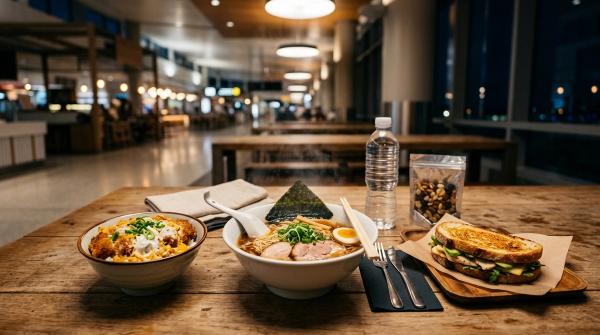
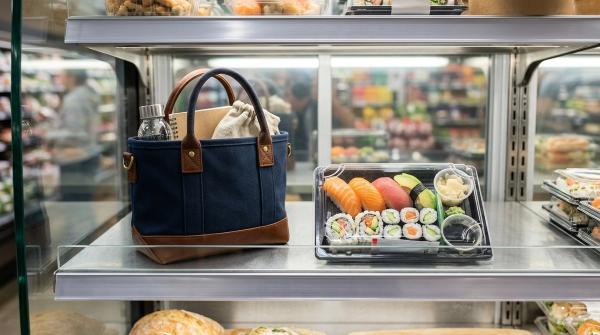
Airports are another place where reusable cutlery feels like a small rebellion against overpriced food. Most airport food courts have cutlery, yes, but if you’ve ever taken a packed meal from home to avoid paying ₹350 for a dry sandwich, you know the value of your own spoon. Domestic flights in India can also have delays because of weather, congestion, or operational issues, so carrying a snack box plus cutlery is sensible. Nothing fancy. Lemon rice, paratha roll, sprouts chaat, or dry poha mix. If you’re packing no-fridge food, I’d pair the kit with things like roasted chana, peanut chikki, makhana, thepla, and other ideas from Shelf-Stable Vegetarian Protein Snacks for Travel. It saves money and mood, both.
Budget hotels and hostels are where it becomes gold. In India, dorm beds in backpacker hostels can be roughly ₹400 to ₹1,200 per night depending on the city and season. Basic private rooms often start around ₹1,500 to ₹3,500 in many tourist towns, though hill stations and beach places shoot up during long weekends. Many of these places have kettles, shared kitchens, or at least hot water access. A spoon and fork means you can eat oats, cup soup, instant noodles, fruits, leftover biryani, anything. And yes, if you’re doing hotel-room meals, read this before you become too adventurous with kettles: Instant Noodles While Traveling: Kettle & Safety Tips. I have seen people boil eggs in kettles. Please don’t be that person.
Seasonal Packing Tips, Because India Is Basically Many Countries in One
#Your reusable travel cutlery kit should change a little with weather. In summer, especially North India summer where everything feels like tandoor air, carry a pouch that can be wiped clean. Food residue turns nasty fast. Wash your spoon properly after dairy items like curd, lassi, paneer rolls, or mayo sandwiches. If you can’t wash immediately, at least wipe it with tissue and rinse later. Don’t put a wet spoon straight into a closed pouch and forget it for two days. I have done this. The smell was personal attack.
Monsoon travel needs extra care. Whether you’re in Munnar, Chikmagalur, Meghalaya, Goa, or just commuting through Mumbai rains, things don’t dry. A metal kit is better than bamboo. Carry two napkins if possible, one for wiping hands and one for wrapping washed cutlery. If your pouch is cloth, let it breathe at night. Fungus is not a travel souvenir anyone asked for.
Winter travel is easier, especially in Rajasthan, Gujarat, Delhi, Varanasi, Himachal, Uttarakhand, and the Northeast during clear weather months. But cold places bring another issue: you eat more hot snacks and soups, and flimsy plastic spoons crack in hot food. A metal spoon is comforting. In mountain areas, your kit is useful for thukpa, Maggi, siddu, rajma-chawal, or whatever warm thing you find after a cold bus ride. Just don’t lick the spoon and put it back, even if you’re tired. Basic hygiene only, but travel makes us all slightly junglee sometimes.
Cleaning on the Go Without Acting Like You Have a Full Kitchen
#This is where people overcomplicate things. You don’t need a full dishwashing setup for one spoon. I carry a tiny bottle of mild dishwash liquid only on longer trips. For short trips, soap from the hotel bathroom works if you rinse properly. At railway stations, use drinking water only if you’re going to eat immediately with it. Otherwise wash with tap water, dry well, and maybe rinse again before eating. In airports, washrooms are usually fine, but please don’t block the sink like you’re cleaning a pressure cooker.
One hack that actually works: carry a small piece of sponge or a folded scrub pad in a mini zip pouch. Not a wet, dirty sponge, please. A clean dry piece. Turmeric, peanut butter, chocolate spread, and cheese are stubborn, and fingers don’t remove everything. Another simple thing is baking soda in a tiny paper sachet for longer travel, but honestly I rarely do it unless it’s a camping trip. Most times, warm water and soap is enough.
If you eat non-veg, fish, eggs, or strong-smelling chutneys, wash quickly. Stainless steel doesn’t absorb much smell, but the pouch can. I learned this after carrying a spoon used for prawn curry in Kochi and forgetting to wash the pouch lining. My entire toiletries bag smelled like seafood for two days. Very humbling experience.
What to Pack for Different Travel Styles
#For a short city break, like Mumbai to Pune, Delhi to Jaipur, Bengaluru to Mysuru, or Chennai to Pondy, pack one spoon, one fork, cloth napkin, and pouch. That’s enough. You’ll mostly eat outside, but it helps for takeaway and snacks. For train journeys longer than 6 to 8 hours, add one extra spoon if you’re travelling with family because someone will forget theirs or use yours and not return it. Indian family travel law.
For hostels and workations, I pack slightly more: spoon, fork, butter knife, straw, napkin, and sometimes a small foldable bowl. Workation places in Himachal, Goa, Rishikesh, Manali, Bir, and Varkala often have cafés, but daily café eating becomes expensive. If your stay has a kettle or shared kitchen, your reusable kit helps with simple breakfasts and late-night food. Accommodation prices in these places vary wildly by season. Dorms can be cheap in off-season, boutique stays can go ₹4,000 and above easily, and beach or hill places jump during Christmas-New Year, Holi weekends, long weekends, and school holidays. A small food setup saves money without making you feel like you’re compromising.
For treks, pack lightweight but strong. A spoon or spork is usually enough. Avoid glass containers, heavy steel boxes, and anything with loose parts. Ask the trekking company what meals are provided. For self-planned hikes, don’t leave food waste behind, and wash away from water sources if you’re outdoors. I’m not going to give big lecture, but mountains are already dealing with enough plastic and trash from us tourists. Carry back what you carry in. Simple.
Food Pairings That Make the Kit Worth Carrying
#The reusable cutlery kit becomes most useful when you plan food around it. For flights and trains, I like dry-ish foods that don’t leak: thepla, paratha rolls, lemon rice, tamarind rice, idli with dry chutney powder, poha, upma, roasted makhana, chana, fruits, and homemade sandwiches without too much sauce. For hotels, oats sachets, soup packets, ready poha cups, peanut butter, bananas, bread, and curd if there’s a fridge. If you’re travelling with kids, a familiar spoon can also make eating less messy. Parents already know this, I’m sure.
Local food is where your own cutlery quietly shines. In Kolkata, I used my spoon for mishti doi because the shop ran out of disposable spoons. In Varanasi, it helped with malaiyyo because I didn’t want to balance that delicate foam with a flimsy leaf spoon. In Madurai, I didn’t need cutlery for meals served on banana leaf, obviously, but later for jigarthanda and parcelled pongal, useful. In Nagaland and Sikkim, where soups and noodles are everywhere, a sturdy spoon is lovely. In Goa, beach shack cutlery is available but when you’re eating takeaway poi and curry at your stay, your kit saves the night.
There is also a cultural thing here. In India, eating with hands is normal and beautiful, and I still prefer hands for dal-rice, dosa, litti chokha, fish curry meals, all that. A reusable cutlery kit doesn’t mean you become fancy and forget how to eat properly. It just gives you choice. Some places don’t have a clean handwash nearby. Some foods are too hot. Sometimes you’re in a moving car. Sometimes you just painted your nails and don’t want haldi under them, okay.
Safety, Security, and Common Sense at Airports
#Airport rules can feel confusing because the same item may be treated differently depending on size, sharpness, and route. The safest approach for Indian domestic flights and international travel is: carry spoon and fork in cabin only if they are not sharp, avoid knives in cabin, and put questionable items in check-in luggage. If your fork has very sharp tines or your multitool has a blade, don’t risk it. Security staff don’t have time for your sustainability speech when there is a queue behind you.
Also, don’t pack your cutlery buried under wires, coins, power banks, and snack packets. Keep it in a visible pouch so if your bag gets checked, you can remove it quickly. I once had my backpack opened at security because the X-ray looked like “metal objects mixed with food items”, which was basically my spoon, steel straw, charger, and a dabba of parathas. Nothing bad happened, but it delayed me. Since then, my kit stays in the front pocket.
For international trips from India, check airline and airport guidance before you go, especially if you’re transiting through strict airports. Some countries are more particular about agricultural food items, liquids, gels, and sharp objects. Cutlery is only one part of packing. Your chutney, pickle, ghee, jam, frosting, or sauce can cause more drama than your spoon. Keep messy foods sealed, label homemade stuff if needed, and don’t carry large liquidy items in cabin unless allowed.
Buying Guide: What I’d Spend Money On and What I Wouldn’t
#You don’t need an expensive branded reusable travel cutlery kit. A normal steel spoon and fork from home can work. If you want a dedicated kit, look for strong metal, rounded edges, dishwasher-safe material if you use one, and a pouch that can be washed. The pouch matters more than people think. A bad pouch becomes dirty, smells, and then you stop carrying the whole thing.
In India, basic reusable cutlery sets are available online and in home stores across a wide price range. Simple stainless steel sets can be affordable, while bamboo, titanium, or branded compact kits cost more. Don’t buy only for looks. Read reviews about rusting, sharp edges, pouch quality, and actual size. Some “travel spoons” are so tiny they feel made for a dollhouse. If you have bigger hands or eat proper meals, check dimensions.
If you’re travelling as a couple or family, colour-code or mark the kits. Sounds silly, but it helps. My cousin and I once had identical spoons on a Rajasthan road trip and by day three nobody knew whose was whose. Not a disaster, but avoidable. Kids can carry smaller spoons, but make sure they’re not too sharp. For older parents, choose a comfortable handle because thin metal can be annoying to hold for long.
A Few Lesser-Known Uses That Made Me Laugh Later
#A spoon is not just a spoon while travelling. It becomes a jam spreader, packet opener, mango scooper, tea stirrer, emergency measuring tool, and sometimes emotional support object when your bus stops at a dhaba with no clean cutlery. I’ve used mine to scoop out coconut malai after drinking tender coconut in Udupi, stir ORS during a hot day in Hampi, eat birthday cake in a hostel common room, and rescue pickle from a deep jar without getting oil on my fingers.
A fork can hold a tea bag string, fluff up cup noodles, mix bhel, and stop a packet from flying in beach wind if you place it properly. A straw cleaner can clean bottle caps and tiny flask grooves. The cloth napkin becomes a placemat on suspicious surfaces, a wrap for fruit, a sweat cloth on bad days, and once, in my case, a bandage-ish thing when my sandal gave a shoe bite. Not medical advice, just jugaad.
The best travel gear is not the one that looks cool in photos. It’s the thing you reach for again and again without thinking, because it quietly makes your day less irritating.
My Final Packing List, The One I’d Actually Recommend
#- One stainless steel spoon, medium size, with rounded edges and a comfortable handle.
- One fork, or a spork if you’ve tested it and genuinely like using it.
- One washable pouch with waterproof or wipe-clean lining. Not loose cloth only, unless you’re very disciplined about drying.
- One cloth napkin, preferably dark coloured because turmeric and chutney don’t forgive.
- Optional metal straw with cleaner, mainly for road trips, beach places, and cold drinks.
- Optional blunt butter knife for road trips, trains, and checked baggage, but skip it in cabin luggage if there’s any doubt.
What I’d avoid: sharp knives in cabin bags, cheap bamboo in humid weather, giant sets with too many pieces, white plastic that stains, pouches that can’t be washed, and anything that feels flimsy before the trip even starts. Also avoid carrying wet cutlery in a closed pouch for hours. I know I’m repeating this, but smell trauma is real.
Final Thoughts, From One Slightly Hungry Traveller to Another
#A reusable travel cutlery kit is one of those small things that doesn’t feel important until the exact moment you need it. It won’t transform your trip like a scenic train ride or a perfect sunset, but it will make everyday travel smoother. You’ll eat better, waste less, save some money, and avoid the tiny frustration of searching for a spoon when your food is getting cold. For Indian travellers, especially, it fits so naturally into how we already travel with snacks, dabbas, leftovers, fruits, chai, and emergency namkeen packets.
Start simple. Don’t buy some dramatic 12-piece camping set unless you’re actually camping. Take one spoon from your kitchen, add a fork, wrap it in a clean napkin, and try it on your next train ride or weekend trip. You’ll quickly know what you personally need. Travel gear should become part of your rhythm, not another burden in the bag. And if you’re the kind of person who plans trips around food like me, then trust me, this tiny kit earns its place. For more practical, desi-style travel ideas and little packing lessons that come from actual chaos, I keep finding nice reads on AllBlogs.in, so ya, worth browsing before your next trip.