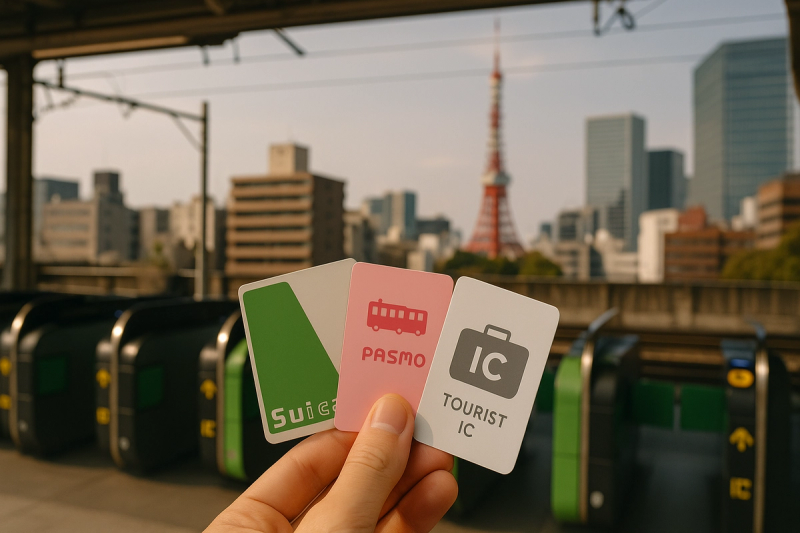
Tokyo transport looks scary from India, not gonna lie. Before my trip I had this image in my head of giant stations, ten million signboards, trains leaving in 4 seconds, and me standing there with one suitcase and zero clue. And honestly... the stations are huge, yes. Shinjuku especially felt like a whole city having an identity crisis. But the actual paying-for-trains part became way easier once I understood the IC card scene. That’s what this post is about. Not just Suica and Pasmo, but the alternatives too, what still works for tourists, what changed recently, and what I wish somebody had explained to me in simple language before I landed in Tokyo half sleepy and overexcited.
If you're an Indian traveller planning Japan, this is the basic thing to know: an IC card is basically your metro-bus-convenience-store wallet. You tap in, tap out, life moves on. In Tokyo the big names are Suica and Pasmo, and for normal travel they do almost the same job. You can use them on JR trains, Tokyo Metro, Toei Subway, many private railways, buses, vending machines, konbini like 7-Eleven or FamilyMart, even some lockers. So it’s not one of those cards you use once and forget. It becomes part of your day. I was using mine for train rides in the morning and then absentmindedly buying egg sandwiches at night with the same balance. Super useful.
First thing first... do you even need an IC card in Tokyo?
#Short answer, yes, I really think so. You can buy paper tickets every time, but why torture yourself. Tokyo fares depend on route and operator, and if you're changing between JR and metro lines all day, paper tickets become annoying very fast. IC cards save brain cells. The only time I’d say maybe skip it is if you’re doing a very short stay in one area and mostly walking, or if you’ve got a specific rail pass covering almost everything you're doing. But for most people, specially first-timers, an IC card is the easiest setup by far.
- You don’t need to calculate exact fares for each ride
- You can switch between train companies without standing at ticket machines every 5 minutes
- It works for buses too, which helped me a lot in quieter neighborhoods
- You can use leftover balance at convenience stores so money doesn’t just sit there useless
And yeah, one more thing. Tokyo is very safe overall. I was out late around Ueno, Shibuya, even near stations after dinner, and never felt that weird tension you sometimes get in unfamiliar cities. Standard city precautions apply, of course. Keep your passport safe, don’t wave cash around, last train timings matter, all that. But as a solo or family traveller, the public transport system felt extremely secure and very, very organised.
Suica vs Pasmo, the difference is smaller than people make it sound
#This confused me before going. Travel forums act like you need a PhD to choose. You don’t. Suica is associated mainly with JR East. Pasmo is tied more with private rail and subway operators. For actual day-to-day tourist use in Tokyo, both are almost interchangeable. I used Suica on metro lines, a friend used Pasmo on JR rides, and nobody stopped us and said sir this is illegal or whatever. It’s all integrated enough that the practical difference is tiny.
The real issue isn’t which one is better. The real issue is what format you can actually get. Physical card? Welcome Suica? Passport-based tourist card? Mobile Suica? Apple Wallet? Limited stock? This is where people get stuck. There were periods when regular cards were harder to issue because of chip supply shortages, and that’s why tourist-specific options got more attention. Even now, I always tell people don’t assume every counter will have every card available in unlimited quantity. Have a backup plan. Tokyo rewards people who are prepared, lol.
| Option | Best for | Main thing to know | Typical setup |
|---|---|---|---|
| Regular Suica | General travellers if available | Refundable deposit may apply on physical versions | Buy at station machine or counter |
| Regular Pasmo | Same as above | Works almost same as Suica in Tokyo | Buy at major stations if available |
| Welcome Suica | Short-term tourists | Usually no deposit, validity is limited | Good airport arrival option |
| Pasmo Passport style tourist card | Visitors wanting a tourist version | Validity is limited and availability can change | Useful if being sold during your travel dates |
| Mobile Suica / Mobile IC | People with compatible phones | Very convenient, but phone compatibility matters | Add to wallet app and top up digitally |
| Paper tickets | Absolute backup only | Works, but slow and annoying for frequent rides | Buy per ride at machines |
What actually worked for me at the airport
#I landed tired, slightly confused, and weirdly emotional because Tokyo had been on my list for years. At the airport my grand plan was to figure everything out calmly. That lasted maybe 6 minutes. You’ve got immigration, SIM or eSIM setup, cash withdrawal, finding your train, and then suddenly transport card decisions hit you too. So my strong advice: decide before boarding your India-to-Japan flight what your Plan A and Plan B are.
For me, the smoothest route was simple. Get connectivity first, then get the IC setup, then move. If your phone supports mobile transit cards properly, that can be brilliant because you skip one layer of hassle. But not everybody’s phone or bank card behaves nicely abroad, and Indian cards can be hit-or-miss on some systems. That’s why I still think a physical tourist card or a station-purchased IC card is a very sensible option. Slightly old-school, yes, but dependable.
My honest opinion? In Japan, convenience beats clever planning. The setup that works immediately is better than the setup that sounds smart on Reddit.
IC card alternatives if Suica or Pasmo isn’t available, or just not worth the stress
#Now the useful part. Say you reach Tokyo and regular Suica or Pasmo is unavailable at the counter you try, or you simply don’t want to hunt around. You still have options. Tourist cards like Welcome Suica are often the first thing people check because they’re designed for short-term visitors and usually skip the deposit system. They’re easy, but keep an eye on validity period. If your trip is longer, don’t get caught by that and then suddenly wonder why the card stopped being useful.
Then there’s mobile IC. For iPhone users especially, this can be a lifesaver. A lot of travellers now just load a transit card into Apple Wallet and top up digitally. The tapping experience is honestly very slick. But because this is a real-world blog and not a fantasy world, I should say the setup can depend on your phone region, wallet settings, and payment card acceptance. Some people sail through it. Others sit in airport Wi-Fi muttering under their breath. If you’re not fully sure, keep a physical fallback.
- JR ticket machines and manned counters are still your backup friends
- You can buy single tickets till you sort the card issue out
- Day passes sometimes make sense if you’re doing heavy subway sightseeing in one zone
- Regional IC cards from other parts of Japan usually work in Tokyo too, if you already have one
That last point is underrated. Japan has a bunch of interoperable IC cards, not just Tokyo ones. So if you’re entering Japan through another city and already picked up ICOCA, TOICA, Kitaca or something similar, chances are you can use it in Tokyo for normal urban transport. That saved one guy in my hostel, actually. He had arrived via Kansai and was laughing at the rest of us because he’d already solved the problem.
Tourist setup from India: what I’d do now if I were going again
#Okay, practical mode on. If I were planning again from Mumbai or Delhi or Bangalore, I’d keep it very simple. First, book hotel near a station line you’ll actually use. Sounds random, but your transport setup starts with your stay. Staying near Ueno, Asakusa, Shin-Okubo, Ikebukuro or even parts of Nihombashi can make life easier than chasing a fancy hotel somewhere awkward. Typical budget hostels or simple business hotels in these areas often start around ¥4,500 to ¥9,000 per person for dorms or budget rooms, while mid-range business hotels can sit around ¥10,000 to ¥18,000 a night depending on season. Family rooms and nicer hotels go way beyond that, obviously.
Then I’d do this. Land. Withdraw some yen. Keep a backup credit card. Have eSIM ready before arrival if possible. Check if mobile IC is compatible with your phone. If yes, great. If not, buy a tourist IC card or regular one at airport/station. Top up modestly first, maybe ¥2,000 to ¥3,000. Don’t dump a huge amount immediately. You can always recharge at machines, convenience stores, or digitally if using mobile. I made the classic enthusiastic mistake of topping up too much and then spent my final evening trying to finish balance on snacks and bottled tea. Not the worst problem in the world, but still.
How much transport cost felt like on a normal Tokyo day
#People ask this a lot and there isn’t one perfect answer because Tokyo depends on where you stay and what you do. But for me, on a city sightseeing day with 4 to 6 train rides, I was often spending roughly ¥800 to ¥1,500 on transport. Some lighter days were cheaper. Airport transfers and longer suburban trips push it up. If you’re doing a lot of bouncing around between Shibuya, Asakusa, Akihabara, Ueno, Ginza, Shinjuku and Odaiba, then yeah, your IC card balance goes down faster than you expect.
Still, compared to the stress it saves, it’s worth every yen. Also, not every day pass is automatically a deal. I checked this more than once. Sometimes a Tokyo Subway Ticket can save money if you're mostly using Tokyo Metro and Toei lines all day. But if your route includes JR East heavily, an IC card with pay-as-you-go is cleaner. Tourists overbuy passes because passes feel efficient. Actual efficiency depends on your route. Bit annoying, but true.
Where the IC card became more useful than I expected
#Convenience stores, for one. This sounds small till you're there. After walking 18,000 steps, buying an onigiri, coffee and Pocari Sweat by just tapping your card feels weirdly satisfying. I also used mine on some buses when I went into quieter local areas, and on station lockers once. Tokyo has this nice ecosystem where one small card quietly handles lots of tiny tasks. It reduces friction, and when you're travelling in a place where everything is new, friction reduction is kinda priceless.
Btw, here’s something cool I found. Lesser-known neighborhoods become easier to explore when you stop obsessing over ticket machines. I had one lovely slow afternoon around Yanaka and Nezu, then another in Kiyosumi-Shirakawa where the cafes were excellent and the pace felt softer than central Tokyo. An IC card won’t magically turn you into a local, obviously, but it does make spontaneous detours much more likely. And those detours were some of the best parts of the trip for me.
Season tips, crowds, and when Tokyo feels easiest
#If this is your first Japan trip, I’d say spring and autumn are the easiest emotionally and physically. Late March to early April has cherry blossom madness, gorgeous yes, but also crowds and higher hotel rates. Autumn, especially October into November, felt more balanced to me in terms of weather. Summer is energetic and festival season can be amazing, but the heat and humidity are no joke. As an Indian traveller I thought, arre I know heat, how bad can it be. Different beast, boss. Tokyo summer walking plus stairs plus train changes... it drains you. Winter is crisp, often clear, and surprisingly nice if you layer properly.
Accommodation prices swing hard with weekends, blossom season, Golden Week, year-end holidays, and major events. So book earlier than you think. Capsule hotels and hostels can be budget friendly, but for couples or families, compact business hotels are usually the sweet spot. Clean, efficient, near stations, and very Japanese in that practical no-nonsense way. Safety-wise, Tokyo remains one of the easiest big cities to navigate if you stay alert and organised. Lost items are often returned, trains are punctual, and station staff are genuinely helpful even if language is limited.
Food, culture, and the little etiquette things linked to transit
#This is maybe not directly about Suica or Pasmo, but it matters. Tokyo trains are quiet. Not spooky quiet, just respectful quiet. Keep phone calls to a minimum. Queue properly. Let people get off first. Don’t block doors with giant luggage if you can help it. These tiny habits make your whole experience smoother. And once you get the rhythm, you start enjoying the city more. I went from nervous outsider to someone tapping through gates, grabbing a konbini breakfast, and reaching Tsukiji area before the crowds like I knew what I was doing. Fake it till you make it, basically.
Also yes, food around stations is dangerous for your budget because everything smells fantastic. Ueno had some of my favorite casual meals. Asakusa was great for snacks. Shimbashi after office hours has that energetic salaryman vibe. If you eat halal or vegetarian, Tokyo is getting easier than before, though planning still helps. Indian restaurants are everywhere, but honestly do try Japanese convenience food, ramen alternatives, curry rice, tempura, and the bakery scene too. I didn’t expect the bakery scene to hit that hard, but wow.
Mistakes I made so you don’t have to
#One, I assumed all ticket machines would be equally intuitive. Mostly yes, sometimes no, specially when you're rushed. Two, I overplanned rail passes before understanding my actual routes. Three, I didn’t keep enough small change the first day. Four, I nearly let my phone battery die while depending on maps, which is a dumb move if you're trying mobile transit setup. Carry a power bank. Seriously. Me and my confidence both dropped to 3 percent that evening.
- Take a screenshot of your hotel name in Japanese
- Save offline maps before landing
- Keep one physical payment method even if you're going digital-first
- Don’t panic if you tap wrong gate once, station staff can usually sort it out
That last one matters. Japanese station staff are used to confused visitors. If your fare calculation goes weird or you entered the wrong side, just show the card and ask. I did this once, slightly embarrassed, and it was fixed in like 30 seconds. No drama.
So... which option should you pick?
#My no-nonsense answer. If mobile Suica or equivalent works smoothly on your phone, and your payment method is accepted, it’s probably the easiest modern setup. If not, get whatever physical tourist-friendly IC card is available first without overthinking the brand. Suica, Pasmo, Welcome Suica, another interoperable IC card if you already have one... for everyday Tokyo travel, the best card is the one in your hand when you need to catch the train.
And that’s really the whole thing. Don’t turn this into a bigger problem than it is. Tokyo can feel intimidating before day one, but after a couple of taps through the gates, it starts making sense. You settle in. You stop staring at route maps like they’re ancient scriptures. You begin to trust the system. That moment is nice, actually. Very freeing. If you're planning a Japan trip around 2026 or even later, this advice should still hold up because the core truth won’t change much: keep your setup simple, stay flexible, and let the city teach you the rest.
Anyway, hope this helped a bit and saved you from the same overthinking spiral I had. Tokyo is expensive in some ways, surprisingly affordable in others, and absolutely worth the effort. Get the card situation sorted early, keep some yen, eat well, walk more than planned, and don’t be scared of the trains. They end up becoming part of the fun. For more travel stories and practical guides in this same no-fake-fancy style, have a look at AllBlogs.in.