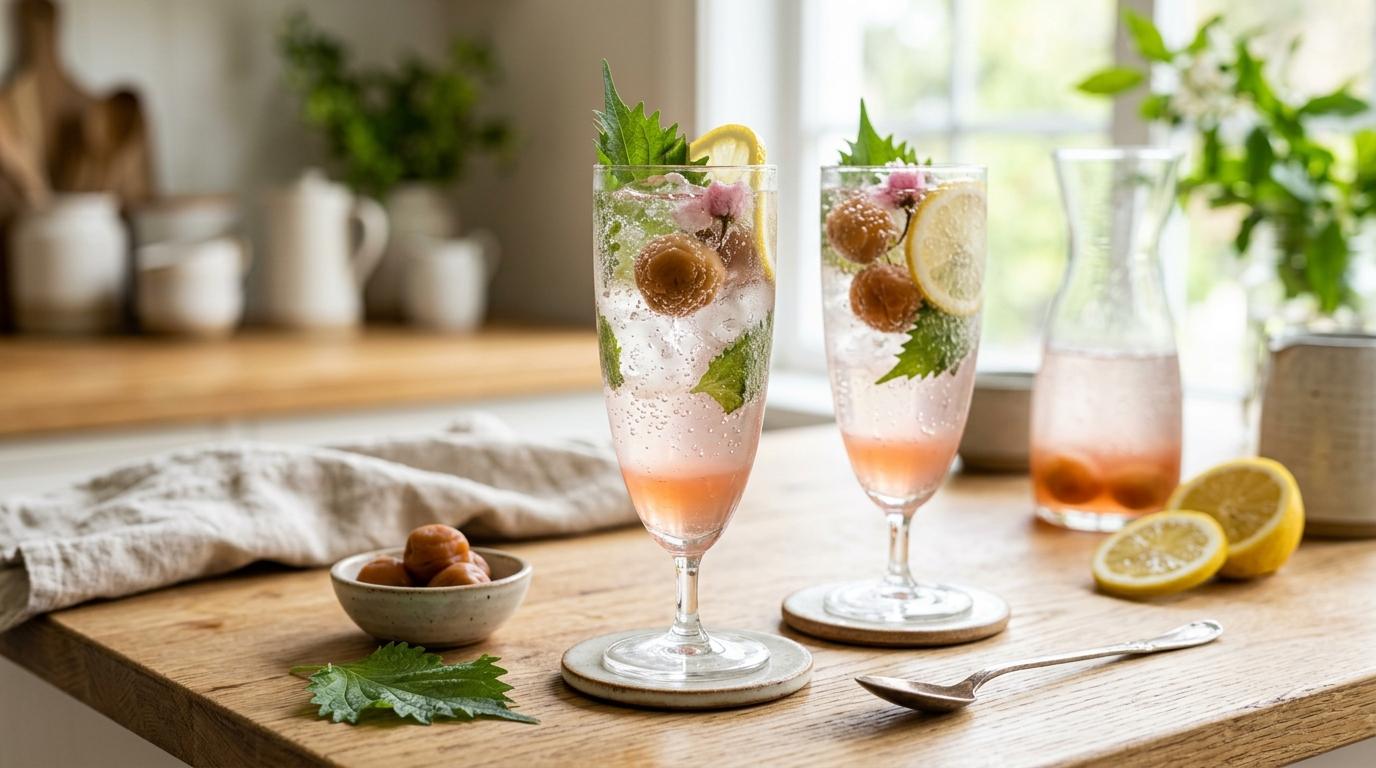
Quick answer:An ume soda mocktail is a fizzy, alcohol-free drink made with ume, the tart Japanese fruit often called Japanese plum. The easiest version is a Japanese plum soda: ume syrup, ice, and sparkling water. A good starting ratio is 1 part ume syrup to 3 or 4 parts sparkling water, then adjust from there.
If you want something less sweet and more punchy, try an umeboshi soda. That one uses pickled umeboshi, citrus, herbs like shiso, and sparkling water. It’s salty, sour, and savory in a really refreshing way.
In short: ume syrup makes a sweet-tart drink, while umeboshi makes a salty-sour one. Both are delicious. They just have very different personalities.
What Is Ume Soda?
#Ume soda is one of those drinks that feels fancy even when it takes about two minutes to make. It’s cold, fizzy, tart, and bright, with that unmistakable ume flavor: fruity, floral, sour, and a little mysterious if you’re tasting it for the first time.
Ume is often translated as Japanese plum, though it’s technically closer to an apricot. Either way, it has a sharp, fragrant flavor that works beautifully in drinks.
The most common version is made with ume syrup and sparkling water. Ume syrup is usually made by layering green ume with sugar and letting the fruit slowly release its juices. The result is a sweet, tangy syrup you can mix with water, soda water, tea, or even drizzle over shaved ice.
Then there’s the bolder version: umeboshi soda. Umeboshi are salted, pickled ume. They are not sweet and jammy. They are salty, sour, intense, and a little savory. In a drink, they bring a grown-up, almost cocktail-like edge without any alcohol.
So when people talk about ume soda mocktails, they usually mean one of two styles:
- A sweet-tart ume syrup soda
- A salty-sour umeboshi soda
Both are worth trying. It just depends on what kind of mood your taste buds are in.
Ingredients You’ll Need
#You don’t need many ingredients to make a good ume drink. Ume has such a strong personality that it does most of the work for you.
Ume Syrup
#Ume syrup is the easiest way to make Japanese plum soda at home. It’s sweet, tart, aromatic, and concentrated, so a little goes a long way.
You can make it yourself during ume season if you can find fresh green ume, or you can buy bottled ume syrup at Japanese or Asian grocery stores. It’s the one to reach for when you want something bright and fruity, but more interesting than regular lemonade.
Umeboshi
#Umeboshi are pickled ume, usually very salty and very sour. Some are sharper than others, and some have a little sweetness, depending on the style.
If you’re using umeboshi in a drink, start small. Half of a pitted umeboshi is often plenty for one glass, especially if you’re new to the flavor. Mash it really well so you don’t end up with one extremely salty bite sitting at the bottom.
Sparkling Water
#Plain sparkling water, club soda, or unflavored seltzer works best. Strong bubbles are especially nice because they lift the syrup and make the drink feel crisp.
I’d skip sweet lemon-lime soda at first. It can make the drink too sugary and cover up the ume flavor.
Tea
#Tea is a great way to make an ume mocktail feel a little deeper and more rounded.
Hojicha, a roasted Japanese green tea, is especially good with ume syrup. Its toasty flavor balances the tart fruit beautifully. Black tea also works if you want something closer to an iced tea mocktail.
Just brew the tea a bit stronger than usual, chill it, and mix it with ume syrup over ice.
Citrus
#Lemon, lime, or yuzu juice adds brightness and helps balance the sweetness of ume syrup. Citrus is also useful if you want to make a lighter, lower-sugar drink without making it taste thin.
Shiso
#Shiso is a Japanese herb often paired with ume, and for good reason. It tastes fresh, green, and aromatic, somewhere between mint, basil, and anise.
If you can find fresh shiso, use it. Before adding it to the glass, clap the leaf between your hands to wake up the aroma. It’s a tiny step, but it makes a difference.
Mint, Cucumber, and Ginger
#These are optional, but they’re lovely.
Mint makes ume soda feel extra cooling. Cucumber softens the salty edge of umeboshi. Ginger adds warmth and a little bite. None of them are required, but they’re fun to play with once you’ve made the basic version.
Sweet-Tart or Salty-Sour?
#Before you start mixing, decide what kind of drink you want.
Do you want something fruity and refreshing? Go with ume syrup.
Do you want something sharp, bracing, and a little savory? Go with umeboshi.
That choice matters more than the garnish or the glass.
Sweet-Tart: Ume Syrup
#Ume syrup gives you a bright, fruity drink with a strong sweet-and-sour flavor. If you’re new to ume drinks, start here.
A simple ratio is:
- 1 part ume syrup
- 3 to 4 parts sparkling water
- Ice
If your syrup is very sweet, use more sparkling water. If it’s especially tart, stay closer to 1:3.
One small tip: measure the syrup the first few times. It’s easy to overpour because it tastes so good, but it is concentrated. For a lighter drink, use less syrup and add lemon or yuzu juice to keep the drink lively.
Salty-Sour: Umeboshi
#Umeboshi is intense in the best way. It’s salty, sour, and mouth-puckering, which makes it surprisingly good in a mocktail.
Start with:
- Half a pitted umeboshi
- A squeeze of lemon, lime, or yuzu
- A little sweetener, if you want
- Sparkling water
- Ice
Taste your umeboshi before using it. Some are seriously salty. It’s much easier to add more than to rescue a drink that tastes like carbonated pickle brine.
3 Alcohol-Free Ume Drink Ideas
#Think of these as starting points, not strict recipes. Taste as you go. Add more bubbles, more citrus, more syrup, or more umeboshi depending on what you like.
1. Classic Japanese Plum Soda
#This is the simplest ume soda, and honestly, it’s hard to beat. It’s cold, fizzy, sweet-tart, and incredibly refreshing.
Ingredients
#- 1 part ume syrup
- 3 to 4 parts sparkling water
- Ice
- Optional: lemon or yuzu juice
How to Make It
#Fill a tall glass with ice. Add the ume syrup, then slowly pour in the sparkling water.
Stir gently from the bottom of the glass so the syrup mixes in without flattening all the bubbles.
Taste it. If it’s too sweet, add more sparkling water or a squeeze of citrus. If it tastes too light, add another small splash of syrup.
Low-Sugar Version
#Use:
- 0.5 part ume syrup
- 4 parts sparkling water
- A squeeze of lemon or yuzu
You’ll still get the tart ume flavor, just with less sweetness.
2. Umeboshi Shiso Soda
#This is the savory one. It’s salty, sour, herbal, and very refreshing. If you like drinks that are crisp and complex but not sweet, this is probably your version.
Ingredients
#- Half to 1 pitted umeboshi
- 2 to 4 shiso leaves
- A few mint leaves, optional
- A few cucumber slices, optional
- A small spoon of simple syrup or honey, optional
- Sparkling water
- Ice
- Lemon or lime juice, to taste
How to Make It
#Mash the pitted umeboshi in the bottom of a glass or shaker. Add the shiso, mint if using, cucumber if using, and a small squeeze of citrus.
Muddle gently. You want to bruise the herbs, not shred them into tiny green bits.
Add ice, then top with sparkling water. Stir well and taste.
If it’s too salty, add more sparkling water. If it’s too sharp, add a little sweetener. If it tastes flat, add more citrus.
This drink can get bold quickly, so start mild and build from there.
3. Iced Ume Hojicha Palmer
#This one is mellow, toasty, and a little more layered than a straight soda. The roasted flavor of hojicha is beautiful with tart ume syrup.
Ingredients
#- 2 parts strong brewed hojicha, cooled
- 1 part ume syrup
- 1 to 2 parts cold water or sparkling water
- Ice
- Optional: lemon or yuzu juice
How to Make It
#Brew the hojicha a little stronger than usual, then let it cool.
Fill a glass with ice. Add the ume syrup, then pour in the chilled hojicha. Stir well.
Add cold water if you want a smooth iced tea style drink, or sparkling water if you want bubbles.
Taste before adding citrus. Some ume syrups are already tart enough. If the drink feels too sweet or heavy, a small squeeze of lemon or yuzu will brighten it right up.
For a lighter version, use less ume syrup and more tea.
Serving Tips
#Ume soda mocktails don’t need much fussing over, but a few small details make them better.
Use Plenty of Ice
#These drinks are best very cold. Large ice cubes are ideal because they melt more slowly and keep the drink from getting watery too fast.
Stir From the Bottom
#Ume syrup is heavy and likes to sink. After adding sparkling water, stir gently from the bottom up.
And don’t shake carbonated drinks unless you enjoy cleaning sticky counters.
Garnish Simply
#Good garnish ideas include:
- Fresh shiso leaf
- Lemon wheel
- Lime wedge
- Thin cucumber ribbon
- Mint sprig
- Small piece of pitted umeboshi for savory versions
- Syrup-soaked ume from homemade ume syrup
Avoid using raw green ume as a casual garnish. If you’re making syrup at home, use the prepared fruit from the syrup instead.
Use the Right Glass
#A tall highball or collins glass is perfect for sparkling ume drinks. For tea-based ume mocktails, a shorter glass with lots of ice works nicely too.
Make a Little Mocktail Station
#If you’re serving friends, set everything out and let people build their own drinks:
- Ume syrup
- Sparkling water
- Chilled tea
- Citrus wedges
- Shiso or mint
- Pitted and mashed umeboshi
Some people will want sweet and fizzy. Some will want salty and sharp. This makes it easy for everyone to get exactly what they like.
What to Eat With Ume Soda Mocktails
#Ume’s tartness makes it great with rich, fried, grilled, and salty foods. It refreshes your palate in the same way a good cocktail can, just without the alcohol.
With Classic Japanese Plum Soda
#Sweet-tart ume soda is great with crunchy, savory, or fried foods.
Try it with:
- Tempura
- Chicken karaage
- Pork katsu
- Fried tofu
- Rice bowls with savory sauces
The acidity cuts through richness and makes every bite feel a little lighter.
With Umeboshi Shiso Soda
#Umeboshi soda has a salty, herbal edge, so it pairs well with lighter dishes.
Try it with:
- Cold soba noodles
- Grilled white fish
- Cucumber salads
- Tofu with ginger or scallions
- Simple summer salads
This is the drink to make when you want something crisp, savory, and not too sweet.
With Iced Ume Hojicha
#The roasted tea flavor makes this one especially good with brunch, snacks, or afternoon tea.
Try it with:
- Egg dishes
- Onigiri
- Toast with savory toppings
- Lightly sweet Japanese confections
- Simple tea-time snacks
It’s calmer than the soda versions, which makes it a nice choice when you want a non alcoholic Japanese plum drink that feels balanced and easy to sip.
Final Sip
#Ume soda mocktails are simple once you know the two main paths.
Use ume syrup when you want a sweet, tart, sparkling Japanese plum soda. Use umeboshi when you want something salty, sour, savory, and bold.
Start with a basic ratio, taste as you go, and adjust. Add citrus when the drink needs brightness, tea when it needs depth, and shiso when you want that fresh Japanese herbal note.
Once you have ume syrup or umeboshi in the kitchen, you’re never far from a really good alcohol-free drink. All you need is ice, bubbles, and a glass.