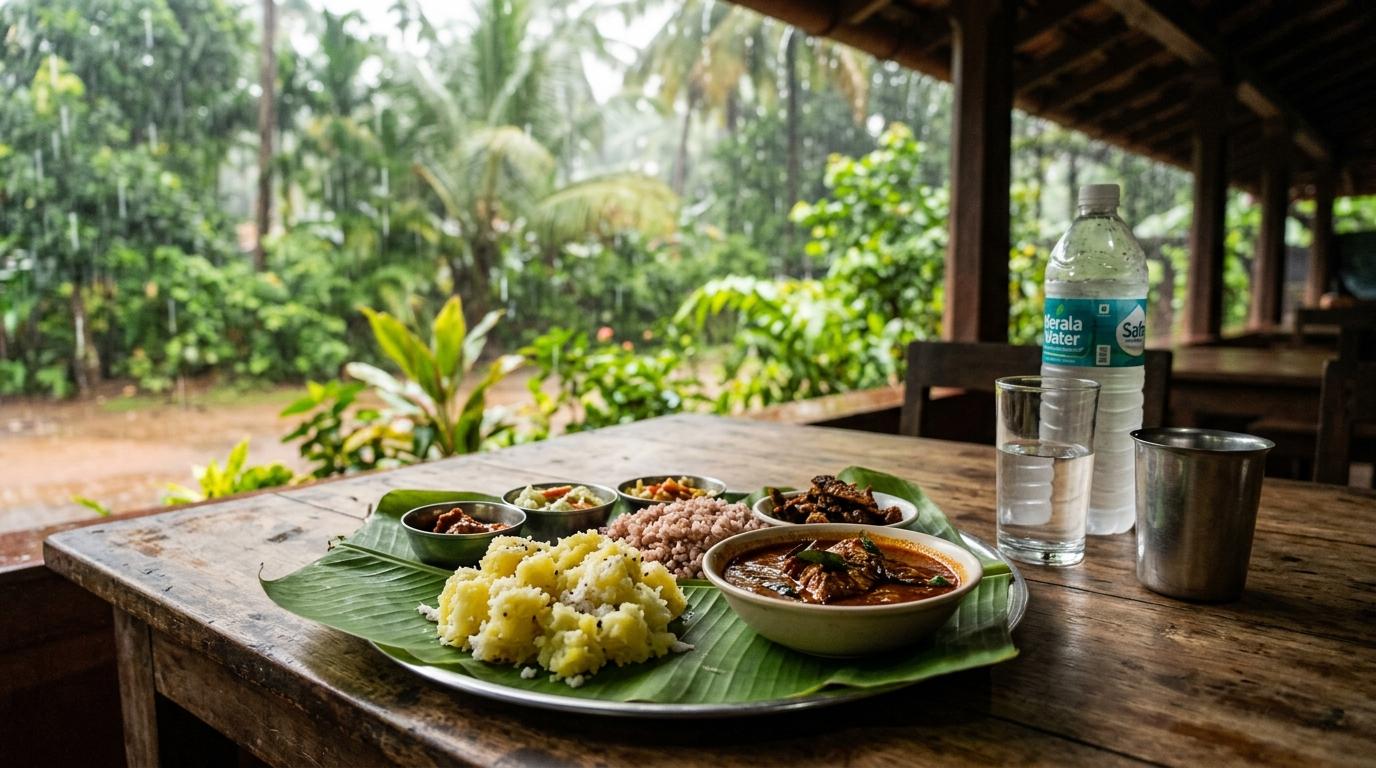
The first time I ate in a Kerala toddy shop during monsoon, my sandals were making that embarrassing squish-squish noise, my shirt was stuck to my back, and I had the kind of hunger that makes you slightly rude. You know that travel hunger? Not normal hunger. The one after a bus ride, a ferry crossing, two wrong turns, and too much chai. I was somewhere outside Kochi, following a friend’s cousin’s recommendation, which is honestly how half the best food in Kerala finds you. The place didn’t look fancy at all. Plastic chairs, steel plates, rainwater dripping from a tiled roof, men talking loudly over glasses of cloudy white kallu, and from the kitchen came this smell of chilli, coconut oil, fried curry leaves and something deeply fishy in the best possible way. I still think monsoon is the right season for toddy shop food, even if it is messy and damp and slightly chaotic. Actually, maybe because of that.
A quick thing before we go full food-mad: toddy, or kallu, is fermented coconut palm sap, and toddy shops in Kerala are licensed places where people drink it and eat the famously spicy food that goes with it. It’s alcoholic, usually mild-ish but it can sneak up on you, especially when you’re eating salty fried fish and thinking, ah this is harmless. Don’t be that traveller who rents a scooter after three glasses. Please. Hire a driver, take an auto, or go with a local who knows the roads, because Kerala roads in the rain are already doing enough drama without your overconfidence joining in.
Why Monsoon Makes Toddy Shop Food Taste Better
#I know this sounds like romantic travel writing nonsense, but rain changes appetite. In Kerala, when the sky goes dark at 3 pm and the coconut trees start thrashing around like they’ve heard bad news, you don’t want a neat little salad. You want hot rice, sour fish curry, peppery meat, boiled tapioca, fried sardines, and something that makes your nose run. Toddy shop cooking is built for that. It’s bold, oily in a good way, tart from kudampuli, sharp with black pepper, and usually not shy with green chilli. You sit there wet at the edges, listening to rain hit the roof, and suddenly kappa with meen curry feels like a complete philosophy. Not a dish, a philosophy. Maybe I’m exagerating, but only a little.
The monsoon also changes what’s available. Kerala usually has an annual monsoon trawling ban for mechanised fishing boats, commonly around June and July, to protect fish breeding. That means some sea fish may be limited or pricier depending on where you are, while smaller boats, backwater fish, river fish, farmed fish, crab, prawns, duck, beef, pork, and country chicken still appear on menus. So if a waiter says karimeen is not there today, don’t sulk. Ask what’s fresh. In toddy shops, the best order is often not the famous thing you came for, but the thing the kitchen is actually proud of that morning.
My First Proper Monsoon Toddy Shop Meal
#The meal that ruined me, in a good way, started with kappa. Plain-looking boiled tapioca, yellowish-white chunks, soft but not mushy, tossed with grated coconut, turmeric, mustard seeds and curry leaves. Then came a red fish curry in a steel bowl, the surface shining with chilli oil. I mixed the curry into the kappa with my fingers because that’s how everyone else was doing it, and the first bite was sour, hot, earthy and comforting all at once. Kudampuli, that dark smoked Malabar tamarind, gives Kerala fish curry a kind of deep sourness that hits the back of your tongue. It’s not lemony. It’s moodier. Rain outside, smoke-sour curry inside, fingers burning a little from the heat of the food... I remember thinking, yeah, this is why people travel.
And then, because I have no self control around seafood, I ordered mathi fry. Sardines. Small, cheap, heroic fish. The waiter brought them blackened at the edges, rubbed with chilli, turmeric, pepper and salt, fried in coconut oil until the skin went crisp but the flesh stayed soft. People talk about big glamorous fish too much. Give me sardines in Kerala in the rain and I’m very happy. But do your freshness checks, especially in monsoon. Clear eyes, firm flesh, no sour ammonia smell, and food should arrive properly hot. I’ve written down more of those fish-market instincts before in Indian Monsoon Fish Markets: Freshness & Safety Guide, and honestly those checks work just as well when you’re staring at a toddy shop menu trying to act casual.
What To Eat First: Kappa and Meen Curry, Obviously
#If you only have one toddy shop meal in Kerala, make it kappa and meen curry. I’m trying not to be bossy, but also I am being bossy. Kappa is tapioca, brought to Kerala centuries ago and now so deeply local it feels impossible to separate it from everyday eating. In toddy shops it’s usually served as puzhukku, boiled and lightly mashed with coconut, or as plain chunks with curry poured over. Fish curry can be made with sardine, mackerel, seer fish, pearl spot, or whatever is good that day. The curry may be red and fiery, or coconut-based and gentler, depending on region and cook. Around Kottayam and Kumarakom I’ve had darker, tangier curries. Near Kochi, I’ve had sharper chilli-forward versions. Both made me sweat like I’d done cardio, which I had not.
The trick is not to eat kappa politely. Don’t cut it with a spoon like it’s hotel breakfast. Break it, mash it a bit, let it soak up the curry, take a bite with a piece of fish and maybe a raw shallot if they give you one. If you’re new to eating with your hand, monsoon toddy shops are a funny place to learn because everything is slippery and spicy and you will probably drop something. It’s fine. Everyone is too busy eating to care. Also, wash your hands before and after, properly. Some places have a sink outside, some have a tap near the back, some you need to ask. Practical stuff matters when your entire lunch is finger-food plus rainwater chaos.
Karimeen Pollichathu: Famous, Delicious, But Ask Questions
#Karimeen pollichathu is one of those dishes that tourists, including me, chase like treasure. Pearl spot fish marinated with chilli, turmeric, ginger, garlic, curry leaves, shallots and sometimes a tomato-onion masala, wrapped in banana leaf and roasted or pan-finished until the leaf smells smoky. When it’s good, it’s gorgeous. The flesh stays moist, the masala clings to the skin, and the banana leaf gives that green, earthy perfume. I had one near the backwaters on a day when the rain came sideways and the whole restaurant went quiet for a minute just to watch it. The fish arrived puffed in its leaf parcel, and opening it felt like unwrapping a present from the sea.
But here’s where I contradict my own excitement: don’t order karimeen just because it’s famous. Ask if it’s fresh. Ask the price before ordering, because it can be expensive. Ask if it’s from backwaters or farmed, if you care about that sort of thing. During heavy monsoon weeks, supply can change fast, and some kitchens may keep frozen fish for tourists who insist on the Instagram dish. Frozen isn’t automatically evil, but badly handled fish is. If the waiter says today crab is better, or prawns are better, believe them. A good toddy shop meal is a conversation, not a checklist.
Duck Roast, Beef Fry, Pork, and All the Peppery Things
#People outside Kerala sometimes think toddy shops are only fish places, but oh no, not even close. Some of my best monsoon plates were meat. Duck roast in Kuttanad-style areas can be spectacular, dark and peppery, the fat coating your lips, the masala full of onions cooked down until sweet. I once had duck with appam in a place where the power kept flickering, and each time the lights came back, everyone just continued eating like nothing happened. That’s the spirit. Beef fry is another toddy shop classic in many parts of Kerala, usually tossed with coconut slivers, curry leaves, black pepper and chilli until it’s dry, chewy, and dangerously snackable. It goes ridiculously well with toddy, which is probably the whole point.
Pork ularthiyathu, if you find it, is not a shy dish. Fatty, spicy, roasted till the edges catch, often with fennel and pepper doing a lot of work. Country chicken curry can be brilliant too, though sometimes tough in that old-school way where you have to actually chew, not just inhale. I like that. Not every food needs to collapse like pudding. In monsoon, these heavier dishes make sense because you’re likely sitting longer, waiting out rain, ordering one more plate, then another. Toddy shops encourage lingering, though not always in a polished restaurant way. More like, the road is flooded, so might as well have prawns.
The Seafood Sides That Steal the Meal
#If the main dish is kappa and curry, the side dishes are where toddy shops get mischievous. Chemmeen roast, or prawns roasted in masala, is the one I always pretend I’m ordering for the table and then mostly eat myself. Njandu curry, crab cooked in coconut and spices, is messy and wonderful if you have patience. Squid fry can be excellent when cooked fast and eaten hot, though rubbery squid is one of life’s small sadnesses. Clam meat, called kakka in many places, can be stir-fried with coconut and spices, and it has this briny, chewy thing going on that tastes like backwater mud in the best way. That sounds bad. It’s not bad. Trust me.
I’ve noticed the best toddy shop seafood usually comes out in small steel plates, not huge theatrical platters. It’s cooked hard and fast, meant to be eaten immediately. If it sits too long in humid weather, it loses charm and, frankly, safety. Monsoon food travel is not about being scared, but it is about being awake. Look for busy places where food is moving, not sitting. Hot food should be steaming. Fried fish should not taste old-oily. And if your stomach is sensitive, maybe don’t start with five varieties of shellfish and a glass of toddy at noon like some idiot I know. Me. The idiot was me.
Where I’d Go: Kochi Edges, Kumarakom Roads, Alappuzha Backwaters
#For a toddy shop trail, I like the watery edges of Kerala more than the center of cities. Around Kochi, especially toward Tripunithura, Maradu, Nettoor and the backwater pockets, you can find places that city people drive to for a long lunch. Some are famous now, some are still pretty local-feeling, and the line between those two is blurry. Around Kumarakom and Kottayam, the food gets wonderfully backwater-heavy: karimeen, duck, kappa, crab, small fish curries. Alappuzha has that slow canal mood, where even getting to lunch feels like part of the meal. I’ve combined houseboat days with toddy shop stops, but I’m a little more careful in monsoon about fish and water hygiene, so this Kerala Houseboat Meals in Monsoon: Safety Guide is worth reading if you’re mixing boats and big seafood lunches.
One thing I’ve learnt: don’t plan toddy shops like fine dining reservations. Plan them like weather-responsive travel. Wake up, check rain, ask your homestay owner or driver what’s actually open and good that day, then go. Some places shut early. Some sell out of the best fish. Some are packed on weekends with local families and groups. And because toddy shops are alcohol-serving spaces, the vibe changes by time of day. Lunch can be lively and food-focused. Late evening, depending on the place, may feel more drinking-heavy. I prefer late lunch, maybe 12:30 to 2:30, when the kitchen is hot and the day still has light.
Ordering Without Looking Completely Lost
#Menus are not always menus. Sometimes there’s a board. Sometimes a waiter recites things quickly in Malayalam and you catch only meen, beef, duck, prawns, and then panic. It’s okay. Ask, “What is fresh today?” or “Nalla meen undo?” which is basically asking if good fish is available, though my pronunciation probably makes people smile. Pointing works. Looking at nearby tables works, as long as you’re not creepy about it. I once ordered an entire meal by saying “same, same” to a plate at the next table, and it turned out to be one of the best beef fry and tapioca lunches I’ve had.
- Start with kappa and one curry, because portions can be bigger than they look.
- Add one fried fish or seafood roast if it’s fresh and coming out hot.
- Ask price for karimeen, crab, prawns, and anything large before you say yes.
- If you drink toddy, go slow. Food heat plus alcohol plus humid rain is a sneaky combo.
- Carry cash. Many places take digital payments now, but rain and network issues love ruining confidence.
Toddy Itself: Taste, Etiquette, and My Honest Opinion
#Fresh toddy tastes lightly sour, yeasty, coconutty, and a bit fizzy if it’s lively. It can be sweet in the morning and more fermented later, though this varies. I don’t always love it on its own, to be honest. Sometimes it tastes like someone whispered “coconut” into a country beer and left it in the sun. But with spicy food, it makes sense. It cools the tongue, then the chilli wakes up again, then you take another sip, and suddenly lunch is a loop. Locals may drink it casually, but if you’re new to it, don’t try to prove anything. Also, Kerala has strict alcohol rules and toddy shops are regulated by the excise department, so go to licensed places. Avoid random roadside offers. Travel romance is great, food poisoning or legal trouble is not cute.
The etiquette is simple: don’t act superior, don’t photograph people without asking, don’t get drunk and loud, and don’t treat the place like a theme park. Toddy shops are everyday spaces for many locals. Some are family-friendly, some less so. Women travellers may feel comfortable in busy, well-known lunch spots, especially in groups, but the vibe varies. I’ve gone with friends and had no issue, but I also trust my gut. If a place feels off, leave. There is always another fish curry in Kerala. Always.
Monsoon Hygiene, Without Killing the Joy
#I hate when travel advice becomes fear advice. Like, don’t eat this, don’t drink that, carry seventeen tablets, never trust chutney. But monsoon in coastal India does need a little common sense. Humidity, power cuts, wet surfaces, and variable fish supply can make food handling more important. Choose toddy shops that are busy with locals, where dishes are cooked to order or moving fast. Avoid lukewarm gravies sitting around. Skip cut fruit unless you trust the place. Drink sealed bottled water if your stomach is delicate. And wash your hands like you mean it, because you’re probably eating with them.
If you’re staying in homestays along the coast or backwaters, the same logic applies. Freshly cooked, hot food is your friend. Leftovers in damp weather are not always your friend, even when they look innocent. I learned this the annoying way after accepting a reheated fish curry at a tiny lodge because I didn’t want to be rude. Nothing dramatic happened, but my stomach spent the night composing angry letters. For a wider practical checklist, especially if you’re moving between homes, boats and small eateries, this piece on Indian Coastal Homestay Meals in Monsoon: Safety Checklist covers the boring-but-useful stuff.
Vegetarian in a Toddy Shop? Harder, But Not Hopeless
#Let’s be real: toddy shops are not usually vegetarian paradises. The star dishes tend to be fish, meat, shellfish, and more fish. But vegetarians can still eat well if the kitchen is willing. Kappa is often vegetarian by itself. You may find puttu, appam, parotta, rice, thoran, pickle, kadala curry, mushroom pepper fry, or vegetable stew in some places, though not everywhere. Ask clearly if fish sauce or meat stock is used, because “veg” can be interpreted loosely in very seafood-focused kitchens. If you’re strict vegetarian, I’d call ahead or go with a local who can explain. If you’re flexible, Kerala has plenty of vegetarian meals elsewhere, so maybe don’t force a toddy shop to become something it isn’t.
That said, one of my favorite rainy bites was not meat at all. It was hot kappa with kanthari chilli chammanthi, a crushed chutney of tiny bird’s eye chillies, shallots, coconut oil and salt. Brutal little thing. It made my eyes water and my soul stand up straight. I had it with black tea because I was trying to behave after too much toddy the previous day. Did I behave later? No. But for twenty minutes, I was a responsible adult eating tapioca and sipping tea while the rain softened the whole road into silver.
A Meal Plan I’d Actually Recommend
#If a friend landed in Kerala in July and said, “Take me for one proper toddy shop meal,” I’d keep it simple. We’d go for lunch, not dinner. I’d choose a place near backwaters but not too remote, somewhere busy enough that turnover is obvious. We’d order kappa, one fish curry, one fried fish, one meat dish like duck roast or beef fry, and one seafood side if it looked fresh. Rice only if we were still hungry, which we probably would not be but would order anyway because greed. One glass of toddy to taste, maybe two if no one is driving. Then black tea after, because Kerala black tea after a heavy meal is like a reset button.
- Best first plate: kappa with red meen curry.
- Best rainy-day splurge: karimeen pollichathu, only if fresh and priced clearly.
- Best shareable snack: mathi fry or prawns roast.
- Best comfort dish: duck roast with appam, especially in backwater areas.
- Best “I need to sit quietly now” ending: black tea, not dessert.
A great Kerala toddy shop meal is not polished. It’s wet roads, hot steel plates, curry leaves stuck to your fingers, someone laughing too loudly at the next table, and that lovely moment when the rain traps you in exactly the place you wanted to be.
Final Thoughts From a Rain-Soaked, Overfed Traveller
#Kerala toddy shop meals in monsoon are not for people who need every travel moment sanitized and predictable. They’re for people who don’t mind damp chairs, loud rooms, spicy surprises, and the occasional menu confusion. But if you love food that tastes tied to its landscape, this is one of India’s great eating experiences. The backwaters are right there in the fish. The coconut groves are in the oil and toddy. The rain is in your appetite. My advice? Go hungry, go early, ask what’s fresh, respect the toddy, and don’t be afraid of the small fish. They often have the biggest flavor. And if you’re collecting more food-travel ideas around India, I’d casually point you toward AllBlogs.in, because that’s exactly the kind of rabbit hole I fall into when planning my next meal disguised as a trip.