So, which Universal is actually better for Indians — Singapore or Japan?
#If you ask me straight, Universal Studios Singapore is the easier, cheaper-ish, more “family trip friendly” option for most Indian travellers. Universal Studios Japan in Osaka is bigger, crazier, more detailed, and honestly more exciting if you are a proper theme park person. But it also takes more planning, more money, more patience, and a little bit of Japanese train confidence, which some of us pretend to have until we are standing on the wrong platform with Google Maps shouting in one ear.
I’ve done both with a very Indian mindset — matlab, comparing ticket cost in INR, checking veg food before rides, trying to avoid wasting money on taxis, and asking myself “is Express Pass really worth it or am I being emotional?” And both parks gave very different vibes. Singapore felt smooth, compact and manageable. Japan felt like an entire mission, but the kind you talk about for years. So this Universal Studios Singapore vs Japan for Indians comparison is not just rides and ticket prices. It’s about visas, food, kids, parents, weather, hotels, crowd stress, and whether your knees will survive 25,000 steps.
Quick comparison table — USS vs USJ for Indian travellers
#| Point | Universal Studios Singapore | Universal Studios Japan, Osaka |
|---|---|---|
| Best for | First-time international family trip, short holidays, kids, relaxed planning | Anime fans, Harry Potter fans, Nintendo lovers, thrill seekers, longer Japan trip |
| Trip difficulty from India | Easy. Singapore is simple, English-friendly, clean transport | Moderate. Japan is safe but needs more planning, language + trains can confuse first-timers |
| Typical park size feel | Compact, doable in one full day | Much bigger and more intense, one day can feel rushed |
| Food comfort for Indians | Easier. Indian food outside the park is very accessible in Singapore | Inside park can be tricky for strict veg/Jain, but Osaka city has options |
| Budget pressure | Usually lower overall if only doing Singapore | Higher because Japan trip itself costs more, plus Express Pass can hurt |
| Best months | Anytime, but avoid weekends/public holidays if possible | Spring and autumn are beautiful, but crowded. Winter can be good if you handle cold |
| Biggest emotional pull | Easy foreign holiday with theme park fun | World-class attractions, Super Nintendo World, Harry Potter, Japanese pop culture |
This table is the practical version. But honestly, the feeling of both parks is totally different. Singapore is like going to a very well-organised destination wedding — you know where everything is, you eat, you roam, you don’t get too lost. Japan is like entering a different universe where everything is cute, efficient, confusing and amazing at same time.
Getting there from India: Singapore wins for convenience, Japan wins for bigger holiday feeling
#From India, Singapore is just easier. Direct flights from cities like Delhi, Mumbai, Bengaluru, Chennai, Hyderabad and Kolkata are common, and flight time is manageable. If you are travelling with parents or small kids, that matters a lot. I know people say “travel is about the journey” but after a red-eye flight with one crying toddler and one uncle snoring beside you, no thank you. Singapore airport to city is also super smooth, and reaching Sentosa is not rocket science — MRT, taxi, Grab, shuttle, whatever suits your budget.
Japan needs a proper trip plan. Universal Studios Japan is in Osaka, but many Indians land in Tokyo first because flight options are wider, or because they want to do Tokyo + Kyoto + Osaka. If Tokyo is part of your plan, airport choice becomes a real thing, not just some boring detail. I found this useful while planning: Narita vs Haneda: Best Tokyo Airport for Indians, especially if you’re connecting your Osaka Universal day with Tokyo sightseeing and don’t want to waste half your holiday in transfers.
For Osaka, Kansai International Airport is the main gateway. From there, you can reach Osaka city by train or bus, then go to Universal City Station. It’s very efficient, but if you are landing late night, carrying big Indian-family suitcases, plus snacks, plus that one extra bag of “just in case” clothes, it can feel tiring. Japan rewards planning. Singapore forgives lazy planning more.
Visa and entry stuff Indians should think about
#Singapore visa for Indian passport holders is generally straightforward through authorised agents or online channels via partners, and many travellers get it without drama if documents are clean. Japan visa is also very doable, but it needs more paperwork and slightly more patience. Bank statements, itinerary, employment proof, hotel bookings — the usual file-making exercise we Indians know very well. Don’t leave Japan visa till the last minute, especially during high travel seasons.
Also, please check the official visa and entry rules close to your travel date. I’m saying this because policies, documents and processing timelines do change, and WhatsApp University is not a visa consultant. For Singapore, entry process feels fast and digital. For Japan, immigration was polite but more formal. Nothing scary, just more structured. If your family is doing first international trip, Singapore feels less intimidating.
Park vibe: Singapore is chill, Japan is full power
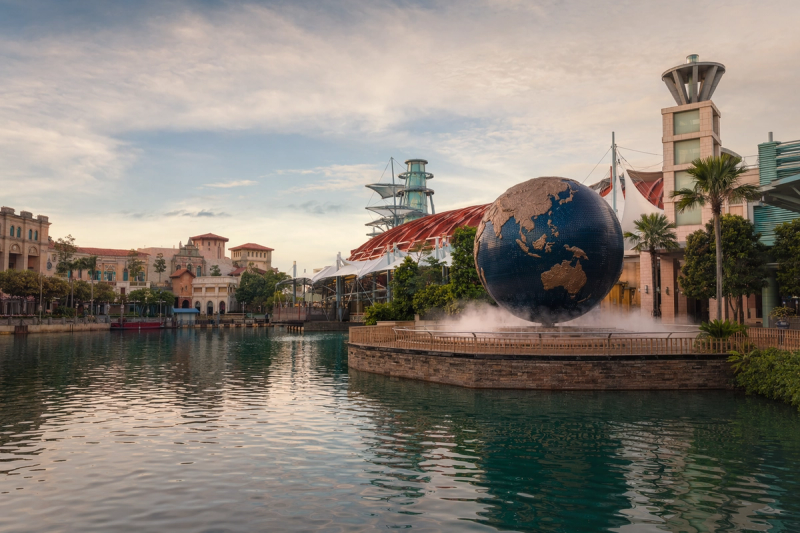
#Universal Studios Singapore sits inside Resorts World Sentosa, and the first thing I liked was how compact it is. You enter, you see the globe, take the compulsory photo where everyone pretends they didn’t see 500 other people taking the same photo, and then you are inside. The zones are close to each other, walking is not too much, and you can repeat rides if crowds are low. For families with kids or older parents, this is a big plus. You don’t feel like you are doing a trek.
Universal Studios Japan is a different beast. It feels more alive, more layered, and more local-Japanese in the best way. People dress up. Groups wear matching outfits. The merchandise is next level. Even the way fans react to characters and themed food has that proper Japanese enthusiasm. If you love Harry Potter, Nintendo, anime, Minions, Jurassic Park kind of things, USJ gives more “wow yaar” moments. But it can also be crowded in a way that tests your soul.
One small thing I noticed: Singapore has more international tourist energy. Japan has more local crowd energy. Both are good, but different. In Singapore, you’ll hear Hindi, Tamil, Bengali, Punjabi, everything, especially during school holidays. In Osaka, you’ll spot Indian travellers too, but the park still feels very Japanese. That’s actually part of the charm.
Rides and attractions: USJ has the big guns, USS has the easy wins
#At Universal Studios Singapore, the ride that most Indians talk about is Battlestar Galactica — the red and blue duelling roller coasters. One is seated, one is suspended, and both are proper fun if you like thrill rides. Transformers is also a crowd favourite, and Revenge of the Mummy is still one of those rides where even if you know something is coming, you scream like a fool. I did. No shame. Jurassic Park Rapids is fun but you may get wet, and in Singapore humidity that can either feel refreshing or disgusting depending on your mood.
USJ in Osaka has a stronger attraction line-up overall. The Wizarding World of Harry Potter is magical even if you’re not a hardcore Potterhead. Super Nintendo World is a huge reason many people choose Japan now, especially families with teenagers or adults who grew up with Mario. USJ also regularly has seasonal and limited-time attractions linked to Japanese anime, games and pop culture, but these change, so don’t book only for one temporary attraction unless you’ve checked the official schedule.
Here’s my honest ride-person opinion: if you want a relaxed theme park day, USS is enough and very enjoyable. If you want a park that feels like a destination by itself, USJ is better. Singapore is “I had a great day.” Japan is “I need to recover but also I want to go again tomorrow.”
Crowds and Express Pass: this is where Japan gets painful
#Universal Studios Japan can get seriously crowded. Like, Indian railway platform before long weekend kind of energy, but organised. Popular attractions may need timed entry or long waits, and Express Passes can sell out or become very expensive depending on the day. If Super Nintendo World is important for you, please research timed entry rules before going. Don’t just show up at 11 am and assume everything will happen by jugaad. Japan does not run on jugaad, it runs on systems.
Universal Studios Singapore also gets crowded, especially weekends, school holidays, and public holidays. But because the park is smaller, it still feels easier to understand. Express Pass in Singapore can be useful during peak season, but I didn’t feel the same pressure as Japan. In USJ, Express Pass can make the difference between “best day ever” and “why did I pay so much to stand in queues?” But the price can sting badly when converted to INR.
- For USS, weekdays are your best friend. Reach early, do big rides first, then slow down.
- For USJ, buy tickets in advance, study the app, and decide early if Express Pass fits your budget.
- If travelling with small kids, don’t overpack the day. Theme parks look fun on Instagram, but tired children become CEO of chaos by evening.
Food situation for Indians: Singapore is much easier, Japan needs backup snacks
#Food is where Universal Studios Singapore clearly wins for Indians. Not because the food inside the park is mindblowing — it’s theme park food, so prices are high and taste is sometimes okay-okay — but because outside the park and across Singapore, Indian food is everywhere. Little India, Mustafa area, food courts, South Indian meals, North Indian, chaat, biryani, veg options, Jain-ish requests in some places… you can survive happily.
Inside USS, you’ll find vegetarian options, snacks, fries, pizza-type things, desserts, drinks, etc, but strict vegetarian or Jain travellers should not assume too much. Ask clearly. Cross-contamination can be an issue for some people. I usually carry a small snack pack — nothing dramatic, just theplas, protein bar, biscuits, something. Singapore security rules are strict in some places, so don’t carry a full tiffin like you’re going to Lonavala picnic, but basic snacks for kids are often practical.
Japan is more complicated for Indian food habits. Osaka has Indian restaurants, no doubt, and some very good ones. But inside USJ, strict veg choices can feel limited, and language can make ingredient checking awkward. Many Japanese dishes use fish-based stock, even if it looks vegetarian. If you eat chicken, seafood, eggs, you’ll manage better. If you are pure veg, Jain, or travelling with parents who need dal-rice after 7 pm or life becomes meaningless, plan dinner outside the park.
Btw, Japan convenience stores are amazing, but for vegetarians they are also a puzzle. Onigiri may have fish, sandwiches may have ham, soups may have meat stock. Use translation apps, ask politely, and carry backup snacks from India. I’m not saying fill half your suitcase with khakhra, but also… maybe fill a little.
Accommodation: where to stay without burning your wallet
#For Universal Studios Singapore, staying on Sentosa is convenient but expensive. Resorts and hotels around Sentosa or Resorts World Sentosa can easily go into luxury pricing, and during holidays it feels like the hotel rates are personally attacking you. If budget matters, stay in areas like Little India, Bugis, Chinatown, Lavender, Novena or even around Clarke Quay depending on your plan. You can use MRT and reach Sentosa without much stress.
Typical Singapore stay costs vary a lot, but roughly speaking, budget hostels or capsule stays may start around ₹3,000-₹6,000 per night for solo travellers, basic hotels can be ₹7,000-₹12,000, and decent family-friendly hotels often go ₹12,000-₹22,000+ per night. Sentosa and premium properties can go much higher. Singapore rooms are smaller than what many Indians expect, so read room size before booking. A “cosy room” sometimes means your suitcase and you cannot both breathe at same time.
For Universal Studios Japan, the easiest area is near Universal City, because you can walk to the park. Great for families, but prices can rise fast. Osaka areas like Namba, Umeda, Shinsaibashi and Tennoji are also popular because they connect well by train and have food/shopping/nightlife. Budget stays may start around ₹3,500-₹7,000 per night, mid-range hotels around ₹8,000-₹16,000, and family rooms or hotels near USJ can go much higher, especially weekends and school holiday periods.
Transport and getting around: Singapore is simpler, Japan is better but confusing at first
#Singapore transport is very Indian-tourist friendly. MRT is clean, signs are in English, taxis and Grab are available, and distances are not too much. To reach Universal Studios Singapore, most people go to HarbourFront, then Sentosa via monorail, walking boardwalk, cable car if you’re feeling fancy, or taxi. If you are travelling with elders, taxi/Grab till Sentosa can be worth it, especially after a full park day when everyone’s legs are gone.
Japan trains are fantastic, but first-time users may feel overwhelmed. Osaka has JR lines, metros, private railways, and stations that can feel like underground cities. Universal City Station is convenient for USJ, but your hotel location matters. Google Maps works well, still keep extra time. Also, trains can be crowded, and dragging huge luggage during rush hour is not fun. Indians sometimes overpack because “weather may change” and “what if we need ethnic wear” — don’t. Japan punishes heavy luggage silently.
Weather and best months: don’t underestimate humidity or cold
#Singapore is hot and humid almost all year. You can go any month, but carry light clothes, cap, sunscreen, and a small towel if you sweat like me. Rain showers can happen suddenly, especially during wetter months, but usually the trip doesn’t get ruined. The bigger thing is avoiding weekends and school holidays if possible. Singapore plus Universal during peak family season can feel very crowded, and hotel rates also climb.
Japan has more dramatic seasons. Spring and autumn are beautiful, and the weather is much nicer for walking around USJ. But cherry blossom time and autumn foliage season can bring high prices and crowds across Japan. Summer can be hot and humid, sometimes worse than expected, and standing in queues becomes painful. Winter is cold, but crowds may be more manageable on some days, and the vibe is lovely if you dress properly. For Indian families not used to cold, layering is important. Don’t act brave in one hoodie.
Budget reality: Singapore looks expensive, Japan quietly becomes more expensive
#A Singapore trip for Indians is not cheap, but it is controllable. Flights can be reasonable if booked early, visa is usually manageable, transport is efficient, and you can balance expensive attractions with free things like Marina Bay walks, Jewel Changi, Chinatown, Little India, Gardens by the Bay outdoor areas, and hawker meals. Universal Studios Singapore ticket prices vary by date, age and promotions, so check official sellers, but overall the day cost is easier to predict.
Japan starts looking okay when you see flight deals, then slowly adds up. Visa, intercity trains, hotels, USJ tickets, Express Pass, food, shopping, luggage transfers, IC cards, airport transfers — all small-small expenses become one big number. USJ ticket pricing is date-based and Express Pass pricing changes depending on demand and type. If you’re going all the way to Japan mainly for Universal, I would say combine it with Kyoto, Nara, Tokyo or Hiroshima so the flight cost feels justified.
- Choose Singapore if your total holiday is 4-5 days and you want low planning stress.
- Choose Japan if you can do 8-12 days and want a proper cultural + theme park trip.
- Don’t compare only park ticket price. Compare full trip cost in INR, including hotels, food and transport.
Safety, cleanliness and comfort for Indian families
#Both Singapore and Japan are extremely safe by normal travel standards. As an Indian traveller, I felt comfortable in both places, including late evenings. Singapore feels more familiar because of English, Indian communities, and tropical weather. Japan feels safe but a bit more formal. People are helpful, but language can be a barrier. You’ll rely on translation apps, station signs, and sometimes pure guesswork. It works, mostly.
Cleanliness is excellent in both parks. Toilets are clean, queues are orderly, and staff are professional. Singapore staff often communicate easily in English. In Japan, staff are very polite, but sometimes explanation in English may be limited. Still, they try. One thing Indian families should remember: follow rules. Don’t jump queues, don’t argue loudly, don’t sit anywhere blocking paths, don’t treat public spaces like we sometimes do back home. You represent all of us, boss.
What else to do nearby: Singapore is quick, Japan is deeper
#Around Universal Studios Singapore, Sentosa has plenty — SEA Aquarium, beaches, cable car, Wings of Time depending on schedule, Madame Tussauds, beach clubs, and just general resort vibes. You can do a very neat Singapore itinerary: one day Universal, one day Marina Bay and Gardens by the Bay, one day Sentosa or shopping, one day Little India/Chinatown/Jewel Changi. It’s perfect for families who want variety without changing hotels.
Osaka gives you more depth. After USJ, you can explore Dotonbori, Shinsaibashi, Osaka Castle, Kuromon Market, Umeda Sky Building, and nearby day trips to Kyoto and Nara. If you love food and street energy, Osaka is fantastic. But for Indian vegetarians, research restaurants in advance. Also, Japan sightseeing involves walking. Lots of walking. My smartwatch was celebrating, my feet were filing a complaint.
Lesser-known tip: don’t keep USJ on the first full day after landing in Japan if your flight was long. Jet lag plus theme park crowds is a bad combo. For Singapore you can still manage because distances are small, but even there, if you land at 6 am and go straight to Universal, by 4 pm you’ll be sitting on a bench questioning your life choices.
My final verdict: which one should Indians choose?
#If it’s your first international family holiday, or you’re travelling with parents, younger kids, or people who don’t like complicated planning, choose Universal Studios Singapore. It’s fun, clean, easy to reach, has enough thrill, and Singapore as a destination is very comfortable for Indians. You can eat well, move around easily, and not worry too much about language or transport. It’s the safer recommendation.
If you are theme-park crazy, love Harry Potter or Nintendo, enjoy Japanese culture, don’t mind planning, and have a bigger budget, Universal Studios Japan is the better experience. It feels grander and more immersive. The crowd management and timed entries can be stressful, but when it works, it really works. I didn’t expect USJ to feel so emotional, but it did. Maybe because Japan adds its own magic to everything, even popcorn buckets.
My simple Indian-traveller answer: Singapore is the practical choice, Japan is the dream choice. Pick Singapore for comfort. Pick Japan for the bigger story.
And if your budget allows both someday, don’t overthink — do both. They are not copy-paste parks. USS is a lovely one-day highlight in an easy Singapore holiday. USJ is a full-blown adventure inside a Japan trip. Just plan honestly, check latest ticket and visa rules before booking, and don’t underestimate queues, weather, or hunger. Hunger can ruin even the best theme park day, trust me. For more such travel comparisons and desi-style planning tips, I usually keep browsing AllBlogs.in when I’m making my own trip notes.