Dal baati churma is one of those meals that sounds simple until you actually sit in front of it in Rajasthan, hungry from a dusty highway ride, and somebody pours hot ghee over the baati like they’re blessing your entire life. And honestly? They kind of are. This is not “light lunch” food. This is warrior food, desert food, food that makes you slow down, loosen your belt a tiny bit, and accept that your afternoon plans might involve staring at a haveli wall in a happy food coma.
I’ve eaten dal baati churma in a few places across Rajasthan, mostly around Jaipur, Jodhpur, Udaipur, Pushkar, and one very memorable roadside dhaba between Ajmer and Beawar where the baati came smoking hot from an earthen oven and the owner looked personally offended when I asked for “just a little ghee.” Big mistake. In Rajasthan, “little ghee” is a suspicious phrase. Like, why are you here then?
But this guide is not just a love letter to ghee, although it might become that by accident. It’s also for travelers like me who want the full food experience without spending the night chewing antacids and wondering why we ignored our body’s tiny warning signals. Because dal baati churma is rich, filling, earthy, a little smoky, a little sweet, and very very capable of defeating an overexcited stomach. So here’s my food-and-travel guide to eating it properly, where to try it, how to pair it, and how to enjoy the ghee without regretting every life choice.
First, What Actually Is Dal Baati Churma?
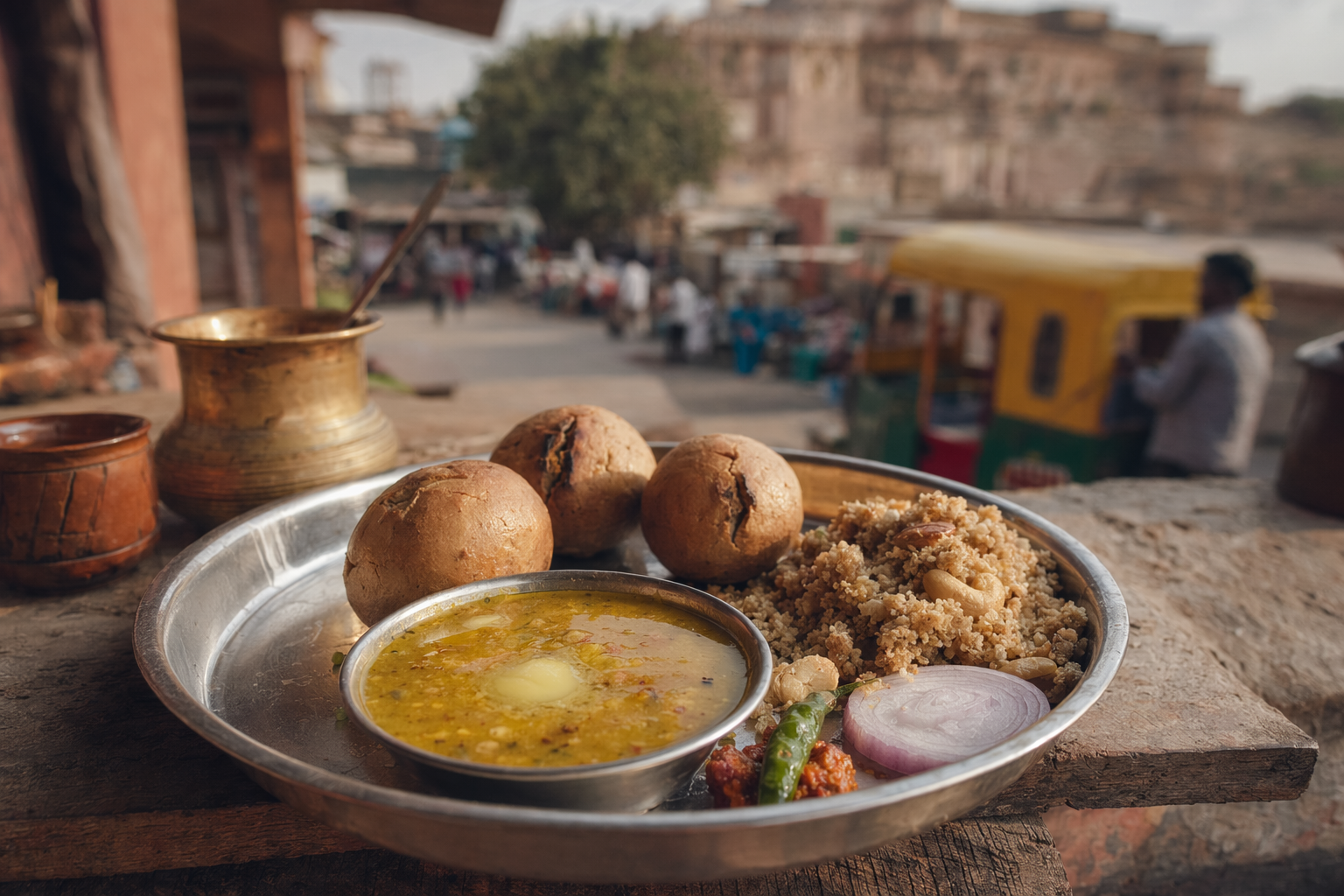
#If you’ve never had it, dal baati churma is basically a Rajasthani thali built around three main heroes. Dal is usually made from mixed lentils, often panchmel dal with moong, chana, urad, masoor, and toor, depending on the house or restaurant. Baati is a hard, round wheat dumpling, traditionally baked over fire or in a tandoor, then cracked open and soaked with ghee. Churma is the sweet part, made by crushing baati with ghee and sugar or jaggery, sometimes with cardamom, nuts, or even dried fruit.
The genius is in the contrast. The dal is salty, spiced, and comforting. The baati is dense and nutty and honestly a bit stubborn until ghee softens it. The churma is sweet and crumbly, like dessert but also somehow part of the main meal. You eat a bit of dal-baati, then a bit of churma, then pickle, then maybe garlic chutney, then you realise you’re not in control anymore.
There are regional variations too. In some places you’ll get masala baati stuffed with peas, potato, paneer, or spices. Some restaurants do baked baati, some do tandoori, and in villages you may find baati cooked in cow-dung cakes or over traditional chulha heat, which gives it that deep smoky flavour you just can’t fake. In 2026, I’m seeing more travelers chase these hyperlocal versions instead of just ticking off one famous restaurant in Jaipur and calling it done. Food travel has become more about roots, not just reels, thank god.
Why Rajasthan Is the Perfect Place to Eat It, Not Just Order It at Home
#I’ve tried making dal baati churma at home. It was nice. Fine. Respectable, even. But eating it in Rajasthan is a totally different thing. The dry air, the old stone buildings, the brass plates, the smell of roasting wheat, the servers insisting on one more spoon of ghee even after you clearly said no... it all becomes part of the flavour.
Rajasthani food makes sense when you travel through the landscape. The baati was practical food, it lasted, it filled you up, it didn’t need delicate handling. Ghee was energy, preservation, richness, and pride. Lentils brought protein. Churma gave sweetness and celebration. It’s a meal built by climate, scarcity, hospitality, and a deep cultural belief that guests should leave looking slightly stunned.
And if you’re doing a food trip, Rajasthan is still one of India’s strongest culinary destinations. Jaipur has royal kitchens, thali restaurants, sweet shops, and newer chef-led places playing with traditional grains. Jodhpur is more rustic and punchy, all mirchi vada, mawa kachori, and serious thalis. Udaipur has lake-view dining and old-school dining halls. Jaisalmer and Bikaner lean desert, camel-milk sweets, papad, ker sangri, and slow-cooked flavours. Pushkar has its backpacker-café thing going on, but also some proper Rajasthani meals if you look beyond pancakes and smoothie bowls.
My First Proper Dal Baati Churma Moment Was in Jaipur
#My first proper sit-down dal baati churma in Rajasthan was in Jaipur, and I still remember the feeling of being completely unprepared. I’d eaten a big breakfast because, you know, hotel buffet logic. Then by lunch I told myself I’d “just taste” dal baati churma. That phrase should be illegal. You don’t just taste it. You commit.
The thali arrived with dal, baati, churma, gatte ki sabzi, ker sangri, papad, pickle, garlic chutney, and chaas. The baati was cracked open in front of me, and then came the ghee. Not a polite drizzle. A golden, shameless flood. I watched it sink into the hot wheat like the baati had been waiting its whole life for this exact moment. First bite, I understood the obsession. It was earthy, buttery, smoky, spicy from the dal, and then the churma came in like a sweet little apology.
Ten minutes later, I was deeply happy. Twenty minutes later, I was negotiating with my stomach. This is where my ghee-and-acidity education began, not from a doctor, but from personal overconfidence and one aunty at the next table who told me, “Beta, chaas piyo. Slowly.” She was right.
Where to Eat Dal Baati Churma: Cities and Spots I’d Actually Plan Around
#Jaipur is the easiest starting point if you’re flying in or doing a classic Rajasthan route. Chokhi Dhani is touristy, yes, but it’s also fun if you go with the right mindset. Think village-resort evening, folk dance, camel rides, thali service, and a very generous approach to ghee. It’s not the hidden local secret, obviously, but for a first-time visitor it gives you the drama and abundance of a Rajasthani meal. Laxmi Misthan Bhandar, usually called LMB, is more famous for sweets and old Jaipur vibes, but it’s also a useful stop if you want a broader taste of Rajasthani vegetarian food in the old city area.
In Jodhpur, I like the food mood better, if I’m being honest. It feels less polished and more direct. Gypsy Restaurant is a well-known name for Rajasthani thali, and it’s the kind of place where you should not pretend you’re going to eat lightly. Go hungry. Go with time. Also wander the old city for mirchi vada, makhaniya lassi, and sweets, because Jodhpur does fried snacks like it’s a public service.
Udaipur is a softer landing. After forts and dry desert stretches, the lake city feels almost romantic about food. Natraj Dining Hall has long been a popular thali stop, and there are also plenty of smaller places serving dal baati churma, though some lake-facing restaurants tone down spice and richness for tourists. Not always a bad thing, especially if your acidity is already sending warning emails.
In Jaisalmer, I’d choose atmosphere as much as the plate. A simple desert camp dinner, if it’s done well and not just buffet tourism, can be magical. Baati near a fire, dal in a steel bowl, cold night air, folk music floating around, sand still in your shoes. That’s the kind of meal you remember even if the dal wasn’t technically the best dal of your life. Travel food isn’t always about perfect cooking, sometimes it’s about the moment.
The Ghee Question: How Much Is Too Much?
#Here’s the thing. Ghee is not the villain. Bad timing, huge portions, dehydration, too much chilli, and lying flat after eating are usually the real troublemakers. Ghee is part of the dish’s soul. Without it, baati can feel dry and heavy in a sad way, like it’s missing its best friend. But there’s a point where delicious becomes dangerous, especially if you already deal with acidity, reflux, bloating, or that burning feeling after rich meals.
My personal rule now is simple: first serving with ghee, second serving without extra ghee unless I’m really feeling heroic. I ask them to pour ghee on the side or lightly on top, not because I’m trying to insult tradition, but because I want to enjoy the whole day. Most places understand if you say, “Thoda ghee, please,” though some servers will still interpret thoda in a very Rajasthani way, meaning quite a lot.
- Ask for ghee separately if you have acidity. Not no ghee, just control ghee.
- Crack the baati into small pieces and dip into dal instead of drowning everything at once.
- Eat churma slowly. It has ghee and sugar, which is basically a sleepy stomach trap.
- Don’t combine dal baati churma with three kachoris and a giant lassi unless you are built different.
Also, quality matters. Good ghee tastes nutty, clean, almost caramel-like. Old or poor-quality fat can sit heavy and leave that weird greasy coating in your mouth. If the ghee smells rancid or the food tastes reheated in tired oil, just don’t push through for the sake of being adventurous. There’s brave, and then there’s stupid. I have been both.
Acidity Tips That Actually Help While Traveling
#I’m not a doctor, obviously, but I am someone who has made enough bad food decisions on the road to have a practical system. Dal baati churma is rich, and Rajasthan travel can be dehydrating, especially if you’re walking forts, markets, stepwells, and palace courtyards under sharp sun. Acidity often hits when you mix heavy food with heat, not enough water, late meals, and too much tea or coffee.
Chaas is your best friend. Salted buttermilk with roasted cumin is one of the smartest things to drink with this meal. It cools the palate, helps the heaviness, and makes you feel less like you swallowed a warm brick. I usually choose chaas over sweet lassi with dal baati churma. Sweet lassi is lovely, but with churma and ghee it can become too much, like dessert on dessert on dairy.
- Start the day lighter if you know dal baati churma is lunch. Fruit, poha, toast, something easy.
- Eat it at lunch rather than late dinner. Your stomach will thank you at 11 pm.
- Walk after the meal, gently. Don’t climb Mehrangarh Fort immediately unless you enjoy suffering.
- Carry basic acidity medicine if you already use it, and don’t experiment with unknown street remedies.
- Avoid lying down right after. I know the hotel bed calls your name, but resist for a bit.
One more tiny trick I picked up: take more dal than baati. Dal brings moisture and spice balance, while too much dry baati plus ghee can feel like a cement project in your stomach. Also ask for extra lemon or onion if available, and don’t underestimate plain water. In Rajasthan I drink water like it’s my second job.
How 2026 Food Travel Trends Are Changing the Dal Baati Trail
#Food travel in 2026 feels different from a few years ago. People still want famous places, sure, but there’s much more interest in village meals, heritage cooking, cooking classes, farm visits, millet-based dishes, and food stories told by locals instead of just glossy restaurant menus. Rajasthan fits this shift beautifully because the best food here has always been tied to climate and survival.
Millets are having a long moment in India, and Rajasthan has been using bajra and other hardy grains forever, not because they were trendy but because they made sense in dry regions. Now you’ll see travelers asking for bajra roti, raab, khichda, and traditional grain dishes along with dal baati churma. Some boutique stays and heritage hotels are building menus around local grains, house-made pickles, desert beans, and regional sweets, which I love. When it’s done honestly, it feels like preservation, not performance.
There’s also a wellness angle creeping into food tourism. Not the boring kind where everything becomes steamed and joyless, but the practical kind: smaller thalis, ghee on the side, baked instead of deep-fried snacks, probiotic drinks like chaas, and menus that mention local sourcing. QR menus and UPI payments are everywhere now in tourist-heavy cities, but the best dal baati churma may still come from a place where the menu is shouted from memory and the bill is written on a tiny paper slip. Both worlds are co-existing, and that’s kind of charming.
A Rough Dal Baati Churma Food Route Through Rajasthan
#If I were planning a food-first Rajasthan trip around dal baati churma, I’d do 7 to 10 days. Start in Jaipur for accessibility and the big thali experience. Spend one day in the old city eating kachori, sweets, and a proper Rajasthani lunch. Then go toward Ajmer and Pushkar, where you can mix temple-town snacks, cafes, and simpler local meals. Pushkar is also good if you need a break from heavy food, because there are enough lighter options around.
Then Jodhpur. Two nights minimum, because Jodhpur’s food deserves wandering time. Eat a Rajasthani thali, try mirchi vada near the market, drink makhaniya lassi if dairy doesn’t destroy you, and save room for sweets. After that, if you have the energy, go toward Jaisalmer for the desert meal experience. This is where dal baati churma feels most connected to place. Sand, sky, fire, wheat, ghee. Very dramatic, yes, but sometimes drama is correct.
End in Udaipur if you want a softer finish. Lakes, rooftop meals, dining halls, and a slightly more relaxed pace. By this point, you may be craving vegetables and plain curd, which is normal and not a personal failure. I usually hit that stage around day six, when my body starts asking, politely but firmly, “Can we have something green?”
What to Eat With Dal Baati Churma, and What to Maybe Avoid
#A good Rajasthani thali can get overwhelming fast. Along with dal baati churma you might see gatte ki sabzi, ker sangri, papad ki sabzi, aloo pyaaz, kadhi, garlic chutney, mango pickle, papad, rice, and sweets. Everything is tempting. Everything is also salty, spicy, oily, sour, or rich in its own way. This is where pacing matters.
Garlic chutney with baati is excellent, but go easy if you’re acidity-prone. Same with very spicy pickles. Ker sangri is one of my favorite Rajasthani dishes, tangy and desert-y and slightly chewy in a good way, but it can be intense with a heavy meal. Gatte ki sabzi is gram flour dumplings in gravy, very tasty but also filling. Basically, don’t treat the thali like a race. Nobody wins that game.
- Best pairing: dal baati churma with chaas, onion, light pickle, and a slow walk after.
- Risky pairing: dal baati churma plus sweet lassi plus kachori plus nap. I’ve done it. Regrets were recieved.
- Smart dessert move: share churma instead of ordering extra sweets right away.
- Acidity-safe-ish move: ask for less chilli in dal if the kitchen can manage it.
Home-Style Meals vs Restaurants: Which One Is Better?
#Restaurants are convenient, and some are genuinely great, but home-style dal baati churma has a different emotional weight. If your homestay or heritage guesthouse offers a Rajasthani meal, take it seriously. Ask in advance. Some of the best food I’ve had in Rajasthan came from kitchens where the cook wasn’t trying to impress Instagram, just feeding people the way her family eats.
Home-style baati may be less uniform, less glossy, and sometimes less ghee-loaded unless you ask. The dal might taste simpler, with fewer restaurant spices, but also more honest. Churma might be made with jaggery instead of white sugar, or with coarser wheat, or with a family twist someone casually mentions only after you say how good it is. These meals feel slower. You talk more. You ask dumb questions. Someone laughs at your pronunciation. It’s lovely.
That said, restaurants are better if you want variety in one sitting, hygiene predictability, and a broad thali. For first timers, I’d do both. One classic thali restaurant, one homestay or village-style meal, and one roadside dhaba if your stomach is generally brave. Not all in the same day, please.
Street Food Safety, Because Romance Is Nice but Food Poisoning Is Not
#I love street food, but Rajasthan’s heat can be unforgiving. For dal baati churma specifically, I prefer places with high turnover. Hot dal should be hot. Baati should not look like it has been sitting since yesterday’s sunset. Churma should smell fresh, not stale or dusty. If a stall is busy with locals, that’s usually a good sign, though not a guarantee.
Carry hand sanitizer, drink sealed or filtered water, and be careful with raw salads unless you trust the place. I know this sounds unromantic, but nothing ruins a fort city sunrise faster than stomach trouble. Also, don’t overdo food on the first day. Let your body arrive. My younger self would ignore this advice completely, but my current self has learnt, mostly the hard way.
A Tiny Cultural Note: Don’t Fear the Hospitality
#Rajasthani hospitality can feel intense if you’re not used to it. Servers and hosts will keep offering more food. More dal? More baati? More ghee? More churma? You may say no and they may hear “ask again in 20 seconds.” It’s not pushy in a bad way most of the time, it’s cultural warmth. Food is pride here.
But you’re allowed to say no. Smile, put your hand over the plate gently, say “bas, thank you,” or “bahut ho gaya.” If you have acidity, say it simply. “Acidity hai, thoda kam ghee.” People understand more than we think. The worst thing is eating past comfort because you’re embarrassed. I have done this too, and let me tell you, politeness has a price.
Dal baati churma is best enjoyed with respect, appetite, and a little self-control. Actually, maybe a lot of self-control if the ghee is excellent.
My Ideal Dal Baati Churma Plate
#If I could design my perfect plate right now, it would be two medium baatis, cracked and lightly soaked with good ghee. A bowl of thick panchmel dal, smoky with cumin and hing, not too watery. One small serving of churma with jaggery and cardamom. A spoon of garlic chutney, a little ker sangri, roasted papad, onion, lemon, and a tall glass of salted chaas with roasted jeera. No giant lassi. No extra fried starter. Maybe a tiny sweet later, but only if I’m walking after.
And the setting? Honestly, not fancy. Give me a shaded courtyard in Jodhpur or a desert camp near Jaisalmer where the night gets cold and the baati comes out hot. Or a Jaipur thali place buzzing with families, steel plates clattering, someone at the next table asking for more churma. Food tastes better when there’s life around it.
Final Thoughts: Eat the Ghee, Just Don’t Let It Defeat You
#Dal baati churma is one of India’s great travel meals. It’s not delicate, it’s not shy, and it doesn’t care about your calorie tracking app. It tells the story of Rajasthan in wheat, lentils, fire, sugar, spice, and ghee. If you’re traveling for food, don’t reduce it to a dish on a checklist. Eat it in different cities, compare versions, talk to cooks, watch how baati is made, and notice how the same meal changes from restaurant to home to desert camp.
But also listen to your body. Ask for ghee on the side if needed. Drink chaas. Walk after. Don’t eat it too late. Don’t combine every famous snack in Rajasthan into one heroic afternoon unless you’ve got a stomach made of sandstone. The best food travel memories are the ones you can actually enjoy while they’re happening, not the ones you survive dramatically.
And if you’re planning your own Rajasthan food trail, keep notes. The best places are sometimes the ones you find between the famous names, where the baati is a little uneven, the dal is bubbling, and somebody insists you take just one more bite. For more food-travel rabbit holes and tasty trip ideas, I’d casually point you toward AllBlogs.in, especially if you’re the kind of person who plans journeys around lunch, which, frankly, is the correct way to travel.