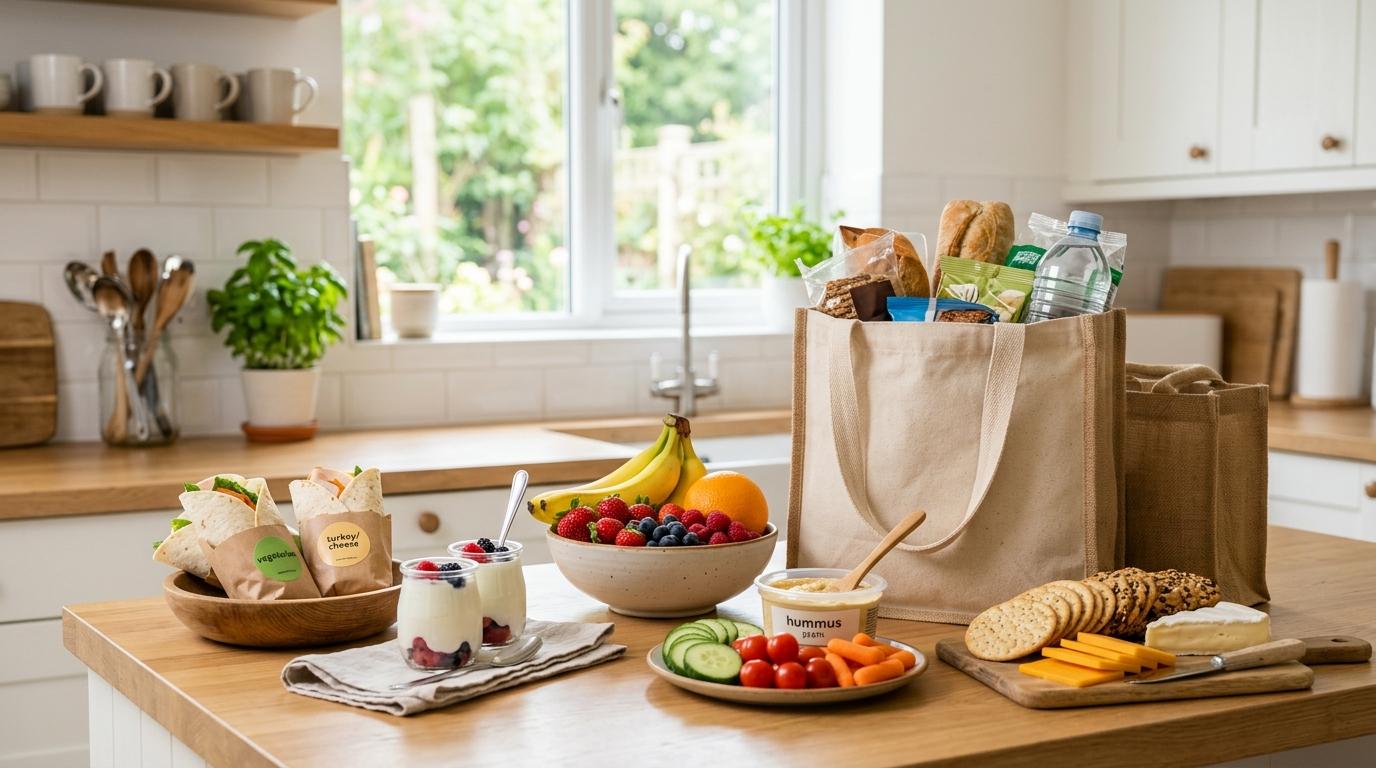
A vacation rental kitchen can be a lifesaver. You get a fridge, a table, maybe a microwave or toaster, and suddenly every snack, breakfast, and “I’m hungry” moment doesn’t have to turn into a restaurant search.
But vacation rental groceries can also get out of hand fast.
You arrive tired, make one big grocery run, and toss everything into the cart like you’re moving in. Then checkout morning rolls around and there it is: half a tub of hummus, wilted lettuce, leftover takeout, an open jar of mayo, and a sad container of cut fruit nobody wants to deal with.
The trick is to shop like you’re visiting, not like you live there.
This guide gives you a practical vacation rental grocery list for Airbnbs, cabins, condos, beach rentals, serviced apartments, family rentals, and similar stays. It focuses on no-cook travel meals, easy assembly, food safety, and buying just enough so you’re not throwing half of it away at the end.
Quick Answer
#For a short trip, your first vacation rental grocery list should cover simple breakfasts, quick lunches, snacks, and one easy backup dinner that takes little to no cooking.
Start with:
- Ready-to-eat proteins: rotisserie chicken, tuna or salmon pouches, canned beans, hard-boiled eggs, cheese, hummus
- Easy carbs: wraps, bread, pita, crackers, cereal, granola
- Sturdy produce: apples, oranges, bananas, cucumbers, cherry tomatoes, carrots, slaw mix, pre-washed greens
- Dairy basics: yogurt cups, milk if needed, cheese sticks, sliced cheese
- Flavor helpers: one dressing, one dip, small condiments, salt and pepper if the rental doesn’t have them
- Arrival-day food: one meal you can eat immediately, because nobody wants to “figure out dinner” after travel
The smartest move is to buy fewer perishables than you think you need. Shop for the first 48 to 72 hours, then see how the trip actually goes. Plans change. People eat out. Someone finds a great taco stand. A quick second grocery run is almost always better than tossing a fridge full of food on checkout morning.
Before You Shop: Check the Rental Kitchen
#Before you go to the store, take a few minutes to look around the kitchen. “Fully stocked kitchen” can mean very different things depending on the rental.
Check for:
- Fridge size and whether it actually feels cold
- Freezer space
- Microwave
- Toaster or kettle
- Cutting board and knife
- Plates, bowls, cups, and utensils
- Food storage containers or zip-top bags
- Dish soap, sponge, paper towels, and trash bags
- Salt, pepper, oil, and basic condiments
If you’re staying in an Airbnb or similar rental, it can also help to ask the host what’s usually stocked. That way you don’t end up buying a full bottle of olive oil, a giant thing of salt, or a pack of coffee filters you’ll use once.
Pay special attention to the fridge. Some rental fridges are empty when you arrive and may take a while to feel fully cold. Perishable foods should be kept cold, ideally at or below 40°F or 4°C. If the fridge seems weak, overfilled, or slow to cool, be careful with dairy, deli meat, seafood, cut fruit, and leftovers.
If you’re in a studio, hotel-style unit, or small kitchenette, think more like hotel mini-fridge food safety. A compact fridge is usually fine for drinks, yogurt, and cheese for a short stay, but it may not be great for storing a lot of highly perishable food for several days.
A good rule for vacation rental meal planning: shop for the kitchen you actually have, not the kitchen you imagined when you booked.
The Core Vacation Rental Grocery List
#A good grocery list for Airbnb stays should be flexible. You want ingredients that can be mixed and matched across several meals, not a bunch of random items that only work for one recipe.
Think in categories: protein, produce, carbs, dairy, snacks, and flavor.
Ready-to-Eat Proteins
#These make no-cook meals feel more like real meals, without needing a stove or a sink full of dishes.
Good options include:
- Rotisserie chicken
- Hard-boiled eggs
- Hummus
- Canned chickpeas or black beans
- Tuna or salmon pouches
- Canned tuna or salmon, if you have a can opener
- Sliced cheese or cheese sticks
- Cottage cheese or yogurt
- Deli meat, only if the fridge is reliable
- Cured meats, in small amounts
- Nut butter
- Nuts and trail mix
- Protein bars
If the fridge seems questionable, lean into shelf-stable options like tuna pouches, canned beans, nut butter, nuts, and protein bars. Just remember that once some foods are opened, they may still need refrigeration. Open food isn’t automatically safe just because it started on a shelf.
Sturdy Produce
#Vacation produce should be easy to eat, hard to crush, and useful in more than one meal.
Good choices include:
- Apples
- Oranges or mandarins
- Bananas, if you’ll eat them quickly
- Grapes
- Cherry tomatoes
- Cucumbers
- Baby carrots
- Bell peppers
- Snap peas
- Pre-washed spinach
- Cabbage slaw mix
- Avocados, only if you’ll use them soon
- Lemons or limes for flavor
Be careful with delicate greens and berries if you’re shopping for several days at once. They can turn quickly, especially in a fridge you don’t know well.
Pre-cut fruit and veggie trays are convenient, and sometimes they’re absolutely worth it. Just know they’re more perishable than whole produce. Buy smaller trays, keep them cold, and use them early in the trip.
Carbs and Meal Bases
#These are what turn a pile of snacks into something that feels like lunch or dinner.
- Wraps or tortillas
- Pita bread
- Sandwich bread
- Crackers
- Bagels
- Granola
- Cereal
- Instant oatmeal, if you have hot water or a microwave
- Rice cakes
- Shelf-stable microwave rice, if you have a microwave
Wraps are especially useful. They work for breakfast, lunch, and dinner, take up less space than a big loaf of bread, and are easy to pack for day trips.
Dairy and Fridge Staples
#Buy dairy in smaller portions unless you know your group will finish it.
- Yogurt cups
- Milk or plant-based milk
- Sliced cheese
- Cheese sticks
- Cream cheese
- Butter, only if you need it
- Small soft cheese, if you’ll eat it soon
Store dairy toward the back of the fridge, where the temperature is usually steadier. Try not to keep milk, yogurt, or soft cheeses in the fridge door if you can avoid it, since that area warms up every time someone opens the fridge.
Dips, Spreads, and Flavor Boosters
#This is the stuff that keeps simple meals from feeling depressing.
- Hummus
- Guacamole, in a small tub
- Salsa
- One salad dressing
- Mustard
- Small mayonnaise, only if needed
- Peanut butter or almond butter
- Jam
- Salt and pepper
- Hot sauce
- Pickles or olives
Try not to buy five condiments for a three-night stay. One dip and one dressing can do a lot. Hummus, for example, can be a dip, a wrap spread, a sandwich filler, or the base of a snack plate.
Breakfast Basics
#Vacation breakfasts should be easy. Nobody needs a complicated kitchen project before the beach, hike, theme park, road trip, or family gathering.
Good options include:
- Yogurt
- Granola
- Fruit
- Bagels
- Cream cheese
- Nut butter
- Cereal and milk
- Hard-boiled eggs
- Instant oatmeal
- Coffee or tea, if not supplied
This is the same idea behind a good supermarket breakfast while traveling: choose foods that require almost no thought and very little cleanup.
Snacks and Day-Trip Foods
#Snacks are the difference between a smooth afternoon and an overpriced, cranky food emergency.
Packable options include:
- Nuts
- Trail mix
- Granola bars
- Crackers
- Fruit
- Cheese sticks
- Baby carrots
- Hummus cups
- Popcorn
- Pretzels
- Dark chocolate or another small treat
- Bottled drinks or drink mixes, if needed
If you’ll be out for hours, choose snacks that can handle sitting in a bag without refrigeration. Save dairy, cut fruit, and deli items for times when you can keep them cold.
Drinks
#This depends on your group and your destination, but common basics include:
- Water, if tap water is not suitable or convenient
- Coffee
- Tea
- Milk or plant-based milk
- Juice, in a small size
- Sparkling water
- Electrolyte packets or drink mixes
Don’t overbuy heavy drinks on the first run unless you know you’ll use them. They eat up fridge space quickly, and carrying them in is never as fun as it sounds in the store.
No-Cook Travel Meals That Use the Same Groceries
#You do not need to turn your rental kitchen into a cooking show. The easiest no-cook travel meals are simple combinations: protein, produce, a carb, and something flavorful.
Here are a few easy ideas for travel meals without a stove or with very limited kitchen gear.
Wraps and Sandwiches
#Use wraps, pita, or bread with combinations like:
- Rotisserie chicken, spinach, cheese, and dressing
- Hummus, cucumber, tomato, and slaw
- Tuna pouch with crackers or bread and sliced vegetables
- Hard-boiled egg, greens, and mustard
- Nut butter and banana
Wraps are especially handy because they pack well and help use up little odds and ends from the fridge.
Snack Plates and Grocery-Store Dinners
#For a low-effort grocery-store dinner while traveling, build a plate with:
- Crackers or pita
- Hummus
- Cheese
- Veggie sticks
- Fruit
- Olives or pickles
- Rotisserie chicken or canned beans
- A small sweet treat
This is perfect for arrival night or after a long day out. Nobody has to cook, but you also don’t have to sit through another full restaurant meal when everyone is tired.
Salad Bowls Without Cooking
#Use pre-washed greens or slaw as the base, then add:
- Canned chickpeas or beans
- Rotisserie chicken
- Tuna or salmon pouch
- Cherry tomatoes
- Cucumber
- Cheese
- Dressing
- Crackers on the side
If you buy greens, use them early. Slaw mix usually holds up better than delicate lettuce or spring mix.
Breakfast Plates
#Easy morning combinations include:
- Yogurt, granola, and fruit
- Bagel with cream cheese and fruit
- Hard-boiled eggs, crackers or toast, and tomatoes
- Nut butter on bread or rice cakes
- Cereal and fruit
Simple breakfasts are one of the easiest ways to save money on vacation without feeling like you’re “cooking.”
A Simple First Grocery Run for a 2 to 4 Night Stay
#Use this as a starting point, then adjust for your group size, dietary needs, appetite, and fridge space.
Buy First
#- 1 ready-to-eat protein, such as rotisserie chicken or hard-boiled eggs
- 1 shelf-stable protein, such as tuna pouches or canned beans
- 1 bread option, such as wraps, pita, or sandwich bread
- 1 breakfast base, such as yogurt, granola, cereal, or bagels
- 2 to 3 sturdy fruits
- 2 to 3 vegetables, or one small veggie tray
- 1 cheese or dairy item
- 1 dip, such as hummus
- 1 dressing or sauce
- 1 snack item
- Coffee, tea, or drinks if needed
Skip at First
#- Large condiment bottles
- Bulk produce
- Raw meat, unless you truly plan to cook
- Big bags of salad greens
- Large milk containers for a short stay
- Multiple dips that expire quickly
- Seafood, unless you’ll eat it right away and keep it safely cold
- Anything that needs equipment you haven’t confirmed
Your first grocery run should make the next day or two easier. It does not need to solve the entire trip, and honestly, it probably shouldn’t.
Food Safety Notes for Vacation Rental Meals
#No-cook meals are easy, but they still need safe storage. Since you don’t fully know the rental fridge, it’s worth being a little more cautious than you might be at home.
Dairy
#Milk, yogurt, soft cheeses, cream cheese, and similar foods need reliable refrigeration. Keep them cold, store them toward the back of the fridge, and buy smaller sizes for shorter stays.
If dairy smells off, looks strange, or has been sitting out too long, don’t try to rescue it. It’s not worth it.
Cut Fruit and Pre-Cut Vegetables
#Whole fruit is usually easier and safer for travel than cut fruit. Once fruit is sliced, it becomes more perishable and needs to stay refrigerated.
Pre-cut melon, fruit trays, and cut fruit cups should not sit out for hours while people unpack, swim, nap, or head out for the day. Put them away quickly, use them early, and toss them if they’ve been warm too long.
Deli Meats
#Deli meats are convenient, but they need steady cold storage. If the fridge seems unreliable, buy a small amount and eat it soon. Keep packages sealed until you need them, close them tightly after opening, and don’t leave sandwich meat sitting on the counter while everyone slowly builds lunch.
Seafood
#Seafood is not the best choice for a casual vacation rental fridge unless you’re eating it right away. That includes cooked shrimp, seafood salads, smoked fish, and similar ready-to-eat items.
If you do buy seafood, keep it very cold and don’t try to stretch it over several days.
Leftovers
#Restaurant leftovers and leftover rotisserie chicken can be useful, but only if they’re handled safely. Refrigerate them promptly, keep them cold, and eat them soon. If you’re not sure how long something sat out, toss it.
Leftovers are also very easy to forget in a rental fridge. Make them part of the next meal instead of saving them for some vague “later” that probably won’t happen.
How to Reduce Waste Before Checkout
#The best way to avoid checkout-morning food waste is to start thinking about it before the final morning. Nobody wants to wake up to three open tubs, two half-eaten meals, and a fridge full of questionable leftovers.
Try this:
- Use the most perishable foods first
- Save shelf-stable snacks for later in the trip
- Plan one final “use-it-up” breakfast or snack plate
- Stop buying new perishables in the last 24 hours
- Pack only foods that can travel safely
- Throw away open perishables before leaving
Don’t leave open deli meat, cut fruit, dairy, seafood, leftovers, or half-used jars of mayo in the fridge for the host or cleaning staff. It may feel wasteful, but leaving unsafe food behind isn’t helpful. It’s a sanitation issue.
Unopened dry goods may be okay to leave if the property allows it, but don’t assume. When in doubt, pack it, donate it if there’s a realistic option, or dispose of it properly.