Kharbuja, or muskmelon, is such a classic Indian summer fruit. Cold from the fridge, sweet, juicy, and easy to serve after lunch, in a school tiffin, or as a light evening snack when no one feels like eating anything heavy.
But before you slice into it, there is one small kitchen habit that really matters:
You should wash kharbuja before cutting.
Not because you eat the peel. Most of us don’t.
It matters because the knife touches the peel first.
Kharbuja has a rough, netted outer rind. That surface can hold dust, soil, residue, and whatever it picked up while being transported, stored, or handled at the market. When you cut an unwashed kharbuja, the knife can drag some of that from the outside into the soft, juicy fruit inside.
So yes, that quick rinse and scrub before cutting is worth it.
Here’s how to wash, cut, store, and serve kharbuja safely at home, especially during hot Indian summers when cut fruit can spoil faster than we expect.
Quick Answer
#Yes, always wash kharbuja before cutting.
Keep it simple:
- Wash the whole kharbuja under running water before cutting.
- Scrub the rough rind properly, ideally with a clean vegetable brush.
- Dry it before placing it on the chopping board.
- Use a clean knife and clean cutting board.
- Refrigerate cut kharbuja soon in an airtight container.
- Throw it away if it smells sour, feels slimy, fizzes, has mold, tastes odd, or has been left outside too long.
This is basic muskmelon food safety. Not overthinking, just a sensible summer habit.
Why Wash the Peel If You Are Not Eating It?
#This is the question many people ask.
“If we are throwing away the peel, why wash it?”
Fair enough. But the issue is not the peel itself. The issue is the knife.
When you cut kharbuja, the knife first passes through the outer rind and then goes into the edible flesh. If the rind has dust, dirt, or other contamination on it, the knife can carry some of that inside.
And kharbuja flesh is sweet, moist, and soft. Once it is cut, it needs clean handling and proper kharbuja storage.
The rind may look dry and harmless, but because it is rough and netted, it can trap dirt more easily than smooth-skinned fruits. That is why washing and scrubbing the outside before cutting is a simple but important step.
How to Wash and Cut Kharbuja Safely
#Here is an easy checklist you can follow at home.
1. Wash your hands first
#Before touching the fruit, wash your hands with soap and water.
This is especially important if you have just returned from the market, handled cash, touched raw vegetables, packed other foods, or been doing kitchen work.
Clean hands make a difference.
2. Rinse the whole kharbuja under running water
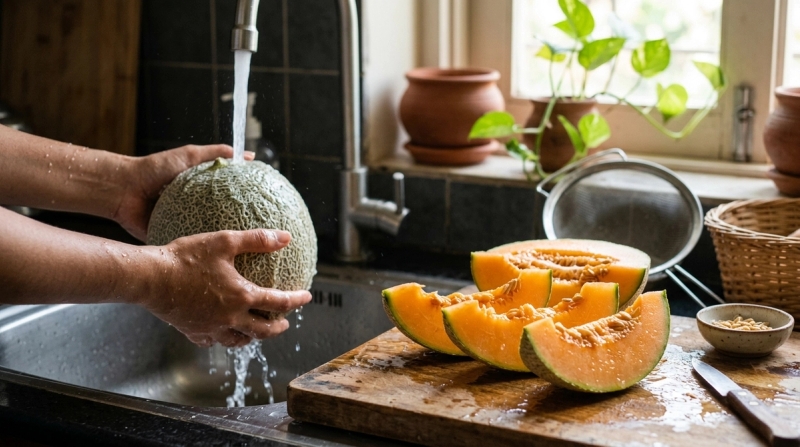
#Hold the whole melon under clean running water.
Turn it slowly so all sides of the rind get rinsed well. Do this before cutting, not after.
3. Scrub the rind properly
#If you have a clean vegetable brush, use it to scrub the rind.
If you don’t have one, rub the surface firmly with clean hands while rinsing. Pay attention to the rough, netted lines because dirt can sit in those tiny spaces.
You do not need dish soap, detergent, bleach, or any strong cleaner. Clean running water and proper rubbing are enough for home use.
4. Dry the melon
#Wipe the kharbuja with a clean kitchen towel or paper towel.
This removes extra moisture from the surface and also makes the fruit less slippery while cutting. That makes it safer for your hands too.
5. Use a clean knife and cutting board
#Make sure your knife and board are freshly washed.
Avoid cutting kharbuja on a board that was just used for raw meat, fish, eggs, or unwashed vegetables unless you have washed it properly first.
A clean board matters just as much as a clean fruit.
6. Cut it on a stable surface
#Place the kharbuja on a steady chopping board.
If it keeps rolling, slice off a small piece from one end to create a flat base. Then cut it in half carefully.
7. Scoop out the seeds with a clean spoon
#Use a clean spoon to remove the seeds and soft centre.
After that, cut the kharbuja into wedges, slices, or cubes depending on how you want to serve it.
If you are still choosing fruit at the market, this guide may help: how to pick a sweet kharbuja.
What Changes After You Cut Kharbuja?
#A whole kharbuja is naturally protected by its rind. Once you cut it open, that protection is gone.
That is when cut melon safety becomes important.
Cut kharbuja should not sit outside for long, especially in Indian summer kitchens where the temperature can rise quickly. If you are serving it immediately, cut only what you need. If there are leftovers, put them in the fridge soon.
This is even more important if you are serving children, elderly family members, pregnant people, or anyone with a sensitive stomach.
No need to panic. Just handle it cleanly and keep it cool.
How to Store Cut Kharbuja
#Follow these simple kharbuja storage rules after cutting.
Refrigerate it soon
#Once kharbuja is cut, don’t leave it lying on the kitchen counter for too long.
If you are cutting it before lunch, keep it in the fridge until serving. If you are packing it for office, school, or a picnic, try to keep it cool as much as possible.
Use an airtight container
#Store cut pieces in a clean, airtight container.
This keeps the fruit from drying out and also stops it from absorbing smells from the fridge. Kharbuja has a strong, sweet aroma, and if left uncovered, it can make other foods smell fruity too.
Keep fresh and old batches separate
#If you cut a new kharbuja today, don’t mix it with leftover pieces from yesterday in the same box.
Keep batches separate so you know which one needs to be eaten first.
Eat it within a short time
#Properly stored cut kharbuja is usually best eaten within 2 to 3 days.
But use your judgement. If your fridge is opened often, there was a power cut, or the fruit sat outside for a while before being refrigerated, it is better to be more cautious.
Throw it away if anything seems off
#Discard cut kharbuja if you notice:
- Sour or fermented smell
- Slimy or slippery surface
- Fizzing sensation
- Mold
- Strange taste
- Long exposure to room temperature
Do not try to fix spoiled fruit by washing it again. Once cut fruit seems off, it is safer to throw it away.
If you store summer fruits often, you may also find this helpful: can you eat cut watermelon the next day.
Can You Cut Kharbuja in Advance for Tiffin?
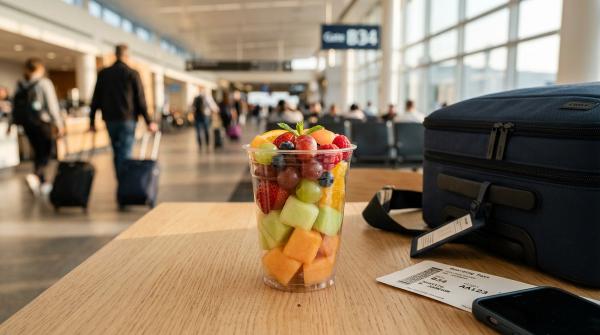
#Yes, you can cut kharbuja in advance for tiffin, but you need to pack it properly.
For school snack boxes or office tiffins:
- Wash and scrub the kharbuja before cutting.
- Use a clean knife, spoon, and board.
- Pack the pieces in a clean, airtight box.
- Keep the box chilled until it leaves the house.
- Use an insulated lunch bag if possible.
- Add an ice pack if the fruit will be outside for long.
- Avoid sending cut melon if it will sit in a hot school bag or office bag for many hours.
Kharbuja is refreshing, but it is still cut fruit. Heat and time are not a good combination.
Should You Wash Kharbuja After Cutting?
#No, it is better to wash the whole kharbuja before cutting.
Once the fruit is cut, rinsing the pieces can make them watery and less tasty. More importantly, it does not solve the main issue, which is dirt from the rind possibly being carried in by the knife.
The safer habit is simple:
Wash and scrub the outside before the knife goes in.
If you forgot to wash it before cutting, use your judgement. If the rind was visibly dirty or the knife and board were not clean, it is better not to serve that fruit to children, elderly people, pregnant people, or anyone with a sensitive stomach.
Is Pre-Cut Kharbuja Safe?
#Pre-cut kharbuja is convenient, especially near markets, offices, parks, railway stations, and roadside fruit stalls. But from a food safety point of view, buying whole fruit is usually safer.
With pre-cut fruit, you may not know:
- Whether the rind was washed before cutting
- Whether the knife and board were clean
- How long the fruit has been sitting outside
- Whether it was kept chilled
- Whether flies, dust, or repeated handling were involved
This does not mean every vendor is unsafe. Many are careful. But the problem is that you cannot always judge the handling and storage conditions.
In peak summer, buying a whole kharbuja and cutting it at home is usually the safer choice.
Quick Kharbuja Safety Rules for Home
#Keep these simple rules in mind:
- Buy whole kharbuja when possible.
- Wash kharbuja before cutting, every time.
- Scrub the rough rind under running water.
- Do not use dish soap or detergent on the fruit.
- Use a clean knife, spoon, and chopping board.
- Cut only what you need if you are not serving a crowd.
- Refrigerate cut pieces promptly.
- Store cut kharbuja in an airtight container.
- Keep old and freshly cut fruit separate.
- Do not eat cut kharbuja that smells sour, feels slimy, fizzes, has mold, tastes strange, or sat outside too long.
Small habits, but they make summer fruit much safer.
Final Takeaway
#Yes, you should wash kharbuja before cutting.
Even though you do not eat the peel, the knife passes through it. A quick rinse and scrub under running water helps reduce the chance of dirt from the rind getting into the fruit.
After cutting, keep kharbuja cold, covered, and clean. And if leftover fruit smells odd, feels slimy, tastes strange, has mold, or has been sitting out too long, don’t take a chance. Throw it away.