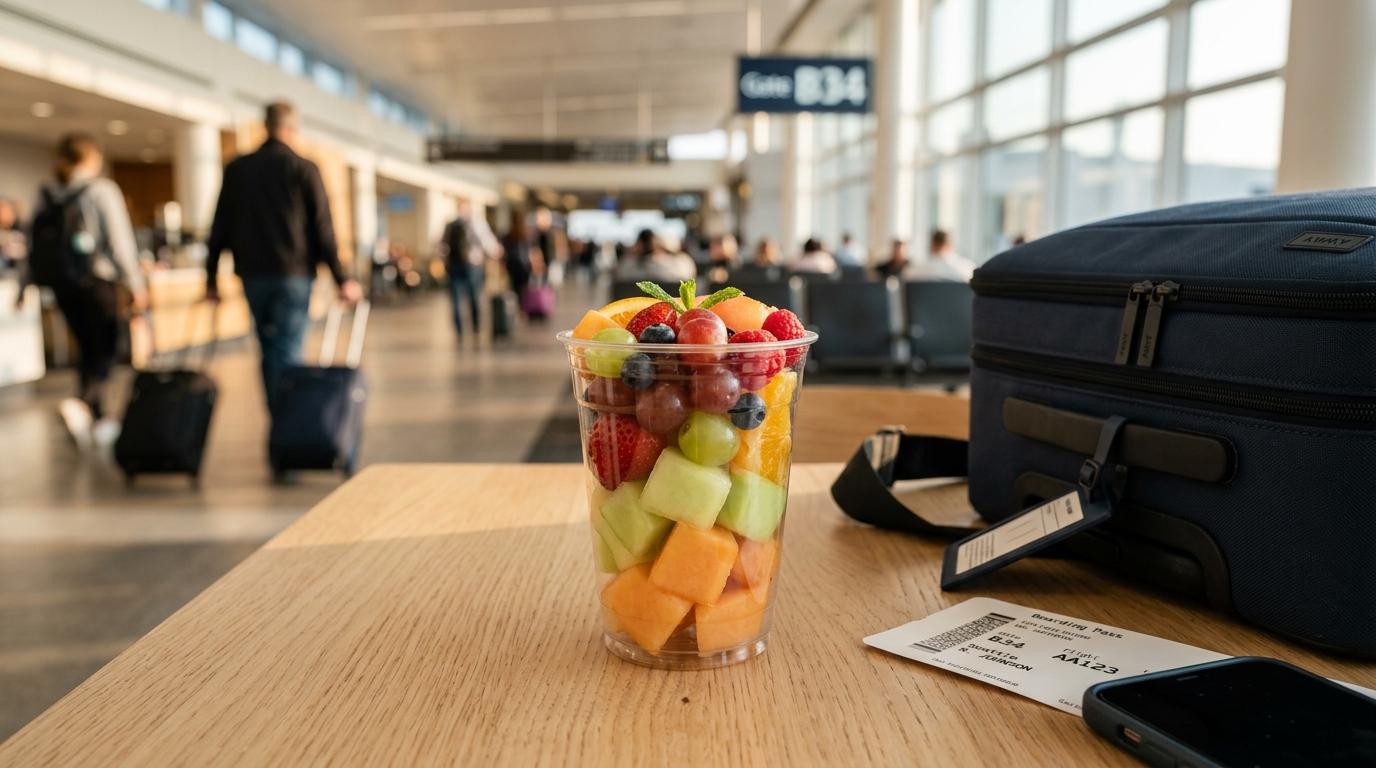
You’ve made it through security. You found your gate. Maybe you even have a little time to spare.
Then hunger hits.
Not “I need a full airport burger” hunger. More like, “I should probably eat something, but I don’t want to feel gross on the plane” hunger.
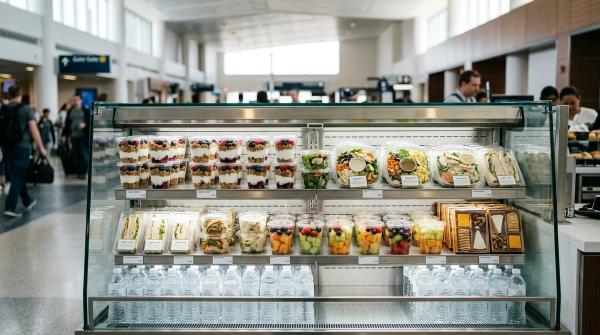
That’s usually when the airport fruit cups start looking good. Little plastic containers of melon, grapes, pineapple, berries, maybe a few orange slices if you’re lucky. They’re cold. They’re colorful. They look like the responsible choice.
And sometimes they are.
But not always.
Cut fruit can be refreshing, hydrating, and a much better option than greasy airport food. It can also be a little risky if it has been sitting too warm, sealed badly, or hanging around long enough to get watery and sad. And even when it’s perfectly safe, it may not be the best idea if fruit tends to make you bloated once you’re in the air.
So, should you buy the airport fruit cup, pack your own fruit, or skip it completely?
Here’s how to decide.
Quick Answer
#If you’re standing in the terminal right now and just want the short version:
- Buy the airport fruit cup if it looks fresh, feels cold, smells normal, has a tight lid, and you plan to eat it soon.
- Pack your own fruit if you want more control. Whole fruit like bananas, apples, oranges, and mandarins usually travels better than cut fruit.
- Skip cut fruit before flying if the case feels warm, the fruit looks slimy or bruised, there’s a lot of liquid in the cup, the lid is loose, or fruit usually makes you bloated.
- Go easy on dried fruit. It’s convenient, but too much can lead to gas, bloating, or constipation, especially if you’re not drinking enough water.
- Check the rules. Fruit through security and customs depends on where you’re flying, especially on international routes or destinations with agriculture restrictions.
When Airport Fruit Cups Are Actually a Good Choice
#Airport fruit cups are not automatically a bad idea. A fresh, cold fruit cup can be a perfectly fine pre-flight snack.
They work best when you want something light, cool, and easy. If the fruit was prepared recently, sealed well, and kept properly chilled, it can be a nice option before a short or medium flight.
Buy one if it looks genuinely fresh
#Fresh cut fruit should look bright, firm, and clean.
It should not look mushy, faded, dried out, slimy, fizzy, or like it has collapsed into a puddle. The container should also feel cold if it came from a refrigerated case.
A little juice at the bottom is normal. Fruit releases liquid after it’s cut. That part is not a big deal.
But if there’s a lot of cloudy liquid, a sour smell, or the fruit looks limp and tired, leave it behind.
Buy one if you’ll eat it soon
#Cut fruit is not the best snack to save for later unless you can keep it cold and upright.
If you buy a fruit cup at the airport, it’s usually better to eat it before boarding or early in the flight. Don’t buy it thinking, “I’ll save this for three hours from now,” especially if it’s going to sit in your backpack the whole time.
This matters even more if you have a layover, a delay, or a long-haul flight. Travel food often sits around much longer than you planned. A fruit cup that seemed like a good idea at 10 a.m. can become a questionable bag leak by mid-afternoon.
Buy one if your stomach handles fruit well
#Some people can eat fruit before flying and feel great. Others get bloated, gassy, or crampy, especially after melon, apples, grapes, pineapple, or a big serving of raw fruit.
If fruit normally agrees with you, a small fruit cup can be lighter than fried food, creamy pasta, or a giant sandwich.
But if fruit already makes your stomach feel off on regular days, a flight probably won’t improve the situation.
When to Skip Cut Fruit Before a Flight
#Sometimes the best move is to walk right past the fruit cup, even if it looks tempting.
Skip it if the fruit is not cold
#Cut fruit needs to be handled carefully because it no longer has its peel or skin protecting it.
Once fruit is sliced, it needs to stay cold. If the display case feels lukewarm, the fruit is sitting out near a warm counter, or the cup itself does not feel chilled, choose something else.
There are plenty of annoying things that can happen on a travel day. Getting sick on a plane does not need to be one of them.
Skip it if the lid is loose or the cup is leaking
#Fruit cups have one major travel flaw: they leak.
A tiny bit of pineapple juice, melon juice, or syrup can make a surprising mess. Suddenly your charger is sticky, your book is damp, your passport feels suspicious, and your bag smells like fruit for the rest of the trip.
If the lid looks flimsy or the cup is already leaking, don’t put it in your bag.
Either eat it right away or pick a snack that won’t betray you.
Skip it if you bloat easily when flying
#Cabin pressure can make gas in your digestive system feel more noticeable. Sitting still for hours can also slow things down.
Add a big serving of raw fruit, fiber, and natural sugar right before takeoff, and some people end up feeling tight, bloated, or uncomfortable.
That doesn’t mean fruit is bad before flying. It just means your portion matters.
If you already struggle with flight bloating, a large cut fruit cup may not be the best pre-boarding snack.
Skip it before complicated international routes
#Fresh fruit can be restricted when you cross borders or fly into places with strict agriculture rules.
Those rules can apply to whole fruit, cut fruit, and even leftovers from the plane. They vary by country, airport, and destination.
If you’re flying internationally, or to a place known for agriculture restrictions, check the rules before you pack fruit or carry it off the plane.
When in doubt, eat it before you arrive or throw it away in the proper bin. Don’t hide fresh fruit in your bag. It is absolutely not worth the fine, delay, or awkward conversation with customs.
Whole Fruit vs. Cut Fruit vs. Dried Fruit
#Fruit can still be a great travel snack. The real question is which kind makes the most sense for your trip.
Whole Fruit for Travel
#Whole fruit is usually the easiest option.
Bananas, oranges, mandarins, and apples are simple because they come with their own natural protection. They are less likely to leak, they don’t need refrigeration for a short travel window, and they’re easy to toss into a carry-on.
Good travel-friendly whole fruits include:
- Bananas, which are soft, easy to eat, and gentle for many stomachs
- Oranges or mandarins, which are refreshing and protected by a peel
- Apples, which are sturdy, crisp, and easy to carry
- Firm pears, which can work well if packed carefully, though they bruise easily
Whole fruit is not perfect. Bananas get smashed. Apples are best washed before you leave home. Peels and cores need to be thrown away neatly.
Still, for most travelers, whole fruit is less risky and less messy than a plastic cup of cut fruit rolling around in a bag.
Cut Fruit Before Flying
#Cut fruit wins on convenience.
No peeling. No knife. No effort. You just open the lid and eat.
The downside is that cut fruit spoils faster, depends on refrigeration, and can leak. If you pack cut fruit from home, use a sturdy sealed container and keep it cold as long as possible.
If you buy cut fruit at the airport, choose the freshest-looking container from a cold case and eat it soon. Not hours later after it has been warming up in your tote bag.
Dried Fruit
#Dried fruit is easy to pack, shelf-stable, and leak-proof. That alone makes it appealing for travel.
The catch is that dried fruit is concentrated. A small handful may be totally fine. A big bag can give your stomach a lot of fiber and natural sugar all at once.
For some travelers, that means gas, bloating, or constipation, especially if they are not drinking enough water.
The best approach: treat dried fruit like a small add-on, not the entire snack.
Security and Packing Cautions
#Fruit rules are not the same everywhere, which is frustrating but true.
Before you travel, especially internationally, check the rules for your airport, airline, route, and destination.
Taking fruit through airport security
#In many places, solid foods are allowed through airport security. Liquids, gels, syrups, and sauces are more likely to be restricted.
For example, under TSA guidance in the United States, solid food is generally allowed through security checkpoints. A whole apple or banana is usually easier than a juicy fruit cup. If cut fruit is sitting in a lot of juice or syrup, the liquid may cause extra questions.
Rules can vary, and security officers have the final say. For the smoothest experience, keep fruit simple, sealed, and not swimming in liquid.
Customs and agriculture rules
#Customs is separate from airport security.
You may be allowed to bring fruit through security and onto the plane, but that does not mean you can bring it into your destination.
Fresh fruit may be restricted because countries and regions want to protect local agriculture from pests and plant diseases.
Be especially careful with fruit on:
- International flights
- Island destinations
- Agriculture-sensitive regions
- Routes with strict customs declarations
If you are not sure, finish the fruit before arrival or throw it away where instructed. Declare items when required. Again, don’t try to sneak it in. It’s just fruit.
Packing fruit safely
#If you pack fruit for the airport, make it practical.
- Use a sturdy container for cut fruit.
- Don’t overfill containers.
- Keep juicy fruit upright.
- Pack napkins or wipes.
- Keep fruit away from electronics, passports, and paper documents.
- Don’t trust a flimsy airport fruit cup lid inside your bag.
- If you use a cold pack, check security rules before packing it.
For the least hassle, choose whole fruit and pack it somewhere it won’t get crushed.
Bloating, Hydration, and Stomach Comfort
#Fruit can help with hydration, but it can also trigger bloating for some people. A lot depends on the portion, timing, and what else you eat with it.
Keep the portion reasonable
#A small fruit cup can feel fresh and light.
A huge container of melon, grapes, and pineapple right before a long flight may be too much, especially if your stomach is sensitive.
If you want fruit, eat a modest amount and see how you feel. You don’t have to finish the whole thing just because airport food prices made it emotionally difficult to waste.
Pair fruit with something more filling
#Fruit alone can be refreshing, but it may not keep you full for very long.
Pairing a small serving of fruit with protein or fat can make the snack feel more balanced.
Good options include:
- A small handful of nuts
- Plain yogurt, if your stomach handles it and it works with security rules
- A simple sandwich
- A boiled egg, if available, though it’s kinder to eat it before boarding
Keep it simple. Heavy, greasy, spicy, or creamy foods are more likely to leave you feeling sluggish or uncomfortable on the plane.
Drink water, but be careful with fizzy drinks
#Fruit contains water, especially melon, grapes, oranges, and berries. But it still does not replace actual water.
Sip water before and during the flight.
If you bloat easily, go easy on carbonated drinks. The bubbles can add to gas and stomach pressure, which is especially unpleasant when you’re trapped in a middle seat with two sleeping strangers beside you.
Better Airport Snack Alternatives
#If the fruit cup looks questionable, your flight is long, or your stomach already feels a little sensitive, pick something safer and more reliable.
Nuts or seeds
#Nuts and seeds are compact, filling, and less messy than cut fruit. They also provide fat and protein, which can help you stay satisfied longer.
Just keep the portion moderate. A huge bag of nuts can feel heavy for some people.
A simple sandwich
#A plain sandwich can be more dependable than a fruit cup if you need an actual meal.
Look for simple fillings. If bloating is a concern, avoid anything very creamy, greasy, spicy, or overloaded.
Oatmeal
#Oatmeal can be a good airport option when it’s available. It’s warm, simple, and often easier on the stomach than fried breakfast food.
Watch the toppings, though. A little fruit may be fine, but lots of dried fruit, syrup, or rich add-ins can make it less stomach-friendly.
Plain crackers or toast
#If your stomach feels uncertain, plain crackers, toast, or simple bread may be easier than raw fruit.
Not exciting, no. But very practical. Sometimes that’s exactly what you need before a flight.
A familiar protein bar
#A protein bar or snack bar from home can save you when airport food options are terrible.
Choose one you already know you tolerate well. A travel day is not the time to test a brand-new high-fiber bar unless you enjoy unnecessary drama.
So, Should You Buy, Pack, or Skip?
#Here’s the simple answer.
Buy an airport fruit cup before boarding if the fruit is cold, fresh-looking, sealed properly, and you’ll eat it soon.
Pack fruit if you want more control. Whole fruit is usually the best travel choice because it’s cleaner, sturdier, and much less likely to leak.
Skip cut fruit before flying if it looks old, smells strange, feels warm, has lots of liquid, or you know raw fruit tends to make you bloated.
Fruit can be a great airport snack. Just choose it carefully so it doesn’t turn into a sticky, risky, stomach-churning surprise at 30,000 feet.