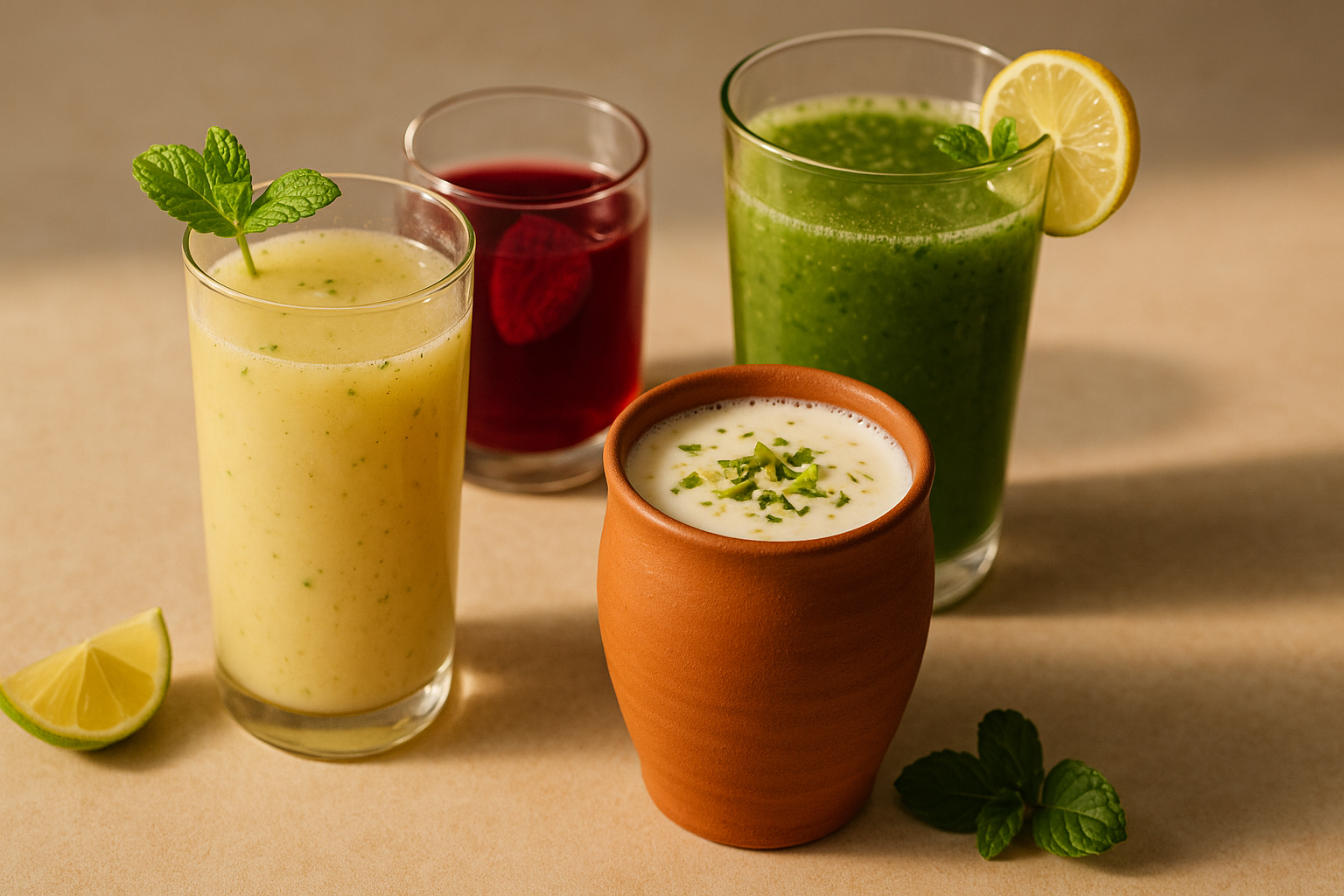
Every year when the heat starts getting rude, like properly rude, I stop craving fancy coffee and start thinking about the drinks I grew up seeing in steel tumblers, clay cups, reused glass bottles, and giant matkas sweating in corners of homes and dhabas. This guide is basically my personal summer map across India, one drink at a time. Not a lab-tested encyclopedia, okay, more like a very obsessed foodie notebook with sticky fingerprints on it. I’ve had some of these on actual trips, some at friends’ homes, some from little places that don’t even show up properly on Google Maps. And honestly? Traditional Indian summer drinks are having a bit of a comeback right now. In 2026, you can see chefs and cafes doing heritage beverage menus, lower-sugar versions, probiotic spins, millet pairings, cold-brew infusions with desi ingredients, all that. But the originals still win for me. Always.
Also, one thing I love: these drinks were doing hydration, cooling, gut support, and seasonal eating way before it became trendy wellness content. People now talk about natural electrolytes, fermented drinks, botanical coolers, regional ingredients, climate-smart food traditions... and I’m like, yes, our grandmothers knew. They just didnt call it a wellness protocol.
1) Punjab — Sweet or salty lassi, the drink that feels like shade
#I know, obvious start. But come on, Punjabi lassi deserves the drama. Thick dahi, churned till smooth, either sweet with sugar and maybe a touch of cardamom, or salty with roasted cumin and black salt. In peak summer, that first sip is like your whole body unclenches. I still remember having this unbelievably cold sweet lassi near Amritsar after a dusty afternoon and thinking, wow, this is less a beverage and more a life event. The malai on top was almost too much, but in a good way. Maybe not practical, but who said summer comfort has to be practical?
These days, a lot of places are doing saffron lassi, rose lassi, mango lassi with Alphonso, and even high-protein versions because, well, gym culture reaches everywhere. Cute, fine. But old-school plain lassi in a tall glass still beats the trendy stuff for me. If you make it at home, the trick is using really good curd and enough chill time. Don’t overblend it into a milkshake situation. Let it stay a little rustic.
2) Gujarat — Chaas, which I swear is more useful than half the summer drinks on earth
#If lassi is the indulgent cousin, chaas is the one who actually keeps the household running. Thin buttermilk, salt, roasted jeera, sometimes ginger, green chilli, curry leaves, coriander, hing if someone in the family is serious-serious about digestion. In Gujarat, chaas isn’t just a drink, it’s almost a daily ritual. You finish lunch, someone asks if chaas is there, and peace is restored. I had a spiced version in Ahmedabad that was served super cold with tiny bubbles from vigorous whisking, and I still think about it when the weather gets unbearable.
- Best with heavy lunches, obviously
- Actually cooling, not fake-cooling like sugary soda
- Cheap, easy, and kind to your stomach if lunch got a bit wild
A lot of 2026 restaurants doing regional thalis have finally stopped treating chaas like an afterthought, thank God. Some are serving smoked chaas, some with stone-ground spice blends, some in ceramic cups. Nice touch. But the best one might still be the one made in a home kitchen with a hand mathani and zero branding.
3) Rajasthan — Aam panna, dusty-road salvation in a glass
#You haven’t really understood Indian summer until you’ve had aam panna on a day when the air itself feels angry. Raw mangoes roasted or boiled, pulp scooped out, mixed with mint, cumin, black salt, sugar or jaggery depending on the house, then diluted with icy water. Sharp, smoky if roasted, sweet-salty-tangy all at once. I had one in Jaipur after walking around in May and honestly nearly cried, not even kidding. The black salt hit first, then the mango tang, then that almost medicinal cooling thing from mint and cumin. Magic. Bit chaotic. Perfect.
This one has also gone semi-mainstream in packaged form, but most bottled versions are too sweet and weirdly flat. Homemade aam panna has edge. And if the mangoes are roasted over flame rather than boiled, there’s this subtle depth that tastes like summer memory itself. Yeah I know that sounds dramatic, but it’s true.
4) West Bengal — Aam pora shorbot, the smokier cousin that deserves more attention
#Now this is where my loyalties get complicated, because Bengali aam pora shorbot and Rajasthani aam panna are related but not identical. Aam pora uses fire-roasted raw mango too, but the final drink often leans more smoky and elegant, less spiced-up aggression, if that makes sense. Mixed with sugar, black salt, sometimes a little roasted cumin, lots of cold water. I first had it at a friend’s Kolkata home where everyone acted like this was completely normal and I was there making ridiculous happy noises after one sip.
In Kolkata right now, there’s a fun little revival of heritage sherbets and old-school cabin-style coolers on summer menus. Some newer cafes are doing artisanal takes with gondhoraj or basil seeds, which I enjoy, though the old home version still has more soul. Also, this is one of those drinks that tastes best slightly imperfect. Not fully strained, a bit fibrous, maybe a little extra char. That’s the point.
5) Tamil Nadu — Neer mor, the quietly brilliant one
#Neer mor does not show off. It just works. A thin, savory buttermilk from Tamil Nadu, usually with ginger, green chilli, curry leaves, coriander, salt, and sometimes asafoetida, it’s one of the most intelligent summer drinks in India, full stop. Temple festivals, home lunches, hot afternoons, train-food memories... it belongs everywhere. I had a fantastic version in Chennai that came after a banana-leaf meal and the whole body just went, ahhh okay, we can continue living now.
I’m seeing more chefs in 2026 talk about electrolyte balance, fermented dairy, and region-specific heat management, and neer mor keeps coming up in discussions around traditional functional beverages. Makes sense. It’s light, practical, and doesn’t knock you out the way very thick yogurt drinks can. Some modern places add cucumber juice or micro herbs, which, sure. I don’t hate it. But classic neer mor with crushed curry leaves is still elite.
6) Kerala — Sambharam, which is basically neer mor’s punchier coastal sibling
#Kerala’s sambharam is another buttermilk-based hero, usually sharper and more aromatic, often with green chilli, ginger, curry leaves, and a faintly citrusy freshness if someone adds crushed lemon leaf or a squeeze of lime. I had this from a roadside place between Kochi and Alappuzha and I can still picture the condensation on the glass. We’d eaten too much, it was sticky-hot, and this drink just fixed things. Instantly.
There’s a trend now where boutique food brands are exploring ready-to-drink regional coolers with clean labels and less sugar, and honestly sambharam deserves that treatment way more than another boring imported-style iced tea. Still, I’d be careful with packaged buttermilk drinks because texture matters. Fresh is best. Fresh is almost everything here.
7) Maharashtra — Kokum sharbat, my forever heatwave obsession
#If I had to pick just one Indian summer drink to keep in my fridge, I mean maybe forever, it might be kokum sharbat. Maybe. Don’t make me sign anything. Popular in Maharashtra and along the Konkan belt, kokum gives this deep ruby-purple drink with tang, fruitiness, a tiny bitterness, and a cooling finish that feels almost sneaky. Mixed with sugar syrup or jaggery, salt, cumin if you want it savory-leaning, sometimes served with soaked kokum petals still floating around. I got addicted to it in Ratnagiri years ago and have never fully recovered.
Kokum doesn’t smack you in the face the way raw mango drinks do. It kind of persuades you. Then suddenly you’re judging every other summer beverage against it.
Lately, kokum is everywhere in the ‘better-for-you’ beverage conversation because people want regional, lower-caffeine, naturally flavorful drinks. You see kokum sodas, kombucha-ish experiments, cocktail mixers, shrub-style bottles, all that jazz. Some of it is great. Some of it tastes like branding. Traditional kokum sharbat, properly balanced, remains the benchmark.
8) Goa — Solkadhi, yes it’s with meals, but I absolutely count it
#Purists may argue solkadhi is more accompaniment than drink, and fine, technically maybe. I’m still putting it here because in a Goan summer, chilled solkadhi is non-negotiable. Coconut milk plus kokum, with garlic, green chilli, sometimes coriander. Pale pink, lightly tangy, soothing but also flavorful enough that it doesn’t disappear next to seafood. My first proper solkadhi was with a thali after a beach afternoon and I remember thinking this is the smartest thing anyone has ever invented.
There’s also more attention now on regional digestive drinks in restaurant programs, and solkadhi has really benefitted from that. A few newer coastal restaurants are serving clarified versions or espuma versions, which... okay, I tried one, it was interesting, but a little too chef-y for me. Give me the homestyle one in a steel tumbler, maybe slightly garlicky, maybe not fully smooth. That one wins.
9) Karnataka — Panaka, the jaggery-pepper-lime combo that sounds odd but totally works
#Panaka, especially associated with Ramanavami in Karnataka, is one of those drinks you taste once and then keep thinking about because the flavor logic is so clever. Jaggery for sweetness and minerals, lime for brightness, dry ginger for warmth, black pepper for bite, cardamom sometimes for aroma. It sounds like too many directions at once. Somehow it lands. The first time I had it in Bengaluru during a blistering afternoon, I was confused for maybe two seconds and then very, very into it.
Because 2026 food trends are obsessed with heritage sweeteners and functional spices, panaka is suddenly cool again among younger home cooks and some cafe menus. Deserved! Though one warning: if the jaggery quality is poor, the drink tastes muddy. Use good dark jaggery and strain it properly. Also don’t overdo pepper unless you enjoy being attacked by your own beverage.
10) Uttar Pradesh — Thandai, not just for Holi and not just for tourists
#I feel like thandai gets reduced to one festival joke and that’s a shame because proper thandai is this beautifully built North Indian cooler with milk, nuts, seeds, black pepper, fennel, rose, cardamom, saffron if you’re lucky, maybe melon seeds and almonds ground into a paste. In parts of Uttar Pradesh, especially around Varanasi, summer thandai has real presence. Rich, yes. Cooling, also yes. It’s not the thing I’d chug after a run, but for slow afternoons? Glorious.
I had a version in Varanasi that was served in kulhad, lightly perfumed with rose but not so much that it felt like drinking potpourri. Honestly one of the best beverage memories of my life. Current trend-wise, there are a lot of sugar-conscious thandai mixes and vegan thandai experiments using oat or almond milk. Some are surprisingly good. But the original texture from soaked-and-ground nuts is hard to beat. Don’t shortcut that part if you can help it.
11) Bihar — Sattu sharbat, the drink that is basically a meal and I mean that lovingly
#The first time I had savory sattu sharbat in Bihar, I was not prepared. Roasted gram flour mixed with cold water, black salt, cumin, lemon, sometimes green chilli, onion, coriander if it’s going in a more filling direction. It’s earthy, nutty, almost blunt in flavor, and wildly satisfying. Not glamorous. Extremely effective. You finish a glass and suddenly the heat doesn’t have the same power over you. Farmers and workers have known this forever, obvously, and now urban wellness folks are acting like they discovered roasted gram protein. I can’t even be mad, just please respect the original.
- Savory version is my pick, always
- Sweet sattu drink exists too, and some people swear by it
- Use very cold water and whisk well or it clumps like crazy
In 2026, sattu is having a huge clean-label, high-protein, affordable nutrition moment in Indian food conversations. Good. It should. But there’s a difference between a fancy cafe sattu smoothie and a proper summer sharbat that actually tastes rooted in place.
12) Telangana/Andhra Pradesh — Nannari sharbat, the old-school syrup I wish more people knew
#Nannari, made from Indian sarsaparilla root syrup, mixed with chilled water and lime, is one of those drinks that feels old-fashioned in the nicest possible way. In parts of South India, especially around Andhra and Telangana and also Tamil Nadu in different forms, it shows up in summer as this fragrant, amber-brown cooler with a woody-herbal sweetness. I had a roadside glass near Hyderabad years ago and it was unexpectedly addictive. Less loud than cola, way more interesting than synthetic orange soda, and deeply refreshing.
There’s increasing interest now in botanical Indian beverages and heritage syrups, which means nannari is finally getting some love beyond old provision stores and syrup bottles on dusty shelves. But choose brands carefully if you’re buying it. Some versions taste too artificial. The good stuff has depth, almost root-beer-ish but not really, and brightens beautifully with fresh lime.
A few random thoughts before you run to the kitchen
#What I really love about these drinks is that they aren’t random recipes. They come from climate, work, crops, community habits, digestion needs, and just plain common sense. Fermented dairy where dairy made sense. Raw mango where summer gave too much mango. Kokum where the coast knew acidity and cooling could be best friends. Sattu where satiety mattered. Jaggery and spice where the body needed more than sugar-water. It’s all so smart, and also so delicious, which is the ideal combo if you ask me.
If you’re trying them at home, don’t obsess over perfection. Taste as you go. Some drinks want more salt than you think. Some need more dilution. Some are better with jaggery, some with sugar. Also serve them properly cold, please. Not vaguely cool. Cold. And if you can use a clay cup or steel tumbler, do it. Maybe it’s psychological, maybe not, but it changes the mood.
Anyway, that’s my very biased state-by-state summer drink guide, built from travel memories, family kitchens, roadside stops, and me being the person who always orders the regional cooler if it’s on the menu. If you’ve got a favorite I missed, I’d probably want to hear about it and then immediately go hunt it down. For more cozy food rambles and desi food inspiration, you know, have a scroll through AllBlogs.in.