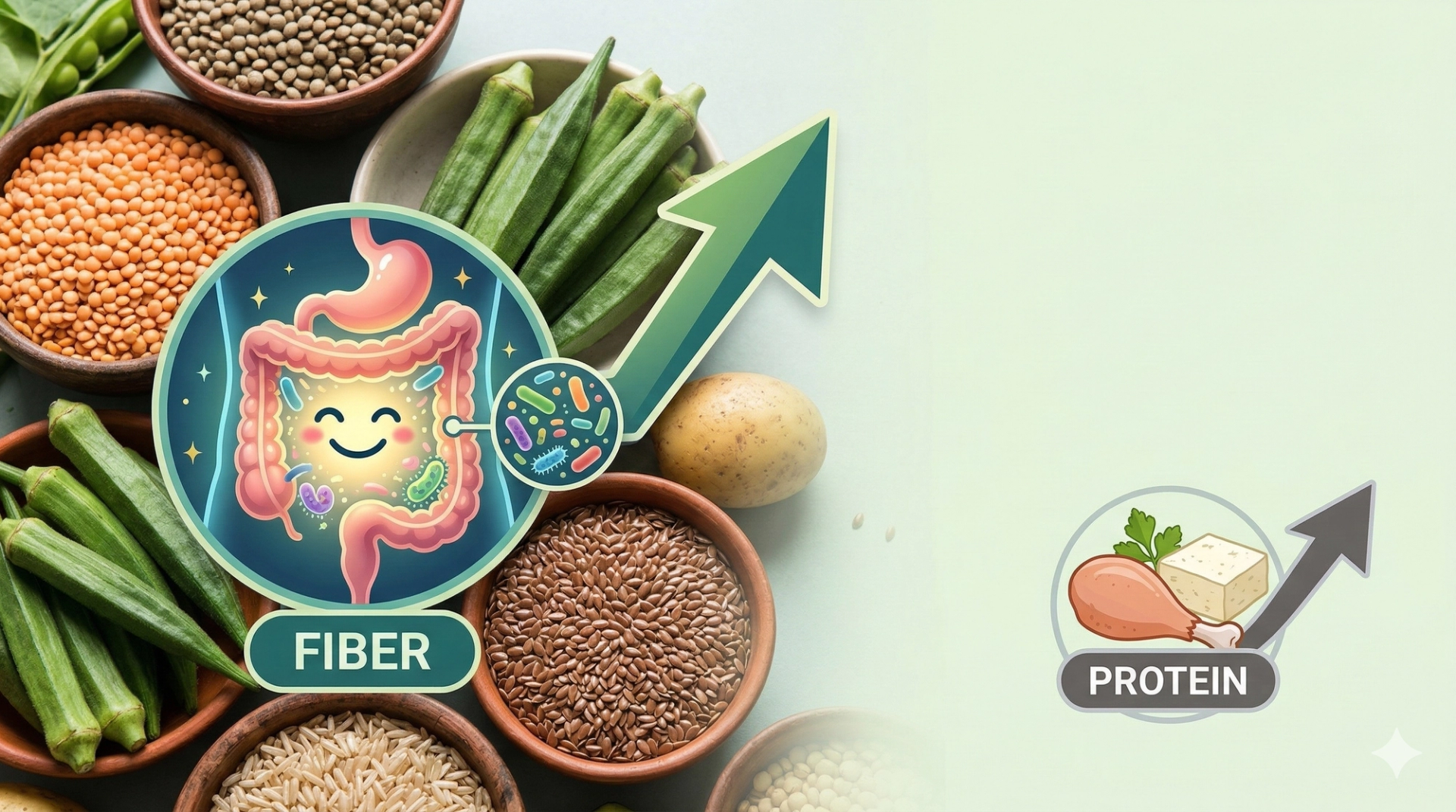
I need to say this upfront because wellness internet gets weird fast. Protein matters. A lot. I'm not anti-protein, not even close. But after watching Indian health trends for the last year or two, and also messing up my own digestion with too many protein bars, shakes, and "healthy" high-protein snacks, I genuinely think fiber is the bigger story for 2026. Maybe not the flashier one, sure. But the more important one? Yeah, probably.
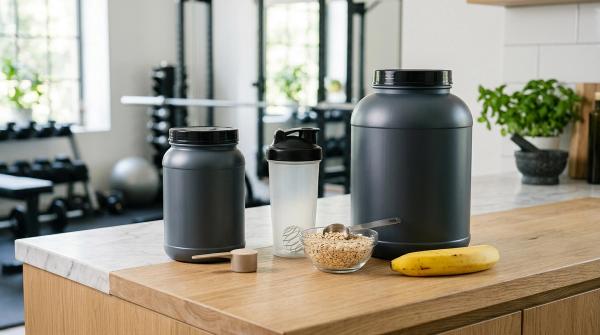
For a while I was doing what everybody around me seemed to be doing. Extra paneer, Greek yogurt, whey in smoothies, "protein atta" products, random cookies claiming 10 grams protein, all that stuff. It felt smart. Modern. Optimised. And honestly... my stomach was not having a good time. I was bloated, weirdly constipated, hungry even after eating, and kind of low-energy in this dull annoying way. It took me longer than I'd like to admit to realise I wasn't lacking protein nearly as much as I was lacking actual fiber.
Why gut health got so huge in 2026, especially in India
#This year the conversation has shifted. You still see protein everywhere, of course, because it's marketable and easy to slap on a packet. But doctors, dietitians, diabetes specialists, and basically anyone talking sense about metabolic health are bringing the focus back to the gut microbiome, blood sugar control, inflammation, and digestive regularity. And fiber sits right in the middle of all that. Not in a trendy way, more in a boring-but-kind-of-brilliant way.
India is in a particularly interesting place here. We still have a food culture that includes naturally fiber-rich stuff like dal, chana, rajma, millets, sabzi, guava, banana stem, methi, sesame, peanuts, fermented foods, and seasonal fruit. But urban eating has changed fast. More packaged snacks, more meal replacement drinks, more restaurant food, more sitting, less chewing, less roughage. So people are eating "healthy" on paper while ending up with low fiber in real life. That's the trap. I've fallen into it too.
The 2026 gut health trend isn't really about buying fancier powders. It's about realising your gut bugs do not care how expensive your protein cookie was if you forgot vegetables, legumes, fruit, and whole grains all day.
The big thing most of us in India are missing: fiber intake is still low
#Most adults should be getting roughly 25 to 35 grams of fiber a day, depending on age, sex, calories, and individual health needs. But many people, in India and elsewhere, don't consistently hit that. Once I actually tracked my meals for a week, mine was embarrassingly low on some days, like under 15 grams. And this was while I thought I was eating pretty clean. That was a humbling little moment, not gonna lie.
What's changed in 2026 is not that fiber suddenly became important. It always was. What's changed is that more clinicians are linking low-fiber diets with the stuff urban Indians are constantly struggling with: constipation, acid reflux, poor satiety, insulin resistance, fatty liver concerns, cholesterol issues, and that forever-bloated feeling after meals. Also, research over the last few years has kept reinforcing that dietary fiber supports beneficial gut microbes, helps produce short-chain fatty acids like butyrate, and can improve metabolic markers. Basically your gut likes being fed plant diversity. Who knew... well, okay, nutrition people knew.
So why am I saying fiber beats protein?
#Not because protein doesn't matter. It does for muscle, recovery, ageing, hormones, appetite, and general health. But in the Indian wellness space, protein has become overhyped in a way that's weirdly disconnected from what many people actually need most. A lot of middle-class urban adults are not in a severe protein crisis every single day. Some are under-consuming, yes, especially older adults, vegetarians with poor meal planning, or people recovering from illness. But huge numbers are doing something else: adding protein on top of low-fiber diets and expecting perfect health.
And that's where things go sideways. If your breakfast is a protein shake, your snack is a protein bar, your lunch is mostly chicken and white rice with almost no vegetables, and your dinner is paneer with two tiny slices of cucumber pretending to be salad... your gut's gonna complain. Maybe not instantly, but eventually. Mine sure did.
- Protein supports you
- Fiber feeds the gut microbes that support you back
- Protein helps build tissue, but fiber affects digestion, cholesterol, blood sugar, satiety, bowel movements, and the microbiome all at once
- A lot of people are chasing one and neglecting the other, and the neglected one is usually fiber
The 2026 Indian gut health trends I'm seeing everywhere
#A few things keep popping up this year in clinics, wellness content, and product launches. Some of it is useful, some of it is, um, a bit overdone.
- Prebiotic foods are having a moment. Not just probiotics in capsules, but actual foods that feed good bacteria, like garlic, onion, oats, bananas, legumes, cooked-and-cooled rice or potatoes, and whole grains.
- Millets are back, but now people are talking about them less as a patriotic superfood and more as a fiber tool. Ragi, bajra, jowar, little millet, foxtail millet, all useful when tolerated well and eaten as part of balanced meals.
- Continuous glucose monitoring has spilled into mainstream wellness. And a lot of people are noticing that meals with more fiber often lead to steadier energy and less dramatic sugar spikes. That's not magic, it's meal structure.
- Women in their 30s and 40s are talking more openly about constipation, bloating, PCOS-related insulin issues, and how fiber changes things. Honestly, about time.
- There's more awareness that ultra-processed "high protein" foods can still be ultra-processed. Big marketing, tiny gut benefit.
I also keep seeing more dietitians in India saying something that sounds simple but is actually huge: count plant variety, not just macros. Try getting 20 to 30 different plant foods across the week. Spices count, herbs count, dals count, nuts count. That idea really changed how I eat. Suddenly gut health felt less like restriction and more like building a fuller plate.
What happened when I stopped obsessing over protein and started adding fiber properly
#This part is personal, obviously, not medical advice. But when I started doing a few boring things consistently, my digestion improved way more than when I was buying supplements. I added fruit in the morning instead of only coffee, increased dal portions, stopped treating vegetables like decoration, ate chana or sprouts a few times a week, and switched some refined grains to more whole ones. Not perfectly. I still eat takeout and random bakery stuff. I'm human. But within maybe three-ish weeks, I felt less heavy after meals, bowel movements got regular, and that uncomfortable lower-belly bloat was reduced. Not gone forever, because life, but reduced.
The catch is you can't go from almost no fiber to a mountain of fiber overnight and expect your gut to clap for you. I made that mistake too. One day I had oats, guava, chana salad, flax, rajma, and a huge salad and by evening I was like wow, this was... a lot. So yeah, increase gradually and drink enough water, otherwise you'll blame fiber for problems caused by the sudden jump.
Best fiber-rich Indian foods that actually fit normal life
#You don't need imported powders or some dramatic detox kit. Most of the useful foods are regular Indian foods, the ones our parents or grandparents would've shrugged at because they were just food.
- Dal, whole masoor, moong, rajma, chole, lobia
- Vegetables like bhindi, lauki, tinda, carrots, beans, cabbage, beetroot, peas
- Fruit that people weirdly underrate, like guava, pear, orange, papaya, apple with skin
- Millets and whole grains, if they suit your digestion
- Oats, barley, psyllium husk when needed and tolerated
- Nuts and seeds in realistic amounts, not influencer handfuls
- Traditional fermented foods paired with fiber-rich meals, like idli with sambar, curd rice with vegetables, kanji, homemade pickles in moderation
One of the easiest habits for me was this: instead of asking "where's the protein?" at every meal, I started asking "where's the fiber?" If the meal had no visible plant food except maybe one onion slice, I knew what was missing.
But wait, isn't India also dealing with low protein intake?
#Yes. And this is where nuance matters. Some population groups absolutely need more protein attention, including older adults, low-income communities with limited food access, people with illness-related muscle loss, and some vegetarians who rely too heavily on refined carbs. So I don't wanna oversimplify and say fiber matters, protein doesn't. That's just not true. Also if you're strength training, pregnant, recovering from surgery, or trying to preserve muscle as you age, protein becomes very important.
My point is more specific than that. In 2026 wellness culture, especially online, protein often gets positioned as the answer to everything. Better skin, no cravings, weight loss, hormones, energy, fitness, gut health, all of it. That's where I disagree. For a huge number of people with sedentary jobs, digestive complaints, low fruit and veg intake, and metabolic risk, the more immediate upgrade might be fiber quality and quantity. Not sexy, but true.
What newer research and expert opinion are basically pointing toward
#Across recent nutrition science, the pattern is pretty consistent: diets higher in fiber and diverse plant foods are associated with better gut microbiome composition, improved stool frequency, lower LDL cholesterol, better blood sugar response, and sometimes lower long-term risk for heart disease and colorectal issues. Not every study is perfect and nutrition research is messy, always has been. But the direction is clear enough that most credible medical bodies still advise prioritising whole grains, legumes, fruits, vegetables, nuts, and seeds.
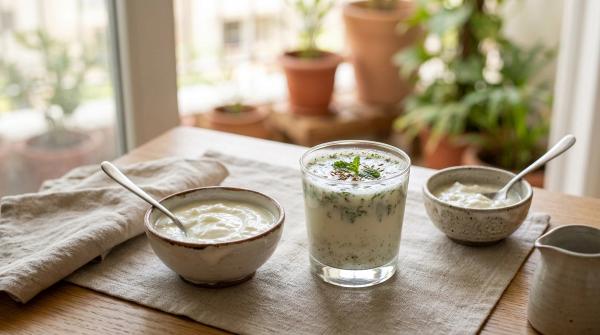
There's also a lot more discussion now around the difference between fermented foods and fiber. People think curd alone will fix the gut. It might help some folks, maybe, but probiotics without enough fiber is like inviting guests over and not giving them food. Your microbes need substrate. They need something to ferment. That's one reason prebiotics and resistant starch are all over gut health conversations in 2026.
A few mistakes I think people make with gut health, me included
#- Thinking one probiotic drink can cancel out an entire low-fiber diet
- Adding too much fiber too fast and then saying fiber doesn't suit them
- Ignoring water intake, movement, sleep, and stress, all of which affect digestion too
- Eating high-protein processed snacks and assuming they are automatically healthier
- Cutting out entire food groups without medical reason because somebody on social media said "inflammation" in a dramatic voice
Also, and this is important, not every bloated person just needs more fiber. Sometimes ongoing symptoms can mean IBS, celiac disease, IBD, lactose intolerance, thyroid issues, pelvic floor dysfunction, medication effects, or something else that deserves proper medical evaluation. If you're seeing blood in stool, unexplained weight loss, severe pain, persistent constipation, anemia, or symptoms waking you at night, please don't just self-treat with chia seeds and vibes. Get checked.
How I'd build a more gut-friendly Indian plate in 2026 without making life miserable
#Honestly I'd keep it pretty simple. Maybe half the plate from vegetables when possible, a decent portion of dal/beans or other protein, a whole grain or millet or rice depending on what suits you, curd or fermented food if tolerated, and fruit somewhere in the day. Nothing revolutionary. The revolution, if you can call it that, is doing it repeatedly.
A basic day could look like oats with fruit and seeds, or vegetable poha with peanuts. Lunch could be dal, sabzi, roti, salad, curd. Snack maybe fruit and chana. Dinner maybe rajma rice with extra veg, or fish plus veg plus red rice, or khichdi with lots of vegetables. If you need more protein, add it. Just don't crowd out the fiber to make room for the latest macro obsession. That's kind of the whole point.
My honest take: fiber is winning because it solves more of modern India's actual problems
#That's really it. We are stressed, under-slept, often underactive, increasingly insulin resistant, and eating more processed food than we admit. In that context, fiber does a lot of heavy lifting. It helps with fullness, digestion, bowel regularity, cholesterol, glucose response, and microbiome support. Protein is essential, yes, but fiber is often the missing lever. The quieter one. The less marketable one. The one your nani would've probably understood without needing a podcast.
I guess what surprised me most is that improving gut health didn't feel high-tech in the end. It felt old-fashioned. More dal. More sabzi. More fruit. More variety. Less fake-health packaged stuff. A little patience. And less chasing extremes every other week because the algorithm got bored.
Final thoughts, before I go make actual lunch
#If you're in India and trying to eat better in 2026, maybe don't ask only how to squeeze in more protein. Ask what your gut is missing. Ask how many plants you ate this week. Ask whether your meals help you stay regular, satisfied, and steady instead of just impressed by the label on the packet. Small shift, big difference. It was for me anyway, even with all my trial-and-error and occasional food fails.
And yeah, if symptoms are persistent or complicated, talk to a qualified doctor or registered dietitian, not just a loud person on the internet. For more chill reads on wellness, food, and healthy living without making it all painfully perfect, you can poke around AllBlogs.in.