Quick answer:If you’re buying airport cold case foods, choose sealed items that feel properly cold, look fresh, and can be eaten soon. The safest bets are usually hard cheese, crackers, whole fruit, nuts, and simple protein boxes. Yogurt, sandwiches, wraps, and sushi can be okay, but they’re better as “eat now” foods, not “save for later” foods. Skip wilted salads, sad cut fruit, anything from a fridge that doesn’t feel cold, and any refrigerated item you plan to carry around during a long delay.
Airport cold cases always look promising when you’re tired, hungry, and trying not to make a bad pre-flight food decision.
You’ve cleared security. Boarding is still a while away. A giant airport burger feels like too much. Then you spot the refrigerated case: yogurt parfaits, salads, sandwiches, sushi trays, fruit cups, cheese boxes. It all looks clean, quick, and responsible.
Sometimes it is.
But some grab-and-go airport meals are much better travel choices than others. The difference usually comes down to temperature, freshness, packaging, and timing. A cold, sealed cheese box eaten right away is one thing. A soggy turkey wrap sitting in your backpack through a two-hour delay is another.
You don’t need to be afraid of airport food. You just need to be a little picky.
What You’ll Usually Find in Airport Cold Cases
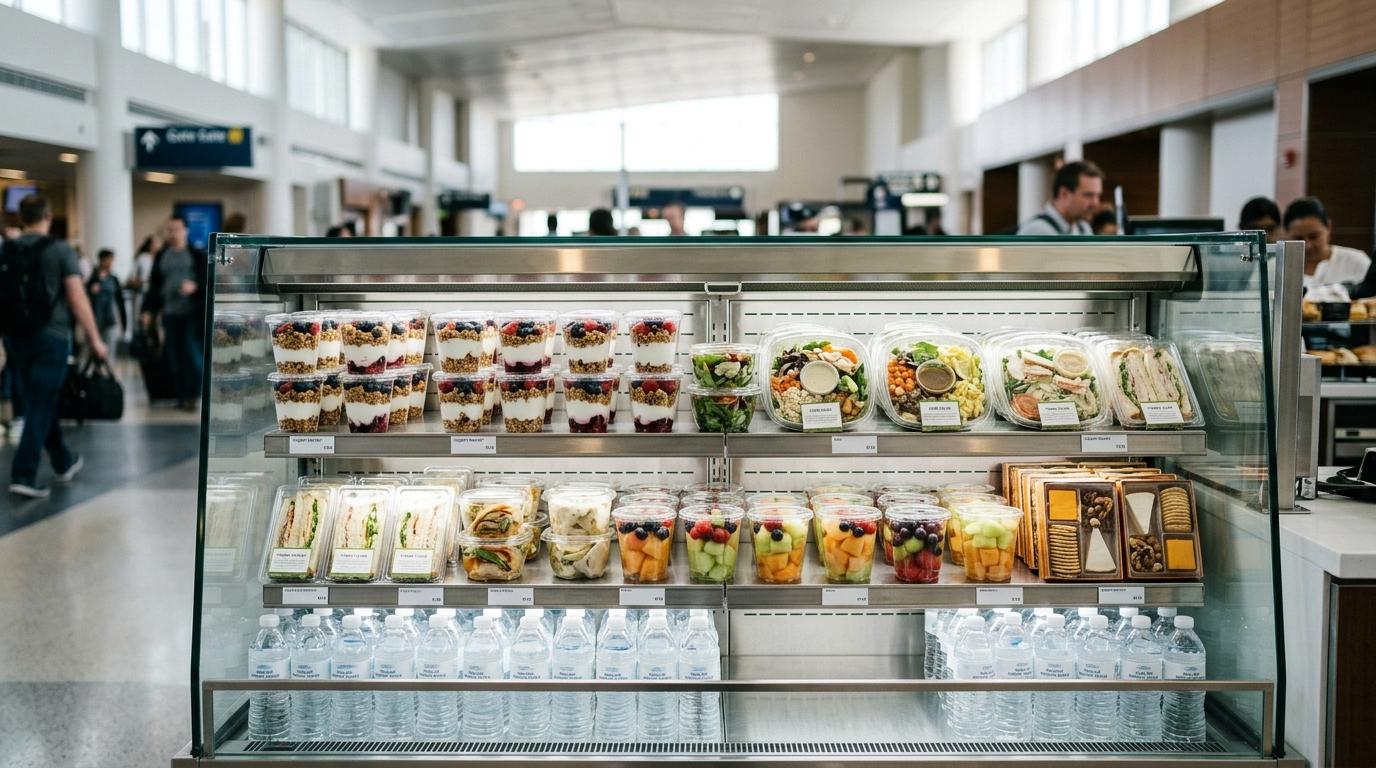
#Most airport cold cases have a familiar lineup. A lot of the food is made somewhere else, delivered to the terminal, and stocked in cafes, kiosks, and convenience-style airport shops.
Common options include:
- Leafy green salads, often with dressing on the side
- Cold sandwiches and wraps, like turkey, chicken, tuna, egg salad, or veggie
- Yogurt parfaits, usually layered with fruit and granola
- Sushi trays, including raw fish, cooked seafood, and veggie rolls
- Cheese and snack boxes, with crackers, nuts, meats, eggs, or fruit
- Cut fruit cups, such as melon, grapes, pineapple, or mixed fruit
- Hummus and dip packs, usually with pita, pretzels, or vegetables
These can be useful when you have an early flight, a short connection, or a long layover where you don’t want a full sit-down meal.
But not all refrigerated airport food is equally sturdy. Moist foods, cut produce, creamy fillings, seafood, and anything with mayo need more careful handling. Temperature matters too. So does how long the food sits after you buy it.
A sealed pack of hard cheese and crackers is simply less fussy than a plastic bowl of chopped greens. And a yogurt you eat at the gate is different from a yogurt that warms up in your bag until mid-flight.
The Buy, Chill, and Skip Checklist
#When you’re standing in front of the cooler trying to decide what to eat before a flight, think of the options in three groups:
- Buy: sturdier cold-case foods that usually travel better
- Chill: fine if they’re cold and you eat them soon
- Skip: higher-risk items, especially if they look old, wet, warm, or poorly stored
Buy: Sturdier Cold-Case Choices
#These are usually the better airport cold-case picks, assuming the fridge feels cold and the packaging looks intact.
Hard Cheese and Crackers
#Hard cheeses like cheddar, gouda, and Swiss tend to be more forgiving than soft cheeses, creamy dairy, seafood, or mayo-heavy foods. They still need to be kept cold, of course, but they’re less delicate than many other refrigerated options.
Look for:
- A fully sealed package
- Cheese that looks firm, not sweaty or dried out
- Crackers that are still crisp-looking
- No swollen packaging
- No odd smell after opening
A cheese-and-cracker box is often a good light meal before boarding. It’s easy to eat, not too messy, and less likely to feel awful once you’re buckled into a cramped seat.
Airport Protein Boxes
#An airport protein box can be one of the better airport cold case foods, especially when it’s built around simple, sturdy ingredients: hard cheese, nuts, crackers, whole fruit, or a properly chilled hard-boiled egg.
Choose a box that is:
- Sealed tightly
- Cold to the touch
- Not leaking
- Not crushed or damaged
- Not fogged up with heavy condensation
- Not full of wilted, watery, or tired-looking ingredients
If the box includes creamy dips, soft cheeses, sliced meats, or cut fruit, treat it as more perishable. That doesn’t mean you can’t buy it. It just means you should eat it soon instead of carrying it around for hours.
Whole Fruit
#Whole fruit is one of the easiest airport food wins.
An apple, banana, or orange doesn’t rely on the cold case the way sliced melon or mixed fruit cups do. It’s portable, easy to eat, and usually a lighter choice before a flight.
If the refrigerated case looks questionable but you still want something fresh, whole fruit is often the safer move.
Chill: Fine If You Eat Them Soon
#These foods can be perfectly reasonable, but they’re not great “save it for later” choices. Buy them when you’re actually ready to eat.
Yogurt and Yogurt Parfaits
#Yogurt is convenient, filling, and usually gentler than a heavy airport meal. An airport yogurt parfait can work well before a flight if it’s genuinely cold and you eat it soon after buying.
Before you grab one, check for:
- A visible use-by or sell-by date
- A sealed lid
- No bloated packaging
- Fruit that doesn’t look watery, fizzy, or fermented
- Granola stored separately, if possible
Skip yogurt that feels only slightly cool, looks strangely separated, or has been sitting in an open case that doesn’t feel cold.
Also, if you’re buying yogurt before security, remember the TSA liquids rule. More on that in a minute.
Sandwiches and Wraps
#Cold sandwiches and wraps are airport classics, but they deserve a second look.
A simple sandwich with firm bread, basic fillings, and sealed packaging is usually a better bet than one loaded with mayo, creamy sauces, or wet vegetables. Wraps can also get soggy quickly, especially if they’ve been sitting too long.
Before buying, ask:
- Is the bread soggy?
- Is the wrap falling apart?
- Is there heavy condensation inside the package?
- Does the lettuce look wilted or dark?
- Does the package feel cold?
- Is there a clear date label?
If it looks fresh, sealed, and properly chilled, it can be fine. Just eat it soon.
What you don’t want to do is buy a turkey sandwich during a delay, tuck it into your backpack, board late, sit on the tarmac, and finally open it hours later. At that point, it’s no longer the same food you bought from the cold case.
Sushi
#Airport sushi is one of those foods that can be fine — or can become the decision you regret at 35,000 feet.
If you’re going to buy it, be picky.
Look for:
- A visible prep date, ideally same day
- A cold case that feels genuinely cold
- Fish that looks glossy, not dull or dry
- Rice that isn’t hard, crusty, or mushy
- Packaging that is sealed and not leaking
Cooked rolls and vegetable rolls may feel like safer choices, and they can be more comfortable picks for some travelers. But they still need proper refrigeration and careful handling.
If anything looks off, skip it. This is not the moment to talk yourself into questionable sushi.
For more detail, see our guide to airport sushi safety.
Skip: Higher-Risk Cold-Case Foods
#Some refrigerated airport foods look healthy and convenient, but they’re not always the smartest pre-flight choice.
Prepackaged Leafy Salads
#This one catches people off guard because airport salads before flight sound like the responsible option. Light, fresh, not greasy. Perfect, right?
Sometimes. But prepackaged leafy salads can be more sensitive than they look. Cut greens are handled more, have more exposed surface area, and release moisture. That moisture can make a salad deteriorate faster, even when it’s refrigerated.
That doesn’t mean every airport salad is unsafe. It just means a sealed plastic bowl of greens from a busy airport cooler deserves a closer inspection.
Skip salads with:
- Wilted, slimy, or dark leaves
- Liquid pooling at the bottom
- Warm packaging
- Soggy toppings already mixed in
- No clear freshness date
- A container that looks puffed, damaged, or poorly sealed
If a salad is made fresh in front of you and kept cold, it may be a better option than a tired prepackaged one. But if you’re unsure, choose something sturdier.
Tired Cut Fruit
#Cut fruit can be refreshing before a flight, especially in the morning. But once fruit is peeled and sliced, it becomes more delicate. There’s more exposed surface area, more moisture, and more opportunity for poor handling to matter.
Be especially careful with melon cups or mixed fruit sitting in lots of juice.
Skip cut fruit if:
- It looks mushy or translucent
- It’s sitting in a warm pool of liquid
- The container is leaking
- The package feels barely cool
- It smells fermented, sour, or overly sweet when opened
Airport fruit cups can be convenient, but whole fruit is usually the simpler and safer travel choice.
Anything From a Warm Fridge
#This is the easiest rule of all.
If you open the cold case and don’t feel cold air, don’t buy refrigerated food from that case. If the package feels room temperature, skip it. If the cooler looks overloaded, messy, or poorly maintained, move on.
No salad, sandwich, yogurt, sushi tray, or cheese box is worth starting your trip with a bad stomach.
Timing Matters, Especially During Delays
#The biggest mistake with airport cold-case food is buying it too early.
It happens all the time. You see a sandwich and think, “I’ll save this for the plane.” Then boarding gets pushed back. You walk around the terminal. You sit at the gate. You board late. You wait on the tarmac. By the time you unwrap that sandwich, it has been warming up in your bag for hours.
That’s where airport food safety becomes more than a vague concern.
Perishable foods shouldn’t sit around at room temperature for long. Food safety guidance often refers to the “danger zone,” between 40°F and 140°F, where bacteria can multiply more quickly. You don’t need to carry a thermometer through the airport. Just use the practical version: if it came from a fridge and now feels warm, it’s probably not a great in-flight snack anymore.
A better flight-day rhythm:
- Buy refrigerated food when you’re ready to eat.
- If your flight is delayed, eat the cold item soon or switch to something shelf-stable.
- Don’t save sushi, yogurt, mayo-heavy sandwiches, or cut fruit for later unless you can keep them properly chilled.
- For long layovers, wait until closer to mealtime before buying from the cold case.
Delays are annoying enough. Don’t add warm airport sushi or a questionable yogurt parfait to the experience.
A Quick TSA Note on Liquids and Spreadables
#If you buy food after security, you usually don’t need to worry about the TSA liquids rule before boarding a domestic flight. But if you’re bringing food from home or buying it before the checkpoint, the rules matter.
Under current TSA guidance, liquids, gels, creams, pastes, and spreadables generally need to follow the 3.4-ounce, or 100-milliliter, container limit and fit in a quart-sized liquids bag.
For airport cold-case foods, that can include:
- Yogurt
- Hummus
- Cream cheese
- Peanut butter
- Creamy dips
- Sauces
- Salad dressings
- Soft spreads
Solid foods like sandwiches, crackers, hard cheese, and baked goods are generally easier to bring through screening, though all items still go through security checks.
Ice packs can also be tricky. TSA generally allows frozen ice packs through screening if they are completely frozen solid. If they’re slushy, partially melted, or have liquid at the bottom, they may be treated differently under liquid rules.
Rules can change, and unusual items can cause confusion at the checkpoint. For the most accurate guidance, check the official Transportation Security Administration food page or your local airport security authority before packing anything questionable.
Safer No-Fridge Backups
#If the cold case looks iffy, or your delay keeps getting longer, shelf-stable snacks are your friend. They may not be exciting, but they travel well and won’t punish you for waiting.
Good no-fridge backups include:
- Mixed nuts
- Trail mix
- Plain crackers
- Pretzels
- Protein bars
- Granola bars
- Jerky
- Whole fruit
- Roasted chickpeas or similar crunchy snacks
These are especially useful for early flights, late-night layovers, and airports where the refrigerated options look like they’ve had a long day too.
A boring backup snack can save you from buying refrigerated airport food just because you’re hungry and out of options. We’ve all been there. It rarely ends well.
Quick Airport Cold-Case Decision Guide
#Before you buy, ask yourself five quick questions:
- Is the case actually cold?If it doesn’t feel cold, skip the refrigerated food.
- Is the package sealed and intact?Avoid leaks, swollen lids, broken seals, and crushed containers.
- Does the food look fresh?Watch for soggy bread, wilted greens, dull fish, watery fruit, or heavy condensation.
- Will I eat it soon?If not, choose something shelf-stable instead.
- Will this feel good on a plane?Very creamy, greasy, salty, or heavy foods may not be your friend once you’re seated.
The best airport meal is not always the one that looks the healthiest. It’s the one that is fresh, cold, practical, and timed well.