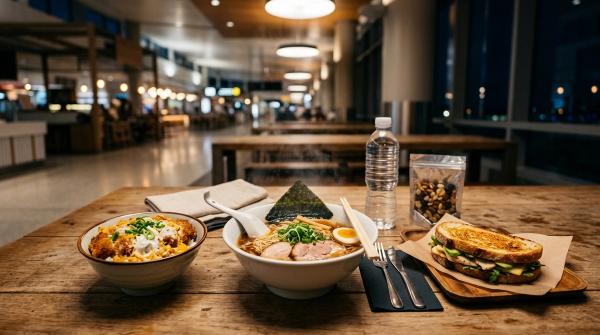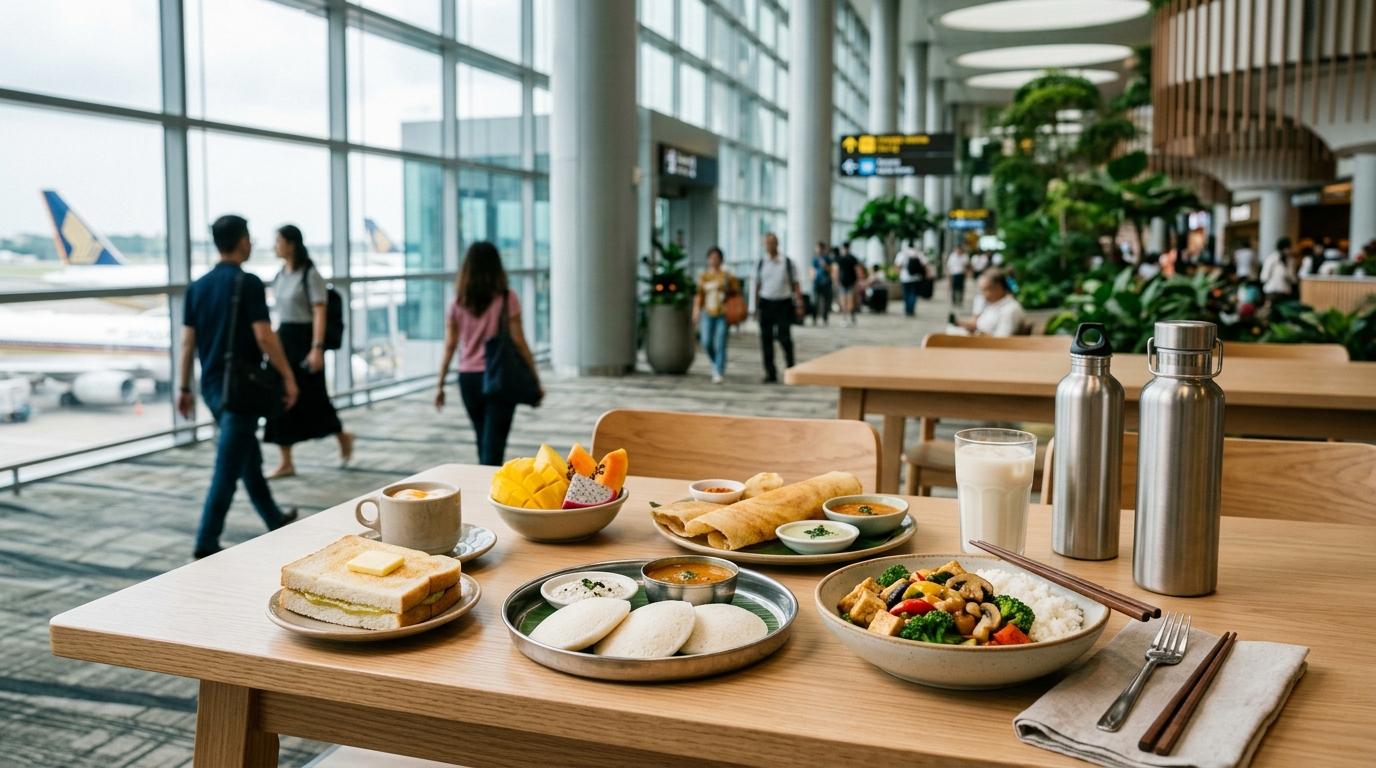
Finding vegetarian food at Changi Airport is usually pretty manageable. It’s one of the better major airports for food variety, and you won’t be stuck with only fries and a packet of nuts unless you arrive at a really awkward hour.
That said, you still need to be a little careful.
In Singapore, a dish can look vegetarian at first glance and still contain chicken stock, pork broth, fish sauce, oyster sauce, shrimp paste, egg, gelatine, ghee, or dairy. Sometimes “vegetable” just means there are vegetables in it, not that the dish is fully vegetarian.
This guide is for those real airport moments: you’re between flights, you’re hungry, you don’t want to wander across three terminals, and you need something that actually fits your diet. Whether you’re vegetarian, vegan, Jain-style, no onion-garlic, lacto-vegetarian, or just trying to avoid surprise meat stock before a long flight, here’s how to approach Changi.
One important thing before you plan your meal: airport outlets and opening hours change. Always check the live listings on Changi’s official dining directory, the Changi app, or the airport screens before walking across terminals for a specific place.
Quick answer
#If you need the short version, here it is:
- Safest choice for strict vegetarians: Look for dedicated vegetarian outlets or stalls, especially Indian vegetarian stalls and Chinese Buddhist vegetarian stalls marked with “素”.
- Useful airside option to check first: Kaveri Indian in Terminal 2 transit is often mentioned by vegetarian travellers for South Indian vegetarian fast food like dosa, idli, and vadai. Check live hours before heading there.
- Best public-area option if you have time: Jewel Changi Airport has a wider restaurant mix and more chances of finding vegetarian-friendly meals. But Jewel is landside, so transit passengers may need to clear immigration.
- Best budget move: Food courts. Try to choose dedicated vegetarian stalls instead of mixed rice counters where meat and vegetable dishes sit side by side.
- Best early breakfast for lacto-ovo vegetarians: Kaya toast can work if you eat egg and dairy. It is not vegan.
- Best vegan-ish breakfast: South Indian basics like idli or plain dosa may be suitable, but ask about ghee, yogurt, dairy, and shared cooking surfaces.
- Best late-night backup: Convenience stores, fruit, nuts, soy milk, crackers, vegetarian-labelled snacks, or clearly labelled instant noodles. Read the ingredients carefully.
The golden rule at Changi is simple: if a dish has soup, sauce, seasoning powder, sambal, or a shiny stir-fry glaze, ask what’s in it.
Best vegetarian choices at Changi Airport
#The easiest way to think about vegetarian food at Changi is by risk level.
A dedicated vegetarian outlet is usually the safest. A mixed-menu restaurant with vegetarian dishes can be fine, but you’ll need to ask questions. A general food court stall that says it can “remove the meat” is riskier, especially if you avoid fish sauce, meat stock, egg, dairy, or cross-contact.
1. South Indian vegetarian meals
#South Indian food is one of the most useful options for vegetarian travellers at Changi. It’s filling, familiar for many people, and often built around rice, lentils, dosa batter, chutneys, and vegetable-based dishes.
At Changi, Kaveri Indian in Terminal 2 transit is a good name to know. It has been listed by vegetarian travel resources as a South Indian vegetarian fast-food option, with items such as idli, dosa, and vadai.
This is especially handy if you are already airside and don’t want to clear immigration just to find food.
Good things to look for include:
- Idli, steamed rice-lentil cakes that are light and easy before a flight
- Plain dosa, especially if it can be made without ghee
- Vadai, if you’re okay with fried food and possible shared fryers
- Rice-based South Indian meals, depending on what is available that day
Useful questions to ask:
- “Is there ghee in this?”
- “Is the chutney made with yogurt?”
- “Is the sambar vegetarian, no meat stock?”
- “Can you make the dosa without ghee or butter?”
- “Does this contain onion or garlic?”
For vegans, idli is often a better starting point than dosa, but don’t assume it’s automatically safe. Ask about chutneys, ghee, yogurt, and what comes on the side.
For Jain-style or no onion-garlic diets, be even more specific. Indian food may be vegetarian, but many sambars, chutneys, and gravies still use onion, garlic, potatoes, carrots, or other root vegetables.
2. Chinese Buddhist vegetarian stalls
#If you see a stall marked with the Chinese character “素”, that usually means Buddhist vegetarian food. These stalls can be very helpful, especially if you avoid onion, garlic, leek, shallot, and chives, since Chinese Buddhist vegetarian cooking often avoids alliums.
Typical dishes may include:
- Rice with tofu and vegetables
- Mock meat made from soy, tofu skin, or wheat gluten
- Stir-fried vegetables
- Vegetarian bee hoon or noodles
- Simple vegetable sides
These stalls can be a good option for no onion-garlic travellers, but if you follow Jain-style rules, still ask carefully. Buddhist vegetarian food may still include root vegetables like carrot, potato, radish, or yam.
Also check whether dishes contain egg. Some vegetarian stalls are suitable for lacto-ovo vegetarians but not vegans.
3. Jewel Changi vegetarian food
#Jewel Changi is usually the better place to look if you want more variety, a calmer sit-down meal, or something a little nicer than a quick food court plate. It has more restaurants than the transit areas, and you’ll generally have more choice.
But there is one big catch: Jewel is landside.
That means if you are an international transit passenger, you may need to clear immigration, enter Singapore, walk to Jewel, eat, then return through departure immigration and security. Don’t do this on a tight connection. A stressful airport sprint is not worth a better meal.
Jewel can make sense when:
- You have a long layover
- You are allowed to enter Singapore
- Your baggage situation is sorted
- You have plenty of time before boarding
- You want more restaurant variety than the transit area offers
Dedicated vegetarian restaurants, when available, are the easiest choice. Mixed-menu restaurants may also have vegetarian dishes, but ask about fish sauce, oyster sauce, broth, egg, dairy, and gelatine in desserts.
Before walking to Jewel, check Changi’s official dining directory or the terminal screens. Airport food information gets outdated quickly, so don’t rely only on old blog posts or screenshots.
4. Mixed-menu restaurants with vegetarian dishes
#Mixed-menu restaurants can work, especially if you’re travelling with people who eat meat or you want a proper sit-down meal. Just don’t rely too heavily on the word “vegetarian” unless the staff can confirm what it means.
Ask whether the dish contains:
- Chicken or pork stock
- Fish sauce
- Oyster sauce
- Shrimp paste or dried shrimp
- Egg
- Dairy
- Gelatine
- Lard or animal fat
- Shared fryer or shared wok contact
Vegetarian noodles are a classic example. The toppings might be tofu and vegetables, but the soup base could still be chicken, pork, seafood, or anchovy-based. Stir-fried greens may be cooked with oyster sauce. Mushroom dishes may use chicken stock for extra flavour.
If the answer is vague, choose something simpler or move on.
Food courts vs cafes vs Jewel
#The best place to eat depends less on the “best restaurant” and more on your actual airport situation.
Are you airside or landside? Are you in Terminal 4? Do you have two hours or six? Are you trying to eat cheaply, or do you want a proper meal before a long flight?
For wider budget planning, see the allblogs guide: Changi Airport Food Court Guide for Budget Layovers.
Food courts: best for budget, speed, and simple meals
#Food courts are usually the cheapest way to eat at Changi. They can be great for vegetarians if you find a dedicated vegetarian stall. They can also be frustrating if all you see are mixed stalls.
Look for:
- Indian vegetarian counters
- Chinese Buddhist vegetarian stalls marked “素”
- Plain rice, tofu, vegetables, and simple sides
- Clearly labelled vegetarian noodles or rice dishes
Be careful with:
- Mixed rice counters where dishes sit beside meat items
- Shared serving spoons between meat and vegetable dishes
- Vegetable dishes cooked with dried shrimp, oyster sauce, or fish sauce
- Soups made with chicken, pork, seafood, or anchovy broth
- Fried items from shared fryers
Food courts are not automatically unsafe for vegetarians. You just need to be more alert. If cross-contact matters to you, skip general mixed rice stalls and look for dedicated vegetarian stalls whenever possible.
Cafes: best for coffee, snacks, and lighter meals
#Cafes are useful when you don’t want a full hot meal or when you’re travelling at odd hours and the bigger food outlets are closed.
Vegetarian-friendly cafe items may include:
- Plain croissants or pastries, if you eat dairy and egg
- Toast or sandwiches with clear ingredients
- Fruit cups
- Yogurt, if you eat dairy
- Coffee, tea, and plant-based drinks when available
Vegans need to be more careful. Many pastries contain butter, milk, egg wash, or gelatine-based fillings. Some breads also contain dairy or egg. If you can’t verify the ingredients, packaged items with labels are safer than loose bakery items.
Also, local coffee and tea often come with condensed milk unless you say otherwise. If you avoid dairy, be clear when ordering.
Jewel: best for long layovers and more choice
#Jewel is great when time is on your side. It has more restaurants, more sit-down options, and usually a better chance of finding something vegetarian-friendly. But it is not a quick airside food court.
Jewel makes sense if:
- You have a long layover, ideally several hours
- You are already landside
- You are departing from Changi and arrived early
- You want a proper meal before a long flight
- You have checked live restaurant availability
Jewel does not make sense if:
- You have a short international connection
- You are unsure about Singapore entry requirements
- Your next boarding time is close
- You need to move between terminals quickly
If in doubt, stay airside and eat near your departure terminal.
Hidden ingredients vegetarians should watch for
#This is where vegetarian eating at Changi gets a little sneaky. There are plenty of options, but Singaporean and regional dishes often use invisible animal-based ingredients.
Broth and meat stock
#Noodle soup is one of the biggest risks. A bowl may look vegetarian because it has mushrooms, tofu, and vegetables, but the broth might be made from chicken bones, pork bones, seafood, or dried anchovies.
Ask:
“Is the soup base vegetarian, no chicken, pork, seafood, or meat stock?”
If the answer is uncertain, don’t order the soup. Choose dry noodles, rice, bread, or a dedicated vegetarian dish instead.
Fish sauce, shrimp paste, and oyster sauce
#A lot of Southeast Asian cooking uses seafood-based seasonings for flavour. This includes fish sauce, oyster sauce, dried shrimp, and shrimp paste such as belacan.
Watch out for:
- Fried rice
- Pad Thai-style noodles
- Stir-fried vegetables
- Sambal dishes
- Saucy tofu dishes
- “Vegetable” noodle plates
Ask:
“Can this be made without fish sauce, oyster sauce, shrimp paste, or seafood seasoning?”
Even if the answer is yes, shared woks may still be used. Decide what you’re comfortable with before ordering.
Eggs
#Eggs turn up in more places than you might expect: fried rice, noodles, kaya toast, breakfast sets, pastries, mayo sandwiches, and some vegetarian patties.
If you are vegan or avoid eggs, say “no egg” clearly. Don’t assume vegetarian means egg-free.
Gelatine
#Gelatine can be found in desserts, jellies, puddings, marshmallow-style sweets, and packaged snacks. If you buy desserts from cafes or convenience stores, check labels. A mango pudding or jelly may not be vegetarian unless the gelling agent is plant-based.
Ghee and dairy
#Indian vegetarian food may use ghee, butter, yogurt, paneer, cream, or milk powder. Kaya toast usually uses butter, and traditional kaya contains egg. Coffee and tea may come with condensed milk by default.
If you avoid dairy, ask about:
- Ghee on dosa or rice
- Yogurt in chutney
- Butter on toast
- Milk powder in drinks or bread
- Paneer or cream in curries
Cross-contact
#Cross-contact matters most for strict vegetarians, vegans, and people with religious dietary needs. It can happen through shared woks, ladles, fryers, chopping boards, tongs, and serving spoons.
Lower-risk choices include:
- Dedicated vegetarian restaurants
- Dedicated vegetarian food court stalls
- Packaged foods with clear labels
- Fruit, nuts, sealed drinks, and simple snacks
Higher-risk choices include:
- Mixed rice stalls
- Shared fryers
- General noodle stalls
- Buffets
- Dishes where meat is simply removed
Early breakfast at Changi
#Early breakfast at Changi can be surprisingly nice if you know what fits your diet. For more general morning planning, read Changi Airport Breakfast Before an Early Flight.
Kaya toast for vegetarians
#Kaya toast is one of Singapore’s classic breakfasts. It usually comes with toasted bread, butter, and kaya, a sweet coconut jam. Traditional kaya is made with coconut milk, sugar, and eggs, which gives it that rich, custardy texture.
So the simple version is:
- Lacto-ovo vegetarian: Kaya toast can work.
- Vegan: Kaya toast is not suitable.
- No egg: Avoid kaya unless the outlet confirms an egg-free version.
- No dairy: Traditional kaya toast uses butter, so avoid it or ask if it can be served without butter.
The classic breakfast set often comes with soft-boiled eggs too. If you don’t eat eggs, order without the egg set and still confirm the toast itself is okay for you.
Better vegan-adjacent morning choices
#If you want a warm breakfast without egg, South Indian food is usually a better bet. Idli, plain dosa, and vadai may work, but ask about ghee, yogurt, and shared fryers.
Other simple breakfast backups include:
- Fruit cups
- Nuts
- Soy milk or labelled plant-based drinks
- Plain crackers
- Packaged bread with clear ingredients
- Convenience-store snacks with vegetarian labels
Cafes can help, but bakery cases aren’t always clear. If ingredients really matter to you, packaged food is safer than guessing.
Late-night layovers
#Late-night layovers are when even good airports become harder to navigate. Changi stays busy, but not every restaurant or stall is open all night. A food court may be accessible while only a few stalls are operating. That perfect vegetarian stall you saw at dinner may be closed at 3 a.m.
For a deeper backup plan, see Changi Airport 24-Hour Food Guide.
Check live hours before moving terminals
#This matters more at night than at any other time. Before you walk, take the Skytrain, or plan around a specific outlet, check:
- Changi’s official dining directory
- The Changi app
- Terminal information screens
- Your current gate and boarding time
- Whether the outlet is airside or landside
Don’t assume a place is open just because a third-party listing says it has long hours. Airport schedules can change.
Convenience stores are your safety net
#If hot vegetarian food is not available, convenience stores such as 7-Eleven or Cheers-style outlets can be useful for emergency meals and snacks.
Look for:
- Fruit
- Roasted nuts
- Plain chips or crackers
- Soy milk or other plant-based drinks
- Packaged bread or buns with clear labels
- Vegetarian-labelled instant noodles
- Granola bars without gelatine
Be careful with instant noodles. Many “vegetable” flavours still contain meat extract, seafood powder, shrimp, fish sauce, or chicken seasoning. Read the ingredient list, not just the front label.
Late-night vegan reality check
#If you are vegan, late-night hot food may be limited. This is where it helps to carry one backup item in your hand luggage, like a protein bar, nuts, or a sealed snack you already know is safe.
Changi is good by airport standards, but strict vegan food at odd hours is never guaranteed.
Indian vegetarian needs without over-assuming
#Indian vegetarian travellers often find Changi easier than many airports because South Indian and Indian vegetarian food exists in the airport ecosystem. Still, not every Indian dish matches every Indian dietary rule.
Different needs require different questions:
- Lacto-vegetarian: Ask about egg in breads, batters, desserts, and fried snacks.
- Vegan: Ask about ghee, butter, curd, paneer, cream, and milk powder.
- Jain-style: Ask about onion, garlic, potatoes, carrots, and other root vegetables.
- No onion-garlic: Chinese Buddhist vegetarian stalls may help, but still confirm.
- Strict vegetarian: Ask about shared fryers, shared griddles, and meat stock.
A phrase like “pure vegetarian” may be understood differently by different staff. Be specific, even if it feels repetitive.
Terminal and travel details to keep in mind
#Changi is easy to move around, but food decisions still take time. Don’t underestimate how long it can take to walk to another terminal, find the outlet, queue, order, eat, and get back to your gate.
Airside vs landside
#This is the first thing to check.
- Airside means after departure immigration/security, inside the transit area.
- Landside means the public area, before immigration or after arrival immigration.
- Jewel is landside, so transit passengers usually need to enter Singapore to visit it.
If you’re unsure whether you can access a restaurant, check the dining directory. It usually shows the terminal and whether the outlet is public or transit-side.
Moving between terminals
#Terminals 1, 2, and 3 are connected airside, and many travellers can move between them without exiting immigration. Terminal 4 is more separate and needs extra transfer time.
Don’t chase a meal across terminals if your boarding time is close. A decent nearby vegetarian snack is better than missing your flight for the perfect dosa.
Use airport screens, not memory
#Restaurant names, units, and hours can change. Before committing to a food plan, check live sources:
- Changi Airport dining directory
- Changi app
- Digital terminal screens
- Staff at information counters
This is especially important for early morning, late-night, public holiday, or low-frequency flight periods.
Water and hot water
#Changi generally has water points around the airport, including hot and cold water dispensers in many areas. This helps if you carry tea bags, instant oats, or labelled instant noodles. Bring a reusable bottle if you can.
Practical ordering scripts
#When language or time is limited, short questions help.
For strict vegetarian food:
“Is this vegetarian, no meat, no chicken, no pork, no seafood?”
For broth:
“Is the soup made with vegetable stock only?”
For sauces:
“No fish sauce, no oyster sauce, no shrimp paste, please.”
For vegan food:
“No egg, no milk, no butter, no ghee, no dairy.”
For Jain-style or no onion-garlic:
“No onion, no garlic. Also no root vegetables, if possible.”
For cross-contact:
“Is this cooked separately from meat?”
If the answer is uncertain, pick another dish. Airport meals are not the best place to gamble, especially before a long flight.