Ajwain and saunf often live side by side in an Indian masala dabba, and at first glance, it is easy to mix them up. They are both small, ridged, seed-like spices. Both are used in everyday Indian cooking. Both can show up in snacks, breads, curries, pickles, and traditional recipes.
But the moment they hit hot oil, they tell you exactly how different they are.
The real ajwain vs saunf question is not about which one is better. It is about knowing what your dish needs. Does it need something sharp, punchy, and savory? Or does it need something sweet, fragrant, and gently warm?
That is the difference that matters.
This guide is focused only on food and cooking. No ajwain water, no saunf water, no home remedies. Just taste, tadka, doughs, curries, snacks, drinks, storage, substitutions, and the small mistakes that can change the whole flavour of a dish.
Quick Answer
#Here is the simplest way to understand the ajwain and saunf difference.
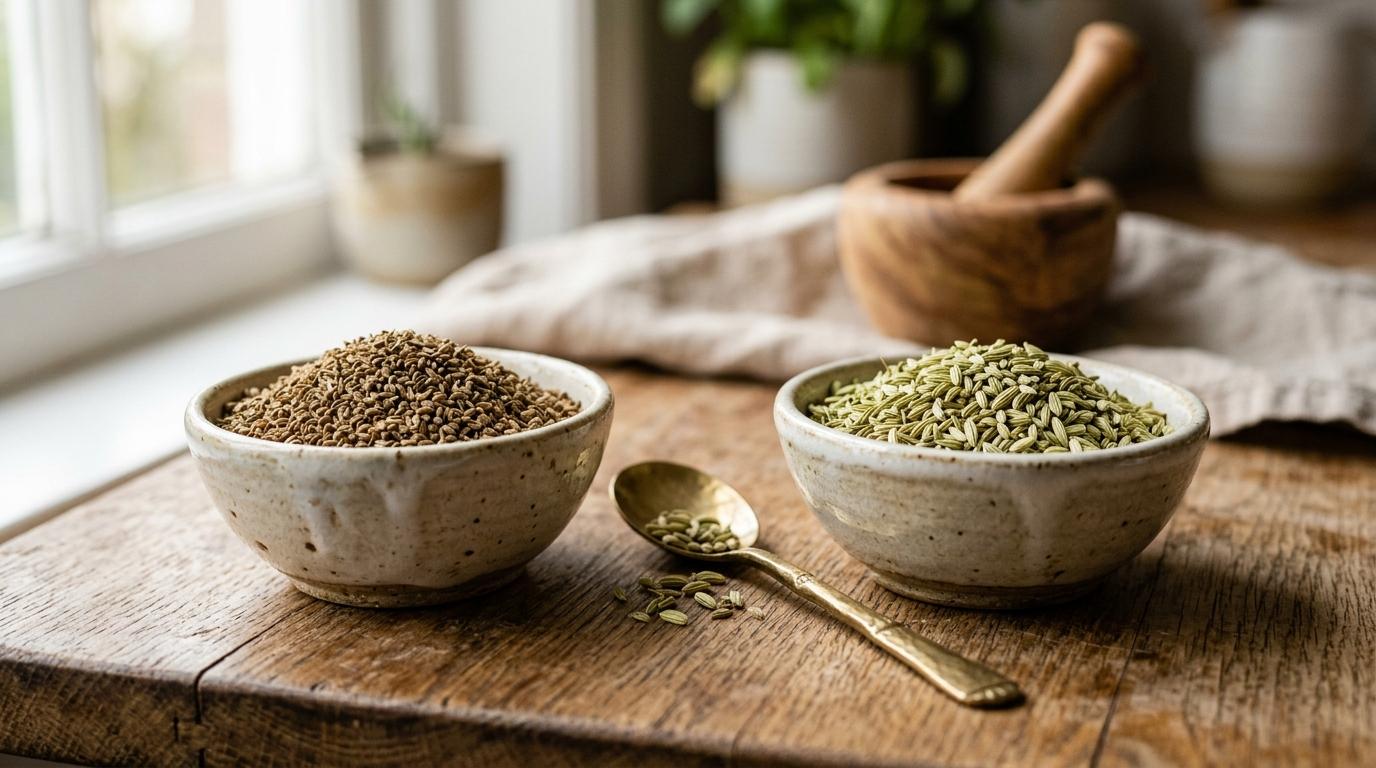
Ajwain, also called carom seeds, is small, brownish, sharp, and very strong. It has a pungent, thyme-like flavour with a slight bitterness. Use it in savory dishes where you want a bold spice that can cut through richness. It works beautifully in parathas, pooris, pakoras, samosa dough, mathri, namak pare, dry sabzis, and fried snacks.
Saunf, also called fennel seeds, is usually larger, greener, sweeter, and more aromatic. It has a mild licorice-like or anise-like taste. Use it in curries, pickles, kachori fillings, spice blends, chai, sweet drinks, desserts, and as a mouth freshener after meals.
In short:
Ajwain is sharp and savory.Saunf is sweet and fragrant.
If a recipe needs ajwain, saunf will usually taste too sweet. If a recipe needs saunf, ajwain will usually taste too bitter, strong, or medicinal. That is the basic idea behind carom seeds vs fennel seeds in cooking.
What Ajwain Tastes Like
#Ajwain is known in English as carom seeds. You may also see it called bishop’s weed or ajowan caraway. It comes from the Trachyspermum ammi plant, and like saunf, it belongs to the Apiaceae family. Technically, what we call “seeds” are tiny seed-like fruits, but in the kitchen, almost everyone simply calls them seeds.
Taste one raw ajwain seed and you will understand why cooks use it with a careful hand.
It is intense.
The flavour is sharp, pungent, slightly bitter, and very aromatic. People often compare it to thyme or oregano, but ajwain is stronger and more direct. It has a thymol-like smell, which is why even a small pinch can flavour an entire dough or tadka.
Ajwain does not quietly sit in the background. If you add too much, it takes over.
That strength is exactly why it works so well in certain foods. It pairs beautifully with flour, besan, potatoes, fried snacks, and dry vegetable dishes. In ajwain paratha, the seeds give little bursts of savory flavour. In pakora batter, they balance the heaviness of besan and oil. In samosa dough, they add that familiar sharp taste that makes the crust feel complete.
Ajwain is not sweet or mellow. It is the spice you reach for when a dish needs a clear, bold, savory edge.
What Saunf Tastes Like
#Saunf is fennel seed, from the Foeniculum vulgare plant. It is usually longer and plumper than ajwain. Fresh-looking saunf is often pale green or greenish yellow, though older fennel seeds can look dull or brownish.
The taste is completely different from ajwain.
Saunf is sweet, aromatic, and gently warm. Its most recognizable note is licorice-like or anise-like. Even when used in savory cooking, it brings a soft sweetness to the dish.
That is why saunf fits into so many types of recipes. It can go into a rich curry, a kachori filling, a pickle masala, a cup of chai, or a refreshing sweet drink. It can be toasted and crushed for snacks, ground into spice blends, or eaten after meals as a mouth freshener.
When saunf is lightly roasted, its sweetness deepens. The aroma becomes warmer and rounder. Coarsely crushed saunf gives little pockets of flavour, which is why it works so well in fillings and masala mixes. Powdered saunf blends more smoothly into gravies and curry bases.
Where ajwain is sharp and direct, saunf is rounded and fragrant. Once you remember that, most of their cooking uses start to make sense.
Ajwain vs Saunf Cooking Uses
#The easiest way to understand ajwain uses in cooking and saunf uses in food is to look at where each spice naturally belongs.
In Tadka
#Tadka, or tempering spices in hot oil or ghee, brings out the aroma of whole spices very quickly. Ajwain and saunf can both be used in tadka, but they behave differently.
Ajwain in tadka cooks very fast. The seeds are tiny, and their flavour releases almost immediately in hot oil. If the oil is too hot or you leave the seeds for too long, ajwain can turn bitter and burnt-tasting.
Use ajwain tadka when you want a strong savory lift. It works well with dry sabzis, especially potatoes, arbi, cabbage, beans, cauliflower, and other hearty vegetables. It can also be used in some dal recipes, but usually in very small amounts. A pinch is often enough.
A simple ajwain tadka could be oil, ajwain, hing, green chilli, and then vegetables added right away. The important thing is to keep the next ingredient ready before the ajwain burns.
Saunf in tadka is gentler and a little more forgiving. It blooms in hot oil and gives off a sweet, warm fragrance. Saunf is also one of the spices in panch phoron, the Bengali five-spice blend made with cumin, nigella, fenugreek, mustard seeds, and fennel seeds.
Saunf works well in tomato-based gravies, yogurt-based gravies, achari-style dishes, and some vegetable curries. It adds aroma without the sharpness of ajwain.
If ajwain tadka feels like a punch, saunf tadka feels more like a warm, fragrant background note.
In Breads and Doughs
#This is where ajwain really shines.
Ajwain is a classic addition to Indian breads and dough-based snacks. You will often find it in ajwain paratha, mathri, namak pare, pooris, samosa crust, and pakora batter made with besan.
It works because flour, ghee, oil, and fried dough need a flavour that can stand up to richness. Ajwain gives that sharp, savory bite. It makes even a simple dough taste more interesting without needing many other spices.
A small tip: crush ajwain lightly between your palms before adding it to dough. You do not need to grind it into powder. Just rubbing it a little helps release the aroma.
Saunf is used differently in breads and snacks. It is less common in plain savory dough, but it works beautifully in fillings. Coarsely crushed saunf is often used in kachori fillings, especially with lentils, coriander seeds, chilli, and other spices. It can also be used in some sweet or lightly sweet baked items where fennel’s aroma makes sense.
So for dough, think ajwain.For sweet-spiced fillings, think saunf.
In Curries and Sabzis
#Ajwain is usually not the main spice in saucy curries. It can be too strong for that. It is better suited to dry or semi-dry vegetable dishes, especially when the vegetable is starchy, earthy, or heavy.
Use ajwain with potatoes, arbi, cabbage, beans, cauliflower, and besan-based dishes. It also works in simple home-style sabzis where the masala is not too sweet or creamy.
Saunf is more flexible in curries. It can be used whole, crushed, or powdered. Fennel powder is important in several North Indian and Kashmiri-style dishes, often paired with dried ginger and other warming spices. Saunf also fits beautifully into achari masalas, where it balances sour, spicy, and salty flavours with mild sweetness.
If your curry needs sweetness, warmth, or a rounded aroma, saunf is usually the better choice. If your dish needs a sharp savory accent, ajwain can work, but use it lightly.
In Snacks
#For fried snacks, ajwain is often the more natural choice.
Pakoras, mathri, namak pare, samosa dough, and masala pooris all benefit from ajwain. It cuts through the oiliness and gives that familiar savory taste.
Saunf works better in snack fillings and spice mixtures. Kachori filling, spiced lentil mixtures, some chivda-style blends, and pickle-flavoured snacks may use crushed saunf for sweetness and aroma.
The mistake is thinking both spices do the same job. Ajwain in kachori dough can be lovely. Saunf in the filling can also be lovely. But swapping them without thinking changes the whole personality of the snack.
In Drinks
#This article is about cooking, not remedies, but both seeds can show up in drinks.
Ajwain can be brewed into a strong savory infusion, though its sharp taste makes it less common as a casual drink ingredient.
Saunf is much more common in beverages. It can be added to chai with milk, tea leaves, and cardamom. It is also used in sweet, cooling drinks where its fragrance and gentle sweetness fit naturally.
For drinks, saunf is usually the easier and more pleasant choice.
Can You Substitute One for the Other?
#Usually, no.
This is one of the most important things to understand in the ajwain vs saunf comparison. They may look somewhat similar, and they do come from the same broad plant family, but they do not taste alike.
Ajwain is sharp, bitter, and savory.Saunf is sweet, mild, and aromatic.
A direct swap can make a dish taste very different, and not always in a good way.
When Not to Swap
#Do not use saunf instead of ajwain in samosa dough, pakora batter, mathri, namak pare, or ajwain paratha. The sweetness of fennel can feel out of place in recipes that depend on ajwain’s sharp bite.
Do not use ajwain instead of saunf in chai, sweet drinks, desserts, fennel-heavy curries, or kachori fillings where saunf is meant to bring sweetness. Ajwain can make these dishes taste bitter, harsh, or medicinal if used in the same amount.
Also avoid swapping them in traditional spice blends where the balance depends on one specific seed. In a blend like panch phoron, saunf has a clear role. Ajwain will not give the same result.
When a Tiny Amount Can Work
#There are a few cases where a tiny amount can work, but only if you are comfortable with the flavour changing.
If you are making a heavily spiced savory curry and the recipe asks for a small amount of saunf, a very small pinch of ajwain can add aroma. But it will not add fennel’s sweetness. It will push the dish toward a sharper, thyme-like flavour.
Use much less ajwain than saunf. If a recipe asks for 1 teaspoon saunf, do not replace it with 1 teaspoon ajwain. That will likely overpower the dish. A tiny pinch is safer.
The reverse is also limited. If a recipe asks for ajwain in a dough or batter, saunf can add fragrance, but it will not give the same savory bite. The final dish may taste sweeter and less balanced.
The practical rule is simple:
Substitute only when the seed is a small background spice, not when it is the main flavour.
Storage, Buying, Roasting, and Crushing
#Good spices make cooking easier. Old spices make even good recipes taste flat. Ajwain and saunf are both best bought whole, then crushed or ground only when needed.
Buying Ajwain
#Look for ajwain that is clean, dry, and brownish to olive-brown. It should smell strong as soon as you open the packet or jar. If it smells dusty, dull, or flat, it is probably old.
Because ajwain is used in small amounts, buy it in modest quantities unless you cook with it often.
Buying Saunf
#Good saunf is usually pale green to greenish yellow, with a sweet fennel aroma. Very dull, brown, or lifeless seeds may be old. Some saunf is naturally larger and greener, while some is smaller, so aroma matters more than size alone.
If you plan to use saunf as a mouth freshener or in drinks, fresher, sweeter-smelling seeds make a noticeable difference.
Storage
#Store both ajwain and saunf in airtight jars, away from heat, light, and moisture. A cool, dark cupboard is better than a shelf right above the stove.
Whole seeds keep their aroma longer than powdered spices. Ground fennel and ground ajwain lose fragrance faster, so grind small amounts when you need them.
Always use a dry spoon. Moisture can spoil the spices or make them clump.
Roasting Ajwain
#Ajwain usually does not need long roasting. If you are adding it to tadka, let it sizzle briefly, then move quickly. If you are dry roasting it for a masala or dough, keep the heat low and stop as soon as it smells fragrant.
Burnt ajwain tastes bitter, and once it burns, there is not much you can do to fix it. It is better to be cautious.
Crushing Ajwain
#For parathas, pooris, mathri, and pakoras, lightly crush ajwain before using. The easiest way is to rub it between your palms. You can also press it gently in a mortar and pestle.
Do not make a fine powder unless the recipe specifically asks for it. Lightly crushed seeds give better texture and little bursts of flavour.
Roasting and Crushing Saunf
#Saunf loves gentle roasting. Warm it in a dry pan over low heat until it smells sweet and aromatic. Do not let it darken too much.
For kachori fillings, stuffed vegetables, achari masala, and snack mixes, coarsely crushed saunf is often better than fine powder. It gives texture and releases flavour slowly as you eat.
For gravies, fennel powder blends more smoothly. Add it carefully, since powdered spices can burn faster than whole seeds.
Common Mistakes to Avoid
#1. Confusing Ajwain, Saunf, and Jeera
#Ajwain, saunf, and jeera can all look like small ridged seeds, especially if you are new to Indian cooking. The easiest way to tell them apart is to smell them.
Jeera smells earthy and warm.Saunf smells sweet and licorice-like.Ajwain smells sharp, pungent, and thyme-like.
Your nose is the best shortcut.
2. Using Too Much Ajwain
#Ajwain is powerful. A little goes a long way. In many home recipes, 1/4 teaspoon to 1/2 teaspoon is enough.
Too much ajwain can make food taste bitter and harsh. If you are unsure, start small. You can always add more next time.
3. Burning Ajwain in Tadka
#Ajwain burns quickly. Keep the next ingredient ready before you add it to hot oil. Once it sizzles and smells fragrant, add onions, vegetables, lentils, or liquid to lower the heat.
Do not walk away from the pan. It really does burn fast.
4. Using Saunf Where a Dish Needs Sharpness
#Saunf is sweet and aromatic, which is lovely in the right place. But it cannot replace ajwain’s bold savory flavour. In pakoras or samosa dough, saunf may taste too sweet unless the recipe is designed for it.
5. Grinding Too Much in Advance
#Freshly crushed spices taste better. If you grind a large batch of saunf or ajwain and leave it for months, the aroma fades. Whole seeds are easier to store and more useful across recipes.
Final Thought
#The ajwain vs saunf difference becomes simple once you stop judging them by how they look and start judging them by flavour.
Ajwain is bold, sharp, and best in savory foods like parathas, pakoras, samosa dough, and dry sabzis. Saunf is sweet, fragrant, and more flexible in curries, fillings, chai, drinks, and some sweets.
Keep both in your kitchen, but do not treat them like twins. Treat ajwain like a strong accent and saunf like a warm aroma. Once you do that, choosing the right seed becomes much easier.