Why I Even Started Carrying Extra Hotel Door Safety Stuff
#I’ll be honest, for years I used to think hotel safety gadgets were a bit dramatic. Like, arre baba, I’m staying in a decent hotel only, not some horror movie lodge on a highway. But travel humbles you. After enough late-night check-ins, weird room latches, one random housekeeping knock at 11:40 pm, and a budget hotel door in Bengaluru that didn’t shut unless I lifted it with my knee, I changed my mind pretty fast.
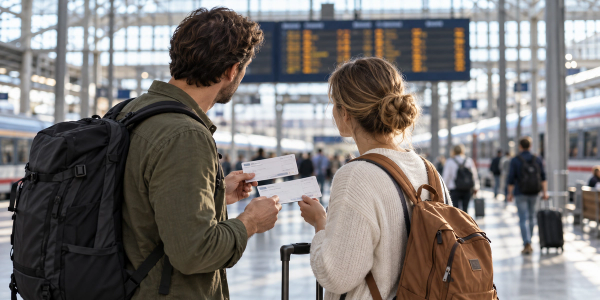
This whole portable door lock vs doorstop alarm for hotels debate became very real for me during a solo trip where I had three different stays in one week — one airport hotel, one homestay, and one small business hotel near a railway station. All were “fine” on paper. Good ratings, okay location, not shady. Still, each room door felt different. One had a proper deadbolt, one had only a chain latch which looked like it was installed by someone’s sleepy cousin, and one had a keycard lock but no inside latch at all. That’s when I realised hotel safety is not only about the star rating. It’s about the actual door in front of you.
So if you’re wondering whether to carry a portable door lock or a doorstop alarm in hotels, especially as an Indian traveller doing solo trips, work trips, family vacations, or budget stays, this is the practical breakdown I wish someone had given me earlier. Not fear-mongering. Not “don’t travel alone” nonsense. Just sensible, small things that help you sleep better.
First, What Is a Portable Door Lock Actually?
#A portable door lock is a small metal device that adds an extra lock from inside the room. You fit part of it into the door strike plate, close the door, and then attach a locking piece that stops the door from opening even if someone has a keycard or duplicate key. At least that’s the idea. It works best on inward-opening hinged doors, which is common in many hotel rooms, guesthouses and serviced apartments.
I bought my first one for around ₹600 online after reading too many reviews at 1 am, as one does. Some basic models are ₹300-₹500, and nicer ones with better metal, pouch, and smoother mechanism can go ₹1,000-₹1,500 or more. The size is tiny, smaller than a power bank, so it goes in my toiletries pouch or the side pocket of my backpack. No charging, no battery, no sound, no drama.
But here’s the catch — it does not work everywhere. This is where people get disappointed. It needs the right kind of door and frame. If the gap is wrong, if the strike plate is unusual, if it’s a sliding door, if the door opens outward, or if the hotel has some fancy flush electronic setup, it may simply not fit. I have stood there in a Kochi hotel room trying to make it work for ten minutes and then finally gave up and ate banana chips angrily. Happens.
And What About a Doorstop Alarm?
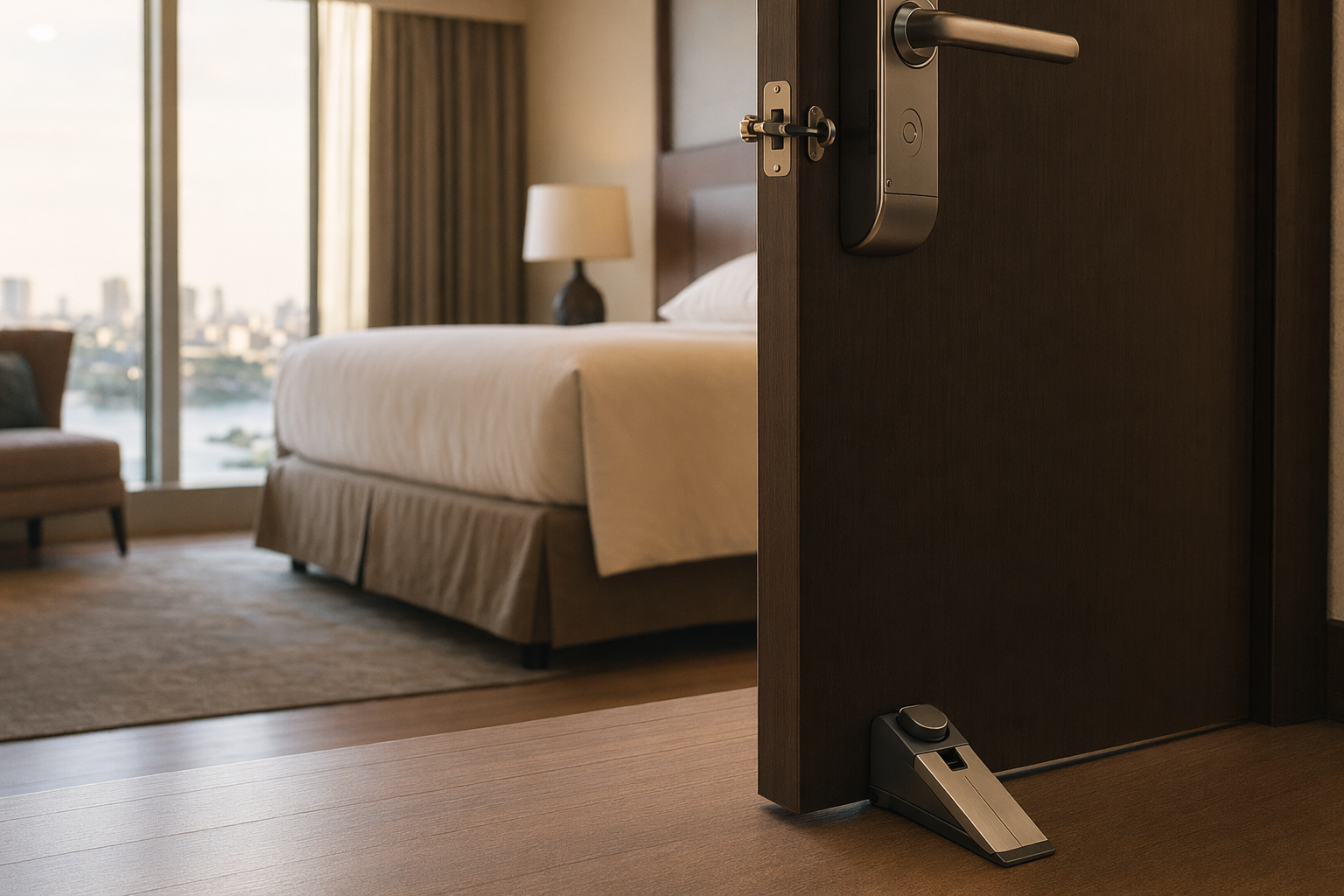
#A doorstop alarm is basically a wedge you push under the door from inside. If someone tries to open the door, pressure hits the wedge and it screams. Loudly. Most models run on batteries, and prices in India usually sit around ₹500-₹2,000 depending on build quality and alarm loudness. Some look cheap, some feel surprisingly sturdy.
The first time I used a doorstop alarm was in a budget stay near a bus stand, because the room latch was doing that loose rattling sound in the wind. I put the wedge under the door, tested it once, and almost gave myself a heart attack. It was LOUD. The uncle in the next room coughed like he was judging me through the wall. But that night I slept better, so no regrets.
A doorstop alarm is not exactly a lock. That’s important. It may slow down the door opening a bit, depending on floor grip and door gap, but its main job is to alert you and scare the person outside. On hard flooring like tiles, marble, vinyl, it usually works better. On thick carpet, uneven flooring, or doors with too much gap at the bottom, performance can be mixed. Also batteries. Please check batteries before travel, because discovering a dead alarm at midnight is such a typical Indian-trip problem, like finding out your charger pin is loose.
Portable Door Lock vs Doorstop Alarm: Quick Comparison from Real Hotel Use
#| Feature | Portable Door Lock | Doorstop Alarm |
|---|---|---|
| Main purpose | Physically blocks the door from opening | Makes loud noise if door is pushed |
| Best for | Inward-opening hinged hotel doors with compatible strike plate | Rooms with gap under door and hard floor |
| Needs battery? | No | Yes, usually |
| Noise level | Silent | Very loud alarm |
| Works while you are outside? | No, only from inside | No, only from inside |
| Travel weight | Very light | Light, but bulkier than lock |
| Biggest issue | Doesn’t fit every door | Can slip, or not work well on carpet |
| My trust level | Great when it fits | Great as alert, not as full lock |
If you want the one-line answer: portable door lock is better for physically securing the room while you’re inside, and doorstop alarm is better for alerting you loudly if someone tries to enter. If you can carry both, carry both. If you only want one, choose based on the kind of stays you usually book.
Which One I Prefer in Indian Hotels, Homestays and Guesthouses
#For Indian hotel travel, I lean slightly toward the portable door lock. Slightly. The reason is simple — many budget and mid-range hotel rooms here still have inward-opening doors where the portable lock works. When it fits properly, it gives that solid feeling ki haan, ab door khulega nahi. I like that. Especially when I’m sleeping alone or staying near transit areas like railway stations, airport roads, or highway stops.
But for homestays, older bungalows, beach shacks, and random guesthouses where doors are wooden, swollen from humidity, or have funny gaps, the doorstop alarm sometimes becomes more useful. Goa, Gokarna, Varkala, old Fort Kochi homes, some Himachal homestays — these places can have charming rooms, but the doors are not always hotel-standard. Cute balcony, nice owner, amazing chai, but the latch? Arre, questionable.
In premium hotels, honestly, I may not use either every time. Many good hotels have deadbolts, peepholes, security chains, CCTV corridors, and controlled lift access. Still, I check the door as soon as I enter. It’s become a habit, like checking if the AC remote works. Because even in nice properties, mistakes happen — wrong room card issued, housekeeping confusion, maintenance staff entering after one knock. Not common, but not impossible also.
My Little Hotel Room Safety Routine Now
#The first five minutes after entering a hotel room, I don’t jump on the bed or start taking aesthetic window videos. Okay sometimes I do, but mostly I check the basics. Door closes properly? Deadbolt works? Latch works? Peephole is not blocked? Connecting door locked? Balcony door secure? Window lock okay? Then only I relax.
- I always lock the main door from inside, even if I’m just taking a shower or ordering chai.
- If the door has no strong internal lock, I use my portable door lock first.
- If the lock doesn’t fit, I use the doorstop alarm under the door, especially at night.
- I don’t open the door immediately for “housekeeping” or “room service” unless I asked for it. I call reception and confirm.
- I keep passport, cash, cards and backup phone safely, not scattered around like confetti.
Btw, door security is only one part of hotel safety. Inside the room, your valuables need their own plan too. I’ve written more about that kind of thing in Hotel Safe vs Luggage Lock: Passport and Cash Safety Tips, because passport panic is not fun. I once misplaced mine inside my own bag and aged about four years in ten minutes.
When a Portable Door Lock Is the Better Choice
#Choose a portable door lock if you mostly stay in hotels, business hotels, serviced apartments, OYO-type budget properties, airport hotels, or guesthouses where the door opens inward and has a normal latch plate. It’s also better if you don’t want noise. Maybe your kid is sleeping, maybe your parents are in the next room, maybe you just don’t want the whole floor waking up because someone pushed the wrong door by mistake.
The best thing is that it creates a physical barrier. If someone has a keycard, the door still shouldn’t open when the device is properly fitted. That gives a very different kind of comfort compared to only an alarm. Especially for solo women travellers, work travellers checking in late, or anyone staying in an unfamiliar city, that extra layer feels worth carrying.
But please test it in daylight or when you check in, not at 1 am after brushing your teeth. You’ll need thirty seconds once you understand it, but the first few times can be fiddly. Also don’t force it and damage hotel property. If it doesn’t fit, leave it. Some door frames are just not made for it. I learnt this after doing too much jugaad in a Jaipur room and then worrying I scratched the frame. Didn’t, thankfully, but my heart was doing dhol beats.
When a Doorstop Alarm Makes More Sense
#A doorstop alarm is better if you want an alert system more than a lock. It’s useful in rooms where the portable lock doesn’t fit, or places where the door bottom gap is good and the floor has grip. It is also nice for people who are heavy sleepers, because the sound can really jolt you awake. Some models claim 120 dB or similar loudness, but I don’t get too obsessed with the number. If it is loud enough to scare me during testing, it is loud enough for a hotel room.
It’s also helpful in rented apartments or Airbnb-style stays where the door hardware varies. A friend used one in a serviced apartment in Pune because the apartment had a main lock but no chain latch inside. She was travelling for a conference, coming back late from dinner, and just wanted that extra alert. Worked fine. Not glamorous travel content, I know, but these are the real things that matter when you’re tired and alone.
The annoying part is false alarms. If you place it badly, if the floor is slippery, or if you kick it at night while going to the bathroom, the alarm can scream and ruin your soul. Also, in hotels with very tight doors and no gap below, it may not slide under at all. So again, test first.
Can You Use These in Hotels? A Small Etiquette Talk
#Most travellers use these devices only when they are inside the room, and that’s the sensible way. Don’t use anything that blocks access when you are not in the room, and don’t create a situation where hotel staff or emergency responders can’t help during an actual emergency. If there’s a fire alarm, medical issue, or evacuation, you don’t want to be fighting with your own gadget.
Also, don’t be rude with hotel staff about it. I’ve seen travellers behave like every receptionist is a suspect, which is unfair. Most hotel staff are hardworking people doing long shifts, dealing with guests who ask for early check-in at 6 am and then complain breakfast is not hot enough. Use your safety tools quietly, respectfully. If a hotel has a clear policy against extra locking devices, follow it or choose another stay.
For flights, I’ve carried both in my luggage without issue, but airport security rules can vary by country and officer discretion. Keep them non-sharp, easy to explain, and don’t pack batteries loose in a weird way. For domestic India trips, it’s never been a drama for me. Still, common sense.
Hotel Types in India: Where I Use What
#Accommodation in India is so varied that one rule doesn’t fit all. A ₹900 lodge in a pilgrim town, a ₹2,500 business hotel in Indore, a ₹6,000 boutique stay in Pondicherry, and a ₹12,000 resort in Coorg are all “hotels” technically, but the door quality, staff access, corridor design and privacy can be totally different.
For backpacker hostels, where dorm beds can start around ₹500-₹1,500 in many cities and private rooms may be ₹1,800-₹4,000, I focus more on locker safety and choosing female dorms or well-reviewed mixed dorms. Door gadgets matter less in dorms because you’re sharing space anyway. For budget hotels around ₹1,200-₹3,000, I carry both if I’m solo. For mid-range stays around ₹3,500-₹8,000, usually portable lock is enough if needed. Resorts and branded hotels may already have better internal locking, but I still check.
During peak travel months, prices jump like anything. Goa around Christmas-New Year, Rajasthan in winter, Himachal during long weekends, Kerala in December, Kashmir during summer holidays — accommodation gets expensive and people sometimes book whatever is left. That’s exactly when you should not compromise too much on safety. Read recent reviews, check location on map, avoid isolated properties if arriving late, and call the hotel before booking if you’re unsure about parking, reception hours or access road.
Seasonal Travel, Late Arrivals and the Safety Angle Nobody Talks About
#Best travel months depend on where you’re going, but from a safety point of view, timing matters a lot. Winter is lovely for Rajasthan, Delhi, Agra, Varanasi and Gujarat, but late-night fog delays can push your check-in to odd hours. Monsoon is beautiful in Western Ghats and Kerala, but power cuts, slippery paths and swollen wooden doors are common in some homestays. Summer hill-station trips sound nice until traffic jams make you reach at midnight and the hotel manager is half asleep.
If I’m reaching after 9 or 10 pm, I book more carefully. I prefer places with 24-hour reception, clear approach road, working phone number, and recent reviews mentioning cleanliness and safety. Near airports or railway stations, I avoid super cheap unknown lodges unless someone local recommended it. Metro cities like Delhi, Mumbai, Bengaluru, Chennai, Hyderabad and Kolkata have good transport options — metro, prepaid taxis, app cabs, autos — but late-night last-mile still needs planning. Don’t stand outside a closed hotel with luggage trying to “figure it out”. Been there, very irritating.
Food also affects safety in a funny way. If I’m arriving late, I check whether the hotel has room service or nearby food options. Because wandering around at 11:30 pm searching for dosa, paratha or Maggi in an unknown area is not always wise. Though yes, some of my best egg rolls in Kolkata and bun maska in Mumbai happened because of late-night hunger. Contradicting myself? Maybe. Travel is like that only.
For Solo Women Travellers: My Honest Take
#I don’t like content that tells women to be scared of everything. We already manage enough mental load while travelling — clothes, transport, judgemental relatives, “send location beta” messages, and the classic “why alone?” question. But practical safety tools are not fear. They are freedom. If a ₹700 gadget helps you sleep properly before a trek, meeting, wedding, exam, or airport transfer, why not?
For solo women travellers, I’d say carry a portable door lock first and a doorstop alarm if you have space. Choose hotels with many recent reviews, not just pretty photos. See if reviewers mention families, women travellers, helpful staff, safe locality, and easy transport. Avoid ground-floor rooms opening directly to parking if you feel uncomfortable. Ask for a room near the lift but not right beside it, if possible. And trust your gut. If the room feels off, ask to change. You don’t need to give a TED Talk explanation.
The best hotel safety gadget is still your judgement. The lock and alarm are backup, not replacement for choosing a decent stay.
Small Buying Tips Before You Waste Money
#Don’t just buy the cheapest thing with five shiny photos. For portable door locks, look for strong metal, smooth edges, and a design that suits common hotel doors. Some come with multiple holes or adjustable plates, which can help. For doorstop alarms, check if the wedge has a rubber base for grip, easy on-off switch, and common battery type. If the battery compartment needs a tiny screwdriver, pack that too or you’ll curse later.
- Test it at home first. Seriously. Don’t make your hotel room the training centre.
- Carry a small pouch so it doesn’t scratch your phone or sunglasses.
- For doorstop alarms, remove or protect batteries if storing for long time.
- Don’t depend on one gadget only. Check the actual hotel lock and call reception if anything is broken.
- If travelling with parents or kids, explain how it works so nobody panics during the night.
Also, if you’re staying in heritage hotels, old havelis, houseboats, jungle lodges or beach cottages, doors can be non-standard. These places are often beautiful, full of local character, amazing food and warmth, but modern safety hardware may not be consistent. I love such stays, honestly. A clean homestay breakfast with poha, filter coffee, appam, paratha, whatever local thing they make, beats buffet sometimes. But I still check the door.
So, Which One Should You Pack?
#If you are a light packer and want only one item, I’d choose a portable door lock for most hotel trips. It is smaller, no battery, and gives physical security when it fits. For business travel, solo city stays, budget hotels and airport overnights, it’s my first pick.
If your travel style includes homestays, guesthouses, older properties, Airbnb-type apartments, beach huts, or you simply want a loud alert, carry a doorstop alarm. It’s not as elegant, and yes it can be a little annoying, but it does the job of waking you up and drawing attention.
Best combo? Portable door lock plus doorstop alarm. Use the lock when compatible, place the alarm as backup if you feel the need. Total weight is still less than that extra pair of jeans we carry and never wear. Cost-wise, both together can be under ₹2,000 if you buy sensibly, which is less than one overpriced airport meal for two people these days.
My Final Verdict After Many Check-ins
#Portable door lock vs doorstop alarm for hotels is not really a fight. They solve slightly different problems. The portable lock is for stopping entry. The doorstop alarm is for warning you. One is quiet strength, the other is full volume drama. Very Indian family WhatsApp group energy, actually.
For my own travel bag, I now keep both, especially when I’m doing multi-city trips or reaching late. They don’t make me paranoid. They make me relaxed. I can enjoy the real parts of travel — the train chai, the auto bargaining, the local thali, the evening walk in an old market, the random temple bells, the beach sunrise, the hotel breakfast dosa that is never as crisp as it should be but still nice. Safety should support travel, not spoil it.
So yes, pack the gadget if it gives you peace. But also book smarter, read reviews, arrive at sensible hours when possible, keep valuables sorted, and listen to your instinct. That combination works better than any single lock. And if you like these practical, slightly trial-and-error travel tips, keep browsing AllBlogs.in — I’ve found that the best travel advice is usually the stuff someone learnt the hard way and then shared casually over chai.