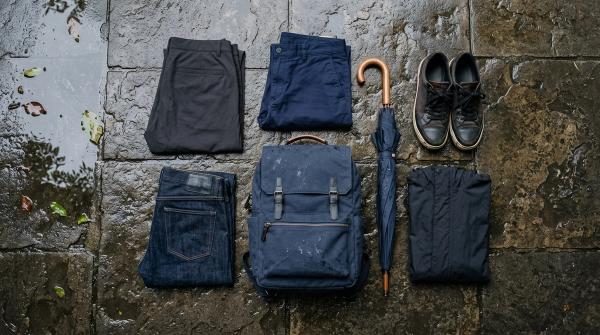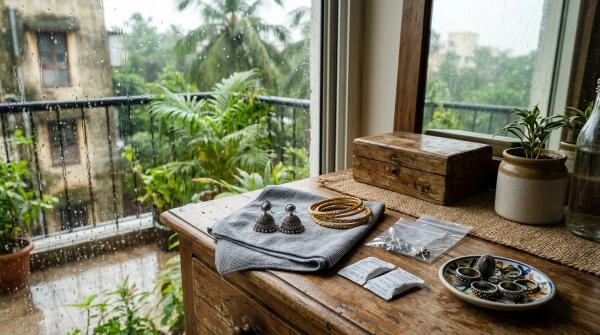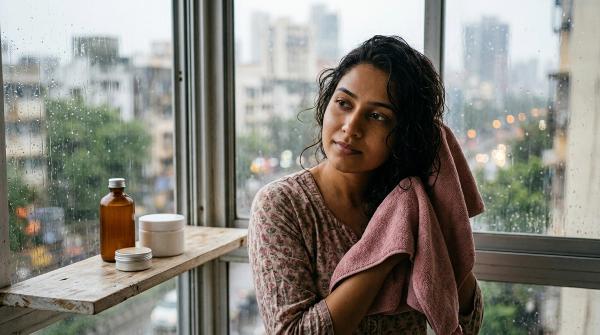
Direct answer: For monsoon office wear in India, your safest bets are lightweight cotton-polyester blends, rayon, modal, crepe, and other quick-dry fabrics. Pure cotton and linen are great for heat, but once they get wet, they can stay damp for hours. For everyday office or college commutes, choose lighter blends, darker bottoms, cropped hems, waterproof footwear, and fabrics that dry fast. Try to avoid heavy denim, thick cotton, suede, velvet, and delicate silk when rain is likely.
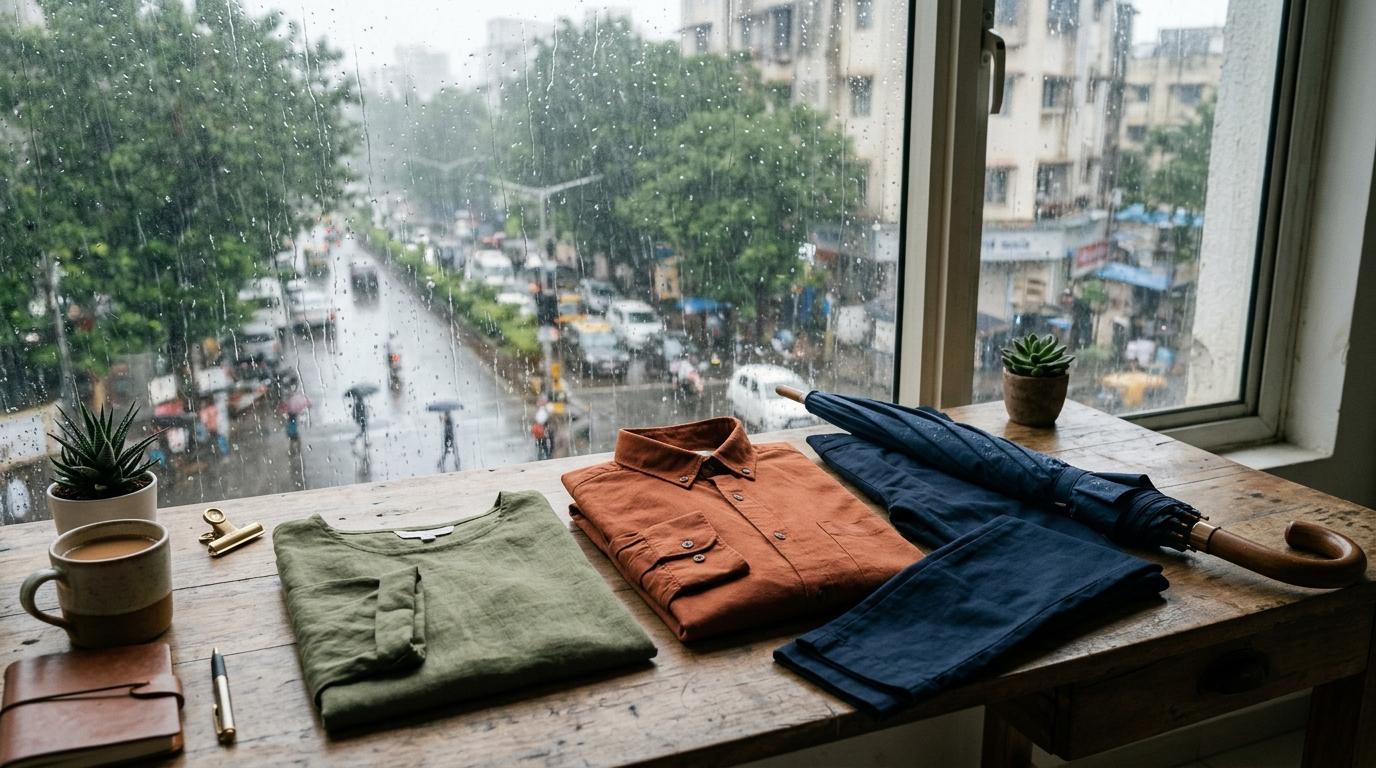
Getting dressed for work during the Indian monsoon is never as simple as it sounds.
You leave home feeling hot and sticky. Then it rains halfway through your commute. By the time you reach office, college, the metro, or a cab, your clothes are slightly damp. And then, of course, the office AC makes everything feel colder and more uncomfortable.
That is why the best fabrics for monsoon office wear are not always the same fabrics you rely on in peak summer. Cotton and linen are lovely in hot weather, but in the rainy season, they can become tricky because they absorb water and take time to dry.
The good news is that you do not need to buy a completely new wardrobe. You just need to know which fabrics work better on rainy days, which ones to keep for drier days, and how to style your regular office clothes a little more smartly.
Quick Fabric Verdict for Monsoon Office Wear India
#If you want the short version, here it is:
- Best everyday option: cotton-polyester blends and other lightweight blended fabrics
- Best for humid but low-rain days: light cotton and linen blends
- Best quick-dry office clothes: rayon, modal, crepe, polyester blends
- Best fabrics to avoid in heavy rain: denim, thick cotton, suede, velvet, delicate silk
- Best styling trick: ankle-length trousers, dark bottoms, waterproof footwear, and one dry layer at work
Monsoon dressing is all about balance. You need clothes that feel breathable in humidity, but you also need fabrics that will not stay wet for half the day if you get caught in rain.
Why Fabric Matters So Much in the Monsoon
#In summer, the advice is usually straightforward: wear cotton, wear linen, keep it light.
But monsoon weather is different.
The humidity makes you want airy clothes. The rain makes you want quick-dry clothes. And the office AC makes even slightly damp clothes feel uncomfortable.
A practical monsoon wardrobe in India usually needs a mix of:
- Breathable clothes for sticky, humid days
- Quick-dry fabrics for proper rainy days
- Darker bottoms that hide splashes
- A dry layer kept at office
- Shoes and bags that can handle puddles
You do not need twenty new outfits. You just need to be a little more careful about fabric, length, and colour.
Cotton for Monsoon Office Wear
#Cotton is everyone’s comfort fabric for a reason. It feels soft, breathable, familiar, and easy to wear in Indian weather. Cotton shirts, kurtas, tops, and trousers can also look neat without much effort.
But during the monsoon, pure cotton has one big drawback: it soaks up water.
If your cotton shirt or kurta gets wet, it can take a long time to dry. Thick cotton can start feeling heavy, clingy, and uncomfortable. Cotton trousers are even more difficult, especially if the hem gets splashed or brushes against wet roads.
When cotton works
#Cotton can still work well if:
- The fabric is light
- Your commute is short
- Heavy rain is not expected
- You are wearing cotton as a top, not a long bottom
- The garment is not thick or heavily layered
- You have a dry layer or backup at work
When to avoid cotton
#Avoid pure cotton on heavy rain days, especially in:
- Thick cotton trousers
- Heavy cotton kurtas
- Long cotton palazzos
- Thick oxford shirts
- Dense cotton pieces that take ages to dry
Cotton is breathable, yes. But it is not always the most practical rainy season workwear fabric.
Linen in the Monsoon: Beautiful, But a Little Risky
#Linen is another favourite for hot weather. It is airy, relaxed, and effortlessly polished. On a humid day, linen can feel wonderful.
But linen wrinkles very easily. Add rain, crowds, public transport, and damp air, and it can start looking crushed quite quickly. Pure linen may also take longer to dry than many blends or lightweight synthetics.
So if you need to look crisp at work, linen can be a bit risky on rainy days.
Cotton vs linen monsoon verdict
#In the cotton vs linen monsoon debate, both have their strengths and weaknesses.
- Cotton is soft and breathable, but it absorbs water.
- Linen is airy and elegant, but it wrinkles quickly and may not look fresh after rain.
- Linen blends are usually more practical than pure linen for office wear.
If you love linen, wear it on humid days when the chance of rain is low. For proper rainy days, choose linen blends and keep linen mostly for tops instead of long bottoms.
Cotton-Polyester Blends: The Most Practical Middle Ground
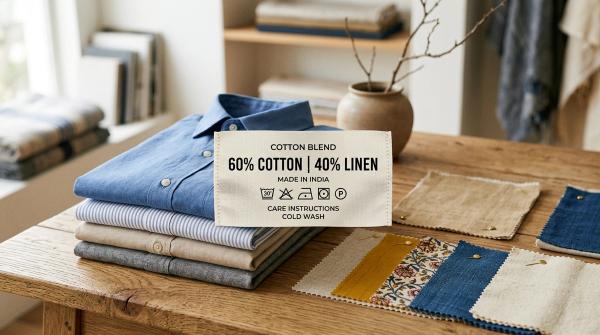
#A cotton-polyester blend for monsoon is one of the easiest and most practical choices for Indian office wear.
The cotton keeps the fabric more comfortable and breathable. The polyester helps it dry faster and wrinkle less than pure cotton. This makes blends useful for shirts, kurtas, trousers, co-ord sets, office dresses, and even college outfits.
Blended fabrics may not feel as airy as pure cotton or linen, but they are much more forgiving when it rains. They hold their shape better, dry faster, and usually look more presentable after a messy commute.
Why blends work well in rainy season
#Cotton-polyester blends are useful because they:
- Dry faster than pure cotton
- Wrinkle less than linen
- Look office-appropriate
- Work for shirts, dresses, trousers, kurtas, and tops
- Make your regular basics more wearable in monsoon
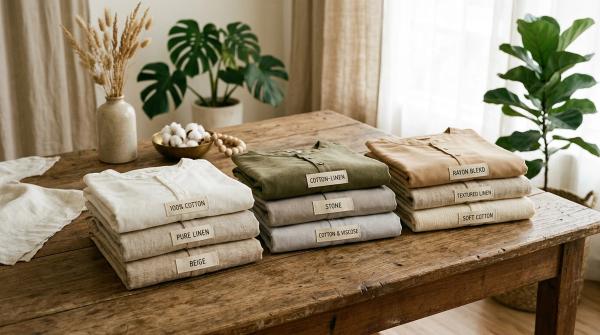
Before buying anything new, check the labels of clothes you already own. You may already have some great monsoon-friendly pieces sitting in your wardrobe.
Rayon and Modal for Humid Office Days
#Rayon and modal are popular because they feel soft, fall nicely, and look a little more polished than basic cotton. They work well for tops, shirts, kurtas, dresses, and relaxed trousers.
For monsoon office wear, rayon and modal can be very useful. They usually feel less bulky than thick cotton and can dry faster than heavy natural fabrics. They also drape well, so your outfit looks put together without feeling stiff.
That said, quality matters. A very thin, pale rayon garment may not be the best idea if you get caught in heavy rain. A darker or slightly thicker rayon or modal piece is usually more practical.
Best ways to wear rayon and modal in monsoon
#Try them as:
- Printed tops
- Dark kurtas
- Office blouses
- Midi dresses
- Relaxed shirts
- Cropped trousers
They are especially good when you want breathable fabrics for humidity, but still need something that looks soft, polished, and office-friendly.
Synthetics for Quick-Dry Office Clothes
#Synthetics often get a bad reputation, and honestly, sometimes they deserve it. Thick synthetic fabrics can feel hot, sticky, and uncomfortable in humid weather.
But lightweight synthetics and synthetic blends can be extremely useful during the rainy season. Fabrics like polyester blends, crepe, and chiffon-style materials do not hold water the way denim or thick cotton does. They can work well for office shirts, blouses, formal tops, skirts, and dresses.
The trick is to avoid anything too tight, too thick, or too clingy. Go for lighter weaves and slightly relaxed fits.
When synthetics work best
#Synthetics are practical when:
- Heavy rain is likely
- You have a long commute
- You want clothes that dry quickly
- You need wrinkle-resistant office wear
- You are wearing them as a top or flowy layer
When synthetics may feel uncomfortable
#They may not be ideal if:
- The fabric is thick
- The fit is too tight
- The weather is humid but not rainy
- The garment does not allow airflow
So no, synthetics are not automatically bad. For monsoon office wear in India, the right synthetic fabric can actually be a lifesaver.
Fabrics to Avoid in Monsoon
#Some fabrics are simply not worth the trouble during the Indian monsoon, especially if you commute daily.
Heavy denim
#Denim absorbs water and takes a long time to dry. Wet jeans can feel heavy, cold, and uncomfortable for the rest of the day. If you like the denim look, try chambray instead. It is lighter, softer, and dries faster.
Delicate silk
#Pure silk can show water marks and may not handle rain well. Save it for indoor events, functions, or days when you are sure you will not be dealing with puddles and splashes.
Suede and velvet
#Suede and velvet are best kept away from rain, mud, and wet roads. They hold moisture and can be difficult to clean properly.
Thick cotton and heavy weaves
#Thick oxford cotton, heavy twill, and dense cotton trousers may look smart, but once they get wet, they take far too long to dry.
Monsoon Fabric Comparison Table
#Best Monsoon Office Outfit Ideas Without Buying Too Much
#You do not need a full rainy season wardrobe. A few small changes can make your usual office clothes work much better.
1. Cotton-polyester shirt with ankle-length trousers
#This is one of the most dependable rainy season workwear combinations. The shirt stays neater than pure cotton, and ankle-length trousers reduce puddle splashes.
Choose darker trousers if you walk, take autos, use buses, or ride a two-wheeler.
2. Rayon kurta with cigarette pants
#A rayon or modal kurta feels lighter than thick cotton. Pair it with cropped cigarette pants or narrow trousers so the hem does not touch wet roads.
Prints and darker colours also hide small splashes better.
3. Crepe blouse with formal trousers
#A lightweight crepe blouse works well when rain is unpredictable. It dries faster and resists wrinkles better than many natural fabrics.
Pair it with formal trousers that end at the ankle, not below it.
4. Linen-blend top with dark bottoms
#If you enjoy wearing linen, go for a linen blend instead of pure linen. Wear it as a top, not as long trousers or a maxi-length piece on rainy days.
Keep the bottom dark, practical, and cropped.
5. Chambray shirt instead of denim jeans
#Chambray gives you that denim-like look without the heavy, slow-drying feel of jeans. It works for casual Fridays, college, and relaxed offices.
Wear it with black trousers, culottes, or a midi skirt, depending on your dress code.
Office Commute Checklist for the Indian Monsoon
#Before leaving for work or college, do this quick check.
Fabric and outfit
#- Choose blends, rayon, modal, crepe, or light synthetics if rain is likely.
- Wear cotton or linen only when rain risk is low, or if the garment is lightweight.
- Avoid heavy denim, thick cotton, suede, velvet, and delicate silk.
- Pick ankle-length trousers, culottes, midi skirts, or cropped hems.
- Avoid floor-length palazzos, trailing hems, and long flared pants.
Colour and print
#- Choose darker bottoms like navy, charcoal, black, brown, or deep olive.
- Use prints to hide small splashes.
- Keep very light colours for tops, especially if your commute is messy.
Footwear and bag
#- Wear waterproof or water-resistant footwear.
- Carry office shoes separately if needed.
- Use a water-resistant bag for your laptop, books, and essentials.
- Keep important papers inside a pouch or folder.
Office backup
#- Keep a dry cardigan, shrug, or blazer at your desk.
- Store one extra pair of socks if your feet often get wet.
- Carry a small towel or cloth in your bag.
- If possible, keep one neutral emergency top at work.
These small backups can make rainy mornings feel much less stressful.
How to Choose Monsoon Fabrics by Commute Type
#Your fabric choice should also depend on how you travel.
If you walk a lot
#Go for cropped trousers, darker bottoms, and quick-dry fabrics. Avoid long hems, denim, and thick cotton.
If you use public transport
#Choose wrinkle-resistant blends, rayon or modal tops, and clothes that let you move easily. Crowded buses, trains, and metros can crush linen very quickly.
If you ride a two-wheeler
#Pick faster-drying fabrics and darker shades. Avoid delicate pieces that show water marks.
If you mostly travel by cab or car
#You can wear cotton and linen more often. Still, be careful on days with heavy rain or waterlogging near your office or college.
Simple Monsoon Wardrobe India Edit
#If you want a practical monsoon office wardrobe without overbuying, start with this:
- 2 to 3 cotton-polyester or blended shirts
- 2 quick-dry tops in rayon, modal, crepe, or light synthetic fabric
- 2 dark ankle-length trousers
- 1 midi skirt or culotte, if it suits your dress code
- 1 lightweight layer kept at work
- 1 waterproof bag or protective inner pouch
- 1 pair of rain-friendly commuter shoes
Build outfits around what you already own. Most people do not need a huge rainy season wardrobe. They just need fewer slow-drying clothes on wet days.
Final Takeaway
#The best monsoon office outfits are not always the most stylish or expensive ones. They are the ones that help you get through humidity, rain, puddles, and cold office AC without feeling messy all day.
For most Indian commuters, the easiest formula is simple: lightweight blends, rayon or modal tops, quick-dry synthetics for heavy rain, dark cropped bottoms, and one dry layer at work.
Keep cotton and linen in your wardrobe, but wear them carefully during the rainy season. That way, your monsoon workwear stays practical, polished, and easy to repeat.