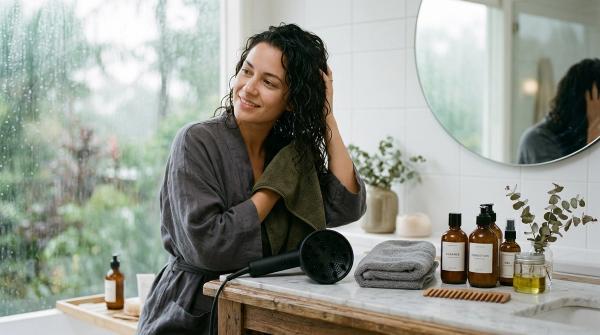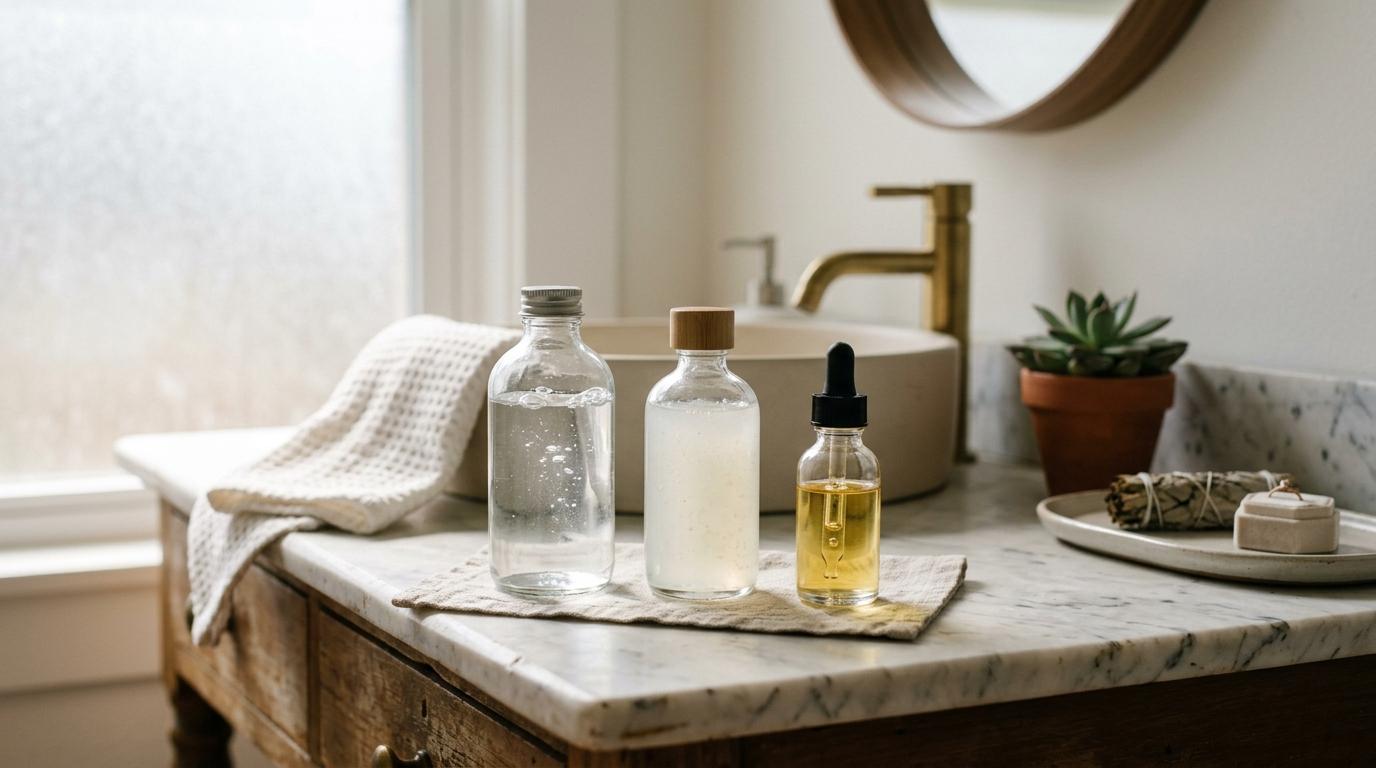
Toner vs. serum vs. essence, in normal-person language: toner is usually a watery step after cleansing, essence is a light hydration layer, and serum is a more concentrated product aimed at a specific skin goal.
And here’s the part skincare marketing doesn’t always make obvious: you do not need all three. Honestly, if you’re just starting out, you might not need any of them yet.
A simple routine of cleanser, moisturizer, and sunscreen is a perfectly good place to begin. Once that feels steady, you can add one extra product at a time if your skin actually needs it.
Let’s make this less confusing.
Why Toner, Essence, and Serum Feel So Confusing
#If you’ve ever stood in the skincare aisle thinking, “Wait… aren’t all of these just liquids in pretty bottles?” you’re not alone.
Toners, essences, and serums can look very similar. They often come in the same types of bottles. They all promise glow, hydration, smoothness, bounce, balance, radiance, and about twelve other nice-sounding things.
Then you see someone online doing a full 9-step routine, and suddenly your cleanser and moisturizer feel embarrassingly basic.
But basic is not bad.
For beginners, skincare should not start with, “How many products can I fit on my face?” It should start with, “What does my skin actually need?”
The American Academy of Dermatology says a basic daily skincare routine can be as simple as cleanser, moisturizer, and sunscreen. It also notes that using too many products can irritate your skin, and the order you apply products can affect how well they work.
So yes, order matters.
But buying every step? Not necessary.
What Is a Toner?
#A toner is usually the thinnest of the three. Most toners feel like water, or very close to it.
Older toners were often strong, drying, and alcohol-heavy. They were made to strip away oil and leave your face feeling extremely “clean,” sometimes too clean.
Modern toners are usually gentler. Many are used after cleansing to refresh the skin, remove any leftover residue, and give your face that clean-but-not-scrubbed feeling before the rest of your routine.
Think of toner as a prep step, not a required treatment.
Typical texture: wateryWhen to use: after cleanserHow to apply: with clean hands or a cotton padBest for: people who enjoy a fresh, watery step after washing
You can skip toner if your cleanser already leaves your skin feeling clean, comfortable, and not tight.
What Is an Essence?
#An essence is also lightweight, but it usually feels a little more hydrating than toner. It might feel watery, slippery, soft, or slightly silky.
Essences became especially popular through Korean skincare routines, where layering light hydration is a big part of the routine. The main idea is simple: an essence gives your skin a little extra hydration before serum and moisturizer.
If toner is the prep step, essence is more like a hydration booster.
Typical texture: watery to slightly silkyWhen to use: after toner, before serumHow to apply: pour a small amount into your palms and gently pat it into your skinBest for: skin that feels dehydrated, tight, or dull even after moisturizing
You can skip essence if your moisturizer already keeps your skin feeling comfortable.
What Is a Serum?
#A serum is usually the most targeted of the three. It’s made to help with a specific skincare goal, such as hydration, brightness, smoother-looking texture, uneven-looking tone, or a more balanced appearance.
Serums can be watery, gel-like, or slightly lotion-like. They are often more expensive because they usually contain more focused ingredients in a more concentrated formula.
If toner preps and essence hydrates, serum is the focused step.
Typical texture: liquid, gel, or lightweight lotionWhen to use: after toner and essence, before moisturizerHow to apply: use a few drops, or the amount recommended on the labelBest for: people who want one targeted extra step beyond the basics
If you’re a beginner and only want to buy one product out of toner, essence, and serum, a simple serum is often the most useful choice. But it still needs to suit your skin, and it should not replace moisturizer or sunscreen.
Toner vs. Essence vs. Serum: Quick Comparison
#The Simple Layering Rule
#The easiest rule is:
Apply skincare from thinnest to thickest.
A full routine might look like this:
- Cleanser
- Toner
- Essence
- Serum
- Moisturizer
- Sunscreen in the morning
But please don’t read that as a shopping list.
You do not need every step.
If you don’t use toner or essence, your routine can be:
Cleanser → serum → moisturizer → sunscreen
If you don’t use serum either, your routine can simply be:
Cleanser → moisturizer → sunscreen
That is still a real skincare routine. A good one, actually.
Morning Skincare Order
#Your morning routine is mostly about keeping your skin comfortable and protecting it from the sun.
Simple AM Routine
#- CleanserWash your face gently. Some people only rinse with water in the morning, and that can be fine too, depending on your skin.
- Toner, optionalUse this if you like a fresh, watery step after cleansing.
- Essence, optionalPat this in if your skin feels like it wants extra light hydration.
- Serum, optionalUse one serum if it fits your skin goals and your skin tolerates it.
- MoisturizerThis helps reduce dryness and keeps your skin feeling comfortable.
- SunscreenUse sunscreen as the last skincare step in the morning, before makeup if you wear it.
Beginner AM Routine
#If you’re new to skincare, start here:
- Cleanser
- Moisturizer
- Sunscreen
That’s enough for many people. You can add toner, essence, or serum later if you know why you’re adding it.
Evening Skincare Order
#Your evening routine is about washing off the day and helping your skin stay comfortable overnight.
Simple PM Routine
#- CleanserWash away sunscreen, makeup, sweat, oil, and daily buildup.
- Toner, optionalUse it if you enjoy the fresh feeling after cleansing.
- Essence, optionalAdd this if your skin feels dry, tight, or dehydrated.
- Serum, optionalUse one serum if your basic routine is already working well and you want a targeted extra step.
- MoisturizerThis helps seal in hydration and supports your skin overnight.
Beginner PM Routine
#Start with:
- Cleanser
- Moisturizer
That may be enough. You can always add a serum later if you have a clear reason.
Beginner Buying Framework: What to Buy, Skip, or Add Later
#This is where you can save money, time, and possibly your skin barrier.
Buy One: Choose a Serum If You Want a Targeted Extra Step
#If your basic routine is already steady and you want to add one product, serum is often the most practical place to start.
That’s because serums are usually made for more specific goals than toner or essence.
For example, you might choose a serum for:
- hydration
- dull-looking skin
- uneven-looking tone
- rough texture
- a more refreshed appearance
But don’t buy three serums at once.
Tempting? Yes.
Helpful? Usually no.
Start with one. Use it consistently. Watch how your skin responds before adding anything else.
Skip One: Skip Toner If Your Cleanser Works Well
#You do not automatically need toner.
If your cleanser removes sunscreen and daily buildup without leaving your face tight, dry, or uncomfortable, toner may not add much.
A toner can feel nice. But “nice” and “necessary” are not the same thing.
Skip One: Skip Essence If Your Moisturizer Is Enough
#Essence can be lovely if your skin enjoys lightweight hydration. But it is still optional.
If your moisturizer already keeps your skin comfortable, you probably don’t need an essence. This is especially true if you want your routine to stay affordable, quick, or easy to travel with.
Add Later: Bring in Toner or Essence When There’s a Clear Reason
#Add toner later if you want a fresh step after cleansing.
Add essence later if your skin feels like it needs more hydration under moisturizer.
The goal is to add products because your skin seems to need them, not because someone online used every possible step.
What to Avoid When You’re New to Skincare
#The biggest beginner mistake is not always buying the “wrong” toner, essence, or serum.
It’s buying too many products at once.
If you start five new products in one week and your skin becomes red, itchy, bumpy, dry, or irritated, you won’t know which product caused the problem.
A better approach:
- Start with cleanser, moisturizer, and sunscreen.
- Add only one new product at a time.
- Use it for a while before adding another.
- Stop using a product if it causes burning, swelling, strong itching, or obvious discomfort.
- Get professional help if symptoms continue or feel severe.
Also, be careful with product labels. The FDA notes that “hypoallergenic” is a marketing term and does not guarantee that a product will not cause a reaction.
So even a product labeled hypoallergenic can still irritate your skin or trigger an allergy.
Annoying, but true.
Patch-Test Before Using a New Product
#Patch-testing is not complicated, and it can save you from putting something irritating all over your face.
Here’s a simple way to do it:
- Apply a tiny amount of the toner, essence, or serum to a small area, like behind your ear or on your inner forearm.
- Leave it on and wait 24 to 48 hours.
- Watch for redness, itching, swelling, burning, bumps, or discomfort.
- If your skin reacts, do not use it on your face.
- If nothing happens, try it on your face slowly. Don’t introduce it with three other new products at the same time.
Patch-testing cannot guarantee your face will love the product, but it is a safer first step.
Irritation Safety Notes
#Skincare should not feel like punishment.
A mild unfamiliar feeling can happen with some products, but burning, pain, swelling, or strong itching is not something you should “push through.”
If something feels wrong, stop using it and rinse gently.
Speak with a dermatologist or qualified healthcare professional if you have persistent acne, rashes, allergic reactions, pain, swelling, burns, sudden skin changes, or irritation that does not settle. Also ask a professional before using new skincare if you are pregnant, have a medical condition, or have concerns about medications.
This article is for general education, not medical advice.
So, Which One Should You Actually Buy?
#Here’s the short version.
Buy toner if:You like a very light, fresh step after cleansing and your skin feels good with it.
Buy essence if:Your skin often feels dehydrated or tight, and you want lightweight hydration before moisturizer.
Buy serum if:You want one targeted extra product and your basic routine is already stable.
Skip all three if:You’re just starting skincare, your skin is easily irritated, or your cleanser, moisturizer, and sunscreen already work well for you.
Simple is not lazy. Simple is often smarter.
Related AllBlogs Reads
#If you want to build the rest of your routine slowly, read these next:
- Face Wash vs Cleanser vs Micellar Water — for choosing your first cleansing step.
- Moisturizer for Humid Weather: Gel, Lotion or Cream? — for matching moisturizer texture to climate.
- Sunscreen Before or After Moisturizer? — for getting morning skincare order right.
- Fragrance-Free vs Unscented Skincare — for understanding sensitive-skin label claims.
- Japanese Skincare vs Korean Skincare — for comparing routine styles without overbuying.
Final Takeaway
#The difference between toner, essence, and serum gets much easier once you stop treating them like mandatory steps.
Toner preps. Essence hydrates. Serum targets.
If you’re a beginner, start with cleanser, moisturizer, and sunscreen. Then add only one extra product if you have a clear reason.
Your skin does not need a crowded shelf. It needs a routine you can actually use consistently and comfortably.
General Education Disclaimer
#This article is for general educational information only. It is not medical advice and does not diagnose, treat, or prescribe for any skin condition. Everyone’s skin is different. Please consult a dermatologist or qualified healthcare professional for persistent acne, rashes, allergic reactions, pain, swelling, burns, sudden skin changes, pregnancy concerns, medical-condition concerns, or medication-related questions.