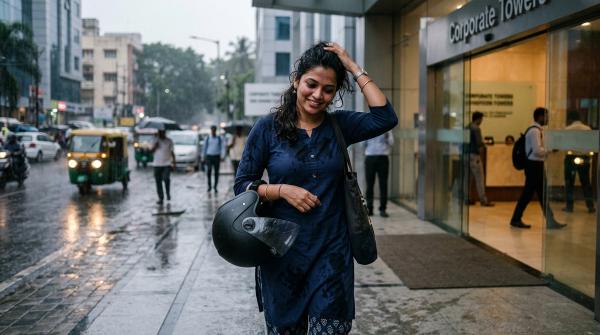
Got caught in the rain again?
Your hair is damp, your scalp feels a little sticky, and you’re standing there wondering: “Do I need to wash it now, or can I just dry it and move on with my life?”
Fair question. Monsoon hair is confusing. One minute it’s just a light drizzle, the next you’ve battled humidity, sweat, traffic pollution, crowded public transport, and that one auto ride where rain hits only one side of your head.
So, here’s the simple rule for rain-drenched hair care:
If only the outside of your hair is slightly damp, dry it gently. If your scalp got wet but doesn’t feel dirty, rinse with lukewarm water. If your hair and scalp are properly soaked, sweaty, oily, dusty, or sticky, use a mild shampoo and conditioner.
That’s it. You don’t need to shampoo every time it rains. But you also shouldn’t ignore wet, sweaty hair and tie it up for the rest of the day.
Let’s break it down properly.
Why Rain-Wet Hair Feels So Strange
#Rainwater by itself is not always terrible for your hair. But in real life, especially in Indian monsoon weather, rain is rarely just rain.
It usually comes with:
- Humidity
- Sweat
- Dust
- Pollution
- Road grime
- Oily scalp
- Frizz
- Product buildup
- Damp hair that refuses to dry
So even if the rain was light, your scalp may start feeling greasy or itchy faster than usual. Your hair may look flat at the roots and puffy at the ends.
One rainy commute will not ruin your hair. But during monsoon, your routine needs to be a little flexible. Some days, drying is enough. Some days, a rinse works. And some days, yes, you need shampoo.
Source-aware note: dermatologist hair-care guidance generally recommends washing based on oil, dirt and hair type, conditioning the lengths correctly, and reducing rough towel friction and heat damage. Environmental sources also note that normal rain is slightly acidic, while polluted rain can be more acidic, so clean-water rinsing after heavy rain is a sensible, low-risk step.
Rinse, Shampoo or Just Dry: What Should You Do?
#A Realistic Post-Rain Hair Routine
#1. Check your scalp first
#Before grabbing shampoo, pause for ten seconds and check your scalp.
Ask yourself:
- Is my scalp actually wet?
- Does it feel oily or sweaty?
- Is there any stickiness, smell, dust, or product buildup?
- Did I already wash my hair today?
- Is only the hair length damp, or are the roots wet too?
If only the ends are damp, you probably don’t need a full wash. But if the scalp feels wet, sweaty, or grimy, cleansing makes sense.
Your scalp should decide the routine, not panic.
2. Don’t attack your hair with a towel
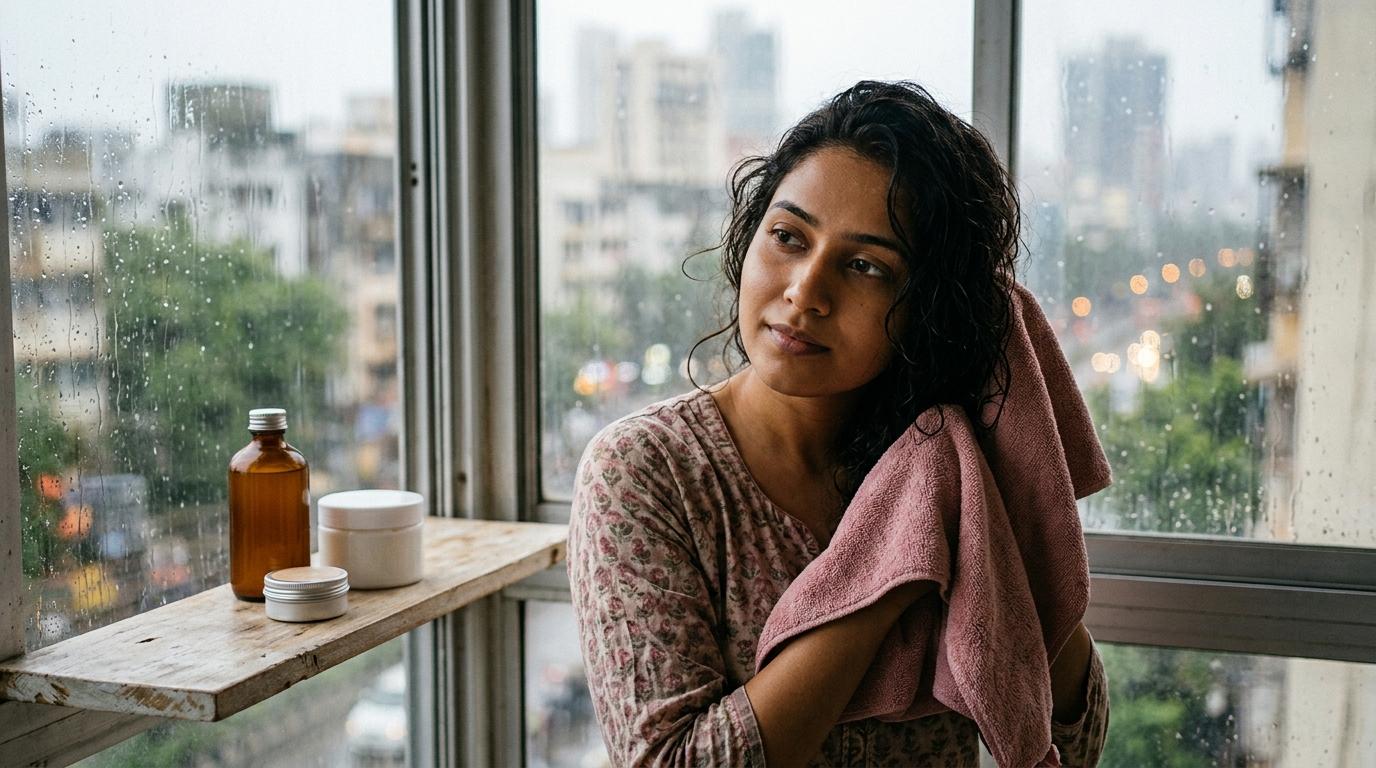
#Please don’t rub your hair aggressively with a towel. It’s tempting, especially when you’re in a hurry, but wet hair is more fragile. Rough towel drying can make frizz and breakage worse.
Use a soft towel or an old cotton T-shirt. Gently squeeze out extra water from the lengths. Around the scalp, press lightly instead of scrubbing.
It sounds like a small thing, but it makes a noticeable difference, especially if your hair gets frizzy in humidity.
3. Rinse if your scalp got lightly wet
#If your scalp got wet in the rain but doesn’t feel oily or dirty, a simple lukewarm rinse may be enough.
Avoid very hot water. It can dry out your scalp and hair, and it may make frizz worse. Lukewarm water is safer, especially if you’re rinsing your hair often during monsoon.
After rinsing, use conditioner on the lengths if they feel rough, tangled or puffy.
4. Shampoo only when your hair actually needs it
#You don’t need to shampoo after every tiny drizzle. But you should shampoo if:
- Your scalp is fully wet
- You travelled through dust or pollution
- Your scalp feels sweaty
- Your roots are greasy
- Your hair smells damp or sticky
- You had styling products in your hair
- Your hair feels heavy or dirty
Use a mild shampoo and focus mainly on the scalp. That’s where sweat, oil and dirt collect. You don’t need to scrub the lengths harshly. The shampoo that runs down while rinsing is usually enough to clean them.
If your scalp gets oily during monsoon, you may need to wash a little more often than usual. If your scalp is dry, you may not need shampoo every time it rains.
There is no one perfect number. Go by how your scalp feels.
5. Condition the lengths and ends
#Conditioner is your friend during monsoon, especially if your hair becomes rough, frizzy, dry or tangled after rain.
Apply conditioner from the mid-lengths to the ends. Avoid putting it directly on the scalp if your roots get oily quickly.
Let it sit for the time mentioned on the bottle, then rinse well.
This helps reduce friction, tangles and puffiness — all the things that make frizzy hair in humidity feel impossible to manage.
6. Dry your scalp before tying your hair
#Don’t tie wet hair into a tight bun or ponytail and leave it like that for hours. It can make your scalp feel damp and uncomfortable, and your hair may start smelling musty. It can also cause more tangling.
Air-dry if you have time. If you’re using a hair dryer, use cool or low heat and don’t hold it too close to your scalp.
You don’t need a salon blowout. Just make sure your scalp isn’t sitting wet for hours.
Common Monsoon Frizz Mistakes
#Monsoon frizz is not just because of rainwater. It’s also because of humidity, friction, over-washing, skipping conditioner, and using the wrong products at the wrong time.
Try to avoid these:
- Rubbing wet hair roughly with a towelThis makes the hair surface rough and frizzy.
- Skipping conditioner every single timeIf your lengths feel dry or puffy, conditioner can really help.
- Putting conditioner on oily rootsThis can make your scalp feel greasy and flat faster.
- Using high heat every time your hair gets wetToo much heat can dry out the hair over time.
- Brushing wet hair harshlyUse your fingers or a wide-tooth comb. Start from the ends and work upward.
- Applying serum on dirty, rain-wet hairIf your hair feels sticky or dusty, rinse or wash it first. Serum is not a cleanser.
Oily Scalp During Monsoon: What Not To Do
#An oily scalp in monsoon can be very annoying. Hair looks flat quickly, roots feel greasy, and you may feel like washing your hair every day.
Sometimes that’s okay. But washing harshly or doing too much can make your scalp feel even more irritated.
Avoid these habits:
- Don’t oil a dirty or sweaty scalpOil will not clean your scalp. If your scalp feels sticky, wash it first.
- Don’t shampoo the lengths again and againFocus on the scalp. The lengths usually don’t need aggressive washing.
- Don’t use a harsh shampoo for every drizzleIf your scalp isn’t dirty, drying or rinsing may be enough.
- Don’t sleep with a damp scalpDry it gently before bed, especially in humid weather.
- Don’t assume more foam means better cleaningA shampoo can clean well without turning your head into a bubble bath.
When Should You See A Dermatologist?
#Most monsoon hair issues are temporary. Frizz, flat roots, mild greasiness and tangles are very common in humid weather.
But it’s better to see a dermatologist if you notice:
- Itching that doesn’t improve with gentle washing
- Redness, pain, swelling or sores on the scalp
- Thick flakes or crusty patches that keep coming back
- Sudden bald patches
- Unusual hair fall that continues or worries you
- Burning or irritation after using a new product
- Scalp smell or discomfort that doesn’t go away
Don’t self-diagnose or use strong treatments randomly. It could be dandruff, irritation, allergy, infection or something else. A dermatologist can help you treat the real issue.
Quick Monsoon Hair Care Rules
#- Light drizzle and dry scalp: just dry your hair gently.
- Scalp slightly wet but not dirty: rinse with lukewarm water.
- Fully drenched, sweaty, oily or dusty: shampoo and condition.
- Shampoo mainly the scalp, not the lengths.
- Conditioner goes on mid-lengths and ends.
- Don’t tie wet hair tightly for hours.
- Don’t sleep with a damp scalp.
- Wash based on sweat, oil, dirt and your hair type — not fear.
Final Takeaway
#Rain-drenched hair does not always need shampoo. But it also shouldn’t be ignored.
The easiest way to decide is to check your scalp.
If your scalp is dry, gently dry your hair. If it’s lightly wet but not dirty, rinse with lukewarm water. If it’s soaked, sweaty, oily, dusty or sticky, shampoo and condition.
Simple, practical and much less stressful — which is exactly what monsoon hair care should be.