That first steamy bowl in Bengaluru, and why I still chase it
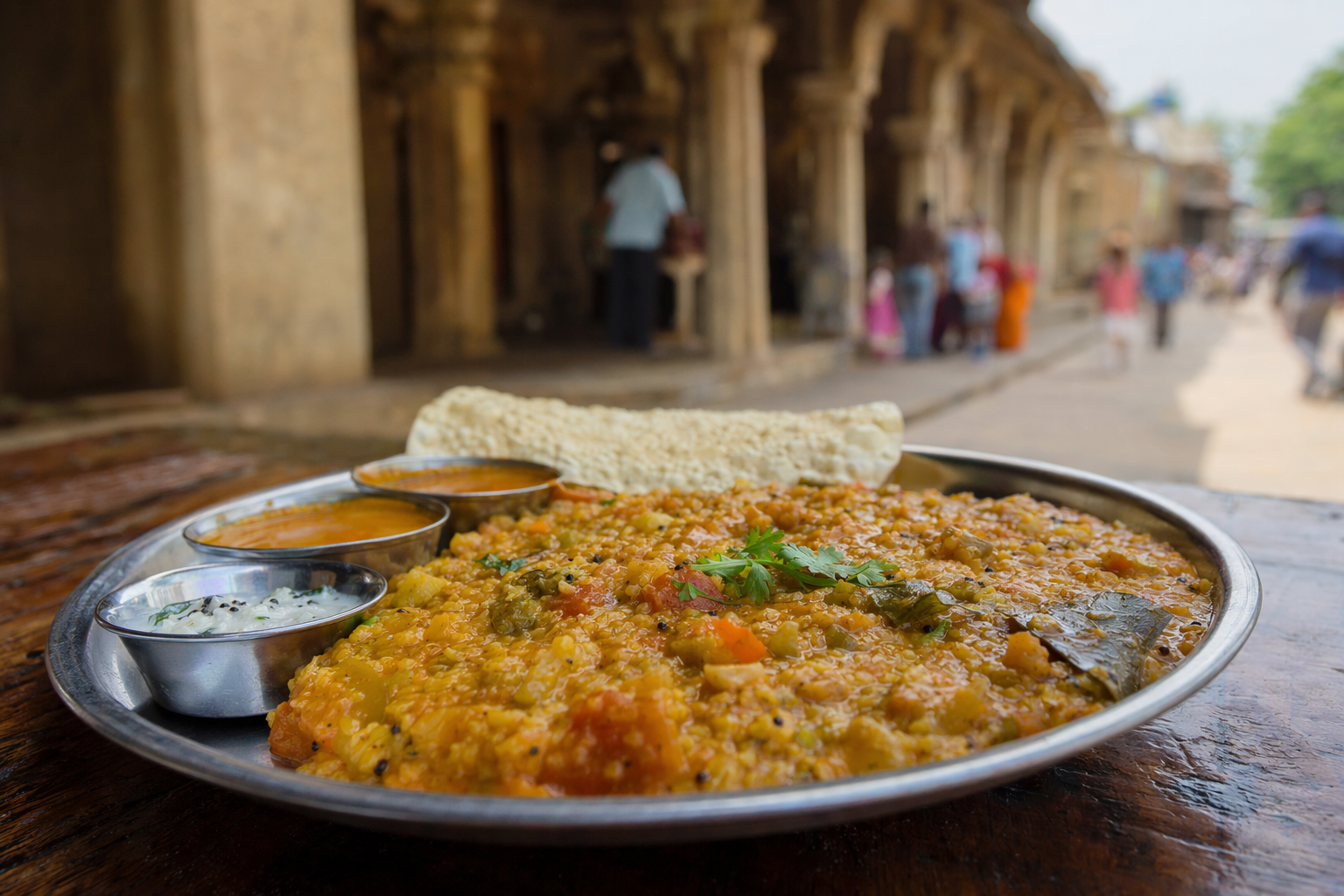
#I used to think bisi bele bath was just “rice and dal with vegetables,” which is honestly such a silly way to describe it that I’m embarassed I ever said it out loud. It’s like calling a monsoon “some rain.” The first proper bowl I had in Karnataka was in Bengaluru, after a night bus that had rattled my spine into new shapes, and I was standing in one of those quick-service darshini places where everyone seems to know exactly what they’re doing except you. Steel counter. Token in hand. Filter coffee smell floating around. Someone shouting “one bath!” from the kitchen. And then there it was: hot, thick, orange-brown, glossy with ghee, little vegetables hiding in the rice-lentil mush, boondi on top going soft at the edges.
I burned my tongue, obviously. Because patience is not my strongest travel skill. But that first spoonful had everything: tamarind tang, dal comfort, rice softness, jaggery-ish sweetness somewhere in the background, and that bisi bele bath powder warmth that doesn’t slap you like some chilli-heavy dishes do, it sort of builds and sits with you. The name literally means hot lentil rice in Kannada, and it really needs to be hot. Not warm. Hot. Like “why am I sweating but also smiling” hot.
This is my Karnataka travel food guide for bisi bele bath, but not in a neat, perfect, laminated itinerary kind of way. More like: here’s where I ate it, where it made sense, where it didn’t, what to ask for, what to pair it with, and how not to order a giant plate right before climbing Chamundi Hills unless you enjoy regret as a travel companion.
So what actually is bisi bele bath?
#Bisi bele bath is one of Karnataka’s great comfort foods, especially associated with the old Mysuru region and Bengaluru’s tiffin culture. At its heart, it’s rice, toor dal, vegetables, tamarind, and a roasted spice mix. But the “heart” doesn’t explain the mood. The spice mix usually has things like dried red chillies, coriander seeds, chana dal, urad dal, cinnamon or cassia, cloves, fenugreek, curry leaves, sometimes coconut, and other house secrets. Every family will tell you their version is correct. Every restaurant behaves like theirs is the standard. And honestly, I love that kind of chaos.
The texture matters a lot. Good bisi bele bath is not separate-grain rice. It’s not pulao. It should be soft and flowing, almost risotto-ish but more homely, more temple kitchen, more rainy afternoon. Vegetables are usually carrot, beans, peas, potato, sometimes capsicum, sometimes drumstick, sometimes whatever the kitchen has that day. Then comes the tempering: mustard seeds, curry leaves, maybe cashews if someone is feeling generous, and ghee. Please don’t skip the ghee unless you have to. Ghee is not decoration here, it’s like the final page of the story.
My personal rule: if the bisi bele bath is thick enough to stand a spoon in, ask for a little extra ghee or even a splash of hot water. It should loosen up and sigh, not sit like cement.
Bengaluru: the easiest place to begin your bisi bele bath trail
#If you’re flying or training into Karnataka, Bengaluru is probably your first stop, and it’s a very good place to get your bisi bele bath bearings. I like eating it in the morning, though some places serve it through the day. Bengaluru’s darshinis and old-school tiffin rooms are built for this kind of food: fast, hot, affordable, no drama, maybe no place to sit, and somehow the coffee arrives at exactly the moment you need it.
Mavalli Tiffin Rooms, usually called MTR, is one of those places people bring up immediately when discussing Bengaluru food. The original Lalbagh Road restaurant dates back to 1924, and yes it can feel touristy at times, but I don’t say that like it’s a crime. Some places become famous because they did something right for a very long time. Their South Indian meals and tiffin items are part of Bengaluru’s food memory, and a bowl of bisi bele bath there gives you that old-city feeling, especially if you go at a quieter hour and don’t act like you’re in a race.
I’ve also had lovely bisi bele bath in no-name darshini spots around Jayanagar, Basavanagudi, Malleshwaram, and near bus stands where the menu board is half-faded and the cashier is mildly annoyed that you’re asking too many questions. Sometimes these are the best places. You watch office-goers eat in five minutes, aunties sharing one plate and one coffee, college kids stretching thirty rupees of hunger into a meal. Food is travel, yes, but it’s also daily life. And daily life is where the flavour hides.
What to order with it in Bengaluru
#- A small bowl of plain curd if you’re worried about spice, or just want that cool-sour balance. It’s not fancy, it works.
- Khara boondi or mixture on top, but add it slowly. I once dumped the whole packet and turned lunch into a crunchy salt accident.
- Filter coffee after, not during. I know people will disagree with me, but tamarind and coffee together feels too busy in my mouth.
- A lighter breakfast before a big bisi bele bath lunch. If you’re planning a Karnataka road day, this Akki Rotti Breakfast Guide for Karnataka Trips is actually the sort of thing I wish I’d read before over-ordering at 8 a.m.
Mysuru: where the dish feels older, slower, and somehow more royal
#Bisi bele bath is often linked with the Mysuru palace kitchens in food lore, and while stories vary depending on who is telling them, the Mysuru connection feels real when you eat it there. Maybe it’s the pace of the city. Mysuru has this softer rhythm than Bengaluru, even with all the traffic and tourism. You go to the palace, walk too much, buy sandalwood soap you don’t need, and then suddenly a hot plate of bisi bele bath makes total emotional sense.
My most memorable Mysuru bowl was not in a famous restaurant. It was near Devaraja Market after I’d spent an hour pretending I wasn’t lost. The market had bananas stacked like yellow walls, jasmine sellers threading flowers, spice shops with sacks open to the street, and that lovely dusty-sweet smell old markets have. I found a small hotel nearby, the kind with steel tumblers and a fan making a heroic but mostly symbolic effort. The bisi bele bath came with a papad, a dab of chutney, and a spoon that was too small for my hunger.
Mysuru versions, at least the ones I’ve tried, often feel a little more mellow than some Bengaluru ones. Not bland. Just rounded. The tamarind doesn’t shout so much. The spices are warm and aromatic. Also, Mysuru is a good city to eat bisi bele bath at lunch and then walk it off gently, which is important because this dish is filling. Like deeply, seriously filling. Don’t plan it before a long taxi ride on twisty roads unless your stomach is made of granite.
The road-trip version: Mandya, Ramanagara, Hassan, and those highway hotels
#Karnataka is made for road trips if you like food stops as much as monuments. The Bengaluru-Mysuru highway has changed a lot over the years, with faster stretches and more polished stops, but I still have a soft corner for highway hotels where idli steam clouds the front counter and the tea is too sweet. Around Ramanagara and Mandya, you’ll see plenty of breakfast and lunch places serving the usual Karnataka staples: idli, vada, dosa, chow chow bath, rice meals, and yes, often bisi bele bath.
On one trip toward Srirangapatna, me and my friend stopped at a place because the parking lot was full of local cars. That’s usually a good sign, though not always, I’ve been betrayed before. We ordered one bisi bele bath to share and two coffees. The bath arrived with a bright red slick of spice oil on top and I thought, oh no, this is going to hurt. But it was actually balanced, just intense. The vegetables had almost melted into the rice and dal, and the boondi was still crisp in the center. We sat near the window watching buses cough smoke and families negotiate who gets the last vada. Perfect travel meal, honestly.
If you’re heading to Hassan, Belur, Halebidu, or Chikmagalur, bisi bele bath can be either your strong breakfast or your lazy lunch. But I’d avoid eating a huge plate just before coffee estate roads near Chikmagalur, because those curves are not joking. Been there. Regretted that. A smaller portion with curd is smarter, and then save room for local snacks later.
How spicy is it, really?
#This is the question I hear from friends who travel in India and love food but don’t want to spend the next four hours bargaining with their digestive system. Bisi bele bath can be mild, medium, or quite spicy depending on the cook. The heat usually comes from dried red chillies in the spice powder, but the dish also has sourness from tamarind and richness from dal and ghee, so it doesn’t always feel sharp in the same way as, say, a fiery curry.
Still, ask. Don’t be shy. In Karnataka, you can say “swalpa mild maadi?” which basically means please make it a little mild. If you’re ordering in English or Hindi, “less spicy please” is understood in many urban places, though what you recieve may still be someone’s personal definition of less spicy, which can be... optimistic. For more practical phrases, this guide on How to Ask for Less Spicy Food in India is genuinely useful, especially if you’re new to regional canteens and highway hotels.
My stomach strategy is simple: eat it hot, don’t mix ten other spicy things into the same meal, sip water but don’t drown yourself, and order curd if the spice is building. If you’ve travelled in central India and survived something like Saoji food in Nagpur, you’ll probably find bisi bele bath more comforting than aggressive, though spice tolerance is weirdly personal. I wrote down notes after a very hot meal once, and later compared them with this Nagpur Saoji Meal Guide for Travelers because the curd-and-timing advice applies more widely than people think.
Where bisi bele bath fits into a Karnataka food day
#Here’s the thing: Karnataka food travel is not just one dish. If you only chase bisi bele bath, you’ll miss the fun around it. A proper day might start with akki rotti or thatte idli, move into bisi bele bath for lunch, then maybe maddur vade on the road, then neer dosa or ragi mudde depending on where you are. In Bengaluru you might end the night with a benne dosa or a plate of gobi manchurian because cities have their own naughty logic.
Bisi bele bath sits in the middle of this food map as the reliable, warm, deeply filling one. It’s not the light snack. It’s not the crispy treat. It’s the bowl you eat when you need grounding. After a train. Before a museum. During rain. After a fight with Google Maps. I’ve eaten it when tired, when hungover, when excited, and once when I was slightly sad for no good reason, and it helped every time. Food people use the phrase comfort food too easily, but here it really fits.
A loose one-day bisi bele bath plan in Bengaluru
#- Start early in Basavanagudi or Malleshwaram with idli, vada, or akki rotti. Don’t go mad yet. You have a long eating day ahead.
- Visit Lalbagh, Cubbon Park, or one of the older market areas. Walk a bit because honestly you’ll need the appetite.
- Have bisi bele bath for lunch at a darshini, old tiffin room, or Karnataka meals place. Ask for ghee. Get curd if you want balance.
- Take filter coffee after. Stand at the counter like you belong there, even if you don’t.
- For dinner, go lighter. Or don’t. I’m not your doctor. But maybe don’t do a second full rice meal unless you’re built different.
The toppings debate: boondi, chips, papad, or nothing?
#People have feelings about bisi bele bath toppings. I am a boondi person, mostly. The hot bath softens the outside of the boondi while the inside stays a little crisp for the first few minutes, and that texture contrast is beautiful. Khara mixture is also nice but can overpower the spice balance if it’s too salty. Papad on the side is safer. Potato chips are fun in a student-hostel sort of way, not traditional maybe, but who cares on a rainy day?
One auntie in Mysuru told me, very firmly, that too much topping means the cook failed because good bisi bele bath doesn’t need distraction. She’s not wrong. But also, I like crunch. See, this is why food writing gets messy. Two things can be true. A beautifully made bowl should stand alone, and a little boondi still makes it happier.
Markets, spice shops, and bringing the flavour home
#If you fall in love with bisi bele bath while travelling, you’ll probably want to bring home powder. This is where Karnataka gets dangerous for your luggage. Bengaluru and Mysuru both have spice shops and grocery stores selling bisi bele bath powder, from big packaged brands to small local blends. MTR’s ready mixes and powders are widely known, and you’ll find several other Karnataka brands too. Some families still prefer buying ingredients and roasting their own, which is usually better, but not everyone has the time or patience, including me on most weekdays.
Devaraja Market in Mysuru is lovely for the sensory drama, though for sealed spice powders I usually buy from a proper grocery store so it travels better. In Bengaluru, old neighbourhood stores in Jayanagar, Malleshwaram, and Gandhi Bazaar are fun to browse. Look for powders that smell roasted and alive, not dusty. If the shopkeeper lets you smell it, do. If they don’t, don’t make it weird, just buy a small pack.
At home, I’ve tried recreating the exact Karnataka taste and failed in three different ways. First time too sour. Second time too thick. Third time actually decent, but missing the mood, which sounds dramatic but it’s true. You can copy ingredients, but you can’t copy the sound of a Bengaluru darshini at lunch hour or the way rain hits a Mysuru street while you’re holding a steel tumbler of coffee. That stuff seasons the food too.
Mistakes I made so you don’t have to
#I have eaten bisi bele bath at the wrong time, in the wrong quantity, with the wrong expectations. Travel teaches you, sometimes gently and sometimes with acidity. So here are my slightly unglamorous lessons.
- Don’t order it cold or from a place where it’s been sitting sadly for hours. Bisi bele bath needs heat. If it isn’t steaming, I usually skip it.
- Don’t pair it with every fried snack on the counter unless you have a nap scheduled. One vada is joy. Three vadas and bisi bele bath before sightseeing is a personal crisis.
- Don’t assume every version is vegetarian in the same way if you have dietary restrictions. The dish is usually vegetarian, often with ghee, but ask about ghee, onion, garlic, or specific needs.
- Don’t be scared of simple places. Some of my best bowls came from plain hotels with plastic chairs and zero Instagram energy.
- Don’t compare every bowl to the last one. Regional food changes from city to city, cook to cook, day to day. That’s the point, no?
A few places and situations where it tastes extra good
#Rainy Bengaluru afternoon. This is the classic. You’re damp, your cab cancelled twice, and then a hot bowl arrives with ghee melting on top. I don’t know what else to tell you, that’s cinema.
After walking around Mysuru Palace. The palace is gorgeous but crowded, and by the time you come out you’ll be hungry and slightly overstimulated. Bisi bele bath brings you back to earth. Pair it with curd, then go slow for the rest of the day.
Highway lunch between temple towns. On the Belur-Halebidu route, or anywhere you’re doing heritage stops, this dish works because it’s filling and usually easy to find in Karnataka-style restaurants. Just don’t overdo the portion if the afternoon includes lots of walking in sun.
At a friend’s home. Restaurant bisi bele bath is great, but home versions are where the dish becomes personal. Someone’s mother adds more vegetables. Someone’s grandmother uses a darker spice blend. Someone’s uncle insists peanuts are essential, which I’m not fully convinced about, but I respect the confidence.
Final thoughts from a person who has eaten too many bowls, maybe not enough
#Bisi bele bath is not glamorous travel food. It doesn’t pose beautifully all the time. It can look like a soft brown mound if the lighting is bad, and honestly the lighting is often bad. But it carries Karnataka in a way I love: practical, generous, layered, warm, a little spicy, not trying too hard. It belongs in old restaurants, highway hotels, home kitchens, temple-town lunch stops, rainy evenings, and train-station daydreams.
If you’re planning a Karnataka trip, don’t treat bisi bele bath like just another dish to tick off. Eat it when you’re actually hungry. Eat it hot. Ask for ghee if you want the full comfort. Ask for less spice if you need to. Walk after. Drink coffee after. Talk to the person serving it if the place isn’t too busy. They might tell you where to get the better one down the road, because that’s how food travel often works, one bowl leading to another bowl, and then suddenly your whole itinerary is shaped by lunch.
And if you come back home with bisi bele bath powder in your bag and a mild obsession in your heart, welcome. It happens. I’m still chasing that first Bengaluru bowl, or maybe I’m chasing the tired, hungry version of myself who tasted it. Either way, Karnataka is worth eating slowly. For more messy, hungry, practical travel-food stories like this, I usually end up browsing AllBlogs.in with a cup of coffee and, if I’m lucky, something crunchy on the side.