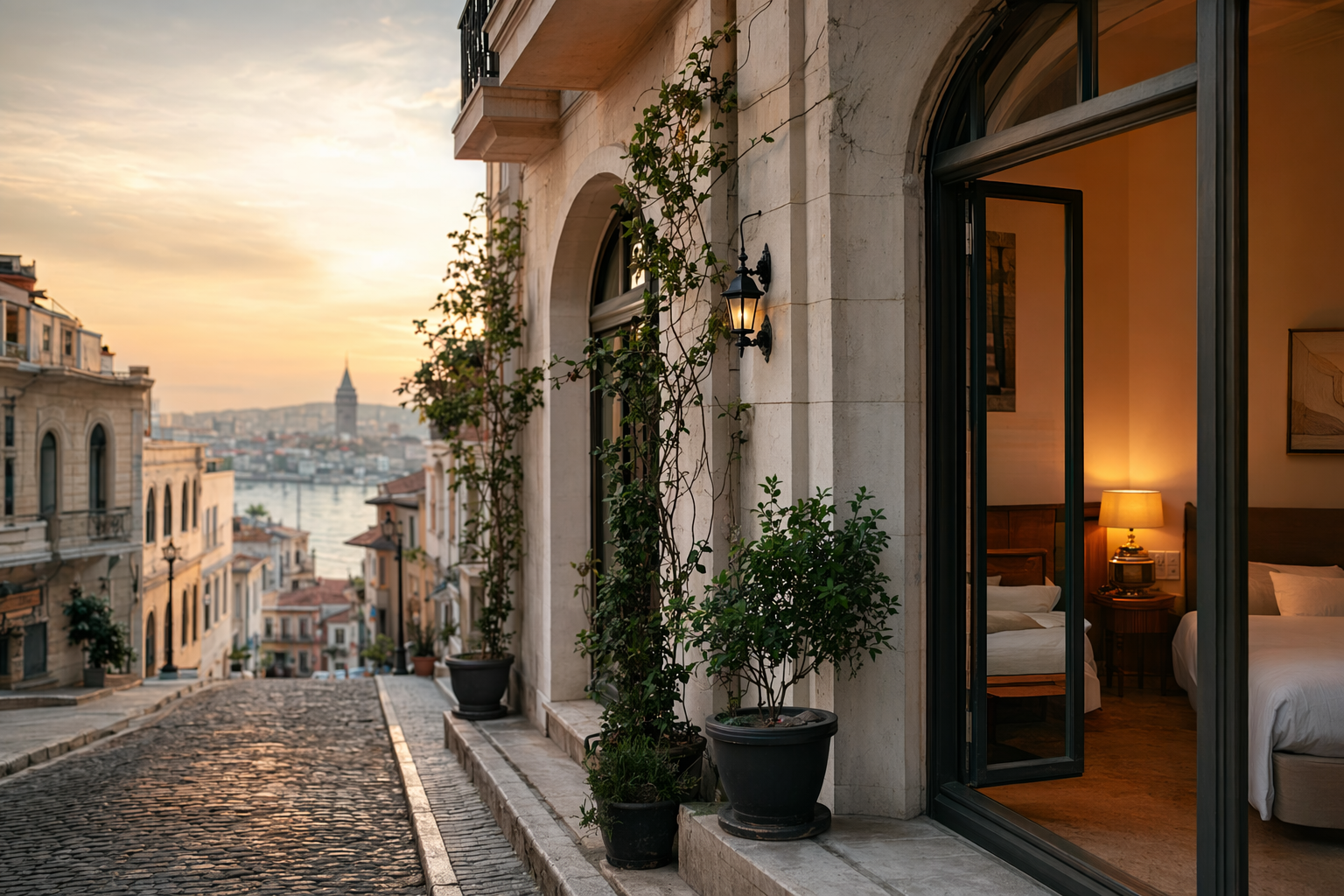
The cheap hotel that cost me more than the nice one
#A cheap hotel can become expensive twice a day. I learnt this the annoying way, not from some travel expert gyaan. I had booked a “great deal” hotel because the photos looked clean, breakfast was included, and the price was almost 30% less than the places near the main area. Very proud of myself, obviously. Indian middle-class brain was like, wah beta, savings!
Then the trip started. Every morning I had to spend money and time getting to the part of the city where I actually wanted to be. Every night, after walking around like mad, I had to again take a taxi back because public transport had become patchy or I was too tired to figure it out. The room was fine, but the location was doing full vasooli from me. That’s when I started taking hotel location more seriously than hotel room photos.
So if you’re wondering how to choose hotel location before booking, this is the checklist I wish someone had pushed into my face earlier. Not a fancy one. Just practical stuff: transport, safety, food, noise, walking distance, airport transfer, and the hidden cost of staying “just 20 minutes away” — which, in travel language, can mean 20 minutes at 11 am and 75 minutes when you’re hungry and irritated.
First rule: don’t choose the city centre, choose the centre of YOUR trip
#This is my favourite hotel location rule now: central to your trip, not central to the city. Sounds simple, but most of us don’t do it. We open a booking app, type the city name, sort by rating or price, and then start comparing rooms. But the best hotel location for tourists is not always the most famous neighbourhood. It depends on what kind of trip you’re taking.
For example, if you’re going to Paris for museums and first-time sightseeing, staying near a metro-connected area makes more sense than chasing a cheap room far outside the city. If you’re in Bangkok mainly for food, shopping, and day trips, being near BTS/MRT or a pier can be more useful than being near one specific mall. In Goa, if your plan is beach-hopping in North Goa, booking a beautiful resort in South Goa because it was discounted might look romantic until you realise every “quick visit” becomes a mini road trip. Same thing in Jaipur, Singapore, Istanbul, Dubai, London, Kochi, everywhere basically.
Before I even open hotel listings properly, I now write down my trip anchors. Not poetic anchors, actual Google Maps anchors: airport or railway station, 2-3 main attractions, one food/market area, one pickup point if I have a day tour, and maybe a friend’s house if I’m visiting someone. Then I check which area keeps showing up in the middle of these pins. That area becomes my search zone. Btw, if you’re the type who gets confused between Google Maps, Apple Maps and Maps.me, this guide on Offline Maps for Travel: Google vs Apple vs Maps.me is genuinely useful before you start saving hotel areas and walking routes.
My quick map-check framework before booking any hotel
#I call this my “5-minute map test”, though honestly it becomes 20 minutes because I get distracted and start looking at cafes. Still, it has saved me from many bad bookings. Open the hotel on the map, not just the booking app map thumbnail. Zoom in. Zoom out. Check what’s around it like you’re already there and it’s 9:30 pm and your phone battery is at 11%.
- Check walking distance to your main daily transport: metro station, bus stop, tram, ferry, or shared taxi point. I prefer under 8-10 minutes walking if I’m travelling with luggage or family.
- Check if the walk is actually walkable. A 600 metre walk beside a busy highway, no footpath, bad lighting, or steep slope is not the same as 600 metres through a normal street.
- Look for food within 5-10 minutes. Not only fancy restaurants. I mean basic food: cafe, bakery, supermarket, local thali-type place, convenience store, pharmacy. When you land late, this matters more than a bathtub.
- Check road noise, nightlife noise, and construction signs. If the hotel is above bars or on a party street, don’t act shocked later. I have done this. Full regret.
- Check recent reviews for words like “unsafe”, “dark street”, “far from metro”, “taxi refused”, “no lift”, “noise till 2 am”, “hard to find”, and “not as central as shown”.
This is the simplest hotel location checklist before booking, and it works globally. In India, we already understand location chaos: two places can look close on map but be divided by traffic, flyovers, one-ways, railway tracks, or just vibes. Same logic applies abroad too. The map doesn’t always show friction.
Public transport nearby is not optional, unless you’re renting a car
#How to choose a hotel near public transport? My rule is boring but solid: choose a stay where your main transport option is close, frequent, and easy to understand. “Near station” is not enough. Which station? Is it on the line you’ll actually use? Does it connect to the airport? Is the station safe at night? Does it have lifts/escalators if you’re carrying a suitcase or travelling with parents?
As an Indian traveller, I love metros because they remove so much negotiation stress. No taxi surge drama, no explaining pronunciation of hotel name, no wondering if the driver is taking a long route. In cities like Singapore, Dubai, London, Bangkok, Tokyo, Delhi, Kochi, Kuala Lumpur and many European cities, staying near a metro/train line can change the whole feel of the trip. You become lighter. You don’t calculate every outing like it’s an EMI.
But there’s a catch. Some “near public transport” hotels are near a station that shuts early, has poor weekend service, or is technically close but across a confusing junction. I usually check directions at three timings: morning, evening, and late night. If the app suddenly says 17 minutes by metro in the morning but 46 minutes at night with two buses and one mysterious walk, I take it seriously.
Airport transfer: the first and last headache of the trip
#Many people check hotel price but forget arrival and departure cost. Airport transfers can quietly destroy a budget, especially if you land late, have big bags, or are in a city where the airport is far from the main area. A hotel that is ₹1,500 cheaper per night but needs a ₹3,000 taxi both ways is not really cheap, na?
Before booking, I check four things. One: how far is the airport or railway station in real travel time, not just kilometres. Two: is there an airport train, metro, bus, or reliable shuttle? Three: what happens if my flight lands after public transport hours? Four: can I reach the hotel easily without dragging luggage through tiny lanes or stairs?
This matters even more for early morning flights. I once stayed in a lovely neighbourhood because it had cute cafes and cheaper rooms. Then my flight was at an ungodly hour. At 4 am, suddenly the “cute neighbourhood” had no taxis nearby, no reception guy awake properly, and me standing with my suitcase doing silent Hanuman Chalisa. Since then, if I have an early departure, I either stay closer to airport on the last night or choose an area with proven taxi availability.
Safety is not just crime rate, it’s convenience plus comfort
#Hotel area safety and convenience checklist sounds very serious, but actually it’s mostly common sense. Safety is not only whether an area is “dangerous” or not. It’s also: will I feel okay walking back after dinner? Are there people around? Is there lighting? Are taxis easy to get? Is the hotel entrance on a main road or inside a lane where even the cab driver looks confused?
For solo travellers, women travellers, older parents, and families with kids, this becomes extra important. I don’t rely on one random review saying “safe area”. I read multiple recent reviews, check street view where available, see if there are shops/restaurants nearby, and search the neighbourhood name with words like “night”, “safety”, “tourist area”, “transport”. Not to scare myself, but to avoid being casual.
Also, safety conditions change by city and by neighbourhood. Big cities globally have pickpocketing zones around crowded tourist areas, nightlife streets can get messy late night, and some station areas are super convenient but not always pleasant after dark. This doesn’t mean avoid everything. It means know what you’re booking. If the hotel is in a party district, okay, just don’t expect quiet family vibes. If it’s in an industrial area, maybe fine for business travel, not great for a first-time tourist trip.
Noise: the hidden hotel location problem nobody takes seriously
#We Indians can sleep through a lot, agreed. Horns, pressure cooker, upstairs furniture dragging, random shaadi band at 11 pm — we have training. But travel sleep is different. You’re already tired, your body clock may be off, and then one nightclub bass or early morning garbage truck can ruin the next day.
When checking what to check before booking a hotel, please include noise. Look for nearby highways, railway tracks, bars, temples/church bells, night markets, airports, bus depots, and construction zones. In many old cities, the most charming area is also the loudest area. In beach destinations, sea-facing rooms can be peaceful or can mean music from shacks till late. In hill towns, hotels right on the main mall road may feel convenient but noisy with traffic and crowds.
I have a slightly weird habit now: I read only the 2-star and 3-star reviews for location issues. Five-star reviews often say “amazing stay” and move on. But mid reviews tell the truth: “good hotel but noisy”, “great staff but far from everything”, “room nice but lane smells”, “breakfast good but no taxi access”. These are gold. Not every complaint matters, but repeated complaints matter.
Food access: because hunger makes every location worse
#A hotel near good food is underrated. I’m not saying stay inside a market if you hate crowds, but have some food options around. After a full day out, sometimes you don’t want a Michelin-starred tasting menu or even a proper restaurant. You want something hot, quick, safe, and close. Maybe a dosa, sandwich, ramen, shawarma, dal-rice, supermarket salad, whatever the city offers.
This is especially important for vegetarians, Jain food preferences, people with kids, elderly parents, or anyone who gets hangry. In many global cities, restaurants close earlier than we expect. As Indians, we assume food is available till late because in many places back home, kuch na kuch mil hi jaata hai. Abroad, and even in some quieter Indian destinations, kitchens shut and then you’re surviving on chips from reception.
I check the map for restaurants, grocery stores, pharmacies, and breakfast places. If the hotel breakfast is expensive or not included, nearby cafes help. If you’re staying in an apartment or hostel, a supermarket nearby is basically luxury. Also, check if the area is alive on the days you’ll be there. Some business districts become dead on weekends. Some markets close one day a week. Small thing, big impact.
Price ranges: don’t compare only room rate, compare total trip cost
#Accommodation prices vary too much globally to give one perfect range. A budget hotel in Vietnam, a hostel in Europe, a mid-range stay in Dubai, a homestay in Himachal, and a business hotel in Mumbai are all playing different games. But generally, you’ll see buckets like hostels and guesthouses for budget travellers, business/boutique hotels in the mid-range, serviced apartments for longer stays, and resorts/luxury hotels where location can either be brilliant or intentionally isolated.
The mistake is comparing ₹4,000 vs ₹6,000 per night without adding transport and time. Suppose you save ₹2,000 on the room but spend ₹900 extra daily on taxis and lose 90 minutes each day. On a 4-night trip, did you save money or did you just buy irritation? For me, a slightly higher room rate is worth it if it reduces daily commute, late-night taxi dependence, and food stress.
| Location factor | Cheap but far hotel | Better-located hotel |
|---|---|---|
| Daily transport | Often higher taxi/ride costs | More walking or public transport possible |
| Time lost | Can be 1-2 hours daily in big cities | Usually less back-and-forth |
| Food access | May be limited after dark | More casual options nearby |
| Safety comfort | Depends heavily on area and route | Usually easier if streets stay active |
| Sleep quality | Could be quieter, or isolated | Could be noisy if too central, check reviews |
| Best for | Road trips, resort stays, business near venue | Sightseeing, short trips, first-time visitors |
Season and trip style change the best area
#There is no one best hotel location for every season. In peak tourist months, staying near attractions may save time but cost more and feel crowded. In monsoon or rainy seasons, a hotel close to transport becomes more valuable because walking long distances in wet shoes is not character building, it’s just annoying. In very hot destinations, staying near metro or shaded streets matters. In winter, especially with early sunsets, I prefer active neighbourhoods where returning at 6 pm doesn’t feel like midnight.
Beach trips are different from city trips. In a beach destination, you might happily stay slightly away if the resort itself is the plan. In a city, unless you’re working remotely or resting, being too far can make you lazy. Hill stations also have their own logic: a hotel with a beautiful view may involve steep climbs, no lift, narrow roads, or parking drama. Looks cute in photos. Not cute when your taxi stops 300 metres away and uncle ji refuses to carry luggage.
For events, concerts, festivals, weddings, conferences, or sports matches, book near the venue or near a direct transport line to it. Event days create traffic, surge pricing, road closures, and general chaos. I’ve seen people save money by staying far and then miss half the event because every cab was cancelling. If the event is the main reason you’re travelling, location should serve that first.
Neighbourhood vibe matters more than star rating sometimes
#A 4-star hotel in the wrong area can feel less enjoyable than a simple 3-star in a lively, useful neighbourhood. I know this sounds like something hotels don’t want us to say, but it’s true. The neighbourhood becomes part of your trip. Morning chai/coffee, evening walks, random bakery smell, local market, street musicians, corner store uncle, all that.
Some travellers love being in the middle of action. Some want quiet after 8 pm. Some want nightlife. Some want culture and old streets. Some need parking. Some need elevators and wide roads because parents are travelling. So before booking, ask yourself what you’ll actually do between 7 pm and 10 pm. That time decides location satisfaction. If every evening you need to travel across town for dinner or entertainment, your hotel is not in the right place.
Also check if the area is touristy in a bad way. Tourist areas are convenient, yes, but they can have overpriced restaurants, souvenir shops, aggressive touts, and less local feeling. On the other hand, staying in a purely local residential area may be lovely but inconvenient if language, transport, or food access is tricky. Balance, boss. Balance is the whole game.
The booking decision: location first, then cancellation rules
#Once I shortlist a good area, then I compare hotels. Not before. My order is: area, transport, reviews, room basics, cancellation policy, final price. Earlier I used to fall for non-refundable deals because “I’m definitely going”. Then plans changed, visa timing changed, someone got sick, flight prices went mad — normal life only. Now I’m more careful.
If two hotels are similar and one has a better location but costs slightly more, I usually take the better location. If the better hotel is non-refundable and my plans are not fully fixed, I pause. After choosing where to stay, it’s worth reading about Refundable Hotel Booking vs Travel Insurance, because the cheapest rate is not always the smartest rate. Especially for international trips, group trips, and family travel where one change can affect everything.
And please save the hotel address offline. Full address, local language address if available, nearest station, screenshots of map, booking confirmation, and emergency contact. I keep these in my phone and also send them to one family WhatsApp group because Indian parents will ask anyway. This Digital Travel Wallet Checklist: Save Travel Docs Offline fits nicely into the same pre-trip routine.
My final hotel location checklist before I press “book”
#- Pin your real trip places first: attractions, food areas, event venue, airport/railway station, day-trip pickup point. Don’t start with hotel photos.
- Check travel time at different hours. Morning, evening, late night. If the route changes drastically, investigate.
- Make sure public transport is genuinely nearby and useful, not just technically close on the map.
- Read recent reviews for location complaints. Repeated words like noisy, isolated, unsafe, far, dark lane, hard to find — don’t ignore them.
- Check food, pharmacy, ATM, grocery, and basic convenience within walking distance.
- Think about arrival and departure. Late flight? Early train? Big luggage? Parents? Kids? Choose accordingly.
- Compare total cost, not room cost. Add taxis, airport transfer, time, stress, and sleep quality.
If you do only this much, you’ll already avoid most bad location mistakes. Not all, because travel always has some surprise waiting with a naughty smile, but most.
So, how do you choose where to stay?
#For me, the answer has become very clear after enough wrong bookings: choose the hotel location that reduces daily friction. The best stay is not always the cheapest, prettiest, or highest rated. It’s the one that lets your trip flow. You step out and things work. You come back tired and food is nearby. You don’t spend half your holiday in taxis. You sleep properly. You feel okay walking around. Simple things, but they decide the mood of the whole trip.
This hotel location checklist before booking works whether you’re planning a weekend in Udaipur, a work trip to Bengaluru, a family holiday in Singapore, a Europe backpacking route, or a beach break in Bali. The destination changes, but the questions stay almost same: where will I go daily, how will I get there, what happens at night, and what will this “cheap deal” really cost me?
Honestly, I still get tempted by pretty hotel photos. Who doesn’t? But now I always open the map before I fall in love. Trust me, that one habit can save money, sleep, and mood. And if you like practical travel planning without too much fancy nonsense, keep browsing AllBlogs.in — I usually find myself going there when I’m in that trip-planning rabbit hole with 47 tabs open.