The first time I froze yogurt, I absolutely did it wrong
#I wish I could tell you I became the kind of person who freezes yogurt because I’m organized and thrifty and meal-prep-adjacent in a cute apron. Nope. The first time I froze yogurt, it was because I bought one of those giant tubs of plain Greek yogurt while feeling ambitious at the grocery store, then immediately forgot about it behind the pickles. Classic me. When I found it, it was still fine, but I knew I wasn’t going to eat 32 ounces of yogurt in two days unless I started using it as face cream or something. So I shoved the whole tub in the freezer, lid and all, and felt very smug.
Then I thawed it a week later and, um, it looked like a dairy crime scene. Watery on top, kind of grainy, not that smooth spoonable cloud I had in my head. I remember standing over the sink, stirring it like I could bully it back into being creamy. It did not care. But here’s the thing: it was still usable. Not for eating with honey and berries, at least not for me, but for smoothies? Marinades? Pancakes? Absolutely. That was the day I learned frozen yogurt has a second life, you just have to stop expecting it to come back as the exact same person.
So, can you freeze yogurt?
#Yes, you can freeze yogurt. Plain yogurt, Greek yogurt, flavored yogurt, dairy yogurt, even a lot of plant-based yogurts can go in the freezer. The important little asterisk is this: freezing changes the texture. Sometimes a little, sometimes a lot. Yogurt has water, milk proteins, fat, and live cultures all hanging out in a delicate little arrangement. When it freezes, ice crystals form and push things around. When it thaws, the water may separate and the proteins can feel slightly curdled or grainy. Sounds dramatic, but it’s not ruined.
Food-safety wise, freezing is a pause button, not a magic reset button. If your yogurt is already old, smells sour in a bad way, has mold, or has been sitting out on the counter while you answered emails and forgot the concept of time, don’t freeze it and hope for the best. Freeze yogurt while it’s still fresh and within its date, keep it frozen solid, and thaw it in the fridge. That’s the boring advice, I know, but boring advice is what keeps dairy from becoming regret.
What actually happens to the texture, because this is where people get mad
#The texture after freezing depends on the yogurt. Greek yogurt usually handles freezing better than thin regular yogurt because it has less water and more protein. Full-fat yogurt often comes back creamier than nonfat, because fat is lovely and forgiving and basically the friend who brings snacks to the airport. Low-fat and nonfat yogurts can get icy, watery, and a bit chalky. Flavored yogurts with sugar tend to freeze a little softer, which is why homemade frozen yogurt recipes often add honey, maple syrup, or sugar. Sugar lowers the freezing point a bit, so the whole thing doesn’t turn into a brick quite as aggressively.
But here’s my honest opinion: thawed frozen yogurt is almost never as good eaten straight from the bowl as fresh yogurt. I know somebody’s aunt somewhere will say she freezes yogurt all the time and it’s perfect, and bless her, maybe her freezer is magical. Mine is not. Mine turns yogurt into something that needs a job. Give it a blender, a batter, a sauce, a marinade. Don’t ask it to be brunch with granola unless you’re okay with a looser, slightly wierd texture.
Frozen yogurt is not ruined yogurt. It’s yogurt that changed careers.
Best method 1: freeze yogurt in small portions, not the whole tub like I did
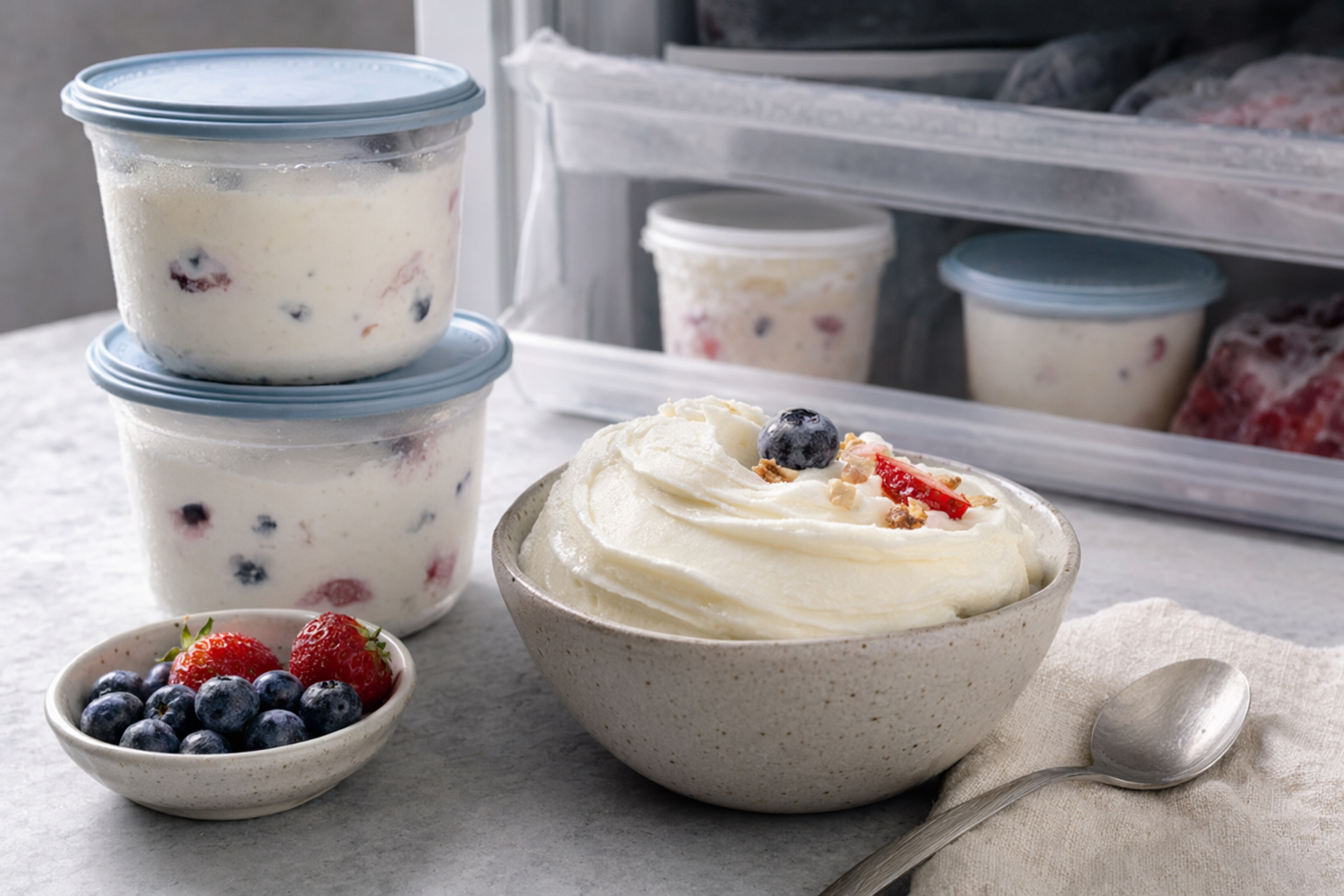
#If you only take one thing from this whole ramble, take this: portion it before freezing. Do not freeze the giant tub unless you truly plan to thaw and use the whole thing. Yogurt doesn’t love being thawed, scooped, and refrozen over and over. Also, the big tub takes ages to thaw and the edges can get sad before the middle is ready. I use half-cup portions most of the time, because that’s what I throw into smoothies, pancake batter, quick breads, or a lazy sauce for roasted vegetables.
- Use silicone muffin cups if you want cute little pucks that pop out easily.
- Ice cube trays are brilliant for smoothie yogurt cubes, especially if you blend yogurt with fruit first.
- Small freezer-safe containers work best when you want to thaw yogurt for cooking or baking.
- Freezer bags are fine too, but lay them flat so they freeze thin and thaw fast.
Leave a little headspace because yogurt expands as it freezes. Label it with the date, even if you think you’ll remember. You won’t. I have pulled mystery white cubes from my freezer and played the world’s least fun guessing game: coconut milk, yogurt, or egg whites? Also, keep your spoon, tray, and containers clean before portioning dairy. I’m not trying to sound like a kitchen inspector, but yogurt is one of those foods where clean hands and clean tools matter. If you’re the sort of person who likes getting nerdy about kitchen safety, Clean vs Sanitize in the Kitchen: What Matters is a genuinely useful read, especially for batch-prep days when every container in your house is suddenly involved.
Best method 2: stir before freezing, then stir again after thawing
#This sounds too simple to be a method, but it matters. Stir the yogurt well before you freeze it, especially if there’s liquid already sitting on top. That liquid is whey, and it’s not bad. It’s actually protein-rich and useful, but if it freezes separately, you’re more likely to thaw a separated mess. Stir it in first so everything freezes more evenly. Then, once thawed, whisk it like you mean it. A fork works, a small whisk is better, and a blender is the emergency room for yogurt that looks beyond saving.
For Greek yogurt, I sometimes thaw it overnight in the fridge, drain off a tiny bit of extra liquid if it’s really loose, then whisk in a spoon of fresh yogurt or a splash of milk. Is this technically restoring it? Not exactly. But it makes it smoother. If I’m using it for a sauce, I’ll add lemon, garlic, olive oil, salt, and herbs, and suddenly nobody at the table knows there was a freezer incident. Food is mostly confidence and seasoning anyway.
Best method 3: freeze it already blended into something delicious
#This is my favorite route, because instead of freezing plain yogurt and later wondering what to do with it, you make a plan right away. Blend yogurt with ripe bananas, berries, mango, peaches, cocoa powder, peanut butter, whatever you’ve got that needs rescuing. Pour it into ice cube trays or little molds. Now you have smoothie starters, popsicles, or snacky frozen bites. My niece calls them “breakfast ice cream,” and honestly, she’s not wrong.
There was one summer where I kept making strawberry-yogurt cubes with the berries from a roadside stand near my parents’ place. They were slightly bruised, too soft to last, and smelled like actual strawberries instead of those crunchy grocery store ones that taste like pink water. I blended them with whole milk yogurt, a little honey, vanilla, and a pinch of salt. The salt sounds odd, but it wakes everything up. Those cubes went into smoothies, but also into bowls of oatmeal when I was too impatient to wait for breakfast to cool down. Which, okay, makes no sense because then the oatmeal cooled too much, but I kept doing it.
The little texture cheat sheet I wish I had years ago
#| Type of yogurt | How it freezes | Best use after freezing |
|---|---|---|
| Full-fat Greek yogurt | Usually the creamiest, still may separate a bit | Sauces, baking, smoothies, marinades |
| Nonfat Greek yogurt | Can turn grainy or chalky if eaten plain | Smoothies, pancakes, muffins |
| Regular plain yogurt | More watery after thawing | Soups, batters, marinades, blended drinks |
| Flavored yogurt | Often freezes softer because of sugar | Pops, smoothie cubes, frozen bark |
| Plant-based yogurt | Varies a lot by brand and base | Smoothies or baking, test a small amount first |
I know tables make everything look very official, but this is honestly just the pattern I’ve seen in my own kitchen too. Coconut-based yogurts tend to stay richer because coconut fat is doing its thing. Almond and oat yogurts can be hit or miss, sometimes kind of starchy after thawing. Soy yogurt usually behaves decently. But plant-based yogurts vary so much by thickeners and formulas that I always freeze a spoonful first before sacrificing the whole container.
How long can yogurt stay in the freezer?
#For best quality, I try to use frozen yogurt within 1 to 2 months. It can stay safe longer if it’s kept constantly frozen at proper freezer temperature, but quality starts sliding downhill. Freezer burn, stale freezer smells, icy texture, that mysterious “old cold” flavor... no thanks. Yogurt is especially good at absorbing odors if it’s not sealed well. If your freezer currently contains fish fillets, chopped onions, and half a birthday cake from February, double-wrap your yogurt or use containers that seal tightly.
And please thaw it in the fridge, not on the counter. I know counter thawing feels faster, and I have been tempted when dinner is late and everyone is hovering, but dairy hanging out in the temperature danger zone is not worth it. If you need it quickly, put the sealed container or bag in a bowl of cold water and change the water as needed, then use it promptly. If you’ve stirred yogurt into something warm, like a curry sauce or soup, cool leftovers properly before refrigerating. This is where the practical stuff in How to Cool Cooked Food Quickly Before Refrigerating really helps, especially if you cook in big batches like I do and then panic at the mountain of hot leftovers.
Can you eat frozen yogurt straight from the freezer?
#Yes, but let’s not confuse frozen yogurt with frozen yogurt, if you know what I mean. Commercial frozen yogurt is churned, sweetened, and formulated to be scoopable and creamy. A tub of yogurt tossed into the freezer is usually going to freeze hard and icy. It might taste nice if it’s flavored, but it won’t have that swirly shop texture. If you want a scoopable homemade frozen yogurt, you need sugar or honey, some fat helps, and ideally churning or frequent stirring while it freezes.
My lazy version is this: I blend 2 cups full-fat Greek yogurt with 1/3 to 1/2 cup honey or maple syrup, a teaspoon of vanilla, a pinch of salt, and fruit if I’m in the mood. Then I either churn it in my little ice cream maker, or I freeze it in a shallow dish and stir it every 30 minutes for a couple hours. Is it as silky as the tart frozen yogurt from those places with stainless-steel machines and 14 toppings? No. Is it excellent at 10:30 at night with crushed pistachios and a spoon straight from the container? Very much yes.
My favorite uses for thawed frozen yogurt
#This is where frozen yogurt earns its freezer space. Once you stop treating it like fresh yogurt and start treating it like an ingredient, it becomes wildly useful. I keep little yogurt portions around the same way I keep frozen herbs and overripe bananas. Not glamorous, but they save meals. And sometimes they make meals better than planned, which is the kitchen version of finding cash in a coat pocket.
- Smoothies: frozen yogurt cubes make smoothies creamy without needing ice, and they add tang. Mango, yogurt, lime, and a little ginger is my current favorite.
- Marinades: yogurt tenderizes and clings beautifully to chicken, lamb, cauliflower, paneer, tofu, whatever. Add garlic, lemon, spices, and salt. Let it sit, then roast or grill.
- Baking: thawed yogurt is great in muffins, pancakes, waffles, quick breads, and cakes. If it separated, whisk it first and carry on.
- Sauces: mix thawed yogurt with tahini, lemon, herbs, or grated cucumber for a quick drizzle. If it’s a little loose, call it dressing and nobody complains.
- Soups and curries: stir in at low heat or off the heat so it doesn’t split. Yogurt is dramatic when boiled.
Yogurt bark, pops, and other freezer snacks I pretend are for the kids
#Frozen yogurt bark had a whole moment online, and I get why. It’s pretty, easy, and makes you feel like the kind of person who casually has wholesome snacks ready. Spread sweetened yogurt on a parchment-lined tray, scatter berries, granola, chopped chocolate, nuts, coconut, or whatever little bits are hanging around, then freeze until firm and break into shards. It melts fast, so don’t serve it during a long philosophical conversation unless you want yogurt puddles.
My favorite bark is Greek yogurt, honey, lemon zest, blueberries, and crushed graham crackers. It tastes like cheesecake’s outdoorsy cousin. I also make a more grown-up one with yogurt, tahini, date syrup, sesame seeds, and flaky salt. That one happened after I ate a tahini soft serve at a tiny Mediterranean spot and became temporarily convinced tahini belongs in every dessert. I still kind of believe that, actually. Not every dessert, but many. More than people admit.
Popsicles are even easier. Blend yogurt with fruit and sweetener, taste it before freezing because cold dulls sweetness, then pour into molds. If it tastes perfect before freezing, it may taste a little flat frozen. Make it slightly sweeter and bolder than you think. Add lemon juice. Add salt. Add vanilla. I’m bossy about this because bland popsicles make me weirdly sad.
What about live cultures and probiotics?
#This is one of those questions people ask with real concern, like they’re tucking the yogurt cultures into tiny winter coats. Freezing can reduce the activity of live cultures, and some may not survive as well as others, but freezing doesn’t automatically destroy all of them. They basically go dormant while frozen, then some wake back up when thawed. The exact amount depends on the yogurt, the cultures, how long it’s frozen, and how it’s handled. I wouldn’t freeze yogurt solely for probiotic perfection, but I also wouldn’t panic that it becomes nutritionally pointless.
If you’re eating yogurt for specific health reasons, or you need a certain probiotic amount, fresh yogurt is probably the safer bet. If you’re freezing it to prevent waste and use in food, go forth. It still has protein, calcium, flavor, and kitchen usefulness. I’m not a doctor, just a person who has eaten a frankly impressive amount of yogurt in various states of dignity.
A few mistakes I keep seeing, and yes I’ve made most of them
#The first mistake is freezing yogurt in a glass jar filled to the very top. Don’t. Expansion is real, and broken glass in the freezer is the kind of chaos that makes you question your life choices. Use freezer-safe glass with headspace, or just use plastic containers, silicone trays, or bags. The second mistake is freezing yogurt that’s already been open for ages. If it smells off, looks moldy, or tastes fizzy in a suspicious way, let it go. We are reducing food waste, not auditioning for a stomachache.
The third mistake is expecting thawed yogurt to behave nicely in hot dishes. Yogurt can split if it gets too hot too fast, especially low-fat yogurt. Temper it by stirring a little warm liquid into the yogurt first, then add it back to the pot off the heat or over low heat. Also, salt and acid can make texture issues more obvious, so season gradually. I say this as someone who once turned a beautiful spiced carrot soup into a speckled yogurt swamp because I was rushing and hungry, and me and my husband just stood there staring at it like it had betrayed us personally.
How I freeze yogurt now, my not-fancy house method
#Here’s my current routine, which is simple enough that I’ll actually do it. If I have a tub of yogurt I know won’t get finished, I stir it well. Then I scoop it into silicone muffin cups in half-cup portions. I freeze them on a tray until solid, pop them out, and move the pucks into a labeled freezer bag. If the yogurt is flavored or fruity, I use it for smoothies and pops. If it’s plain, it becomes cooking yogurt. Sometimes I make a separate bag labeled “marinade yogurt,” which feels absurdly organized and makes me proud every time.
On Sundays, if I’m doing one of my fridge clean-outs, I’ll also freeze bits and pieces of produce before they go bad. Greens are a big one in my house because I buy them with good intentions and then they wilt while I’m off making toast for dinner. If you’re on a food-waste kick too, How to Store Leafy Greens So They Stay Fresh Longer pairs nicely with this whole freezer-yogurt mindset. It’s all the same little battle: trying to eat what we bought before it turns into compost in the crisper.
Quick answers, because I know some of you are standing in front of the freezer right now
#- Can you freeze Greek yogurt? Yes. It usually freezes better than regular yogurt, but it may still separate after thawing.
- Can you freeze yogurt cups? Yes, if there’s room for expansion. The texture will be icy if eaten frozen and possibly watery when thawed.
- Can you freeze yogurt for smoothies? Absolutely. This is probably the best use, honestly.
- Can you refreeze thawed yogurt? I avoid it. For quality and safety, thaw only what you need.
- Can you freeze yogurt with fruit on the bottom? Yes, but stir it first if you want more even texture and flavor.
- Does freezing make yogurt unsafe? No, not if it was fresh when frozen and thawed safely in the fridge.
The bottom line from my messy little kitchen
#Freezing yogurt is worth it, but only if you adjust your expectations. Don’t freeze a tub and expect it to thaw into that glossy, creamy breakfast yogurt you love. Freeze it because future-you needs smoothie cubes, tender chicken marinade, tangy pancake batter, emergency popsicles, or a sauce that pulls dinner together. Use small portions, seal them well, label them, and thaw in the fridge. Stir or blend after thawing. Choose full-fat or Greek yogurt when texture matters most. And if it looks separated, don’t panic. Whisk first, judge later.
Honestly, I kind of love frozen yogurt now, not because it’s perfect, but because it’s useful. It’s one of those humble kitchen tricks that saves money, saves food, and occasionally gives you something really delicious when you thought you had nothing. That’s my favorite kind of cooking. The scrappy kind. The “oh wait, I can make something out of this” kind. If you’re into these little food experiments and practical kitchen rambles, have a wander through AllBlogs.in sometime. I always find something there that makes me want to open the fridge and start messing around.