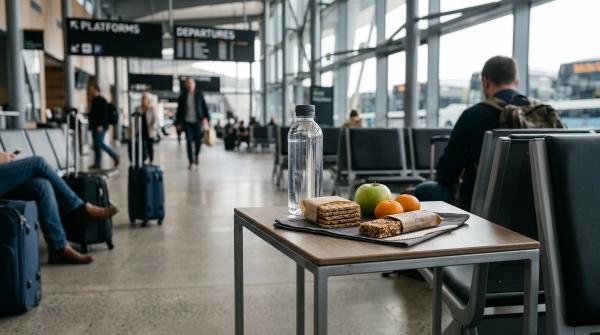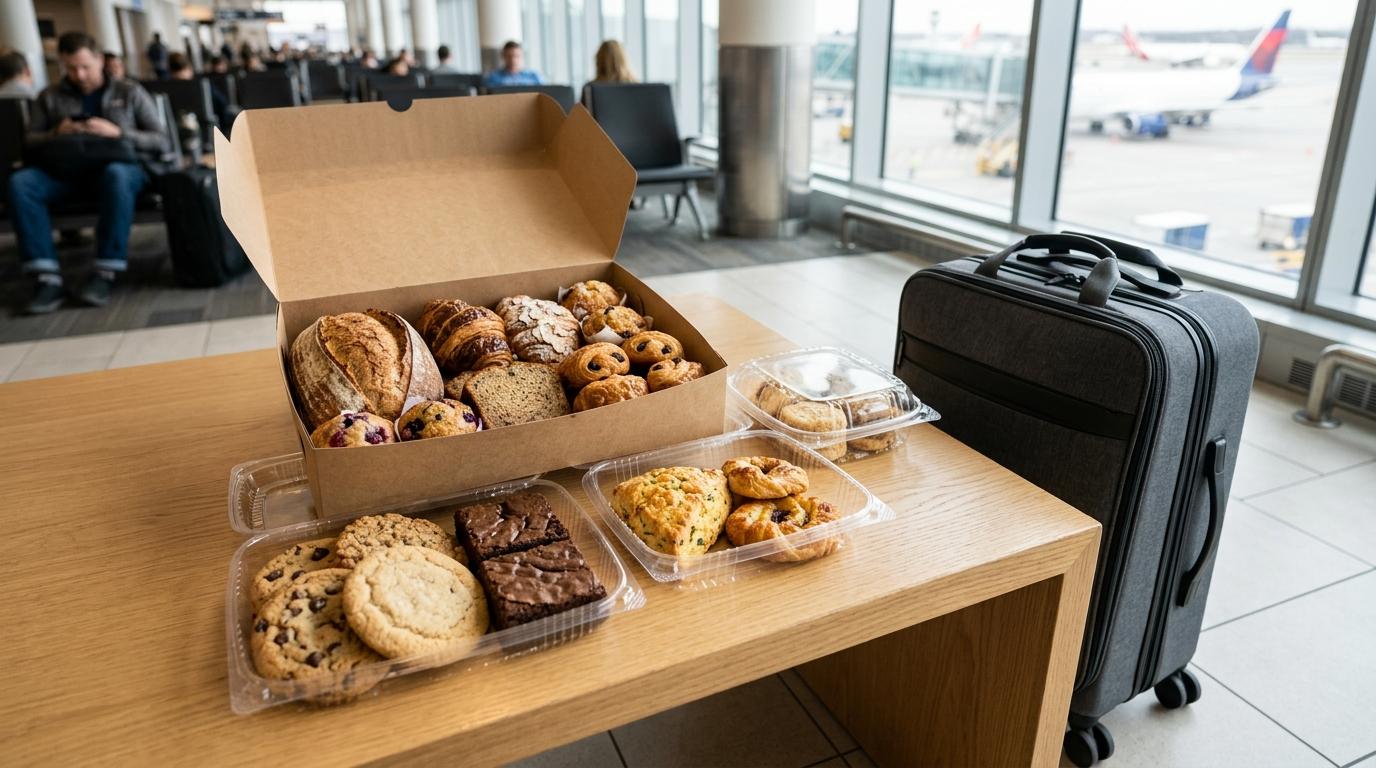
Bringing bakery items on a plane should feel simple. It’s bread. Cookies. A few pastries. Maybe a box of doughnuts you picked up from a bakery you love.
Then airport security enters the chat.
Suddenly you’re wondering about frosting, cream filling, jam, glaze, custard, and whether your beautiful pastry is about to be treated like a suspicious gel.
The short version: most bakery items are totally fine to fly with. Bread, cookies, muffins, croissants, brownies, plain cakes, and many doughnuts are usually allowed in both carry-on and checked bags because they count as solid food.
Where things get trickier is with anything creamy, runny, sticky, wet, soft, or spreadable. Cream, custard, jam, syrup, soft frosting, sauces, and some fillings can make security take a closer look. International travel can add another layer too, because customs rules are separate from airport security rules.
So yes, you can bring baked goods on a plane. You just want to pack the right ones, in the right way.
Quick answer
#Yes, you can usually bring solid bakery items on a plane in both carry-on and checked baggage.
Bread, cookies, muffins, croissants, brownies, plain doughnuts, and dry pastries are generally allowed through airport security. Under TSA-style rules, solid foods like bread are usually fine in carry-on and checked bags. Liquid or gel foods over 3.4 oz / 100 ml are not allowed in carry-on bags.
Bakery items with cream, custard, thick frosting, jam, syrup, soft cheese, sauces, or meat fillings need more thought. They may fall under liquid or gel rules in cabin baggage, and they can also raise food safety or customs issues, especially on international flights.
One important reminder: airport security and customs are not the same thing.
Security decides what can go onto the plane. Customs and agriculture officers decide what can enter another country.
What bakery items are easiest to fly with?
#The easiest baked goods to travel with are dry, solid, and not too fragile.
Good options include:
- Bread loaves, rolls, bagels, and sliced bread
- Cookies
- Brownies and blondies
- Muffins
- Croissants
- Scones
- Plain cakes or sponge cakes
- Plain or lightly glazed doughnuts
- Dry pastries without loose filling
These are the low-drama choices because they do not look like liquids, gels, pastes, or spreads on an X-ray screen.
If you’re wondering, can you bring bread on a plane, the answer is usually yes. Bread is one of the easiest bakery foods to travel with because it is solid, stable, and easy for security officers to recognize.
Cookies are also one of the safest choices. Cookies through airport security are usually no big deal, as long as you are not also carrying a big separate tub of frosting, icing, cream, or dip in your carry-on.
Where bakery items start to get risky
#Bakery foods become more complicated when they contain something soft, wet, spreadable, or perishable.
Be more careful with:
- Cream-filled doughnuts
- Custard tarts
- Éclairs
- Cannoli
- Cream horns
- Cheesecake
- Pastries with loose jam or jelly
- Cakes with thick frosting or filling
- Syrup-soaked sweets
- Meat-filled pastries
- Soft cheese-filled bakery items
A little baked-in fruit or a thin glaze is usually much less concerning than a pastry stuffed with loose custard or jam. But not every filled pastry will be treated the same way, and rules can vary by airport, country, airline, and even the officer doing the screening.
A helpful way to think about it: if your bakery item behaves more like a spread, gel, paste, or liquid than a solid food, it may need to follow the 3.4 oz / 100 ml carry-on liquid rule.
Larger portions are often better in checked baggage, if they are allowed on your route.
For full cakes or heavily frosted desserts, see our guide to taking cake on a plane.
Cabin vs checked baggage packing table
#Use this table as a practical guide, not a guarantee. The final decision can depend on the airport, country, security officer, and how the food is packed.
If you are carrying savory baked snacks or meal-style items, you may also find our guide to airport sandwich security useful.
Can you bring pastries in cabin baggage?
#Yes, pastries in cabin baggage are often allowed, especially when they are dry or only lightly filled.
Croissants, scones, danishes with baked-in filling, small fruit pastries, and similar items are usually easier than anything filled with cream, custard, or jelly. The more your pastry looks and feels like a solid baked good, the smoother the screening process usually is.
The more it behaves like pudding, soft dessert, paste, or gel, the more likely it is to be questioned.
Here’s a simple way to judge it:
- Dry croissant: usually fine
- Almond croissant: usually fine, though it may look dense during screening
- Jam-heavy pastry: use more caution
- Custard-filled pastry: use more caution
- Cream-filled pastry with loose filling: highest risk in cabin baggage
If you really want to bring filled pastries, keep the portions reasonable, pack them where they are easy to inspect, and be prepared for extra screening. If the filling is significant, checked baggage may be easier, as long as food safety and customs rules are not a problem.
Bread, cookies, muffins, croissants, brownies, and doughnuts
#Here’s how common bakery items usually work when flying.
Bread
#Bread is one of the simplest bakery foods to bring on a plane. Loaves, rolls, bagels, buns, and sliced bread are generally considered solid food.
Packing tip: bread gets crushed surprisingly fast in a soft backpack. Use a firm container, a bakery box near the top of your bag, or a reusable food container if you want it to arrive looking decent.
Cookies
#Cookies are usually excellent flight snacks and gifts. They are dry, solid, and easy to pack.
Packing tip: stack cookies in a tin or hard-sided box. If they are decorated, put parchment between layers so the icing does not smear. Avoid bringing a large separate container of frosting, icing, or dip in your carry-on unless it follows liquid rules.
Muffins
#Muffins are usually fine in carry-on or checked baggage. They are solid, but they can crumble or squash easily.
Packing tip: wrap each muffin or place them in a divided container. If they have cream cheese filling or a wet topping, treat them with more caution.
Croissants
#Croissants are usually allowed, but they are delicate. A plain croissant is much easier to travel with than one filled with cream or a soft spread.
Packing tip: do not pack croissants under books, laptops, shoes, or anything heavy. A hard bakery box is worth it.
Brownies
#Brownies are usually fine, especially if they are firm and not covered in wet toppings. Very gooey brownies may get more attention, but they are still commonly carried as solid food.
Packing tip: chill them before packing if you can, then separate pieces with parchment so they do not turn into one sticky brick.
Doughnuts
#Plain, powdered, or lightly glazed doughnuts are usually manageable. Jelly-filled, custard-filled, or cream-filled doughnuts are more questionable in cabin baggage because the filling may be treated like a gel or liquid.
Packing tip: if you are carrying filled doughnuts, keep quantities reasonable and expect that they might be inspected.
Cream-filled bakery items need extra care
#Cream-filled bakery items are the ones most likely to cause problems at the airport.
This includes:
- Cream-filled doughnuts
- Éclairs
- Cannoli
- Custard buns
- Cream horns
- Cream pies
- Soft cheesecake-style desserts
- Pastries with loose dairy fillings
There are two separate issues here.
First, airport security may treat the filling as a liquid, gel, or paste. If the amount is over the carry-on limit, it may not be allowed through the checkpoint.
Second, food safety matters. Cream, custard, dairy, and egg-based fillings spoil faster than dry baked goods. A pastry is not worth getting sick over halfway through your trip.
Food safety timing for dairy, cream, custard, and meat fillings
#Getting food through security is only part of the decision. You also need to think about how long that food will be out of the fridge.
For bakery items with dairy, cream, custard, soft cheese, eggs, or meat fillings, use the standard food safety timing:
- Perishable foods should not sit at room temperature for more than 2 hours.
- If the temperature is above 90°F / 32°C, the safer limit is 1 hour.
- Time in the car, airport line, security queue, gate area, flight cabin, and baggage claim all counts.
This matters for:
- Cream-filled pastries
- Custard tarts
- Cheesecake
- Meat pies
- Sausage rolls
- Soft cheese pastries
- Dairy-heavy sweets
Ice packs can help, but there is a security catch. Under TSA-style screening, frozen ice packs are generally allowed when they are completely frozen solid at the checkpoint. If they are partly melted or slushy, they may be treated as liquids and subject to liquid limits.
If you cannot keep a perishable bakery item safely cold, choose something shelf-stable instead. Cookies, bread, brownies, plain muffins, and dry pastries are much easier on long travel days.
How to pack baked goods for airport security
#Good packing does two things: it protects your food, and it makes screening easier.
1. Use clear or easy-open containers
#A clear container helps officers see what the food is without having to dig through your bag. Dense, dark, or oddly shaped items may still be inspected, but visibility helps.
2. Choose hard-sided boxes for delicate items
#Bakery bags are fine for getting something home from the shop. They are not great inside a packed carry-on.
Use a firm box or container for:
- Croissants
- Doughnuts
- Decorated cookies
- Cupcakes
- Pastries
- Muffins
3. Separate sticky layers
#Use parchment or wax paper between cookies, brownies, pastries, and cake slices. It keeps everything from sticking together and makes the food look neater if security opens the container.
4. Keep wet items separate
#If you are bringing bread plus a spread, keep the spread separate and make sure it follows carry-on liquid rules. If possible, do not soak bread, pastries, or cake in sauce right before travel.
5. Pack food near the top of your carry-on
#If officers need to inspect your bag, you do not want them pulling out half your clothes to reach a box of brownies. Put bakery items near the top, or carry them in a separate tote.
6. Do not overpack fragile gifts
#If the bakery items are gifts, give them some breathing room. Cookies and brownies can handle firmer packing. Croissants, pastries, and doughnuts need more space.
For baked goods, the basic rule is simple: firm container, visible contents, no loose sauces.
Carry-on or checked bag: which is better?
#For most dry bakery items, carry-on is better.
Cabin baggage lets you control temperature, avoid crushing, and keep track of your snacks or gifts. Checked baggage can be rough, and soft baked goods may arrive looking very sad.
Carry-on is usually best for:
- Cookies
- Bread
- Brownies
- Muffins
- Croissants
- Small pastries
- Doughnuts you plan to eat soon
Checked baggage may be better for:
- Larger quantities
- Items with fillings that may exceed carry-on liquid limits
- Bakery gifts packed in sturdy boxes
- Items you do not need during the flight
But checked baggage does not solve everything. Perishable foods can still spoil. International customs can still restrict certain ingredients. Fragile pastries can still break if they are not well protected.
International flights and customs
#Domestic airport security rules are not the same as international customs rules.
You may be allowed to take a bakery item onto the plane, but that does not automatically mean you can bring it into another country. Customs and agriculture rules vary widely, and they can be especially strict with meat, fresh fruit, dairy, seeds, and some homemade foods.
Commercially packaged, fully cooked, dry baked goods are often less complicated than fresh, homemade, meat-filled, or dairy-heavy items. Still, do not guess. Check the destination country’s official customs or agriculture guidance before you fly.
This is especially important if you are carrying:
- Homemade baked goods
- Meat-filled pastries
- Fresh fruit toppings
- Dairy-heavy sweets
- Cream or custard items
- Regional sweets soaked in syrup or containing milk products
For more help, read our guide to homemade food on international flights. If you are carrying mithai or syrupy sweets, see our notes on Indian sweets cabin baggage.
Best bakery items for families and long flights
#If you are packing snacks for kids or a long travel day, choose foods that are tidy, sturdy, and not too sticky.
Good options include:
- Small rolls
- Plain muffins
- Banana bread slices
- Cookies
- Brownie squares
- Mini croissants
- Crackers or dry bakery snacks
Try to avoid anything that leaks, melts, smells strong, or needs a spoon. A cream-filled doughnut sounds great at home. It is less fun when it gets smashed in a backpack at gate 47.
For kids, pack individual portions. It reduces mess, makes sharing easier, and keeps the whole box from being opened again and again.
Final tips before you fly
#Before you leave for the airport, ask yourself:
- Is the bakery item solid, or does it contain lots of cream, jam, syrup, or sauce?
- Does it need refrigeration?
- Will it stay safe to eat for the whole travel time?
- Is it packed well enough to survive security, boarding, and overhead-bin handling?
- If flying internationally, is it allowed by destination customs rules?
If the answer feels uncertain, choose the simpler item. Bread, cookies, brownies, muffins, croissants, and dry pastries are usually much easier than cream-filled, syrup-soaked, or meat-filled bakery foods.
Bakery treats can travel really well. The trick is to keep them solid, visible, protected, and safe to eat.