If you’ve ever prepped mushrooms and ended up with a little pile of stems on the cutting board, you’ve probably paused for a second and thought: am I supposed to use these, or toss them?
You’re definitely not the only one. Some recipes tell you to remove the stems. Some only show neat slices of mushroom caps. Then other recipes have you chop the stems into stuffing, soup, or sauce. No wonder it feels a little unclear.
The simple answer is yes: most mushroom stems are edible, as long as the mushroom itself is edible and fresh. If you’re cooking common grocery store mushrooms like button, cremini, portobello, shiitake, oyster, or mixed mushrooms, the stems are usually safe to eat.
The real question is texture. Some stems are tender and cook just like the caps. Others are tougher, stringy, or woody, which means they’re better chopped small, simmered for broth, or removed before serving.
Here’s how to tell which mushroom stems to keep, which ones to trim, and the best ways to cook them so they actually taste good.
Quick Answer
#Yes, you can eat most stems from edible culinary mushrooms. If you bought fresh mushrooms from the grocery store, such as white button, cremini, portobello, shiitake, oyster, or king oyster mushrooms, the stems are generally edible.
Most of the time, cooks remove mushroom stems because of texture, not because the stems are unsafe. Mushroom caps are usually more tender, while stems can be denser and chewier, especially on larger mushrooms.
A good rule of thumb:
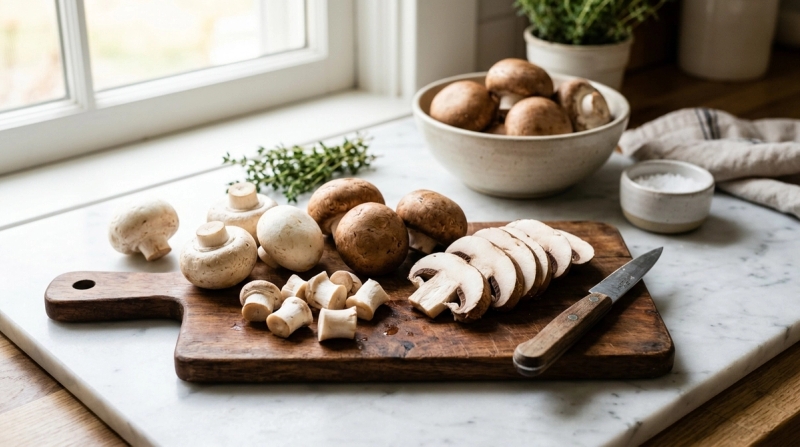
- Tender stems, like button and cremini stems, can be sliced and cooked with the caps.
- Thick stems, like portobello stems, are better minced or saved for stock.
- Very fibrous stems, especially shiitake stems, are best used to flavor broth, then strained out.
- Dry, dirty, slimy, mushy, or spoiled stem ends should be trimmed or thrown away.
One important safety note: this only applies to edible store-bought mushrooms, or mushrooms you are completely sure are edible. Never eat any part of an unknown wild mushroom, including the stem. If you are not 100% sure what it is, don’t taste it, cook it, or save it.
Which Mushroom Stems Are Worth Eating?
#Not every mushroom stem behaves the same way in the kitchen. Some are tender enough to slice right along with the caps. Others have great flavor but aren’t much fun to chew.
Here’s how to handle the most common types.
Button Mushrooms
#White button mushrooms are the easiest. Their stems are mild, tender, and very similar to the caps.
You usually don’t need to remove them. Just trim off the very bottom if it looks dry, dirty, or discolored. After that, slice, quarter, or chop the whole mushroom.
Button mushroom stems work well in:
- Sautés
- Soups
- Omelets
- Pasta sauces
- Stir-fries
- Stuffed mushroom fillings
If the mushrooms are fresh and firm, there’s no real reason to waste the stems.
Cremini Mushrooms
#Cremini mushrooms, also called brown mushrooms or baby bellas, are similar to button mushrooms but have a deeper, earthier flavor. Their stems are edible and usually tender.
For everyday cooking, treat cremini stems the same way you treat the caps. Slice them together for even cooking, or chop them small if you want them to blend into sauces, fillings, rice dishes, or veggie burgers.
Trim only the dry end. If the stem feels firm and smells fresh, keep it.
Portobello Mushrooms
#Portobello mushrooms are larger and more mature, so their stems tend to be thicker and tougher. They’re still edible, but they’re not always pleasant in big pieces.
If you’re grilling, roasting, or stuffing portobello caps, it’s usually best to remove the stems first. Hold the cap in one hand, grab the stem near the base, and gently twist. It should pop loose.
But don’t automatically throw the stem away. Portobello stems have plenty of flavor. They just need a little help with texture.
Try using them:
- Finely minced into stuffing
- Chopped into sauces
- Simmered in vegetable stock
- Added to gravies or soups, then strained if needed
If you’re also wondering about the dark underside of portobellos, this may help: should you remove mushroom gills before cooking?
Shiitake Mushrooms
#Shiitake mushrooms are a little different. The caps are tender and full of savory flavor, but the stems are famously tough. Even after cooking, shiitake stems can stay fibrous and chewy.
So, are shiitake mushroom stems edible? Technically, yes, as long as the shiitake itself is edible. But most people don’t enjoy eating the stems whole.
The best move is to cut or snip the stems off where they meet the cap. Save them for broth, soup base, or sauces. Let them simmer for flavor, then remove and discard the solids before serving.
This is one of the best mushroom stem uses, because shiitake stems can add a deep, earthy flavor without leaving tough little pieces in your finished dish.
Oyster Mushrooms
#Oyster mushrooms grow in clusters, so the stems can vary a bit from bunch to bunch. The delicate upper parts are usually tender enough to eat, while the thick base where the cluster joins can be firmer.
For most oyster mushrooms, trim away the tough base and keep the rest. If some stem pieces feel rubbery or dense, slice them thin or chop them smaller so they cook evenly.
Oyster mushroom stems are great in:
- Stir-fries
- Noodle dishes
- Soups
- Pan-seared mushroom mixes
- Crispy roasted toppings
King Oyster Mushrooms
#King oyster mushrooms are basically the opposite of shiitakes. Their big, thick stems are the main event.
The stem is firm, meaty, and completely edible. Instead of removing it, you usually build the dish around it. Slice it into rounds, score it, roast it, grill it, or pan-sear it until browned.
King oyster stems are especially good when they get golden around the edges. They hold their shape well, soak up seasoning, and have a satisfying bite.
When to Trim or Remove Mushroom Stems
#Just because mushroom stems are edible doesn’t mean every stem should go straight into the pan. Sometimes trimming is about texture. Sometimes it’s about dirt. And sometimes the recipe just works better without the stem attached.
When the Stem End Is Dry or Tough
#Check the very bottom of the stem. The cut end may look dry, darker, or slightly shriveled. That part has been exposed since harvest, so it can be tougher than the rest.
You don’t need to cut off much. Usually a thin slice is enough. Trim the dry end, then use the rest if it’s firm and fresh.
When Dirt Is Stuck to the Base
#Mushrooms often have a little growing medium clinging to the stem base. If it brushes off easily, you don’t need to remove the whole stem.
If the dirt is packed into the bottom, just trim that bit away. It’s usually faster than trying to rinse every speck off, and soaking mushrooms for too long can make them hold extra water.
For more prep help, see: how to clean mushrooms before cooking
When the Recipe Needs a Hollow Cap
#Stuffed mushrooms are the obvious example. You need room for the filling, so the stems have to come out.
But that doesn’t mean the stems are waste. Chop them finely and cook them into the filling. They add flavor, bulk, and moisture, especially with breadcrumbs, herbs, cheese, onions, garlic, or other vegetables.
You may also remove stems when cooking whole mushroom caps so they sit flat in a pan or on the grill.
When the Stem Is Woody or Fibrous
#Some stems are edible, but not exactly enjoyable. Portobello stems can be woody. Shiitake stems are usually too fibrous to serve whole. Older mushrooms can have firmer stems too.
In that case, you can:
- Mince them very finely
- Cook them longer in sauces or fillings
- Save them for broth
- Toss them if they’re unpleasantly tough
The goal isn’t to force every stem into your food. It’s to use the ones that taste good and find smart uses for the ones that still have flavor.
When the Mushroom Shows Signs of Spoilage
#Fresh mushrooms should smell earthy and feel firm. If the caps or stems are slimy, mushy, sour-smelling, moldy, or badly darkened, don’t try to rescue them by trimming off one small spot.
A little dryness on the stem end is normal. Slime, mushiness, and sour smells are different. Those are signs the mushrooms may be past their best.
If you’re not sure, this guide can help: brown spots on mushrooms and spoilage checks
How to Use Saved Mushroom Stems
#Once you stop tossing stems automatically, you’ll realize how useful they are. Some can go straight into the dish. Others are better for background flavor.
Here are a few easy ways to use mushroom stems without making your meal chewy.
Chop Them Into Stuffed Mushroom Filling
#If you’re making stuffed mushrooms, the stems are right there, so use them.
Chop them finely and cook them before adding them to the filling. This works especially well with button, cremini, and portobello stems.
Sauté the chopped stems until they release their moisture and soften. Then mix them with the rest of your filling ingredients. This gives the stuffing more mushroom flavor and keeps the texture from feeling watery.
Mince Them for Sauces
#Finely chopped stems are great in sauces because they almost disappear. They add body and savory flavor without leaving big mushroom chunks behind.
Use minced mushroom stems in:
- Tomato sauce
- Cream sauce
- Gravy
- Lentil or bean sauces
- Pasta fillings
- Rice dishes
For tougher stems, chop them very small. A fine mince helps them soften and blend into the dish.
Save Them for Stock or Broth
#This might be the easiest use for tough stems. Shiitake, portobello, button, and cremini stems can all add depth to broth.
Add clean saved stems to a pot with water and other stock ingredients, then simmer. Once the broth tastes good, strain out the solids.
This is perfect for stems that are too tough to eat but too flavorful to waste. Shiitake stems are the classic example. They’re not fun to chew, but they’re excellent for seasoning liquid.
If you prep mushrooms often, keep a freezer bag for clean mushroom stems and vegetable scraps. Add to it over time, then use the scraps for stock when the bag is full. If you plan to freeze stems, keep them unwashed or make sure they’re very dry first.
Add Them to Soups and Stews
#Tender stems can go straight into soups and stews. Slice them thin so they cook at about the same speed as the caps.
For firmer stems, chop them smaller or add them earlier in the cooking process. If you’re using very tough shiitake stems, treat them like a bay leaf. Simmer them for flavor, then remove them before serving.
Use Them in Burgers, Meatballs, or Patties
#Finely chopped mushrooms can be mixed into burger patties, meatballs, lentil patties, or vegetable fritters. Stems work well here because they’re chopped small and cooked with other ingredients.
For the best texture, cook the chopped stems first to drive off extra moisture. Then mix them into your base.
This is a smart use for button, cremini, and portobello stems. Just avoid leaving tough stems in large pieces, since they can make the finished patty chewy.
Make a Quick Mushroom Hash
#If you have a handful of tender stems, chop them and sauté them with onions, potatoes, greens, or leftover cooked grains. The little pieces brown nicely and add a savory edge.
It’s not fancy, but it’s exactly the kind of everyday cooking where saved stems come in handy.
Roast or Crisp Tender Stems
#Tender stems from button, cremini, or oyster mushrooms can be chopped or shredded, tossed with oil and seasoning, and roasted until browned.
Use them as a topping for:
- Soups
- Toast
- Salads
- Baked potatoes
- Grain bowls
- Scrambled eggs
The smaller the pieces, the crispier they get. Just keep an eye on them, because small mushroom pieces can go from browned to burnt quickly.
How to Cook Mushroom Stems So They Taste Good
#The main trick with mushroom stems is matching the cut to the texture.
Tender stems can be cooked almost any way you cook caps. Tough stems need smaller cuts, longer cooking, or a background job, like flavoring broth.
Slice Tender Stems With the Caps
#For button and cremini mushrooms, slice through the whole mushroom from cap to stem. It keeps prep simple, and everything cooks evenly.
Use medium-high heat and don’t crowd the pan. Mushrooms release moisture as they cook, and giving them space helps them brown instead of steam.
Dice Firmer Stems Small
#Portobello stems and older mushroom stems are better diced or minced. Smaller pieces soften faster and spread their flavor through the dish.
Add them early when you’re sautéing onions, garlic, or other aromatics so they have time to cook down.
Simmer Tough Stems for Flavor
#For shiitake stems and other fibrous pieces, simmering is better than chewing.
Add them to soups, stocks, sauces, or braising liquids. Let them release their flavor, then strain or remove them before serving.
Cook Stems Before Mixing Them Into Fillings
#Raw chopped stems can release water into fillings, which can make stuffed mushrooms, patties, or dumplings soggy. A quick sauté helps remove extra moisture and improves the flavor too.
This is especially helpful for stuffed mushrooms, dumpling fillings, savory pies, and patties.
How to Store Mushroom Stems Safely
#If you remove mushroom stems but don’t plan to use them right away, store them carefully.
Mushrooms don’t love being trapped in wet, airtight plastic for too long. Moisture builds up, and they can turn slimy faster. A paper bag or breathable container in the fridge is usually better for short-term storage.
A few tips:
- Keep stems dry until you’re ready to use them.
- Don’t wash mushrooms before storing unless you dry them very well.
- Use fresh cut stems soon.
- Freeze clean, dry stems if you’re saving them for stock.
- Throw away stems that become slimy, mushy, moldy, or sour-smelling.
Freezing is best for stems you plan to simmer later. Frozen stems won’t have the same fresh texture, but they’re still useful for broth and cooked dishes.
Can You Eat Mushroom Stems Raw?
#People sometimes ask whether mushroom stems can be eaten raw. With common grocery store mushrooms, some people do eat small amounts raw, especially in salads. Still, cooking is usually the better choice.
Cooking improves texture, brings out flavor, and makes tough stems easier to eat. It also helps reduce the risk that comes with eating any raw produce that hasn’t been handled or cleaned properly.
If you want more detail, read: can you eat raw mushrooms?
For stems especially, raw usually isn’t the best option. They’re denser than caps, so they can taste dry, spongy, or chewy unless sliced very thin.
Wild Mushroom Safety
#This part is important.
Don’t use this guide to decide whether a wild mushroom is safe to eat. Edibility is not something you can confirm by looking only at the stem, cap, color, smell, or where the mushroom grew.
Some wild mushrooms are dangerous, and mistakes can be serious. If a mushroom is unknown, don’t taste it. Don’t cook the stem. Don’t assume removing one part makes another part safe.
Use only:
- Store-bought edible mushrooms
- Mushrooms from a trusted food supplier
- Wild mushrooms that have been confidently identified as edible by someone qualified
When in doubt, throw it out.