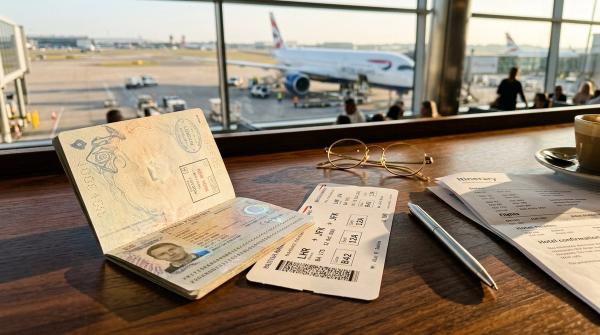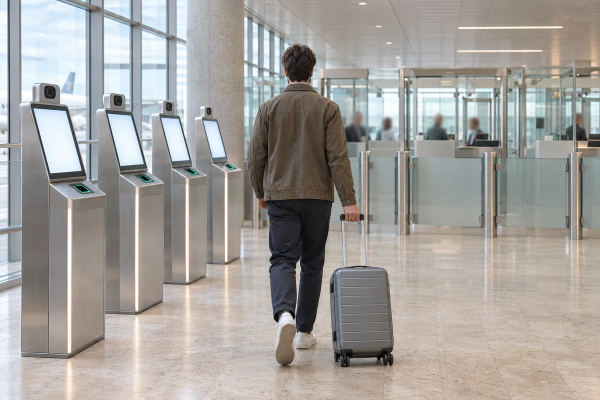
Walking into an airport terminal before a holiday trip and spotting three separate fast-track signs—TSA PreCheck, Global Entry, and CLEAR+—leaves almost everybody guessing which line actually moves faster. Half the crowd buys CLEAR+ thinking it lets them leave laptops inside backpacks. Another half pays $80 for standalone TSA PreCheck only to get stuck in a 75-minute passport-control hall returning from Europe two months later.
Here is the simple decision rule for 2026 and 2027: if you fly outside the United States even once every couple years and qualify, pick Global Entry ($120 for five years) because it already includes full TSA PreCheck privileges plus skips international customs lines. Stick with standalone TSA PreCheck (~$79.75 to $84.95 new enrollment) only when you never cross international borders or don't want to sit through multi-month international vetting (like India GEP delays), and treat CLEAR+ ($219/year since July 2026) strictly as a paid shortcut past the ID podium—not a PreCheck replacement—unless a credit card refunds its annual fee automatically.
Let's map out which airport choke point each program actually fixes, updated 2026 pricing after CLEAR+'s steep fee jump, under-18 child waivers, Enrollment on Arrival shortcuts, India GEP wait reality, credit cards that reimburse the fees, and when the $0 Mobile Passport Control (MPC) app saves you from buying anything at all.
Why People Mix Up ID Lines, Bag Lanes, and Customs Kiosks
#Getting through an airport happens in three totally seperate stages, and each program solves only one specific bottleneck:
- Stage 1 — Document & ID Verification Podium (Where CLEAR+ works): Before getting near any bag X-ray belt, an officer verifies your face and boarding pass. CLEAR+ is a private company scanning your eyes or fingerprints at dedicated pods and escorting you straight to the front of the ID podium queue—and dropping you right before the regular conveyor belts. It does NOT let you keep shoes, laptops, belts, or 3-1-1 liquids inside bags unless you ALSO hold TSA PreCheck!
- Stage 2 — Physical Bag & Body Screening (Where TSA PreCheck works): Once past the ID check, TSA PreCheck gives you a Known Traveler Number (KTN) printing "TSA PRE" on participating airline boarding passes so you step into faster dedicated lanes leaving shoes, light coats, belts, compliant liquids, and laptops safely tucked in your bag while walking through standard metal detectors where available.
- Stage 3 — Returning International Passport Control (Where Global Entry and MPC work): Landing back in the US from Europe, Canada, Asia, or Mexico channels everybody into CBP immigration lines. Global Entry automates entry via rapid facial-recognition kiosks and includes domestic TSA PreCheck—whereas Mobile Passport Control (MPC) gives eligible flyers a dedicated fast customs line through a free phone app without any domestic PreCheck perks.
That confusion between Stage 1 and Stage 2 wastes real money: someone paying $219/year for CLEAR+ alone still stands in line taking boots off and pulling laptops out at the scanner!
Side-by-Side Comparison: TSA PreCheck vs. Global Entry vs. CLEAR+ vs. Free MPC
#Comparing annual cost, what lines disappear, and how kids qualify shows right away where value lives:
| Program Feature | TSA PreCheck | Global Entry | CLEAR+ | Mobile Passport Control |
|---|---|---|---|---|
| Primary Problem Solved | Fast US physical departure security | Fast US international arrivals PLUS PreCheck | Skips airport ID-check podium line only | Fast US international arrivals via app |
| Current Price (2026) | ~$79.75 to $84.95 new; ~$58.75 to $72.95 online renewal | $120 non-refundable fee | $219 per year (raised July 2026) | $0 completely free |
| Membership Length | 5 years | 5 years | 1 year (annual auto-renewal) | No membership (per-trip app use) |
| Includes TSA PreCheck? | Yes | Yes (prints KTN automatically) | No (requires separate PreCheck!) | No |
| Children Under 18 Rule | Kids 12 and under free with member; 13-17 on same PNR | Every child needs own account, YET fee waived under 18 with member parent | Youth under 18 join free through adult lane at airport | Whole traveling family enters one household form |
| Typical Card Credit Match | Up to $120 credit on select travel cards | Up to $120 credit every 4 years on top cards | Select cards like Amex Platinum ($219/yr) only | None needed (free) |
2026 Fee Math and Why Global Entry Quietly Beats Standalone PreCheck
#Run the five-year numbers side by side and the gap looks almost silly. Signing up through TSA's three authorized providers—IDEMIA, Telos, or CLEAR—puts a fresh 5-year TSA PreCheck membership between $79.75 and $84.95 (roughly $16 to $17 per year), while Global Entry runs $120 across those same five years ($24 per year).
Spending just $35 to $40 extra once in five years buys full TSA PreCheck plus fast automated US passport clearance at major arrival hubs and overseas Preclearance terminals! Better yet for traveling households, CBP changed family pricing so kids under 18 pay $0 for Global Entry when a parent or legal guardian holds active Global Entry or applies alongside them—meaning parents no longer drop $100+ per toddler just to walk through the same customs lane together!
Meanwhile, paying out of pocket for CLEAR+ lost most of its math case in mid-2026. CLEAR+ bumped its standard annual membership fee to $219 per year in July 2026—roughly nine times what Global Entry averages per year!
Unless you fly constantly out of famously backed-up ID halls like Denver, Atlanta, Orlando, or New York—or hold a card reimbursing the $219 automatically—paying cash every year rarely pencils out. Note too that TSA's newer CAT-2 facial-recognition ID cameras already speed up regular TSA PreCheck ID checks, shrinking the few minutes CLEAR+ used to save.
Which Credit Cards Actually Pay Your Fee (and the Family Trap)
#Paying your own cash for TSA PreCheck, Global Entry, or CLEAR+ rarely makes sense if you carry a mainstream US travel card—just make sure you don't burn a $120 statement credit on an $80 standalone PreCheck fee when Global Entry costs $120 and covers way more.
Check how three common cards handle statement credits right now:
- American Express Platinum Card: Reimburses Global Entry (up to $120 every 4 years) or TSA PreCheck (every 4.5 years) AND adds up to $219 per calendar year specifically for CLEAR+. That makes it one of the rare single cards covering all three airport shortcuts together, and paid Additional Platinum cards also carry their own Global Entry/PreCheck credits.
- Chase Sapphire Reserve: Credits up to $120 every 4 years toward Global Entry, TSA PreCheck, or NEXUS, zero CLEAR+ credit.
- Capital One Venture X: Credits up to $120 every 4 years toward Global Entry or TSA PreCheck, zero CLEAR+ credit.
Even mid-tier travel cards from Chase, Capital One, Bank of America, United, Delta, and US Bank regularly throw in that $120 credit once every four to five years.
Before typing in your card digits, watch out for two super common traps:
- Skip sketchy third-party "application concierge" sites: Dozens of lookalike checkout pages sit high in Google results charging $199 to submit forms you can fill yourself in ten minutes. Your card's fee credit triggers strictly when billed directly by the official U.S. government Trusted Traveler portal or an authorized TSA PreCheck enrollment partner—third-party middlemen waste your money AND skip the card credit.
- Check whether authorized users actually get separate credits: Free additional cardholders rarely receive duplicate $120 credits (for instance, Venture X authorized users do not carry separate fee credits, though under-18 kids applying for Global Entry pay $0 anyway once tied properly to an enrolled parent).
How to Skip Long Global Entry Interview Waits (Enrollment on Arrival)
#One huge reason people hesitate on Global Entry isn't the $120 fee—it's seeing zero local airport interview openings for four months straight on the booking calendar! Fortunately, CBP gives conditionally approved travelers an easy workaround called Enrollment on Arrival (EoA) that skips appointment hunting altogether.
Once your online application moves from "Pending Review" to Conditional Approval, follow this simple workflow:
- Skip hunting for cramped local appointment slots if you already have an international trip booked: Instead of refreshing the scheduler at midnight trying to snag a Tuesday appointment three towns away, just fly your upcoming international itinerary as planned.
- Follow "Enrollment on Arrival" signs right after landing back in the US (or at participating Preclearance hubs): Every major US international gateway sets up dedicated CBP EoA booths directly inside the passport-control area. Let the customs officer know you are conditionally approved, hand over your passport (and secondary ID/proof of residency if requested), scan fingerprints and photo on the spot, and walk out fully approved—often in ten extra minutes!
- Wait on booking flights strictly around NEXUS unless crossing into Canada: If you regularly drive or fly between the US and Canada and both US citizens/permanent residents or Canadian citizens/PRs apply, NEXUS ($120) quietly works across both borders and includes full Global Entry kiosks plus TSA PreCheck too—though in-person joint US/Canada interview centers remain concentrated near northern border crossings.
Just remember one practical rule before packing: Enrollment on Arrival only activates on international arrivals (or Preclearance airports like Toronto, Dublin, or Abu Dhabi)—not domestic flights. Until that quick interview finishes and your Known Traveler Number goes live, don't expect "TSA PRE" to show up on boarding passes.
Indian Citizens, Visa Holders, and International Flyers: Real Approval Wait Times
#Before paying $120 non-refundable expecting Global Entry to work on next month's flight, verify eligibility and real-world country wait times honestly:
- Who qualifies for TSA PreCheck vs Global Entry: TSA PreCheck mainly covers US citizens, US nationals, and lawful permanent residents (green card holders). Global Entry opens doors to US citizens, green card holders, plus passport holders from approved partner countries including the United Kingdom, Germany, Switzerland, Singapore, India, Colombia, South Korea, and others.
- The Indian Citizen GEP Reality Check: Indian passport holders flying frequently to the US (business travelers, H-1B/L-1 visa holders, or parents visiting US family) can enroll in Global Entry—yet unlike domestic US residents who often receive conditional approval inside a few weeks, Indian citizens must clear dual vetting across both US CBP and Indian authorities through Passport Seva and VFS Global police verification. Realistically, that two-country check routinely takes 6 months to 2 years! Submit early for future trips rather than paying right before a single vacation expecting fast approval.
- Keep flight profiles and local airport biometrics separate: Double-check your airline profile stores exact passport spelling whenever booking separate international tickets—our self-transfer flight and immigration layover guide covers tight international connections, and our DigiYatra airport biometric troubleshooting guide helps when returning into Indian domestic terminals (where DigiYatra runs totally separately from US Trusted Traveler passes).
Also check one rule at online check-in: your Known Traveler Number doesn't link itself automatically to your face—you have to type your 9-digit KTN (PASSID for Global Entry) into each airline reservation beforehand so "TSA PRE" actually prints on your boarding pass! Walk up without it printed on your ticket and TSA officers send you straight to the normal bag belt regardless of what plastic card sits in your wallet.
When You Should Skip Paid Programs and Use Free MPC Instead
#What if you hate government paperwork, fly outside the country only once a year, or got stuck waiting ten months in vetting? Check whether you qualify for Mobile Passport Control (MPC) before spending a dollar!
Run completely free by U.S. Customs and Border Protection, the MPC app serves US citizens, US permanent residents, Canadian B1/B2 visitors, and returning Visa Waiver Program (ESTA) travelers landing at dozens of major US entry hubs and Preclearance gates.
Using it takes about a minute when you touch down:
- Open the free CBP MPC app once your plane parks at the gate, pick stored passport profiles for your family group together, answer short customs questions, take a quick selfie, and generate a digital receipt.
- Walk straight down the purple-and-white Mobile Passport Control lane inside immigration—moving almost alongside Global Entry lines for $0 fee, zero appointments, and zero waiting months for background vetting!
Remember two limits before skipping Global Entry completely: typical non-ESTA B1/B2 tourist visa holders (for example, Indian passport holders on standard visitor visas) usually cannot use the universal US/Canadian/ESTA MPC bucket, and MPC does nothing for departing domestic security lines.
To wrap up your decision before booking the next trip: check whether one of your travel credit cards already hides an unused $120 reimbursement first. Pick Global Entry if eligible and you fly internationally occasionally (especially with free under-18 kids and EoA convenience), grab standalone TSA PreCheck if you stick strictly to US domestic trips or dont want long international vetting waits, and lean on free MPC at customs whenever eligible.
And defintely skip spending $219/year cash on CLEAR+ unless a credit card refunds it automatically. Before locking hotel nights or non-refundable tickets outside the airport, check our refundable hotel vs travel insurance checklist so schedule hiccups outside security never cost extra either.