You know the kind of travel night I mean.
Your flight lands late. The hostel kitchen is already closed. The hotel restaurant stopped serving an hour ago. You have been driving forever, your phone battery is low, and the only place still glowing at the exit is a convenience store.
At that point, a convenience store dinner can feel weirdly comforting. There is cold water, hot coffee, a microwave, maybe a sad but useful sandwich case, maybe hot food under lamps, maybe enough snacks to build something that almost feels like a meal.
It is not glamorous. But it can absolutely work.
The goal is not to buy the most food possible because you are tired and starving. The goal is to buy something that is safe, filling, easy to eat, and not going to become tomorrow morning’s questionable leftover on a hotel desk.
Here is how to make a decent convenience store dinner while traveling: what to buy, what to skip, what to eat now, and what is actually safe to save for later.
Quick Answer Summary
#If you are standing in the aisle right now, hungry and half-awake, here is the short version:
- Start with protein. Look for sealed refrigerated options like yogurt, hard-boiled eggs, cheese packs, hummus cups, sandwiches, or wraps. Shelf-stable options like nuts, jerky, and protein bars also help.
- Trust temperature more than vibes. Hot food should be properly hot. Cold food should feel properly cold. Lukewarm food is a no.
- Check the use-by date. Especially on sandwiches, salads, sushi, dairy, cut fruit, and ready meals.
- Do not save perishable leftovers without a fridge. A backpack, car seat, hostel locker, or hotel desk does not count as cold storage.
- Remember the 2-hour rule. Perishable food should not sit at room temperature for more than two hours, or more than one hour if it is very hot outside.
- Save shelf-stable foods for later. Water, crackers, whole fruit, nuts, jerky, and sealed bars are much better travel backups than half a sandwich.
- Reheat ready meals properly. Follow the package instructions and make sure the food is steaming hot all the way through.
The basic idea is simple: choose food that has been kept hot or cold properly, prefer sealed packaged items when you are unsure, and skip anything that looks neglected, damaged, or mishandled.
The Buy, Skip, and Save Decision Table
#Convenience stores are designed for quick decisions, which is exactly why it helps to pause for a few seconds before grabbing dinner.
How to Build a Filling Convenience Store Dinner
#A convenience store dinner does not need to be perfect. It just needs a little structure.
Otherwise, it is very easy to walk out with chips, candy, a soda, and the feeling that you somehow ate dinner but are still hungry.
Try to build your meal around three things:
- Protein: yogurt, eggs, cheese, hummus, deli sandwich, nuts, jerky, tofu, beans, or a ready meal with a decent protein source.
- Fiber or steady carbs: whole fruit, whole-grain crackers, oats, salad, rice bowl, wrap, vegetables, or beans.
- Hydration: bottled water, sparkling water, unsweetened tea, or something that helps you rehydrate without ruining your sleep.
Easy combinations:
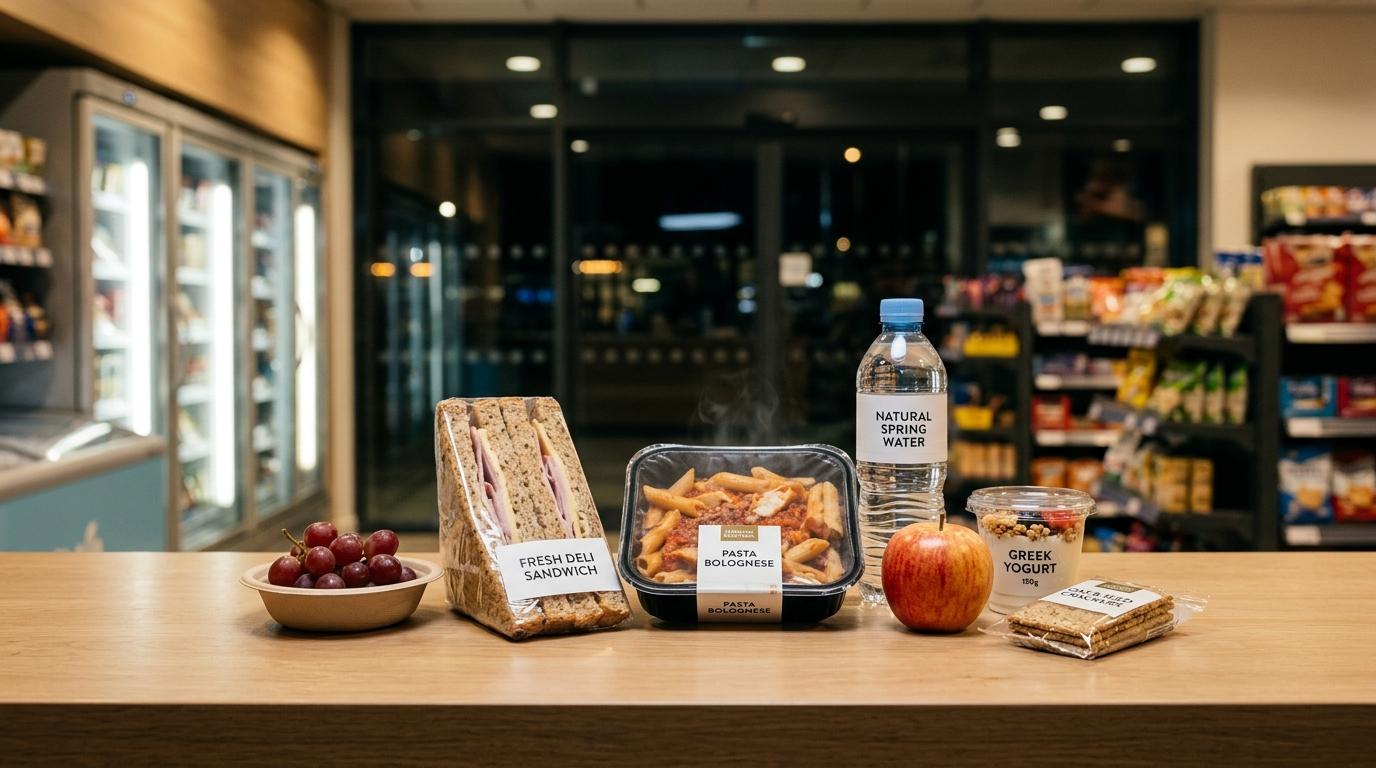
- Greek yogurt, banana, nuts, and water.
- Hummus cup, pretzels or crackers, whole fruit, and sparkling water.
- Sealed turkey or veggie sandwich, side salad, and bottled water.
- Properly heated ready meal with a piece of fruit.
- Jerky, whole-grain crackers, apple, and water.
- Hard-boiled eggs, cheese pack, crackers, and unsweetened tea.
If it is very late, you probably do not need a huge meal. Sometimes the best travel dinner is just enough food to settle your stomach so you can sleep.
Hot Case vs. Cold Case Dinner Choices
#Most convenience store dinner choices come from one of two places: the hot case or the cold case.
Both can be fine. Both can also be questionable.
The key is temperature.
Hot Case: Good When It Is Actually Hot
#Hot cases usually have pizza slices, hot dogs, fried foods, breakfast sandwiches, meat pastries, and other warmed items.
The important question is not “Does this look good?”
It is: Is this actually being kept hot?
Hot foods should generally be held at 140°F or above. You probably are not carrying a food thermometer while traveling, so use common sense.
Look for:
- Food that looks hot or is visibly steaming.
- Warming equipment that is clearly on and working.
- Items that look recently stocked.
- Food that is not dried out, shriveled, or forgotten-looking.
- Staff using tongs, gloves, or proper serving tools.
Skip it if:
- The food feels lukewarm.
- The warmer looks barely on.
- The item looks old, dry, or tired.
- Food is uncovered or handled carelessly.
- You are not going to eat it soon.
Hot-case food can be totally fine when it is truly hot and you eat it right away. But if you are unsure, the cold case or shelf-stable aisle is usually a better bet.
Cold Case: Often the Better Travel Option
#Cold cases usually have sandwiches, wraps, salads, yogurt, cut fruit, sushi, cheese packs, hard-boiled eggs, hummus, and chilled ready meals.
Cold foods should generally be kept at 40°F or below. Again, you probably will not know the exact temperature, but you can still do a quick check.
Before buying, look at three things:
- Temperature: The package should feel cold, not barely cool.
- Date: Check the use-by date and do not stretch it while traveling.
- Packaging: Avoid torn wrapping, loose lids, leaks, swollen packages, or anything that looks opened.
The cold case is often where you find the most “real meal” options in a convenience store. Just remember: once you buy something perishable, the clock starts.
Eat it soon or refrigerate it properly.
Ready-Meal Reheating and Use-By Cautions
#Many convenience stores now sell chilled ready meals: pasta bowls, rice dishes, curries, soups, noodles, burrito bowls, and microwave dinners.
These can be a lifesaver in a hotel room without a kitchen, but they need to be handled properly.
Before buying a ready meal:
- Make sure it came from a refrigerated case unless the package clearly says it is shelf-stable.
- Check the use-by date.
- Avoid damaged, leaking, swollen, or poorly sealed packaging.
- Read the heating instructions before you leave the store.
- Be realistic about whether you can heat and eat it soon.
When reheating:
- Follow the package directions.
- Vent the lid if instructed.
- Stir halfway through if possible.
- Rotate the container if the microwave does not rotate well.
- Let the food stand briefly after heating.
- Make sure the whole meal is steaming hot before eating.
Microwaves heat unevenly. One bite can be lava-hot while another is barely warm. For reheated foods, 165°F is commonly used as a safer internal temperature target. If you do not have a thermometer, use the practical travel test: the entire meal should be steaming hot, not just warm at the edges.
If you are using a hotel microwave, you may also find this useful: Hotel Microwave Meals While Traveling: Safe Reheating Guide.
The No-Fridge Hotel or Hostel Room Rule
#This is the travel mistake almost everyone makes at least once.
You buy a big sandwich, eat half, wrap the rest, and leave it on the desk for breakfast. Or you tuck a yogurt into your backpack. Or you save leftover rice beside the bed because checkout is early.
Please do not do this.
A hotel room is not a fridge. A hostel locker is not a fridge. A windowsill is not reliable cold storage, even if the air outside feels cold. A car overnight is not reliable either.
Perishable foods include:
- Meat and poultry.
- Fish and sushi.
- Dairy, including yogurt, cheese, and milk drinks.
- Eggs.
- Cut fruit.
- Cooked rice, pasta, and vegetables.
- Deli sandwiches and wraps.
- Creamy dips and mayo-based salads.
The basic rule is: do not leave perishable food at room temperature for more than two hours, or more than one hour if it is very hot, around 90°F or above.
If you do not have a working mini-fridge, buy smaller portions. It is better to buy one meal you can finish than to buy the “better value” size and end up with unsafe leftovers.
And if your room does have a mini-fridge, check that it is actually cold before trusting it. Some hotel fridges are turned off, barely cool, or packed so tightly that food does not chill properly.
For more on this, see: Hotel Room Food Safety Without a Fridge: Keep or Toss.
What to Buy for Different Travel Situations
#Late Arrival at a Hotel
#Keep it simple. You are tired, and this is not the time for a complicated meal.
Good options:
- Refrigerated sandwich or wrap, if cold and sealed.
- Yogurt with nuts and fruit.
- Hummus cup with crackers.
- Ready meal you can heat immediately.
- Bottled water.
Do not buy too much. If you are exhausted, there is a real chance you will fall asleep before storing anything properly.
Airport Layover
#Go for sealed items that travel well.
Good options:
- Nuts or trail mix.
- Protein bar.
- Whole fruit.
- Jerky.
- Bottled water after security, where applicable.
- Sealed sandwich if you will eat it soon.
Be careful with refrigerated foods if you still have hours before eating. A cold sandwich does not stay safe forever just because it started in a chilled case.
Road Trip Dinner Stop
#Think about what you will eat now and what is actually safe to keep for later.
Eat now:
- Hot food, only if it is truly hot.
- Cold sandwich, only if it is truly cold.
- Ready meal, if you can heat and eat it immediately.
Save for later:
- Water.
- Crackers.
- Nuts.
- Whole fruit.
- Jerky.
- Shelf-stable bars.
Do not keep perishable leftovers in the car for later. Car temperatures can change quickly, even at night.
Hostel Stay Without a Kitchen
#Choose foods that do not need much prep, many utensils, or reliable storage.
Good options:
- Single-serve hummus or cheese pack, eaten right away.
- Yogurt, eaten right away.
- Whole fruit.
- Crackers.
- Nuts.
- Sealed ready-to-eat meal if you can eat it immediately.
If there is a shared hostel fridge, use your judgment. If it is packed, dirty, too warm, or unreliable, buy less and eat it right away.
Hydration and Light Late-Night Meal Tips
#Travel can dehydrate you before you realize it. Flights, long drives, salty snacks, caffeine, alcohol, and weird schedules can make late-night hunger feel more intense than it really is.
A calmer plan:
- Buy water first.
- Choose something satisfying but not huge.
- Keep caffeine modest if you need sleep.
- Do not let dinner turn into a candy-and-soda emergency.
- If your stomach feels off, keep the meal bland and simple.
Good light late-night combinations:
- Banana, crackers, yogurt, and water.
- Hard-boiled eggs, fruit, and sparkling water.
- Hummus, pretzels, and unsweetened tea.
- Nuts, apple, and plain water.
- Soup or a ready meal heated thoroughly, if you can eat it right away.
If you are truly hungry, eat a real meal. But if you are mostly tired, stressed, and thirsty, start with water and a smaller protein-based snack. Then see how you feel.
Common Convenience Store Dinner Mistakes to Avoid
#Mistake 1: Buying Only Snacks
#Chips, candy, and sweet drinks are easy to grab, but they usually do not make a satisfying dinner.
Add protein and something with fiber. Even a yogurt, apple, and nuts will feel more like a meal than a bag of chips and a soda.
Mistake 2: Trusting Food That Is Neither Hot Nor Cold
#Lukewarm is the danger zone.
If food is supposed to be hot, it should be hot. If it is supposed to be cold, it should feel cold. If it is somewhere in the middle, skip it.
Mistake 3: Saving Leftovers Without Refrigeration
#This is the big one.
If it has meat, dairy, eggs, cooked grains, cut fruit, or creamy sauce, do not leave it out for tomorrow. Without reliable refrigeration, it is an eat-now-or-toss situation.
Mistake 4: Ignoring the Use-By Date
#At home, some people take chances. On the road, it is just not worth it.
You do not want food poisoning when you have a flight, bus ride, long drive, meeting, tour, or shared bathroom situation ahead of you.
Mistake 5: Overbuying Because You Are Tired
#Travel hunger can make everything look necessary.
A good rule: buy one dinner and one safe backup snack for later. That is usually enough.
Is convenience store sushi safe while traveling?
#It depends on how it has been stored and how soon you will eat it.
Sushi should be cold, sealed, and within its use-by date. If it contains raw fish and you are not confident about the cold case temperature, choose something else. Cooked or vegetarian sushi may feel safer, but it still needs proper refrigeration and should not be left out.
Can I save half my convenience store sandwich for tomorrow?
#Only if you have reliable refrigeration and store it promptly.
If you do not have a working mini-fridge, do not save it. Deli meat, cheese, eggs, cut vegetables, and creamy condiments are perishable. If the sandwich has been sitting out for more than two hours, toss it.
What is the safest late-night convenience store meal for a sensitive stomach?
#Keep it simple.
Plain crackers, a banana, applesauce, bottled water, and maybe yogurt if it is sealed and properly cold can be easier than greasy hot-case food or spicy snacks. If your stomach already feels unsettled, skip anything heavy, creamy, or questionable.
Are packaged hard-boiled eggs a good travel dinner choice?
#They can be.
Choose eggs that are commercially packaged, sealed, within date, and kept cold. They are a convenient protein option, but treat them like any other refrigerated food. Eat them soon and do not save opened eggs without proper refrigeration.
What should I keep in my bag for later?
#Choose shelf-stable foods:
- Bottled water.
- Crackers.
- Nuts.
- Trail mix.
- Sealed protein bars.
- Jerky.
- Peanut butter packets.
- Whole uncut fruit.
These are much better travel backups than leftover sandwiches, dairy, cut fruit, or ready meals that need refrigeration.
Final Takeaway
#A convenience store dinner while traveling does not have to be a disaster. It just needs a little common sense.
Start with protein. Buy water. Keep hot foods hot and cold foods cold. Eat perishables soon. Save only shelf-stable foods for later. Skip anything lukewarm, expired, damaged, or uncertain.
That is the easiest way to turn a tired late-night convenience store stop into a meal that actually gets you through the next part of the trip.