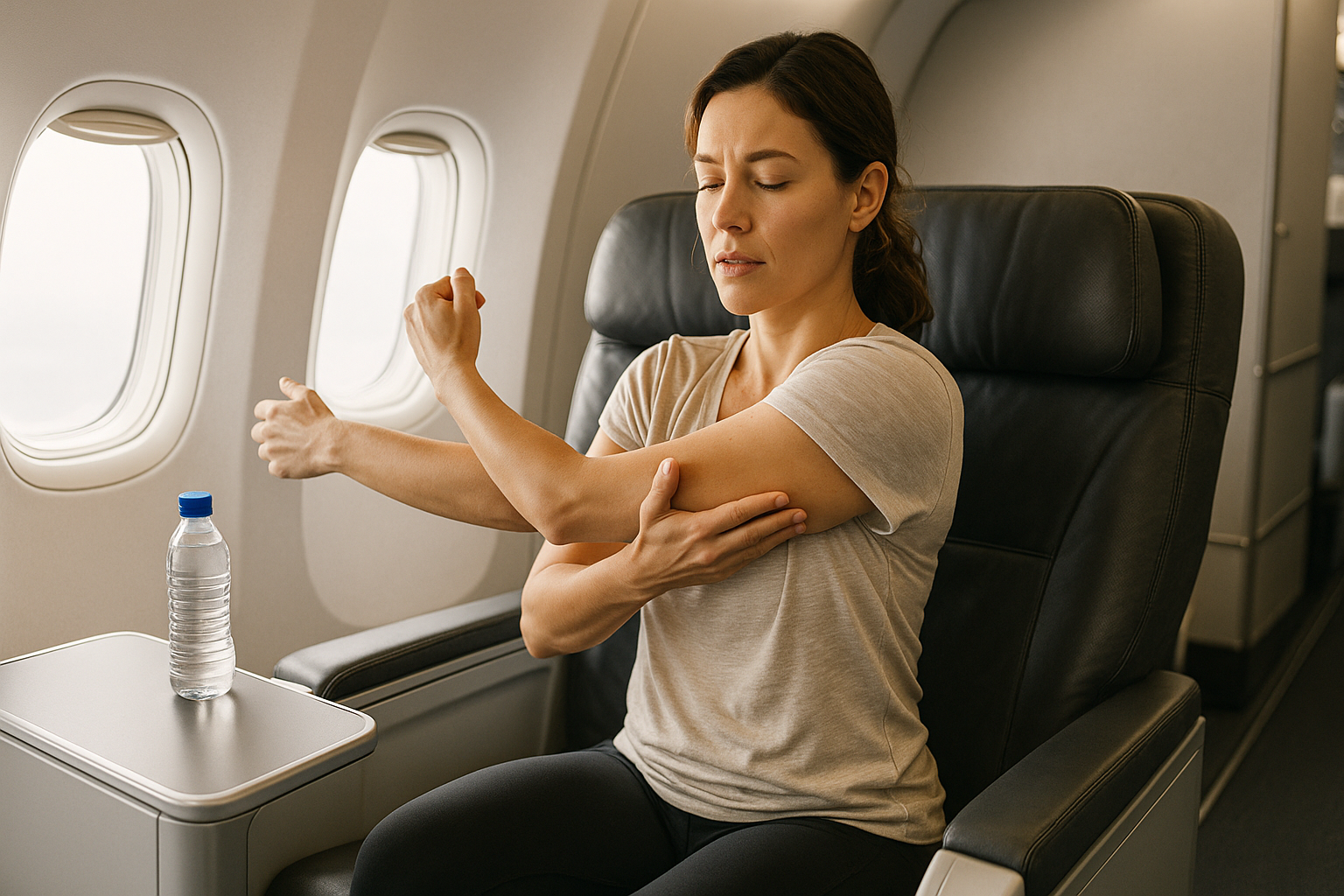
I used to think flight bloating was just one of those annoying travel things you had to put up with, like dry airplane chicken or that weird moment when everyone pretends they’re not fighting over the armrest. But after a couple long-haul trips where I landed feeling like my leggings had turned into a punishment device, I started paying attention. And honestly... there are reasons this happens, and there are ways to make it a lot less awful. Not perfect, maybe, but better. Way better.
Quick note before I ramble too far: I’m not a doctor, just someone who’s very into wellness, digestion, hydration, all that stuff, and who has spent a pretty silly amount of time reading about gut health before flights. If you have severe pain, vomiting, blood in stool, major swelling, or ongoing bloating that doesn’t go away, pls talk to an actual medical professional because that’s not just “travel bloat.”
Why flying makes your stomach act weird in the first place
#The biggest thing a lot of people don’t realize is that gas expands at altitude. Cabin pressure in commercial planes is lower than what you experience on the ground, even though the cabin is pressurized. So any gas already hanging out in your digestive tract can expand, which means more pressure, more fullness, and that classic “why do I feel six months pregnant after one bread roll?” feeling. It’s not in your head. It’s physics mixed with digestion, which is kind of rude if you ask me.
Then you add the other flight stuff: you’re sitting forever, maybe a little constipated, maybe dehydrated from dry cabin air, maybe eating airport food that’s way saltier or greasier than normal, maybe drinking sparkling water because it feels healthy even though bubbles plus altitude is... not always your friend. Stress matters too. A nervous system that’s on high alert can slow or disrupt digestion. So if you’re an anxious flyer, yeah, that can totally show up in your belly.
For me, the worst combo is salty airport food, zero walking, and thinking Diet Coke counts as hydration. It does not. I mean, you can do it, but your stomach may file a formal complaint.
The pre-flight stuff actually matters more than what happens on the plane
#This was the part I got wrong for years. I’d try to “be good” on the flight itself, but the day before? Chaos. Big restaurant meal, dessert, maybe a cocktail, not enough water, running around to pack, barely sleeping. Then I’d board already bloated and somehow be shocked when things got worse. I remember one overnight flight to Tokyo where me and my friend basically treated the airport like a food court crawl. Fun at the time. Not fun at hour 9.
What helps me now is keeping the 24 hours before departure pretty boring, food-wise. Not sad, just simple. I do better with meals that are moderate in salt and not super heavy, and I try not to overload on foods that are more likely to ferment in the gut. This is where current gut-health advice in 2026 has gotten a bit more practical, thankfully. Instead of demonizing everything, a lot of dietitians now talk about reducing your personal trigger foods before travel rather than doing some extreme cleanse. For some people that means cutting back on beans, onions, garlic, large amounts of dairy, sugar alcohols, or giant salads right before a flight. For me it’s big salads, protein bars, and carbonated drinks. Healthy in theory, catastrophe in seat 34A.
My basic 24-hour anti-bloat routine before a long-haul flight
#- I drink water consistently, not all at once like a maniac at the gate
- I keep fiber normal, not super high. This is important because suddenly loading up on bran to “be healthy” can backfire
- I avoid fizzy drinks, chewing gum, and chugging through a straw because swallowing extra air is a real thing
- I go easier on very salty takeout and those giant airport sandwiches that taste good but make me puff up
- I try to get one decent walk in the day before travel, even if it’s just 20 or 30 minutes
- If I know I get constipated while traveling, I don’t ignore it and hope for the best anymore
Let’s talk about hydration, because everyone says it and still somehow we all mess it up
#Cabin air is super dry, and even mild dehydration can make constipation and bloating worse. That part isn’t trendy wellness fluff, it’s basic physiology. The newer travel wellness trend I actually agree with in 2026 is “steady hydration” instead of electrolyte overload. Electrolytes can be useful, especially if you’re traveling in heat, sweating a lot, or tend to get headaches, but some mixes are loaded with sodium or sugar alcohols that can make sensitive stomachs more cranky. So read the packet, don’t just trust the influencer with glowing skin and a discount code.
My rule now is simple: water regularly before and during the flight, and maybe one balanced electrolyte drink if it’s a really long trip or I’m feeling off. I also try not to overdo alcohol. I know, boring. But alcohol plus poor sleep plus dehydration equals puffy face, sluggish gut, and regret. Coffee is a weird one. Sometimes a little helps me stay regular, sometimes it just makes me anxious and gassy. Very annoying. Your body may vary.
What to eat before and during the flight so you don’t feel like a balloon
#The best pre-flight meal for me is something simple with protein, easy carbs, and not too much fat. Think rice and salmon, eggs and toast, oatmeal with banana and peanut butter if that sits well for you, or a chicken and rice bowl without ten mystery sauces. I used to think raw veggies were the smartest choice because, you know, wellness. But a giant cruciferous veggie bowl before a 12-hour flight? That was me being optimistic to the point of stupidity.
On the plane, I try to eat lightly but not skip food completely. Going too long without eating can leave me ravenous and then I inhale the bread, dessert, snack box, and whatever random thing I packed. Small, digestible meals seem to work better. Also, this is just my opinion but airplane meals are often so salty it’s almost comical. If I have a choice, I’ll prioritize the plainest parts of the tray and leave the stuff that usually wrecks me.
- Choose meals that are familiar, not the time to experiment with five kinds of airport cheese
- Watch out for sugar alcohols in “healthy” bars and gum, since they can trigger gas and bloating fast
- Go easy on beans, large dairy portions, onions, garlic-heavy meals, and fizzy drinks if those are your triggers
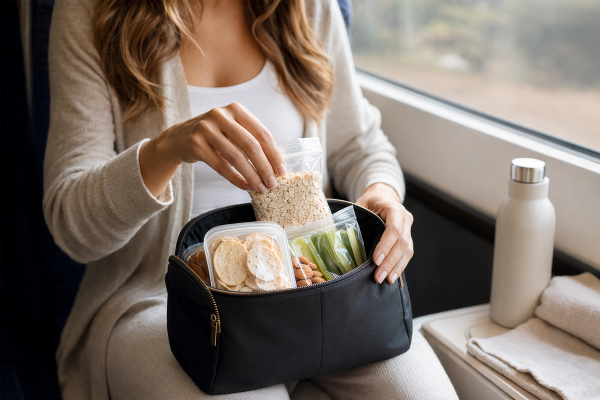
- Pack your own snacks if you can. Rice cakes, crackers, bananas, oats, nuts in moderate amounts, simple sandwiches... all less dramatic than terminal fast food
Movement is boring advice, but yeah, it works
#I hate how effective this is because I really do just want to curl up with a blanket and disappear for the flight. But when I get up every couple of hours, walk the aisle, roll my ankles, and twist a little in my seat, my stomach feels better. My legs do too, obviously. Sitting still for ages can slow things down, and for some people it contributes to constipation and that gross heavy feeling.
There’s also the bigger health reason to move on long flights: circulation. Travel medicine advice still recommends regular movement to reduce the risk of blood clots, especially on long-haul trips. That’s separate from bloating, but kind of connected because your whole body feels less swollen and stagnant when you move. I do easy seated knee lifts, calf raises, and slow belly breathing, which sounds a bit woo-woo but honestly helps me more than some supplements I’ve wasted money on.
The gut-health trends I’m side-eyeing a little... and the ones I think are actually useful
#Okay so, 2026 wellness internet is still wellness internet. There’s always some new hack. Right now there’s loads of talk about “microbiome travel stacks,” debloat teas, chlorophyll drops, digestive gummies, and probiotic cocktails at airports. Some of it is harmless, some of it is overhyped, and some of it can make things worse if your gut is sensitive. I’ve learned to be suspicious of anything promising a flat stomach by tomorrow morning. Bodies don’t really work like that, despite what TikTok keeps insisting.
What does seem more grounded in actual evidence is this: routine matters, hydration matters, stress management matters, and probiotics may help some people depending on the strain and the symptom pattern, but they are not a magic fix. Current digestive health guidance generally supports probiotics more for certain cases like antibiotic-associated issues or some IBS symptoms, not as a guaranteed anti-bloat cure for everyone. Same with magnesium. Helpful for some constipation-prone travelers, yes. Something to randomly take in huge doses before boarding? Uh, no. Please don’t discover your supplement tolerance at 35,000 feet.
Things I’ve personally found useful vs. things that sounded cool on social media
#- Useful: walking before boarding, water, simple food, getting enough sleep the night before if humanly possible
- Sometimes useful: peppermint tea, ginger, a probiotic I had already tested at home, gentle magnesium only if I know it agrees with me
- Not useful for me: sparkling “digestive” drinks, detox teas, very high-fiber snack bars, chewing gum for hours
- Absolutely not before a flight: trying a new supplement because a wellness girl with abs said it changed her life lol
If you’re anxious when you fly, your stomach probably knows
#This part gets overlooked. The gut-brain connection is real, and if I’m stressed, rushing, overstimulated, or white-knuckling takeoff, my digestion gets weird. I swallow more air, my stomach tightens up, and I either feel nauseous or bloated or somehow both. A lot of more current wellness coverage has finally started talking about nervous-system regulation without making it sound mystical, which I appreciate. Sometimes “debloating” is less about a miracle food and more about getting your body out of panic mode.
What helps me is embarrassingly simple. I put my phone down for five minutes. I do longer exhales than inhales. I loosen my waistband. I stop trying to be productive for one second. If you’re into meditation apps, great. If not, just breathing slowly and unclenching your jaw can help. Seriously. Not glamorous, but neither is bloating.
When bloating on a flight might be more than normal travel discomfort
#Most flight bloating is temporary and settles once you’re moving normally, hydrating, and eating your usual foods again. But if you get severe abdominal pain, persistent vomiting, a hard swollen belly that won’t ease up, fever, chest pain, trouble breathing, one-sided leg swelling, or constipation lasting a long time with significant pain, don’t just brush it off as “plane belly.” Also if bloating is frequent even when you’re not traveling, it could be worth asking about IBS, food intolerances, celiac disease, reflux, constipation, or other digestive issues. I ignored recurring symptoms for way too long because I thought I was just sensitive. Turns out I needed an actual plan, not just ginger candies.
My realistic long-haul game plan now
#So these days, before a long-haul trip, I keep meals simple, drink water steadily, and avoid the foods I already know are likely to blow me up. At the airport I usually get something plain-ish, not too salty, not too huge. On board I skip fizzy drinks, move every couple hours, and don’t wear jeans that require optimism. Compression socks sometimes help me feel less puffy overall too, even though that’s more about legs than digestion. And when I land, I walk as soon as I can, eat a normal meal, and get back to a routine instead of treating the whole travel day like nutritional anarchy.
Is this a perfect system? Nope. I still bloat sometimes, especially on overnight flights or when my sleep is trash. Hormones affect it too, and honestly so does travel stress. But I no longer arrive feeling like a swollen parade float, which is progress. And that’s kinda my whole philosophy with wellness now. Not perfection. Just fewer dumb mistakes, a little more body awareness, and less suffering in synthetic leggings.
Final thoughts, from one bloated traveler to another
#If you deal with flight bloating, you’re not dramatic, and you’re definitely not the only one. It’s common, it’s explainable, and thankfully it’s often manageable with a few boring-but-effective habits. Keep things simple before the flight, hydrate in a sane way, be careful with fizzy drinks and ultra-processed “health” snacks, move your body, and don’t underestimate stress. And if something feels off beyond normal bloating, get it checked. That’s not being paranoid, that’s just taking care of yourself.
Anyway, that’s what’s worked for me after a bunch of trial, error, and some truly questionable airport meals. If you like practical wellness stuff that isn’t too preachy, I’d poke around AllBlogs.in too, there’s usually something helpful there when I’m in my “let me fix my life before this trip” mode.