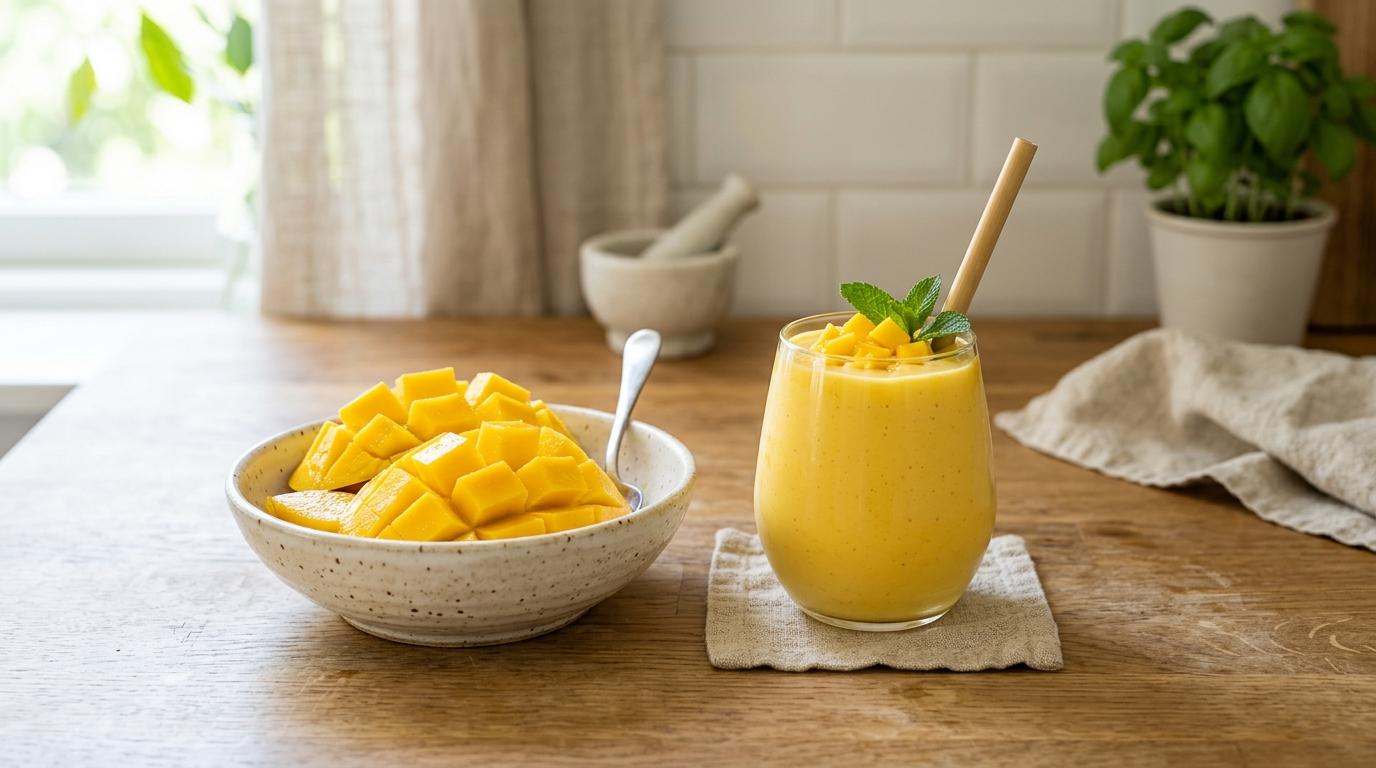
Mango season has its own mood. There’s sliced mango after lunch, chilled mango from the fridge, mango shake in tall glasses, and at least one person in the house saying, “It’s homemade, just drink it.”
And yes, mango is delicious. No argument there.
But if mango sometimes leaves you feeling heavy, sleepy, acidic, bloated, or hungry again too soon, the issue may not be mango itself. It may be how you’re eating it.
That’s where the mango shake vs sliced mango question becomes useful. It’s not just about taste. The form of mango, the portion size, the timing, and what you add to it can all change how your body responds, especially in summer when digestion can already feel a little sluggish.
The simple answer: sliced mango is usually better for daily eating
#If you want the quick answer, here it is:
Sliced mango is usually the better everyday option.
You chew it, eat it more slowly, see exactly how much you’re having, and the fruit’s fibre remains part of the whole eating experience. That makes it easier to control portions and less likely that you’ll overdo it without realizing.
Mango shake is not “bad.” But it is much easier to turn into something heavy.
Once mango is blended with milk, sugar, cream, ice cream, or extra pulp, it can become a large, sweet, dense drink. Some people digest it just fine. Others may feel bloated, acidic, sleepy, or notice a quicker sugar rise.
A simple summer rule:
- Choose sliced mango most of the time.
- Keep mango shake occasional and in smaller portions.
- Avoid adding sugar to already sweet mangoes.
- Don’t drink a heavy mango shake after a full meal or late at night.
- If you have diabetes, reflux, lactose intolerance, IBS, or repeated digestive symptoms, personalize your mango intake with a qualified professional.
Now let’s break it down properly.
Mango shake vs sliced mango: what actually changes?
#Mango is still mango whether you slice it or blend it. But your body may not experience both forms the same way.
The difference comes from three main things:
- How fast you consume it
- How much you end up having
- What gets added to it
Sliced mango
#With sliced mango, you naturally slow down. You pick up pieces, chew them, and notice the quantity on your plate.
That matters.
The fibre in mango does not cancel out the fruit’s natural sugar, but eating the fruit whole usually helps you consume it more mindfully. You’re also less likely to accidentally eat the equivalent of two or three mangoes in one sitting.
This is why sliced mango often feels lighter than a thick mango shake.
Mango shake
#A mango shake is much easier to drink quickly.
That’s the main issue.
When mango is blended, you skip most of the chewing. Then, if milk, sugar, cream, ice cream, or extra mango pulp is added, the drink becomes heavier and sweeter. A big glass can contain much more mango than you would normally eat as slices.
For some people, this can lead to heaviness, bloating, acidity, or a faster mango and sugar spike followed by sleepiness or cravings.
This doesn’t mean mango shake is forbidden. It just means it needs more portion control than we usually give it.
Quick comparison: sliced mango vs mango shake
#Why sliced mango may feel easier to digest
#Digestion starts before food reaches your stomach. Chewing plays a real role.
When you eat sliced mango, you chew it and mix it with saliva. You also eat it more slowly, so your stomach receives the food gradually.
With mango shake, especially a thick one, you may finish a large glass in a few minutes. Now your stomach has to manage fruit sugar, liquid volume, dairy, and sometimes added sugar all at once.
That’s when mango shake digestion can feel uncomfortable.
Common complaints include:
- heaviness
- burping
- gas
- bloating
- mild cramps
- sleepiness
- acidity or heartburn
Of course, not everyone feels this way. Some people can drink mango shake without any problem. But if you notice that sliced mango feels fine and mango shake doesn’t, that’s useful feedback from your body.
Mango shake acidity: why it happens
#Some people feel acidity after mango shake, especially when it is cold, sweet, thick, and taken after a meal.
The problem is usually not mango alone. It’s the full combination.
A mango shake can be:
- very sweet
- heavy because of dairy
- large in volume
- consumed quickly
- taken at the wrong time, like after dinner
For people with reflux, GERD, or a sensitive stomach, this combination can trigger discomfort.
Mango shake acidity may feel like:
- burning in the chest
- sour burps
- throat irritation
- nausea
- a heavy, stuck feeling in the stomach
Sliced mango is not automatically safe for everyone with acidity. A large portion of any sweet fruit can bother some people. But in everyday eating, sliced mango is usually easier to keep moderate.
Mango shake bloating: it may be the milk, not just the mango
#A lot of people blame mango when a shake makes them bloated. But often, the milk is part of the problem.
If you are lactose intolerant, milk can cause:
- gas
- bloating
- cramps
- loose stools
- stomach discomfort
Now add mango, which contains natural fruit sugars, and the drink can become harder for your gut to handle.
That’s why mango shake bloating is common in people who are sensitive to dairy, fructose, or large sweet drinks.
A simple way to understand your own pattern:
- If sliced mango feels fine but mango shake makes you bloated, the issue may be milk, portion size, blending, or added sugar.
- If both sliced mango and mango shake bother you, you may need to look at mango quantity, fruit sugar sensitivity, or your overall digestion.
Either way, don’t ignore repeated symptoms.
Mango and sugar spike: don’t panic, but do watch portions
#Mango is naturally sweet, so it makes sense that people worry about blood sugar.
But mango does not need to be treated like a forbidden fruit for everyone. The real issue is usually the portion and the form.
A small bowl of sliced mango is very different from a large mango shake made with two mangoes, milk, sugar, and ice cream.
For better sugar control:
- Choose sliced mango more often than mango shake.
- Keep the portion modest.
- Avoid adding sugar.
- Don’t treat mango shake like a harmless drink.
- Count it as food, not just a beverage.
- Avoid large servings on an empty stomach if they make you feel tired or hungry later.
- Pair mango with a balanced meal or a small source of protein or fat if that suits your body.
For many people, half a medium mango or a small bowl of sliced mango is easier to manage than a full glass of shake.
But if you have diabetes, insulin resistance, or blood sugar concerns, don’t rely only on general advice. Your tolerance depends on your medication, meal timing, activity level, glucose response, and overall diet.
Best time to eat mango in summer
#The best time to eat mango is usually when your stomach is not already overloaded and when you’re not about to lie down.
For many people, mango works well as:
- a mid-morning snack
- a late-afternoon snack
- a controlled portion with a balanced meal
Mango may not feel great:
- right after a heavy dinner
- late at night
- immediately before sleeping
- after fried or spicy food
- first thing in the morning, if sweet foods give you energy crashes
This is not a strict rule for everyone. Some people tolerate mango at breakfast. Some people can enjoy a small mango shake and feel completely fine.
The point is to notice your own pattern instead of eating mango at every possible time just because it’s mango season.
Common mango shake mistakes
#Mango shake becomes more troublesome when both timing and portion go wrong. These are the common mistakes to watch for.
1. Drinking mango shake after a heavy meal
#A full meal followed by a thick mango shake may sound satisfying, but your stomach may disagree.
This is one of the easiest ways to feel heavy, bloated, or acidic.
If you want mango after a meal, a small portion of sliced mango is usually the lighter choice.
2. Having it late at night
#A sweet, dairy-based drink late at night can worsen reflux or disturb sleep in people who are sensitive.
If you already get nighttime acidity, mango shake is probably not the best post-dinner habit.
3. Treating mango shake like a drink instead of food
#Mango shake is not like water, nimbu pani, or plain chaas.
Depending on how it is made, it can be filling and calorie-dense. If you drink it casually between meals and still eat your regular food, you may end up consuming much more than you planned.
4. Adding sugar to sweet mangoes
#Ripe mangoes are already sweet.
Adding sugar usually makes the shake heavier and may increase the chance of a quicker sugar rise. Most of the time, it’s unnecessary.
5. Making a huge glass because it is homemade
#Homemade does not always mean light.
A large homemade mango shake with milk, sugar, and extra pulp can still be too much for your digestion.
How to make mango shake lighter
#If you love mango shake, you don’t have to give it up completely. Just make it smarter.
Keep the serving small
#Use a smaller glass. This one change can help with heaviness, bloating, and sugar load.
Skip added sugar
#Let the mango provide the sweetness. If the mango is not sweet enough, it may simply not be the best one for a shake.
Avoid cream and ice cream
#Cream and ice cream make the shake richer, thicker, and heavier. If mango shake makes you uncomfortable, remove these first.
Use milk that suits you
#If regular milk causes gas or discomfort, mango shake may make that more obvious.
People with lactose intolerance may need lactose-free milk or may need to avoid dairy-based shakes altogether.
Don’t make it too thick
#A very thick shake usually means more mango, more milk, or extra ingredients. Keep it lighter and easier to drink slowly.
Drink it slowly
#Don’t gulp it down in two minutes. Treat mango shake like a small snack, not like a thirst-quencher.
Don’t pair it with a heavy meal
#Have it separately, preferably earlier in the day, and keep the portion controlled.
When sliced mango is the better choice
#Choose sliced mango over mango shake when:
- you want something lighter
- you are prone to acidity
- milk makes you bloated
- you are watching blood sugar
- you tend to overdrink shakes
- you want mango after a meal
- you are eating later in the evening
- you want better portion control
Sliced mango keeps you more aware of how much you’re eating. That sounds simple, but it makes a big difference.
Drinking fruit is much easier to overdo than eating it.
Who should be more careful?
#Most healthy people can enjoy mango in moderation. But some people should be more mindful, especially with mango shakes.
Speak with a doctor, registered dietitian, or qualified clinician if you have:
- diabetes
- insulin resistance
- frequent sugar crashes
- reflux or GERD
- regular acidity
- lactose intolerance
- IBS
- fructose sensitivity
- repeated bloating, cramps, or loose stools after mango or milk
- a medical diet plan where fruit portions need to be personalized
People with diabetes should not depend on general serving advice alone. Mango tolerance can vary a lot depending on medication, meal timing, activity level, glucose response, and overall diet.
And if mango shake repeatedly gives you symptoms, don’t keep testing it every day. Your body is already giving you the answer.
So, what should you do this summer?
#If you’re choosing between mango shake vs sliced mango, go with sliced mango most of the time.
It is simpler, lighter, easier to portion, and usually easier on digestion.
Enjoy mango shake when you genuinely want it, not as a daily “healthy drink.” Keep it small, skip added sugar, avoid cream or ice cream, and don’t drink it after a heavy dinner.
Mango is one of summer’s best pleasures. You don’t need to fear it. Just don’t turn every mango into a giant sweet shake and then wonder why your stomach feels like it went on strike.