I used to think Japan would be one of those gorgeous-but-impossible places for an Indian vegetarian on a budget. Like, pretty trains, dreamy streets, vending machines everywhere... and me quietly starving with a convenience-store banana. I was wrong. Very wrong actually. My last trip through Tokyo, Kyoto, Osaka and a couple smaller stops turned into this weirdly joyful food hunt where I spent less than I do in some Indian metros on a bad weekend, and still ate warm meals, snacks, desserts, even late-night comfort food. Not every day was easy, no. Sometimes I stood in front of a menu for 12 minutes trying to decode whether "yasai" really meant vegetarian or just "there are vegetables somewhere in this fish broth". But still. Japan in 2026 is way more doable for us than people make it sound.
Also, little disclaimer from someone who learnt the hard way, vegetarian in Japan can mean many different things. A dish can have no visible meat and still use dashi made from bonito, fish flakes sprinkled on top, oyster sauce tucked in somewhere, or egg if you were expecting vegan. If you're Indian vegetarian, especially strict Jain or no-egg, no-fish-stock type, you really gotta ask. The good news is tourist-heavy cities are much better now. Menus with allergen icons, tablet ordering, translation apps, and the rise of plant-based cafes have changed the game. Expo 2025 Osaka kind of pushed a lot of hospitality businesses to become more foreign-visitor friendly, and you can still feel that in 2026. Honestly, that one event probably helped my stomach more than any guidebook lol.
The basic budget math, because this matters before the fun stuff
#If you travel smart, food in Japan doesn't have to wreck your budget. On most days I spent somewhere around ¥1,800 to ¥3,200 for all meals, which is roughly budget-traveler territory if you're mixing supermarket breakfasts, cheap lunches, and one proper meal. Breakfast from konbini or supermarket, maybe ¥300 to ¥600. Lunch set, ¥700 to ¥1,200. Snacks, another few hundred yen if you have no self control around melon pan and matcha things, which I clearly don't. Dinner can still stay under ¥1,500 if you choose udon shops, curry chains, or simple teishoku-style places with customizable sides. Temple food and dedicated veg cafes can be pricier, but if that's one meal every couple days, it balances out.
- Cheapest reliable breakfast: onigiri with ume or kombu, yogurt if you eat it, banana, coffee from konbini
- Best value lunch: vegetable curry, plain udon with safe toppings, or lunch sets at Indian/Nepali-run spots
- Best supermarket hack: evening markdown stickers, usually after 7 pm-ish, sometimes later in bigger cities
- Emergency snack stash: nuts from drugstores, fruit cups, soy milk, sweet potato, bread, and those little packs of edamame
One thing I loved in 2026 was how many supermarkets now have clearer labels for allergens and sometimes even English support through QR-linked translation pages. Not everywhere, don't get too excited, but enough to be useful. In Tokyo especially, digital shelf tags and multilingual self-checkout made budget shopping so much less stressy.
My first real win was not at a restaurant. It was in a supermarket basement in Tokyo
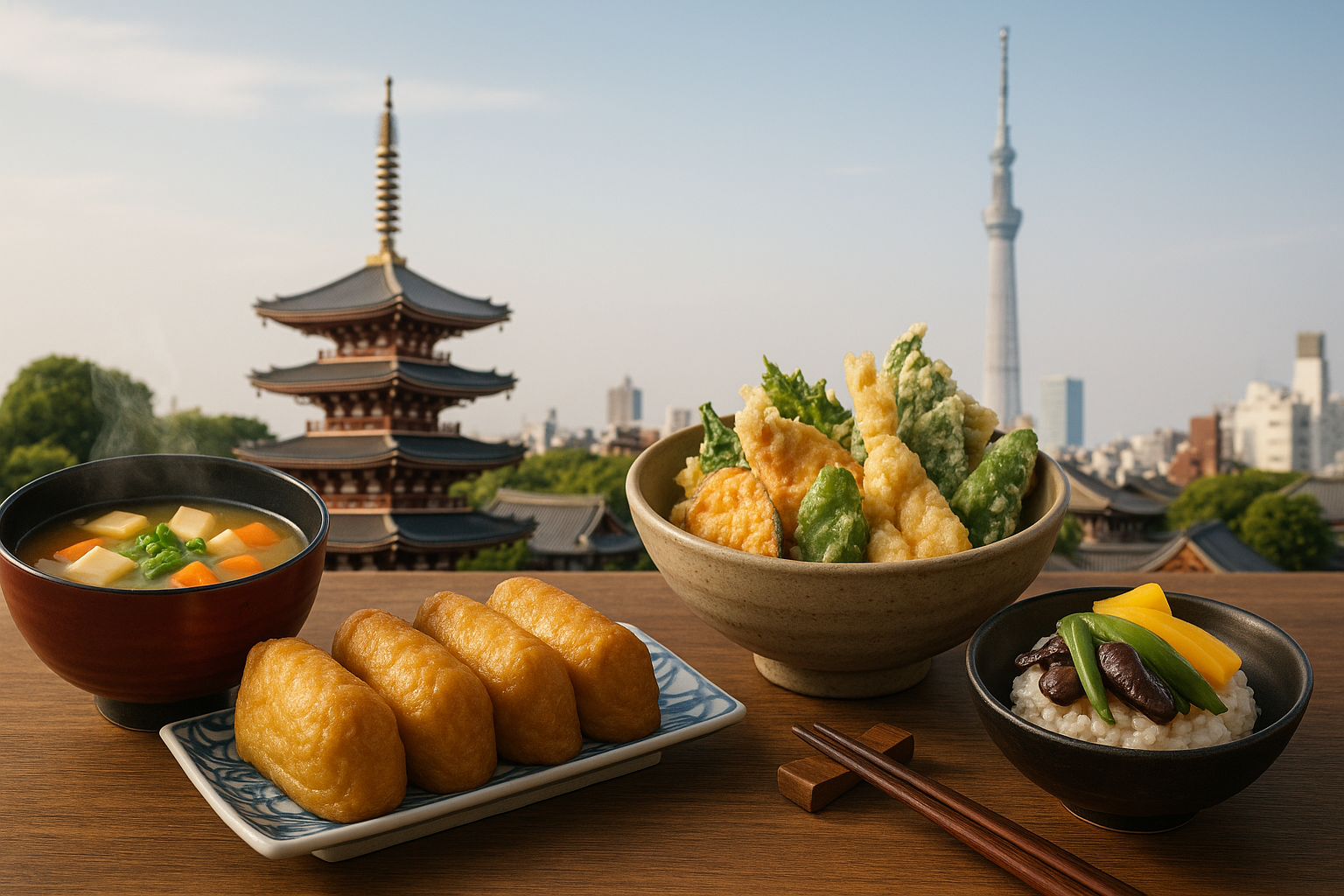
#This sounds very unromantic, but hear me out. My first evening in Tokyo I was tired, carrying a bag that felt like punishment, and I wandered into the depachika section under a department store near Ueno. I expected expensive fancy food. Some of it was, sure. But later in the evening there were discounted salads, rice balls, sesame spinach, inari sushi, cut fruit, and sweet potato stuff that basically saved my life. I sat on a bench outside, watching people rush by, eating inari sushi under city lights and feeling ridiculously happy. That was when Japan clicked for me. You don't need a glossy viral restaurant every meal. Sometimes budget food plus the right street corner is the whole memory.
What Indian vegetarians can actually eat in Japan, if we're being practical
#So, the easiest safe-ish categories for us were these: inari sushi, plain onigiri with umeboshi or kombu, zaru soba if the dipping sauce is handled carefully, vegetable tempura if the batter/fryer situation is okay and the dipping sauce isn't fish-based for you, curry rice at chains with allergen charts, udon with custom requests, tofu dishes, convenience-store salads plus extras, bakery items, and of course Indian restaurants. Plenty of Indian and Nepali places in Japan do affordable lunch sets, and no, I don't think using them is "cheating". Sometimes after two days of label-reading and polite panic, a hot dal with naan feels like emotional stability.
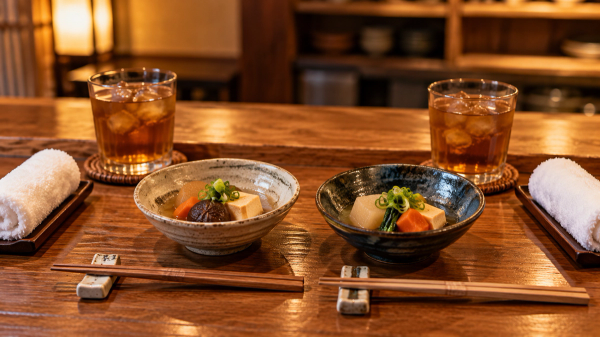
Shojin ryori, the Buddhist temple cuisine, is the beautiful answer everyone talks about and yes it can be amazing. In Kyoto, Koyasan, Nikko and some parts of Tokyo, it's a wonderful way to eat fully vegetarian or vegan. But budget? Ehhh, depends. Full temple meals can be expensive, especially in famous spots. My workaround was going for lunch specials, simpler temple-cafe menus, or combining one memorable shojin meal with cheaper supermarket and noodle-shop food the rest of the day. That's the trick with Japan, I think. Not every meal has to be iconic.
Tokyo on a budget - better for vegetarians now than people realize
#Tokyo gets called expensive and, okay, it can be. But it is also the easiest city in Japan for Indian vegetarians right now, mostly because sheer volume solves problems. More vegan ramen shops, more plant-based cafes, more Indian lunch buffets, more labels in English, more people used to food requests. Neighborhoods like Ueno, Asakusa, Ikebukuro, Shinjuku and Shimokitazawa were especially useful to me. Ikebukuro has a bunch of Indian restaurants where lunch sets are still one of the best value meals in the city. Asakusa was surprisingly kind too, especially if you're okay mixing temple visits with snack-based eating. I had a ridiculous day there eating ningyo-yaki style sweets, fruit sandwiches, then ending with a cheap curry dinner.
Plant-based ramen is also not the niche thing it used to be. In 2026, vegan ramen has gone kind of mainstream in visitor-heavy zones, partly because social media made it cool and partly because restaurants figured out that tourists really, really talk about broth. Some places now do soy-milk tantanmen, mushroom broths, yuzu-scented shio-style vegan bowls, all that. Are they always cheap? No. But lunch deals exist. I had one bowl in Tokyo Station area that was maybe a little overpriced for my budget self, and still... I'd go back. Creamy, spicy, warming, properly satisfying. Worth skipping a fancy coffee later.
My biggest Japan food lesson was this: stop chasing only the famous places. The best budget vegetarian days happened when I mixed one planned meal with random supermarket finds, bakery stops, and tiny cafes near stations.
Kyoto was lovely, a bit trickier, but honestly more memorable
#Kyoto is where I had my most peaceful meals and also my most annoying menu confusion. The city is deeply tied to tofu, yuba, sesame, seasonal vegetables, and Buddhist food traditions, which sounds perfect, and sometimes it totally is. But old-school restaurants may still use dashi in things that look entirely vegetarian. So yes, ask every single time. That said, Kyoto gave me some of my favorite budget-friendly bites too: fresh yudofu around temple areas, simple rice sets, matcha soft serve, warabi mochi, bakery breads, and supermarket bentos assembled from side dishes. I once built an accidental feast from a Kyoto supermarket with lotus root salad, tofu, rice, pickles, and a chestnut dessert for less than one average cafe meal back home.
There is also this broader 2026 trend in Kyoto of "modern washoku" cafes doing seasonal vegetable plates with local produce, often marketed as sustainable or farm-to-table. It sounds buzzwordy, I know, but some of it is genuinely good and not too expensive at lunch. Tourism boards and local businesses have been pushing regional ingredients harder lately, and you can feel a stronger focus on traceability, reduced food waste, reusable packaging, all that stuff. If you're the kind of traveler who cares where your food came from, Japan right now is quietly doing some cool things.
Osaka, weirdly enough, was where I saved the most money
#People call Osaka Japan's kitchen, and for non-vegetarians that usually means takoyaki and okonomiyaki and meat-heavy comfort food. I was prepared to struggle. Instead I found it fun. Not effortless, but fun. Around Namba, Umeda and Shin-Osaka I found cheap Indian meals, solid vegan cafes, and enough bakery and supermarket options that I never felt stuck. Osaka also has that slightly more relaxed, casual energy, so I found it easier to just ask questions even with my clumsy Japanese. One okonomiyaki-style place offered a custom vegetable version after a long back-and-forth involving Google Translate and me saying "no meat, no fish, no dashi" about fifteen times. Was it perfect communication? absolutely not. Was it delicious? yeah, kinda amazing actually.
And because Osaka got such a tourism boost around the Expo period, multilingual menus and cashless ordering got better in major areas. That's not just a tech detail. It saves money because you're less likely to panic-order the one expensive item with a photo. I also noticed more cafes doing oat milk, soy-based desserts, and clearly labelled plant-based sweets, which is small but nice when you want a break from plain snacks.
The convenience store truth - not glamorous, still essential
#Let's talk konbini. 7-Eleven, Lawson, FamilyMart... they are not a complete vegetarian solution, but they are part of the solution. I bought many breakfasts and emergency dinners there. Safe-ish options I repeatedly looked for were plain salads, fruit, yogurt, breads, nuts, cut veggies, frozen fruits, sweet potatoes when available, and some onigiri fillings like ume or kombu. Inari sushi can show up too. Seasonal items rotate constantly, so one week you'll see a good option and the next it's gone, which is very Japan honestly. In 2026, the healthier convenience-store trend is still growing, especially in urban branches, with more protein bowls, plant-based drinks, and low-waste packaging experiments. But label-checking is still not optional. Never assume.
- Learn these words on your phone: niku, sakana, dashi, katsuobushi, ebi, tamago, and vegan if that's your thing
- Use HappyCow, Google Maps reviews, and recent Instagram posts together, not just one app
- Search in map apps for Indian, Nepalese, vegan, shojin, curry, and halal because some halal places also understand no-meat requests better
- Go to supermarkets after evening discount stickers appear. I know I said it already, but seriously, this was elite budget behavior
A few kinds of places that worked for me, even when specific restaurant plans failed
#Instead of pretending I memorized every restaurant name forever, here's what genuinely helped. Indian and Nepali lunch spots near business districts were my safety net. Vegan ramen places in Tokyo and Osaka for one satisfying meal every few days. Temple cafes in Kyoto for calmer traditional lunches. Bakery chains for breakfast. Department store basements for variety. Budget curry chains with allergen charts. And station-area soba or udon spots where staff were patient enough to explain ingredients. Honestly, the most underrated category is the humble bakery. Japan's bakery culture is absurdly good. Curry pan may not always be veg, so check. But plain buns, red bean breads, cheese breads, melon pan, sweet potato pastries, and seasonal chestnut things got me through so many mornings.
There are also more specialty plant-based places now doing Japanese food for international visitors, not just salad bowls. Think vegan katsu made from soy, miso-marinated veggies, mushroom karaage, onigiri cafes, tofu donuts, even vegan soft serve. Some of this is definitely driven by trends, and some by rising inbound travel from South and Southeast Asia where dietary restrictions matter a lot. I met another Indian traveler in Kyoto who said she was shocked how many places at least understood the concept once she explained it. Five or six years ago, she said, that wasn't her experiance at all.
My actual favorite cheap meals, the ones I'm still thinking about
#One was a simple bowl of udon with wakame and tempura vegetables on a rainy afternoon near Kyoto Station, after checking very carefully about the broth. Another was a thali lunch in Ikebukuro that cost less than many Tokyo coffees-and-cake combos. Another was a supermarket dinner beside the Kamo River, where the breeze was nice and the food was very basic and somehow perfect. There was a vegan ramen in Tokyo with sesame and chili that I can still taste. And in Osaka I found a tiny cafe doing a soy keema rice plate that was cheap, filling, and kind of genius. None of these were Michelin, none were "must-do before you die" places. That's maybe why I loved them more.
Some mistakes I made so you don't have to
#I trusted the word vegetable too much. Big mistake. I assumed tofu meant safe. Also a mistake. I got overconfident in tourist areas and ended up with fish flakes on top of what should've been a straightforward meal. One time me and my friend spent extra money on a hyped cafe because TikTok said it was unmissable, and the portion was tiny and the food was fine, just... fine. Another day we skipped a line at a famous place, bought discounted food from a grocery store, sat by the river, and had a better evening. So yeah, don't let internet hype bully your budget. Japan rewards wandering. It really does.
If I had to give a 2026 mini strategy for Indian vegetarians in Japan, it'd be this
#- Base yourself near stations with supermarkets, not just attractions
- Make lunch your main restaurant meal because deals are better
- Carry a translation card saying you don't eat meat, fish, seafood, fish stock, and maybe egg if needed
- Mix local Japanese veg meals with Indian restaurant resets. Your taste buds won't judge you
- Use one splurge meal for shojin ryori or great vegan ramen, then go cheap around it
And maybe the biggest thing... stay flexible. Some days Japan is super easy and you'll find three vegetarian options before noon. Other days you'll walk for ages and eat bread and bananas and feel mildly betrayed. That's normal too. But overall? For a budget-conscious Indian vegetarian, Japan in 2026 is absolutely doable, much more than its old reputation suggests. It's not perfect, not even close, but it's exciting. You get temple food and konbini hacks, proper ramen and random bakery wins, careful questions and lucky discoveries. That mix is what I ended up loving.
If you're planning the trip, I'd say go. Go hungry, but not scared. Learn a few food words, keep snacks in your bag, don't act too fancy for supermarket dinners, and let the food part be a little messy. Some of my best travel memories came from figuring it out as I went. Very few things beat that moment when you finally find a cheap, hot, fully vegetarian meal in a place you once thought would be impossible. Anyway, that's my very real, slightly chaotic Japan food notebook. If you're into more travel-and-food stories like this, wander over to AllBlogs.in sometime.