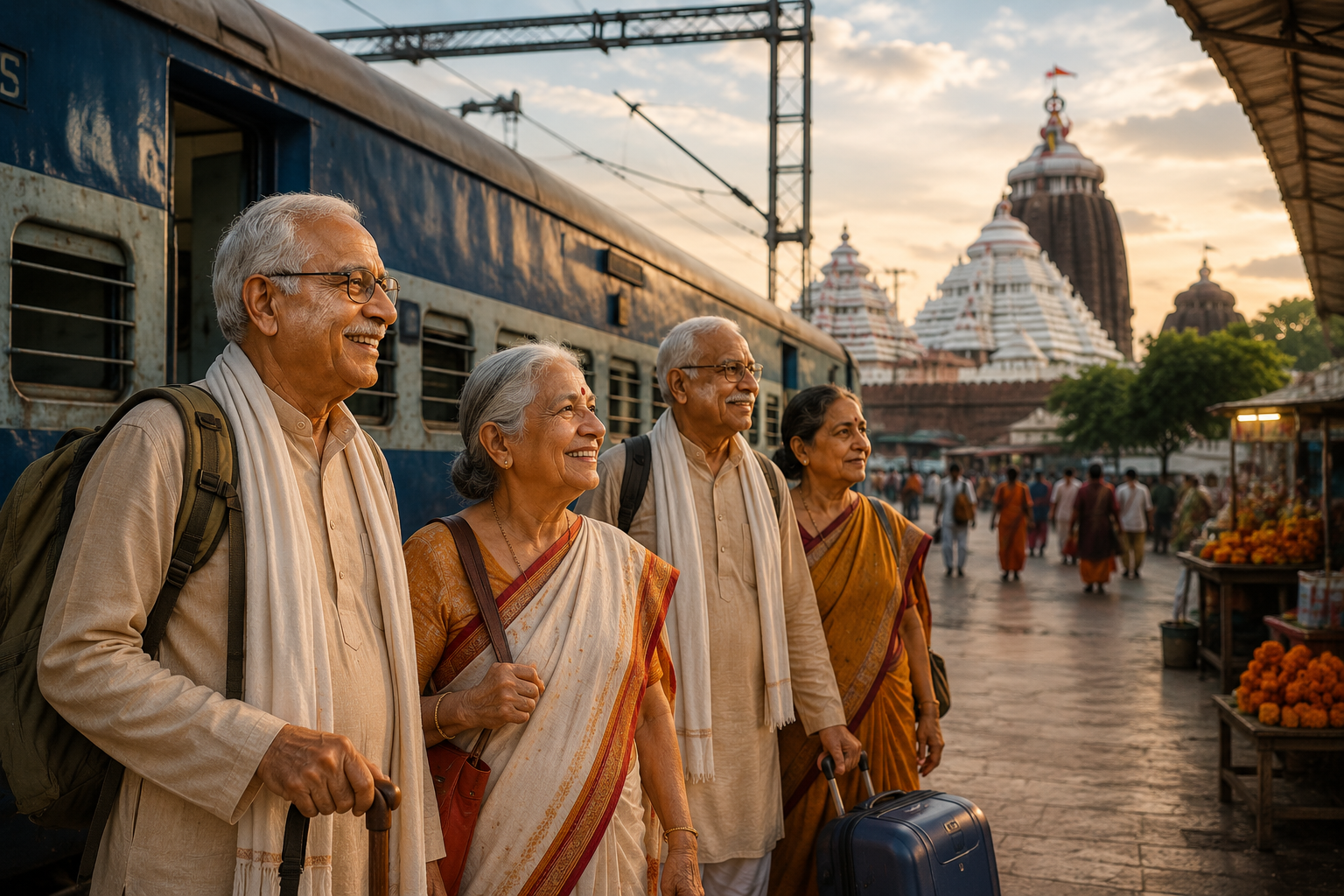
When people in Pune hear “free train travel for senior pilgrims to Odisha”, most of us immediately think arre wah, Indian Railways is giving free tickets for senior citizens again. But wait. This is where many families get confused, and honestly even I got confused when we were planning for Puri Jagannath darshan with my kaka and kaki. Indian Railways, as a normal railway ticket, does not currently give the old senior citizen concession like before. That concession was stopped during Covid time and, for regular bookings, it has not come back in the same old way. So if you go on IRCTC and book Pune to Puri or Pune to Bhubaneswar, you will pay normal fare.
The “free” part usually comes through state government pilgrimage schemes for senior citizens, where the government arranges the journey, food, stay, local transport and darshan support, often using special trains or group bookings handled through official departments or IRCTC-type arrangements. In Maharashtra, people talk about Mukhyamantri Teerth Darshan Yojana / Tirth Darshan scheme for senior citizens, and Odisha’s Jagannath Puri is one of the places families keep asking about because, come on, for Maharashtrian bhaktas also Puri has that pull. That feeling of Mahaprasad, sea breeze, temple bells… it’s something else only.
Small but important point: don’t trust random WhatsApp forms or “agent” calls for free senior pilgrim trains. Always check with the district collector office, social welfare department, official state portal, or local MLA/municipal help desk before submitting documents.
How we started from Pune, and why Odisha felt like a proper yatra, not a vacation
#Our plan began in the most Indian way possible — over evening chai, one relative saying “Puri jaana chahiye ek baar” and another saying “train mein seniors ko free hai kya?” Then everyone looked at me because I travel a bit and apparently that makes me the family railway minister. I checked IRCTC, asked one retired railway uncle, then called a local office contact. That’s when the difference became clear: regular train ticket is paid, but if your senior family member is selected under a government pilgrimage scheme, then the journey can be free or fully sponsored depending on rules.
For Pune people, Odisha usually means either Puri for Jagannath Temple, Konark Sun Temple, Chilika Lake, Bhubaneswar temples, and sometimes Cuttack if family is nearby. But for senior pilgrims, don’t make it a “cover everything in 3 days” madness. Odisha looks close on the map? It is not. Pune to Odisha by train is a long ride, easily around 30-plus hours depending on the train and route. Seniors can enjoy it, actually they enjoy train journeys more than us impatient people, but only if you plan properly — lower berths, medicines, light food, toilet access, enough water, and no hero-giri with heavy luggage.
Free pilgrimage scheme basics seniors should know before applying
#Every scheme has its own rules, so please don’t treat this as final government notice. But in general, senior citizen pilgrimage schemes in India usually ask for age proof, residence proof, income certificate or self-declaration, Aadhaar, medical fitness, passport-size photo, and bank details. Some schemes have income limits, some give priority to people who have not travelled earlier under the same scheme, some allow one attendant if the senior is above a certain age or medically needs help. Rules can change, and they do change quietly, so verify from the official source.
- For Maharashtra residents from Pune, check with the district administration, social welfare office, tehsil office, or official Maharashtra government portals for the latest Tirth Darshan application process.
- Don’t pay agents who promise “confirmed free seat”. Selection is usually official, not through jugaad. Atleast it should be.
- Ask clearly what is included: train fare, meals, accommodation, local bus, temple darshan assistance, travel insurance, medical support, and return journey.
- If the scheme train is not available, compare paid options like Pune–Puri train, Konark Express via Pune to Bhubaneswar, or Pune to Bhubaneswar flight plus train/taxi to Puri.
Train options from Pune to Odisha if you are going on your own
#If your senior pilgrim is not going under a free scheme, or if selection takes time, the normal railway route is still the most practical for many families. Pune to Odisha has a few useful rail connections, though schedules change and you must check live timings on IRCTC or NTES before planning. Pune–Puri Superfast Express is one train people commonly look for when going directly towards Puri. Another popular option is the Mumbai CSMT–Bhubaneswar Konark Express, which passes via Pune and goes towards Bhubaneswar. From Bhubaneswar, Puri is around 60 km by road and also connected by frequent trains.
For seniors, I would personally choose 2AC if budget allows, otherwise 3AC is manageable. Sleeper is cheap, yes, and many of us grew up travelling sleeper only, but for a 30-hour yatra with elderly parents, heat, dust, toilet queues, and night disturbance can become too much. If the journey is in winter, sleeper may still work for fit seniors, but carry a bedsheet, shawl and a chain lock. Always book lower berth quota for senior citizens on IRCTC if doing normal booking. It doesn’t guarantee every time, but it helps.
Approx travel style comparison from Pune
#| Route / Mode | Good for | Things to keep in mind |
|---|---|---|
| Direct Pune to Puri train | Pilgrims who want one long but simple journey | Book early, lower berth needed, food planning important |
| Pune to Bhubaneswar train, then Puri | People who want to rest in Bhubaneswar first | Bhubaneswar has better hotels and hospitals nearby |
| Pune to Bhubaneswar flight, then road/train to Puri | Seniors who cannot sit in train for long | Costly, but saves time and energy |
| Government free pilgrimage train | Eligible senior citizens, group yatra feel | Dates, selection and facilities depend on official scheme |
What the long train ride actually feels like with senior pilgrims
#There is something sweet about travelling with senior pilgrims in a train. They carry thepla, chakli, chivda, small steel dabba of pickle, and then still buy railway tea every two hours. My kaka was doing exactly that. Pune station itself was crowded as usual — porters calling out, families sitting on bags, platform chai smell, announcements half-audible. We reached early because with seniors you should never do last-minute running. Please don’t. One missed footstep and the whole yatra gets spoiled.
The route towards Odisha is long and mixed. You pass dry stretches, then greener parts, then coastal-side humidity starts slowly hitting. By the time you enter Odisha side, the food taste at stations also changes. You start seeing more rice-based meals, fish curry smell somewhere, and that soft Odia accent in platform announcements. It’s not dramatic like a film scene, but you feel it. Seniors in our coach started talking with each other by evening itself. One aunty was going for mannat, one uncle had visited Puri 20 years back and kept saying “ab badal gaya hoga sab”. He was right and not right, both.
Best time for Pune seniors to visit Puri and Odisha
#For senior citizens, the best months are usually October to February. Weather is kinder, walking around temple areas is easier, and train travel also feels less tiring. December and January can be crowded but manageable if you plan. March onwards Odisha starts becoming hot, and April-May can be seriously uncomfortable for elderly travellers from Pune, especially if they have BP, diabetes, breathing issues, or knee pain. Monsoon has its own charm, but heavy rain, slippery temple lanes, and humid rooms can become a problem.
Rath Yatra in Puri is world-famous and very emotional, no doubt. But for seniors, I’ll be honest — unless you have proper arrangements, medical backup, and crowd-handling support, avoid peak Rath Yatra days. The crowd is massive. It is a once-in-a-lifetime experience, yes, but not everyone’s body can handle that pushing, heat and standing for hours. Better to visit a little before or after if peaceful darshan is the aim. Also check cyclone alerts during Bay of Bengal weather disturbances. Odisha administration is generally very alert about cyclones, but travelers should keep an eye on IMD updates, hotel advisories and railway announcements.
Reaching Puri: first impressions, temple lanes and that sea हवा
#Puri station has that pilgrim-town feeling immediately. Not fancy-fancy, but alive. Auto drivers call out “Mandir? Swargadwar? Hotel?” and you need to bargain politely. From station to Jagannath Temple area or sea beach hotels, autos and e-rickshaws are easily available. If you are with senior citizens, don’t walk with luggage thinking it is nearby. Take the auto. Roads can be busy, and temple-town traffic has its own logic which no Google Maps can fully explain.
The first evening we went near the beach, not temple. Seniors were tired from train journey, so this was a good decision. Puri sea is not like a quiet Goa beach. It is louder, more devotional somehow, with families, chai stalls, shell sellers, photographers, camel rides sometimes, and people just standing in front of waves like they are telling their problems to the ocean. My kaki sat on a plastic chair with coconut water and said, “Yatra successful lag raha hai already.” That line stayed with me.
Jagannath Temple darshan tips for elderly visitors
#Jagannath Temple is powerful. I’m not saying this in a filmi way. The energy, the crowd, the sound of bells, the smell of ghee and flowers, the old stone walls, the pandas calling out — everything hits together. Non-Hindus are not allowed inside the main temple, and phones, cameras, leather items and many belongings are restricted, so plan before you go. There are cloakroom facilities around, but keep valuables minimal. For seniors, morning darshan is usually better, but not too early if they are tired. Late evening can also be calmer on some days, though festival days are unpredictable.
One thing I’ll say with full feeling: don’t let your senior parents get dragged into aggressive panda negotiations. Many priests are helpful and sincere, but like every major temple, there are also pushy people. Decide beforehand if you want special puja, how much dakshina you are comfortable giving, and keep small cash. If your group is under a government pilgrimage arrangement, follow the official coordinator. They usually know entry timing and crowd flow better. Wheelchair support and assisted movement may be available in and around the temple area depending on arrangements, but the old temple lanes and crowd are still challenging, so go slow.
Mahaprasad is not optional, trust me
#If you go to Puri and don’t eat Mahaprasad, what are you even doing? Anand Bazaar inside the temple complex is where Mahaprasad is sold, and it has this earthy, sacred, simple taste. Rice, dal, vegetables, khaja, different preparations cooked in traditional way — nothing is “restaurant style”, and that is the beauty. For seniors, keep it light first day because travel stomach can be moody. Also drink bottled water or filtered water only. We Indians think our stomach is strong until one bad water glass proves otherwise.
Where to stay in Puri: budget, dharamshala, and senior-friendly choices
#Puri has everything from basic dharamshalas to mid-range hotels and sea-facing resorts. If you are coming under a free senior pilgrimage scheme, accommodation may already be arranged in group lodges or hotels. Don’t expect luxury. Expect practical rooms, simple food, shared transport and fixed timings. If travelling independently, choose stay based on senior comfort, not Instagram view. Lift, ground-floor room, clean bathroom, hot water, and distance from temple matter more than balcony selfie.
Typical budget dharamshala or basic lodge rooms in Puri can start around ₹700–₹1,500 per night depending on season and cleanliness. Decent mid-range hotels may be around ₹2,000–₹4,500 per night, and sea-facing or better-rated properties can go above ₹5,000, especially on weekends, holidays and festival periods. Prices keep changing, so call directly before booking, ask about lift and parking, and check recent reviews. Swargadwar area is lively and close to beach, but it can be noisy. Grand Road side is better for temple access. CT Road and Marine Drive side may feel calmer but you’ll need auto for temple.
- For elderly pilgrims: avoid very narrow-lane hotels unless someone in your group can manage luggage and walking.
- Ask if the hotel has generator backup. Power cuts are not daily drama, but backup helps in humid weather.
- If someone has knee problem, confirm lift is working. Not just “lift hai sir” — ask properly.
- Book refundable if travelling during cyclone-prone or heavy rain periods.
Food in Odisha that senior pilgrims can actually enjoy
#Odisha food is gentle in many places, not overloaded with masala like some highway dhabas. That works well for seniors. In Puri and Bhubaneswar, you’ll get regular veg thali, Odia thali, dalma, rice, saag, besara-style vegetables, khaja, chhena poda, rasabali, and of course endless tea. Fish is common in local food culture, but vegetarian food is easy near temple areas. For Maharashtrian seniors, rice-heavy meals may feel different after two days, so carry some home snacks. But don’t carry the whole kitchen. I have seen families bring so much food that half their energy goes in managing dabbas.
In Puri, simple meals near temple and beach can be affordable, like ₹100–₹250 for basic thali type food. Better restaurants may cost ₹300–₹700 per person depending on what you order. Bhubaneswar has more polished restaurant options, including South Indian, North Indian and Odia cuisine places. If seniors have diabetes, keep fruit, dry snacks, ORS sachets and medicines handy because darshan timings and group travel meals can get delayed. It happens. Nobody plans delay, but yatra without delay is like Pune traffic without honking — rare.
Bhubaneswar, Konark and Chilika: should seniors add them?
#If health and time allows, don’t return from Odisha after only Puri. Bhubaneswar is beautiful in a quieter way. Lingaraj Temple, Mukteshwar Temple, Rajarani Temple, Dhauli Shanti Stupa, Udayagiri and Khandagiri caves — all are worth it, but choose carefully for senior citizens. Lingaraj Temple has restrictions similar to many Hindu temples, and walking may be needed. Mukteshwar is easier and very photogenic. Dhauli is peaceful, with a nice view and Buddhist history. Udayagiri-Khandagiri caves involve steps and uneven walking, so not ideal for everyone.
Konark Sun Temple is a must if the group can manage a day trip. It is a UNESCO World Heritage Site and the stone work is honestly mind-blowing. But the campus is open and can get hot, so go early morning or late afternoon. Hire a proper guide if your seniors like history, otherwise they’ll just see stones and come back saying “theek tha”. Chilika Lake, especially Satapada side from Puri, is popular for boat rides and dolphin spotting, but it can become tiring. Boat quality, sun exposure and travel time matter. If your senior parents are already exhausted after temple darshan, skip Chilika. No guilt.
Safety, health and practical comfort for senior pilgrims
#Odisha is generally welcoming for pilgrims, and Puri is used to handling huge crowds. But travel safety is about small things. Keep Aadhaar photocopies, medicine list, doctor’s prescription, emergency contact card, and hotel address in each senior’s bag. Not only on phone. Phones get switched off, lost, or given to younger person who goes somewhere else. Also keep cash in small notes because temple areas, autos and small eateries may not always work smoothly with UPI during network rush.
For the train, pack medicines in hand baggage, not big suitcase under the seat. Carry a light blanket even in AC coach, toilet slippers, sanitizer, tissue, water bottle, and a small torch. If your senior has diabetes or BP, don’t experiment with fasting during travel without doctor advice. Many elders will say “darshan ke liye sab chalega”, but later they suffer quietly. Also, travel insurance or scheme medical support is worth asking about. Government group yatras sometimes have medical staff or volunteers, but confirm it instead of assuming.
Documents usually needed for free senior pilgrimage schemes
#- Age proof like Aadhaar card, PAN card, voter ID, or other accepted document as per scheme rules.
- Residence proof showing Maharashtra / local eligibility if applying from Pune under a state scheme.
- Income certificate or declaration if the scheme has income criteria.
- Medical fitness certificate may be asked, especially for long-distance pilgrimage travel.
- Passport-size photos, mobile number, nominee or emergency contact details, and bank details if required.
Budget if the trip is not fully free
#Sometimes people apply for free travel, don’t get selected, and then still want to go because the wish has already entered the heart. For an independent Pune to Puri trip, budget depends heavily on train class and hotel. A very basic trip can be done cheaper, but for seniors I’d keep comfort budget. Train fare will depend on class and availability, so check IRCTC live fare. Accommodation for 3 nights may range from ₹3,000 total in a basic dharamshala-type stay to ₹12,000 or more in a decent hotel. Local autos, temple donations, food, sightseeing car, guide, and shopping add up quickly.
A private cab for Puri-Konark-Bhubaneswar day route can cost a few thousand rupees depending on car type and season. Shared tours are cheaper, but seniors may not like fixed rushing. For local temple and beach movement, autos are fine. Bargain, but don’t fight for ₹20 also. Pilgrim towns run on small earnings. I usually ask hotel reception for rough auto rates first, then negotiate. Works better than looking clueless outside station.
Little local experiences I loved beyond the main darshan
#Btw, here’s something cool I found — early morning in Puri is underrated. Everyone talks about temple and beach sunset, but morning tea near the beach, with fishermen coming back and the sky slowly opening up, is really something. Seniors wake up early anyway, so use that. Take them for a slow walk, let them sit. Not every travel moment needs a ticket.
Pipili appliqué work on the way to Bhubaneswar or Konark is also lovely. Bright umbrellas, wall hangings, lampshades — very Odisha. Raghurajpur heritage crafts village near Puri is another gem if you like Pattachitra art. It is not too far, but lanes can be narrow. Go with patience, not like a shopping mall visit. Buy directly from artists if you can. Even a small painting carries so much work. My kaki bought one small Jagannath painting and now it sits near her home mandir in Pune. She still tells guests “Odisha se laya hai” with full pride.
What I would do differently next time
#Next time, I would keep one extra rest day. This is my biggest advice. We Indians try to squeeze darshan, Konark, Chilika, Bhubaneswar, shopping, relatives, everything in one plan and then seniors come back more tired than blessed. For Pune to Odisha, because the train journey itself is long, keep first day light. Second day temple. Third day nearby sightseeing. Fourth day rest or Bhubaneswar. Then return. If you are going under government free pilgrimage schedule, you may not control everything, but at least mentally prepare seniors for fixed timings and group discipline.
Also I would carry less clothes and more patience. Odisha is not difficult, but pilgrimage travel has crowds, queues, emotions, and unexpected changes. Sometimes darshan is quick, sometimes it takes time. Sometimes hotel food is nice, sometimes bland. Sometimes the sea makes you forget all complaints. That’s the thing with Puri — it doesn’t behave like a normal tourist place. It feels old, sacred, chaotic, comforting, all mixed together.
Final thoughts for Pune families planning free train travel to Odisha
#If you are planning free train travel for senior pilgrims from Pune to Odisha, start with verification. Check if the senior citizen is eligible under the current government pilgrimage scheme, confirm application process from official offices, and don’t believe forwarded messages blindly. If selected, understand what is included and what personal expenses remain. If going independently, book trains early, choose senior-friendly accommodation, avoid harsh summer months, and plan Puri darshan with enough rest.
For me, the Pune to Odisha yatra was not just about reaching Jagannath Temple. It was watching elders become childlike in devotion, seeing them fold hands at the sea, hearing train stories from strangers, eating Mahaprasad sitting simply, and realising that comfort matters but faith carries people even further. Still, faith ke saath planning bhi chahiye. That combo makes the trip beautiful. If you’re collecting more such practical Indian travel stories and pilgrimage tips, have a look at AllBlogs.in sometime — you’ll find plenty of useful reads there, without too much fancy bakbak.